

A modern living room can look polished without feeling cold, and a farmhouse-inspired room can feel warm without looking dated. The sweet spot between those two ideas is what makes Joanna Gaines-inspired living rooms so appealing: clean foundations, natural materials, comfortable furniture, collected character, and just enough contrast.
Instead of filling the room with obvious farmhouse signs and matching rustic accessories, focus on architectural texture, warm neutrals, wood, stone, soft fabrics, vintage character, and practical furniture arrangements.
These Joanna Gaines living room ideas include rustic beams, earthy color palettes, dramatic accent walls, stone fireplaces, natural lighting, built-in storage, greenery, meaningful decor, and other details that can make a living room feel both modern and timeless.
As an Amazon Associate, I earn from qualifying purchases. This article contains affiliate links, which may earn us a commission at no extra cost to you.
Quick Picks for a Joanna Gaines-Inspired Living Room
- For warmth: use natural wood, linen, woven rugs, and warm white walls.
- For architectural character: highlight beams, stone, paneling, or a substantial mantel.
- For a modern update: add charcoal, deep green, or black in controlled amounts.
- For a light room: keep window treatments soft and let natural light lead the palette.
- For a cozy room: layer lamps, sconces, throws, and warm wood.
- For a small space: create one comfortable corner nook instead of adding oversized furniture.
- For character: mix one or two vintage pieces with newer furniture.
- For a timeless finish: choose meaningful decor instead of filling every surface.
What Gives This Living Room Style Its Timeless Look?
The look works best when modern and rustic elements balance one another. If everything is rustic, the room can feel themed. If everything is sleek and neutral, it may feel too sterile.
Start with a warm neutral foundation and then build depth through natural materials, darker contrast, soft textiles, and pieces with a little history.
| Design Element | Good Starting Point | How to Keep It Modern |
|---|---|---|
| Walls | Warm white, cream, greige | Use one darker accent |
| Wood | Oak, pine, reclaimed finishes | Mix with simple furniture lines |
| Textiles | Linen, wool, cotton, jute | Limit patterns and repeat tones |
| Metal | Black iron, aged brass | Use as smaller contrast |
| Decor | Vintage finds, pottery, books | Leave visible open space |
18 Joanna Gaines’s Living Room Ideas for a Modern and Timeless Space
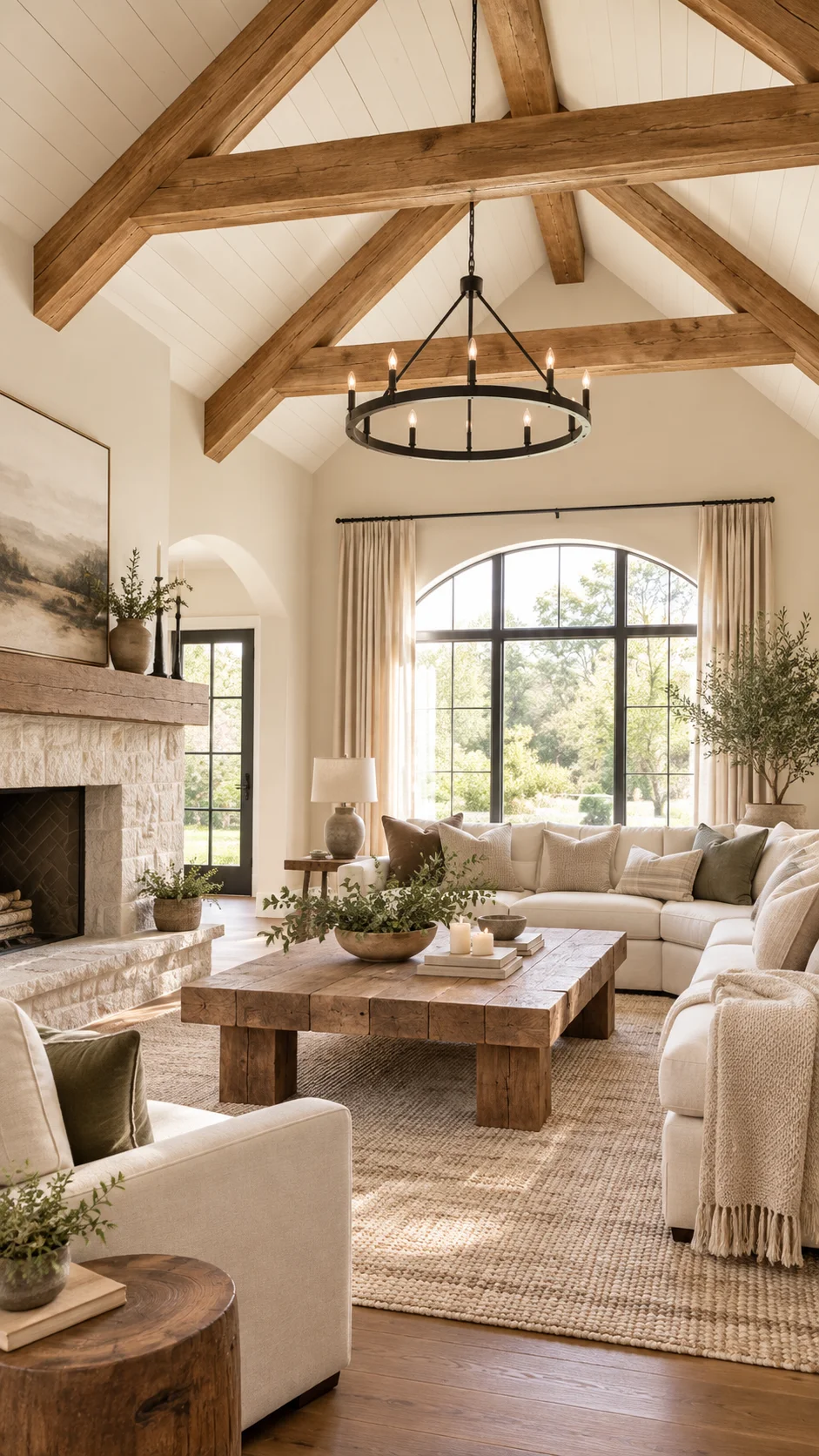
1. Add Timeless Rustic Warmth With Wood Beams
One substantial rustic detail can give an otherwise simple living room instant character.
Exposed wood beams, a plank ceiling, reclaimed mantel, or substantial wood coffee table can introduce age and warmth without turning the entire room into a farmhouse theme.
Keep the surrounding walls warm white or cream so the natural grain becomes the focus.
If real structural beams are not part of the room, decorative beam treatments can create a similar visual effect when installed appropriately.
Timeless rule: let one strong wood feature lead the room instead of repeating rustic wood on every wall and piece of furniture.
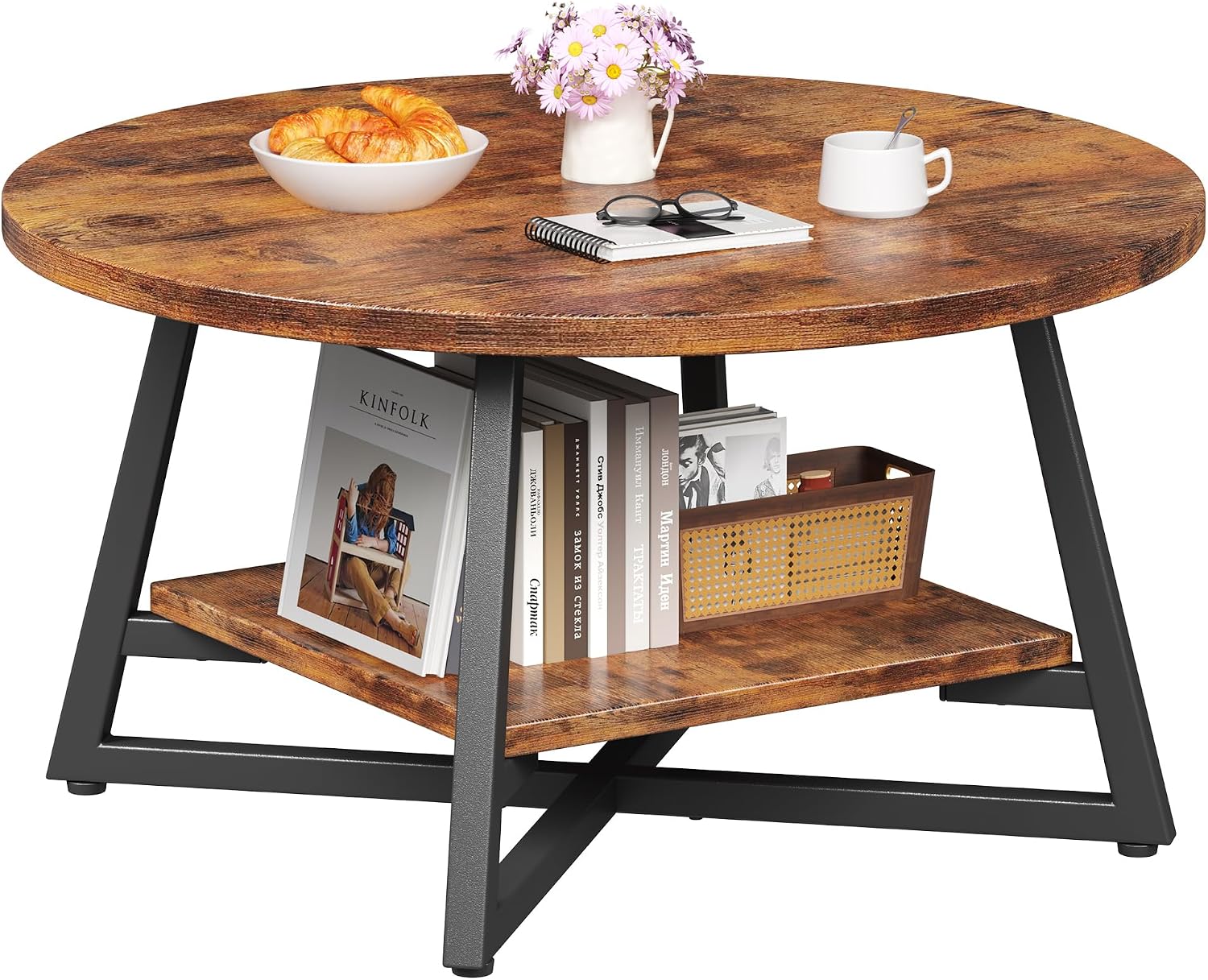
Amazon Find: Rustic Wood Coffee Table
A simple wood coffee table can introduce rustic warmth without requiring architectural changes to the room.
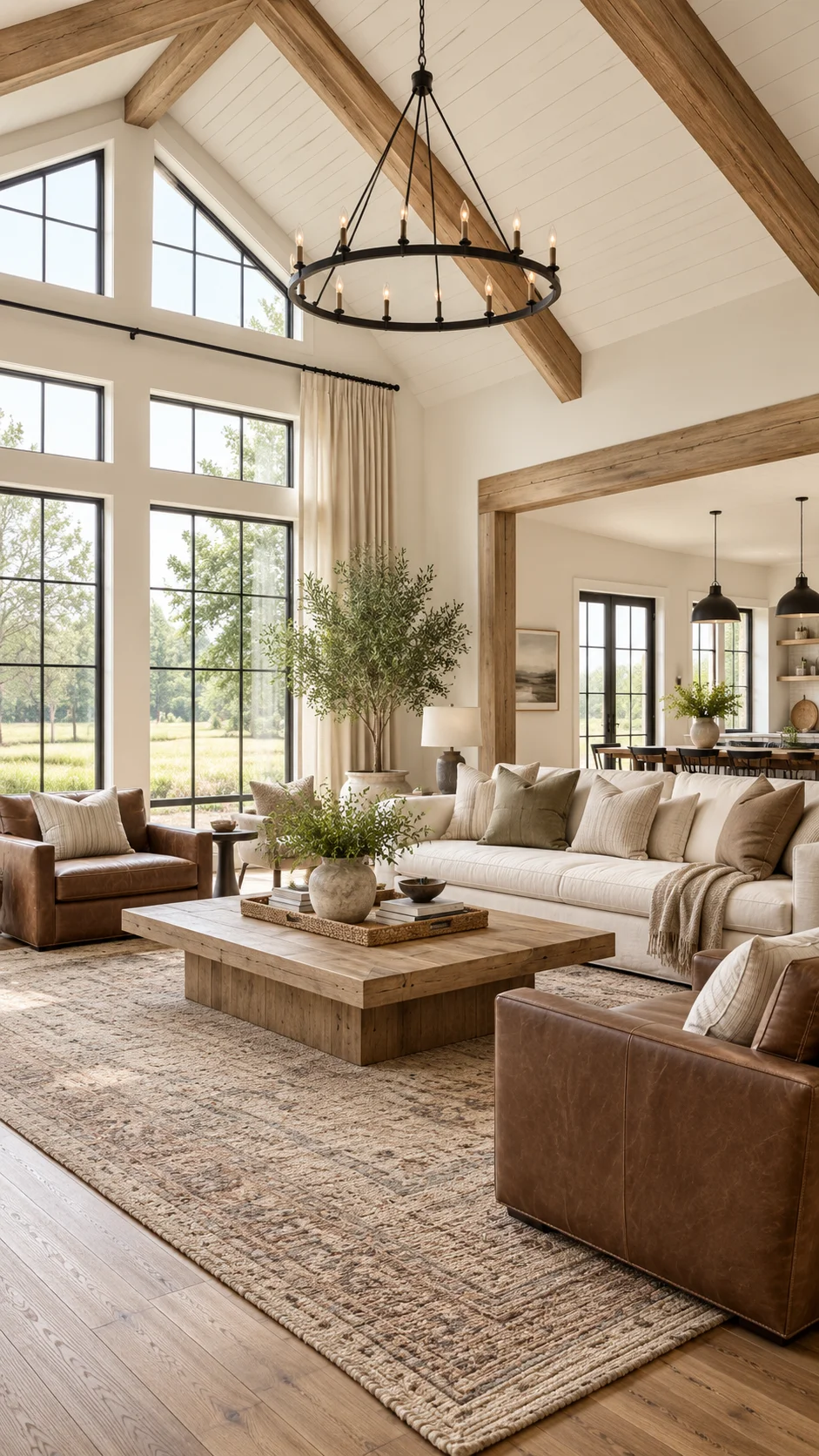
2. Ground a Large Room With Oversized Furniture
High ceilings and open living rooms need enough furniture scale to keep them from feeling empty.
Instead of decorating tall walls with dozens of small objects, start lower down with a substantial sofa, comfortable armchairs, a generous coffee table, and a large rug.
This creates a grounded conversation zone while exposed beams, tall windows, or trusses can provide visual interest above.
Scale tip: a room with very tall ceilings often needs wider furniture rather than simply taller decor.
Leave comfortable walking routes around the grouping so the furniture feels generous rather than crowded.
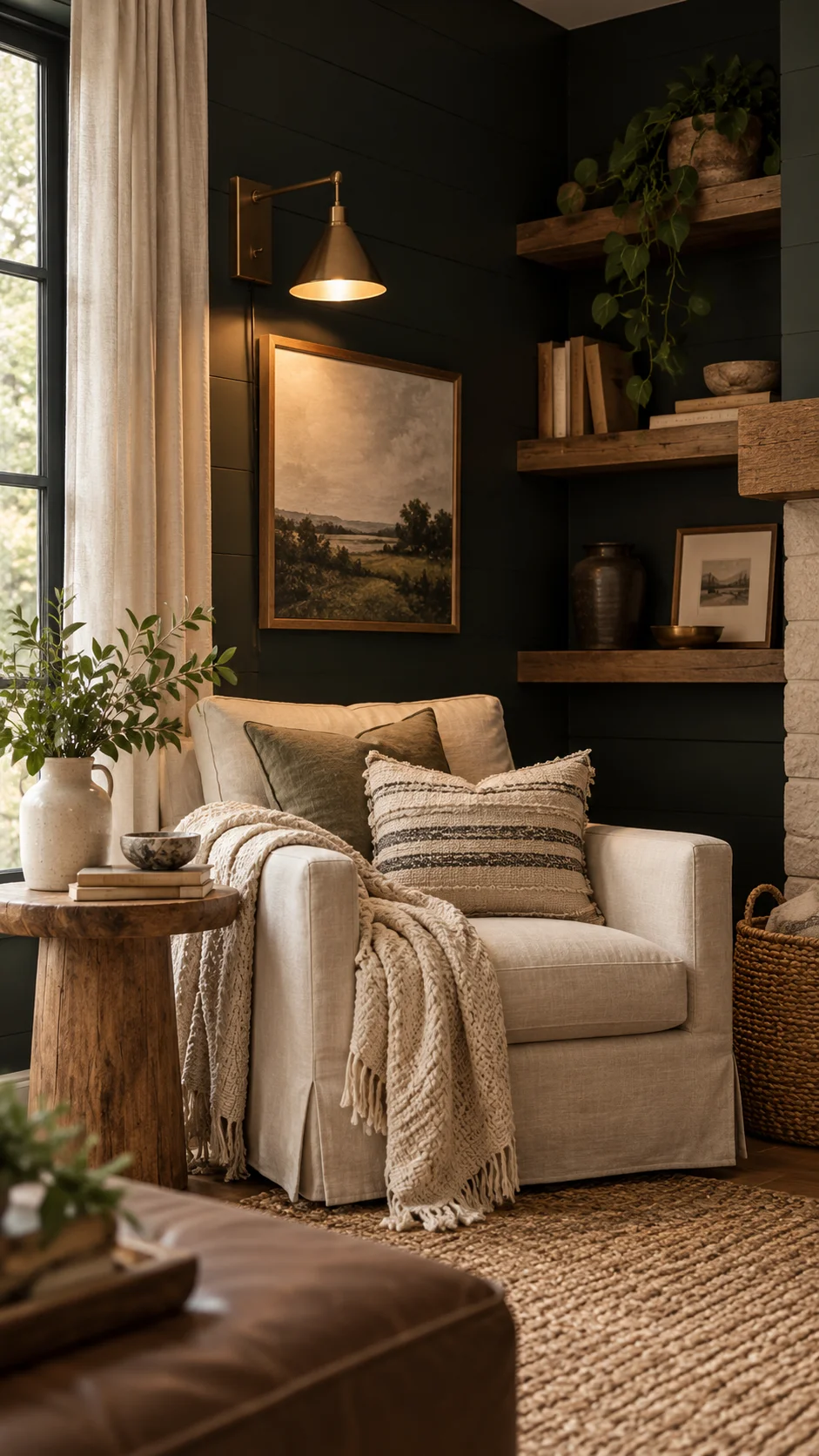
3. Create a Moody Farmhouse Corner With Charcoal
Farmhouse-inspired rooms do not have to be completely white.
Deep charcoal, black-green, or another dark neutral can create a cozy reading corner or feature wall with much more depth.
Balance the dark surface with beige upholstery, woven texture, pale wood, or warm lighting.
A linen chair, small wood side table, and wall sconce may be enough to soften a dramatic backdrop.
Balance rule: every large dark element should have something warm or light nearby to stop the corner from feeling heavy.
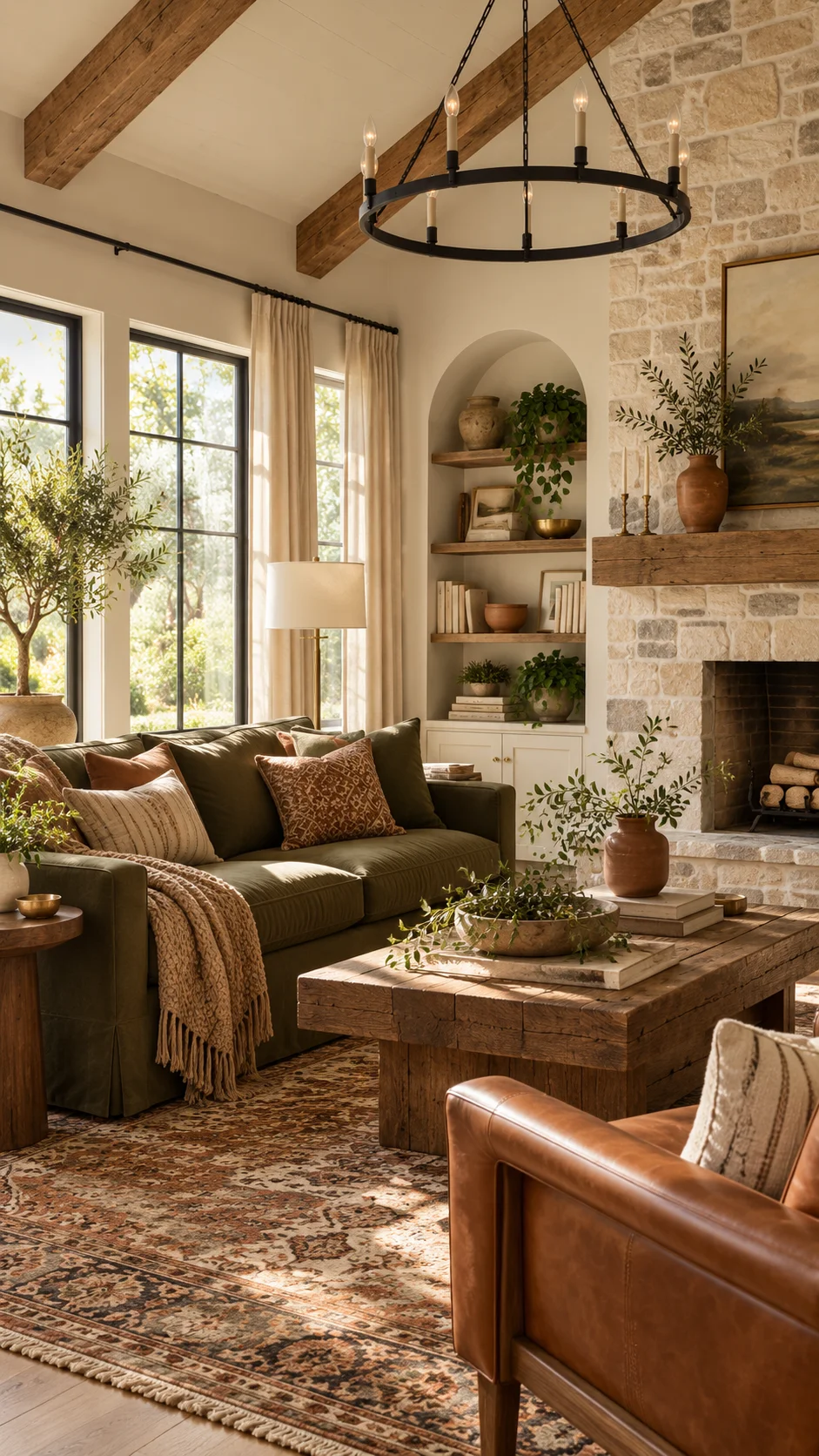
4. Layer Olive, Rust, Brown, and Warm Earth Tones
A living room can feel sophisticated without relying on dramatic color contrast.
Keep the palette within a warm family using olive green, cognac, rust, warm brown, brass, and cream.
Repeat those colors in different materials—a green sofa, worn wood console, brass light, terracotta pottery, and patterned rug, for example.
The room gains variation through texture rather than through many unrelated colors.
Easy formula: choose one earthy color for upholstery, one wood tone, and one warm metallic accent.
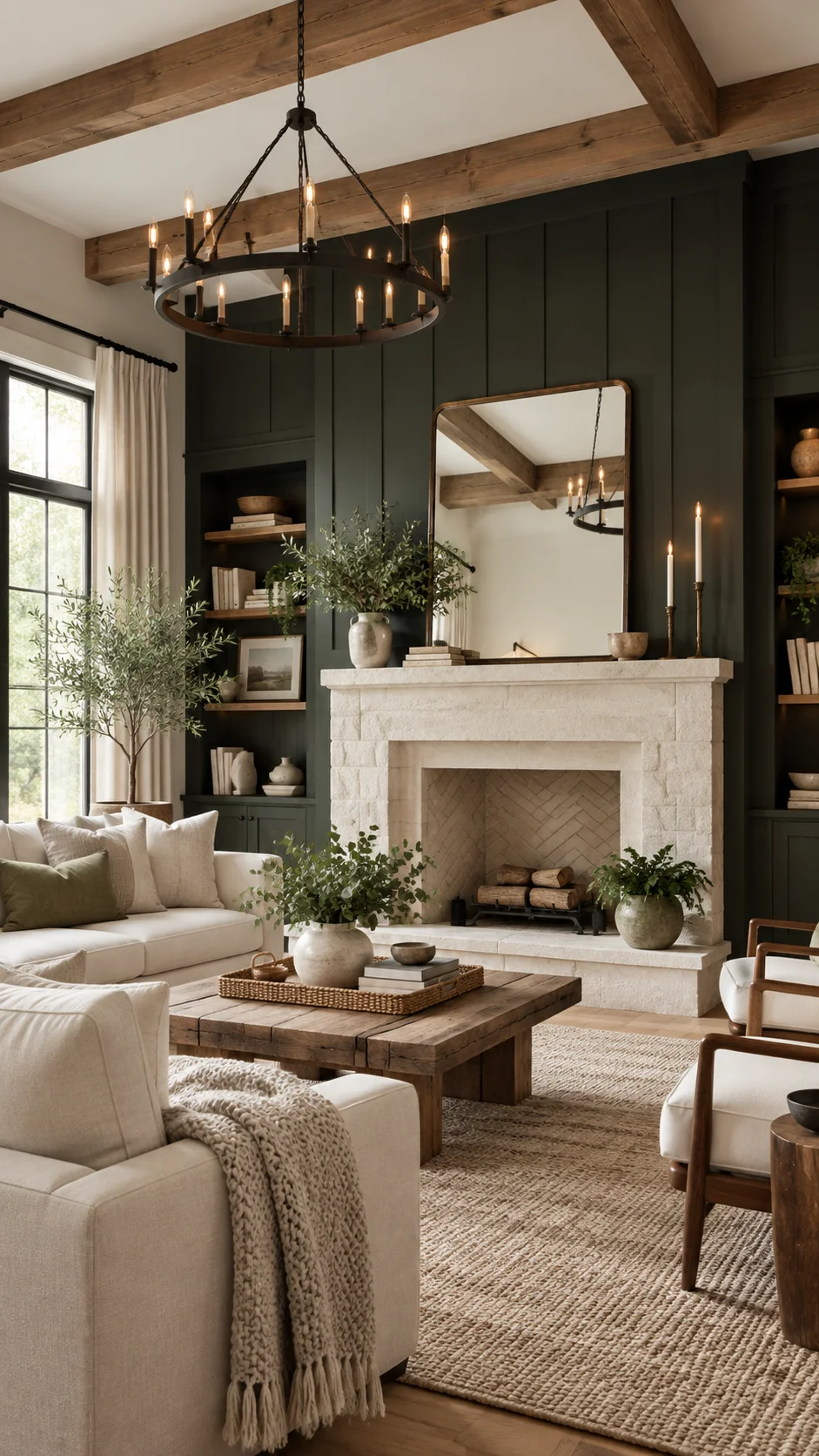
5. Pair a Dark Accent Wall With a Light Fireplace
Strong contrast can make a traditional architectural feature feel much more current.
Try deep green or charcoal paneling around a pale stone or painted fireplace.
Keep the sofa, curtains, and larger textiles neutral so the wall remains the main dramatic element.
Wood and woven materials can bridge the contrast between the dark wall and pale fireplace.
Design tip: choose either the wall or fireplace to be visually dominant. Making both highly decorative can create competition.
For more wall-focused inspiration, see these farmhouse accent wall layout ideas.
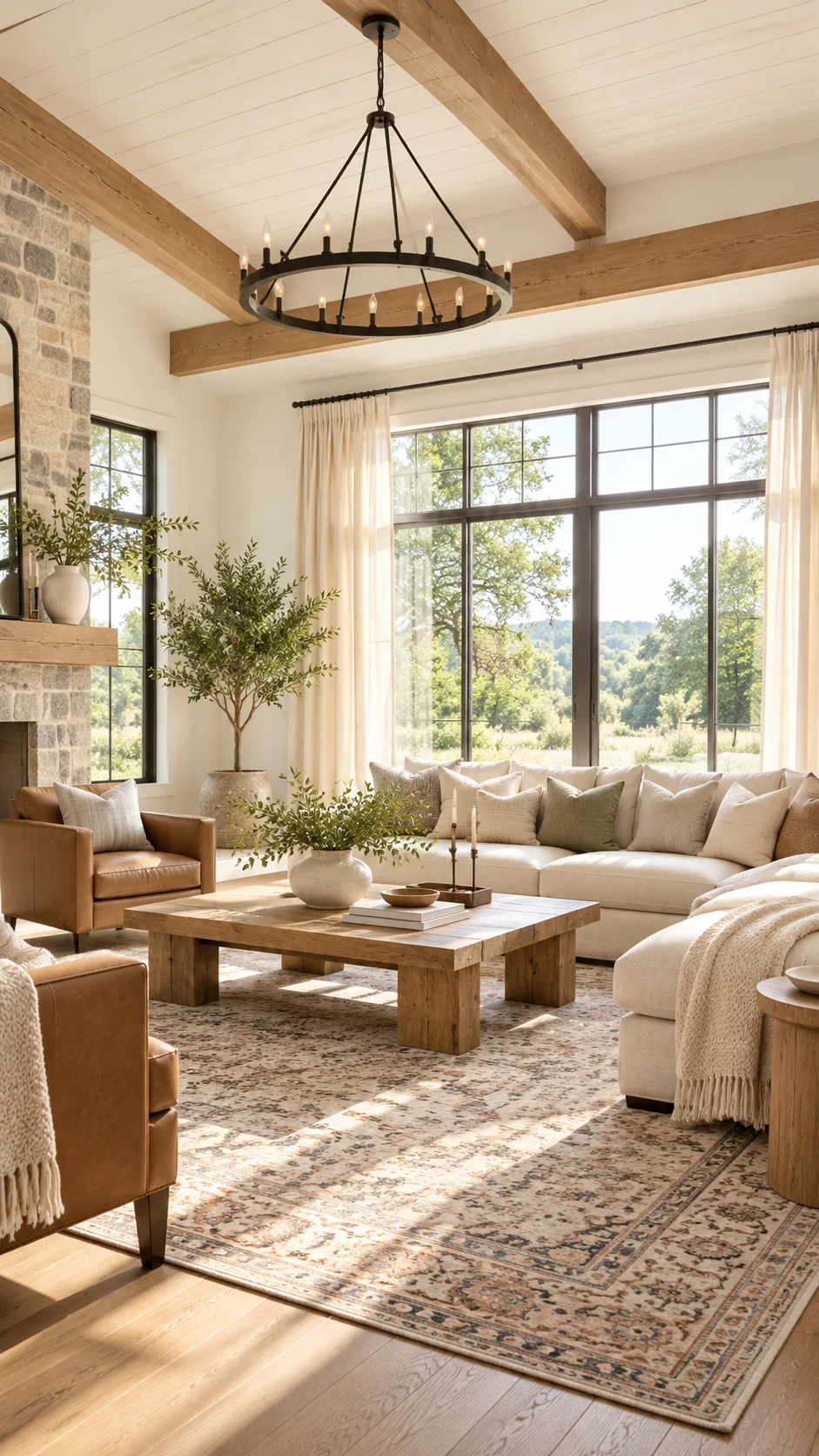
6. Let Natural Light Lead the Room
Large windows can become part of the design rather than something hidden behind heavy curtains.
Use soft linen-look curtains, warm neutral seating, and a natural wood coffee table so the room responds to daylight instead of competing with it.
A patterned rug can add just enough visual weight to stop the room from becoming overly pale.
Airy-room tip: keep tall furniture away from important windows whenever possible so daylight can travel deeper into the room.
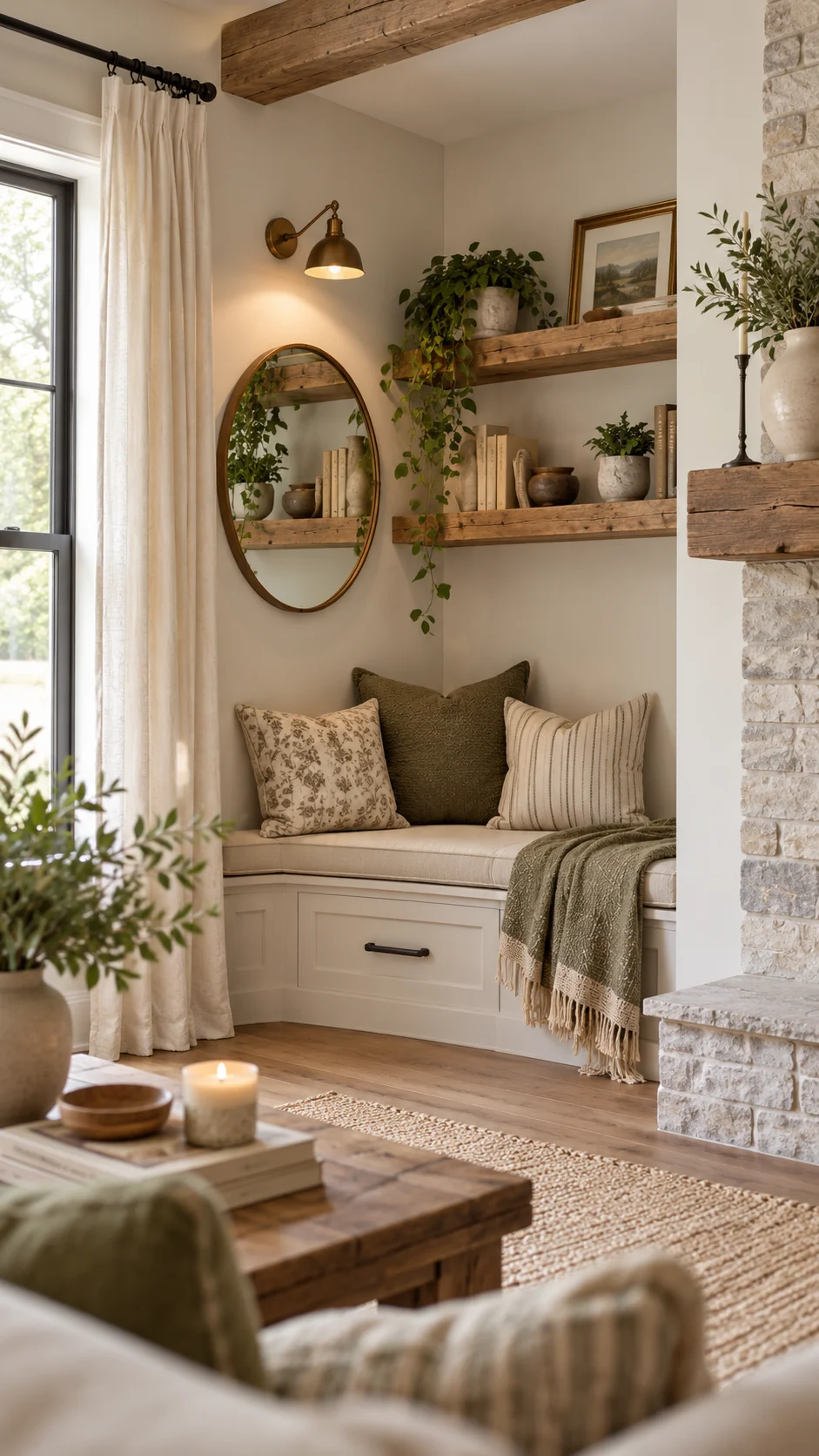
7. Turn an Empty Corner Into a Cozy Nook
You do not always need another full-size sofa to make unused living-room space functional.
A built-in or freestanding bench, one compact chair, cushions, wall shelves, and a round mirror can transform a forgotten corner into a reading or conversation nook.
Use warm wood and muted green or neutral upholstery to tie the nook into the larger room.
Small-space idea: choose one seat with storage underneath when floor space is tight.
You can find more ways to work with tight layouts in these living room layout ideas for small spaces.
8. Build a Soft Farmhouse Glow With Layered Lighting
A cozy living room rarely depends on one overhead fixture.
Combine table lamps, floor lamps, wall sconces, and natural window light so the room has several softer pools of illumination.
Use warm bulbs and pair them with neutral upholstery, textured throws, and wood furniture.
The room will feel more dimensional in the evening because corners remain softly illuminated rather than completely dark.
Lighting rule: distribute light at several heights instead of making the ceiling fixture do all the work.
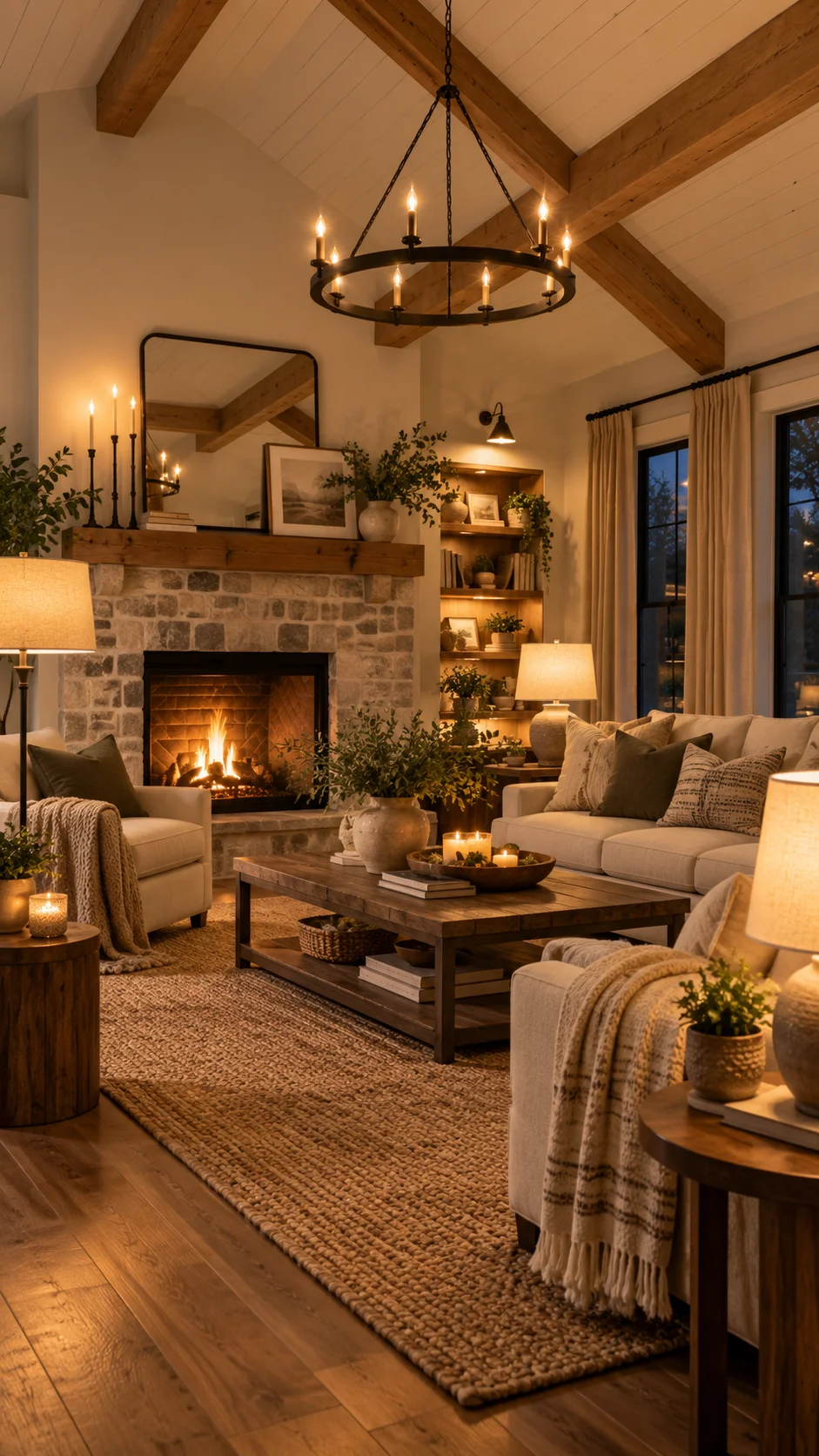
Amazon Find: Warm Farmhouse Floor Lamp
A simple floor lamp can create a softer evening layer beside a sofa or reading chair while keeping table surfaces free.
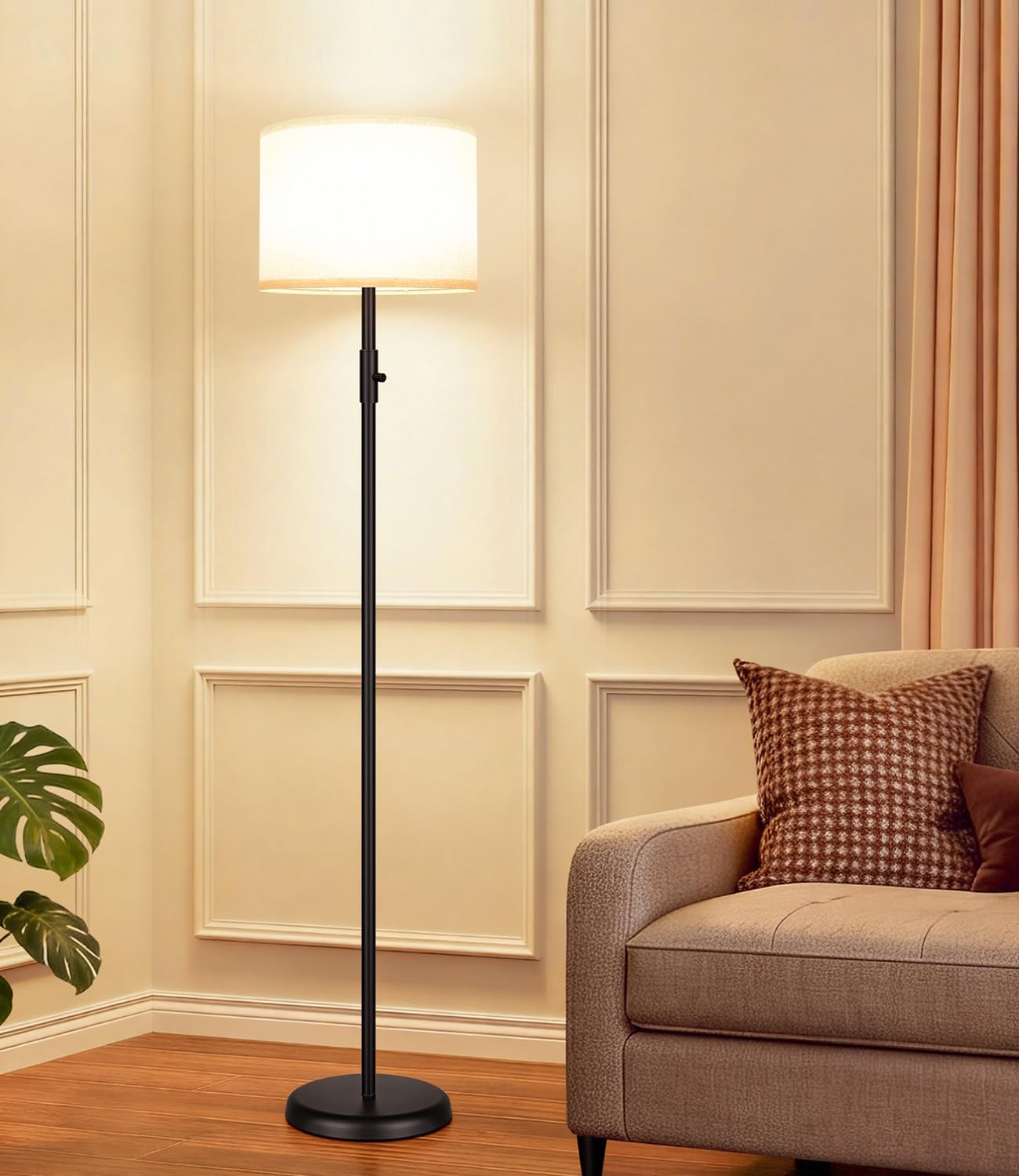
9. Anchor an Open Living Room With Muted Green
Open-plan spaces often need a visual anchor so the living area feels distinct from the kitchen or dining room.
A muted olive or sage wall can define the seating area without physically dividing the room.
Pair it with beige upholstery, a wood table, jute or woven rug, and warm pendant lighting.
Repeat green in only one or two smaller accents elsewhere so the palette feels connected.
Open-plan tip: use the same wood or woven texture in adjoining zones to create continuity.
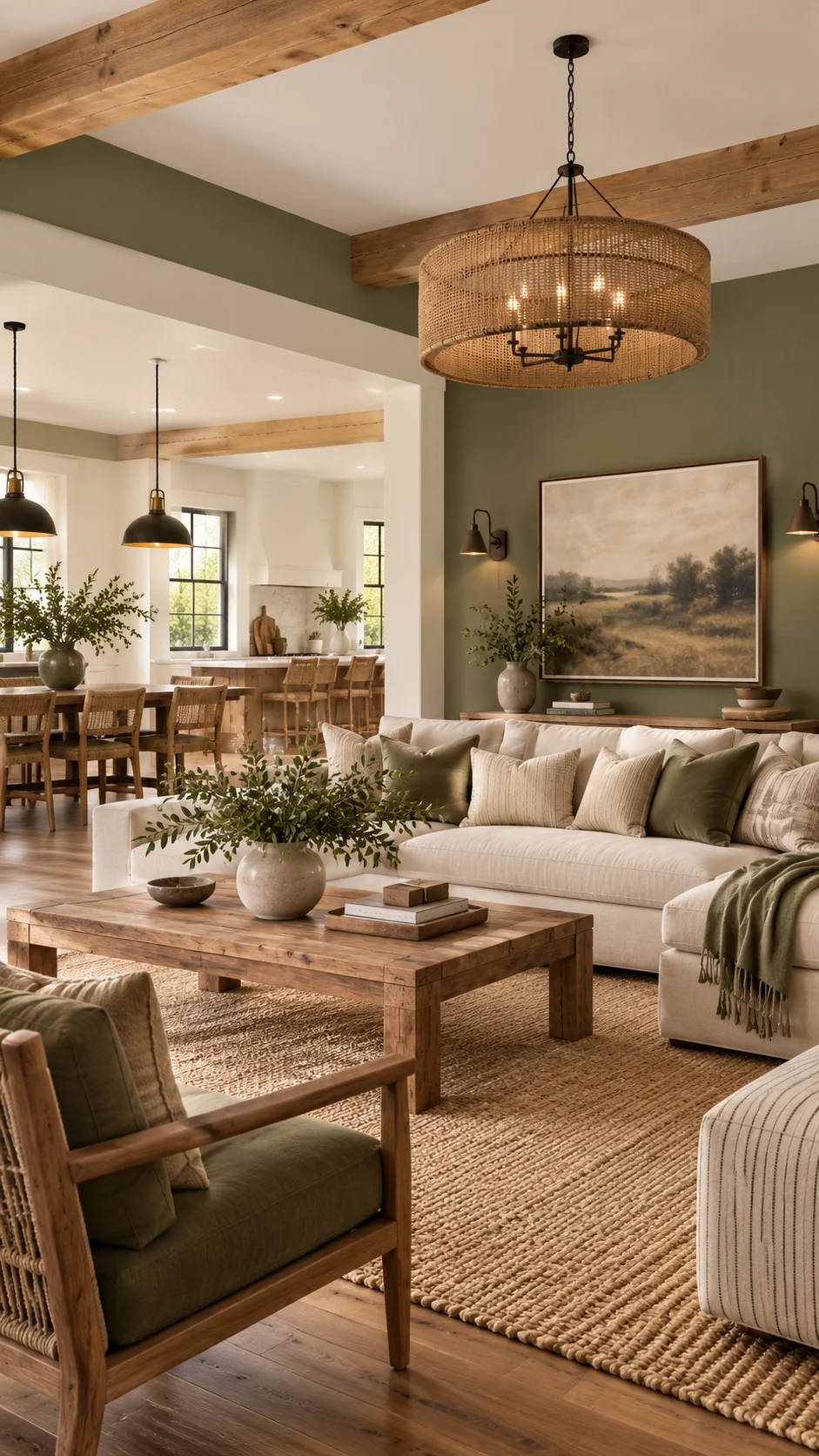
10. Make a Stone Fireplace the Quiet Focal Point
Stone brings enough natural variation that it does not need much additional decoration.
Pair a textured stone fireplace with a thick wood mantel, beige upholstery, taupe pillows, and a woven rug.
A round coffee table can soften the stronger lines of the fireplace and mantel.
Keep the mantel simple with one mirror, artwork, vessel, or restrained greenery arrangement.
Serene palette: use beige, taupe, natural stone, warm wood, and one dark accent.
11. Anchor the Seating Area With a Cozy Rug
A rug is one of the easiest ways to make a seating arrangement feel complete.
Choose a vintage-inspired, lightly patterned, or neutral woven rug with enough size to visually connect the sofa and chairs.
The rug can also bring subtle pattern into an otherwise neutral living room without adding more small decor.
Placement tip: a rug that reaches beneath at least the front portion of the main seating usually feels more connected than a tiny rug floating beneath the coffee table.
12. Layer Natural Light With Lamps Instead of Harsh Overhead Light
Even a beautifully decorated living room can feel flat when all the illumination comes from the ceiling.
Let daylight provide the main daytime light, then supplement it with table lamps, wall lights, and a floor lamp as the evening gets darker.
Choose warm light and use several smaller sources rather than one extremely bright bulb.
Atmosphere tip: lamps near wood, linen, and stone help those textures become much more noticeable after sunset.
13. Add Built-In Cabinets for Calm, Hidden Storage
A timeless room still needs somewhere to hide everyday clutter.
Built-in cabinets or built-in-look storage around a fireplace or media wall can provide structure without adding many separate pieces of furniture.
Paint the cabinetry warm white, muted green, greige, or another quiet color that relates to the walls.
Keep closed storage at the bottom and use open shelving only where you actually want to display objects.
Built-in effect: matching the cabinetry color closely to the wall can make affordable storage feel more architectural.
14. Decorate With Fewer but More Meaningful Objects
A collected living room does not require every shelf and table to be full.
Use family photographs, handmade pottery, a few books, vintage objects, or sculptural pieces that have a reason to be there.
Leave space around these items so each one has visual importance.
Editing tip: if a shelf feels busy, remove half the pieces and rebuild the arrangement around the objects you care about most.
15. Bring Greenery Into Empty Corners and Shelves
Plants add life to the neutral woods, whites, creams, and stone often used in modern farmhouse rooms.
Use a taller plant in an otherwise empty floor corner and smaller greenery on shelves or consoles.
A branch arrangement in a large vase can also create height without adding another piece of furniture.
Natural balance: spread greenery around the room rather than clustering many small plants in one area.
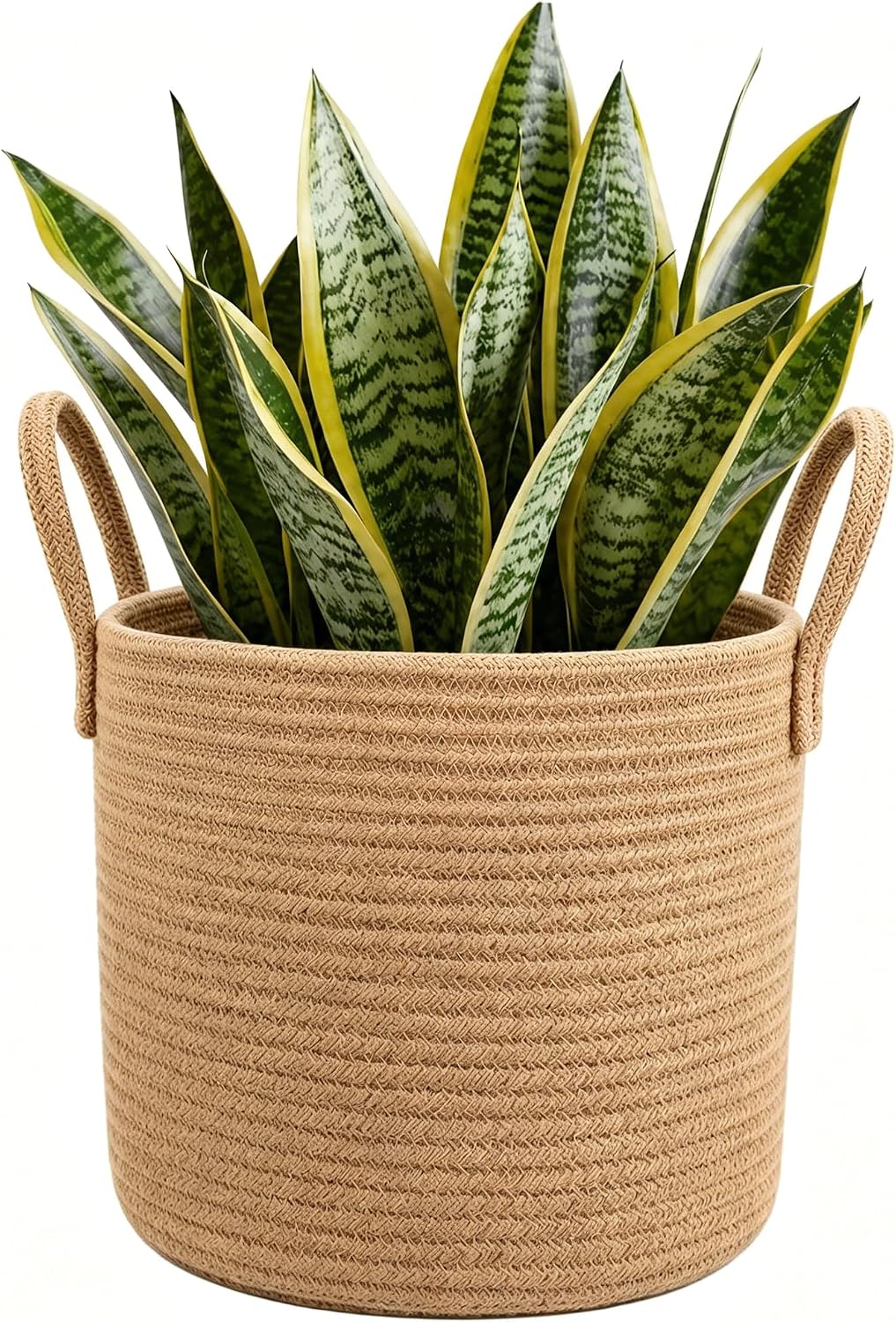
Amazon Find: Woven Plant Basket
A woven basket-style planter cover can add soft natural texture around larger plants while tying into rugs and wood furniture.
16. Use Relaxed Symmetry Instead of Perfect Matching
Symmetry can make a living room feel calm, but perfect matching can make it look overly formal.
Try two similar chairs facing a sofa, matching lamps on opposite sides of a console, or shelves with approximately equal visual weight.
Then loosen the arrangement with different pillows, organic greenery, books, and objects with varied heights.
Balance tip: match the large shapes and let the smaller accessories vary.
17. Keep Coffee Table Styling Casual
Coffee-table decor should not prevent you from actually using the table.
Start with a small tray or low bowl, add a short stack of books, and finish with one vase or simple object.
The grouping should be easy to move when you need space for drinks, games, or everyday family life.
Easy formula: books + tray + one organic element is usually enough.
If you like a more relaxed, layered version of this natural look, these boho living room ideas include additional ways to use wood, texture, greenery, and vintage pieces.
18. Choose One Statement Art Piece With Personality
A neutral room benefits from one piece of artwork that gives the wall an obvious focal point.
Try an oversized landscape, black-and-white photograph, quiet abstract painting, or meaningful family artwork.
Keep the surrounding wall relatively simple so the artwork does not compete with signs, shelves, clocks, and several unrelated frames.
Scale tip: above a sofa or console, choose artwork substantial enough to relate visually to the furniture beneath it.
For multi-frame displays, see these gallery wall layout ideas before hanging your arrangement.
A Simple Joanna Gaines-Inspired Living Room Formula
You do not need every feature in this article. A simpler formula can create the same overall direction:
- Warm neutral walls in white, cream, beige, or greige.
- Comfortable neutral seating with relaxed upholstery.
- One natural focal material such as wood, brick, or stone.
- One darker contrast through black, charcoal, or deep green.
- One vintage or collected piece for character.
- A large rug to define the seating area.
- Layered lighting rather than one overhead source.
- Greenery and meaningful decor in restrained amounts.
Best Color Palettes for This Look
- Classic modern farmhouse: warm white, natural oak, black, and olive.
- Soft rustic: cream, taupe, weathered wood, and muted green.
- Moody farmhouse: charcoal, beige, medium wood, and aged brass.
- Earthy modern: olive, rust, cream, walnut, and black.
- Stone neutral: greige, taupe, limestone, oak, and dark bronze.
How to Get the Look Without a Full Renovation
You can move toward this style gradually instead of replacing the entire living room.
- Rearrange the seating first: build a conversation area before buying decor.
- Change paint strategically: warm neutral walls or one muted accent wall can have a large impact.
- Upgrade the rug: a correctly scaled rug can make existing furniture feel more intentional.
- Add wood: use a coffee table, side table, bench, or shelf.
- Change pillows and throws: linen, cotton, wool-look, and knit textures add depth inexpensively.
- Shop vintage slowly: one old stool, cabinet, frame, or side table can add more character than several new farmhouse accessories.
- Add lamps: lighting

Ankit is an engineer by profession and blogger by passion. He is passionate to do all the stuff such as designing the website, doing the SEO, researching for the content, writing tech blog posts and more.

