

A good-looking home office does not have to start with an expensive designer desk. Some of the most polished workspaces can be created by combining simple IKEA pieces with paint, hardware, storage units, countertops, shelves, or a few clever DIY changes.
The trick is choosing hacks that improve both the appearance and function of the workspace. A basic tabletop can look much more custom with gold legs, a wood surface, or matching drawer units, while inexpensive IKEA storage can turn wasted wall and under-desk areas into practical organization.
These genius IKEA desk hacks include standing desks, floating desks, corner workstations, hidden storage, monitor shelves, rolling drawers, pegboards, and compact solutions for small rooms—all designed to give you an expensive-looking workspace without the custom-office price.
As an Amazon Associate, I earn from qualifying purchases. This article contains affiliate links, which may earn us a commission at no extra cost to you.
Quick Picks for IKEA Desk Hacks
- For the lowest budget: combine a simple IKEA tabletop with basic legs.
- For an expensive look: upgrade ordinary desk legs with a metallic finish.
- For maximum storage: use KALLAX, TROFAST, RAST, or ALEX units as desk support.
- For an awkward corner: build an L-shaped IKEA workstation.
- For small rooms: create a floating wall-mounted desk.
- For working while standing: use adjustable IKEA legs or a removable desktop riser.
- For cable clutter: combine SKÅDIS with cable holders and a mounted power station.
- For flexible storage: put an ALEX drawer unit on locking casters.
How to Make an IKEA Desk Look More Expensive
The difference between an IKEA desk that looks basic and one that looks custom often comes down to the finishing details.
You do not need to change every component. One upgraded surface, matching drawer bases, better cable management, and a coordinated wall treatment can be enough to make an inexpensive desk look much more intentional.
| Basic IKEA Element | Upgrade | Finished Look |
|---|---|---|
| Plain desk legs | Gold, brass, black, or wood finish | More custom |
| Simple tabletop | Wood top or quality contact finish | Designer-style surface |
| Open wall | SKÅDIS or floating shelf | Built-in organization |
| Visible cables | Mounted power and cable management | Cleaner workstation |
| Separate storage | Matching drawer units | Custom built-in effect |
16 Genius IKEA Desk Hacks That Look Expensive on a Budget
1. Build an Adjustable Counter-Height IKEA Desk
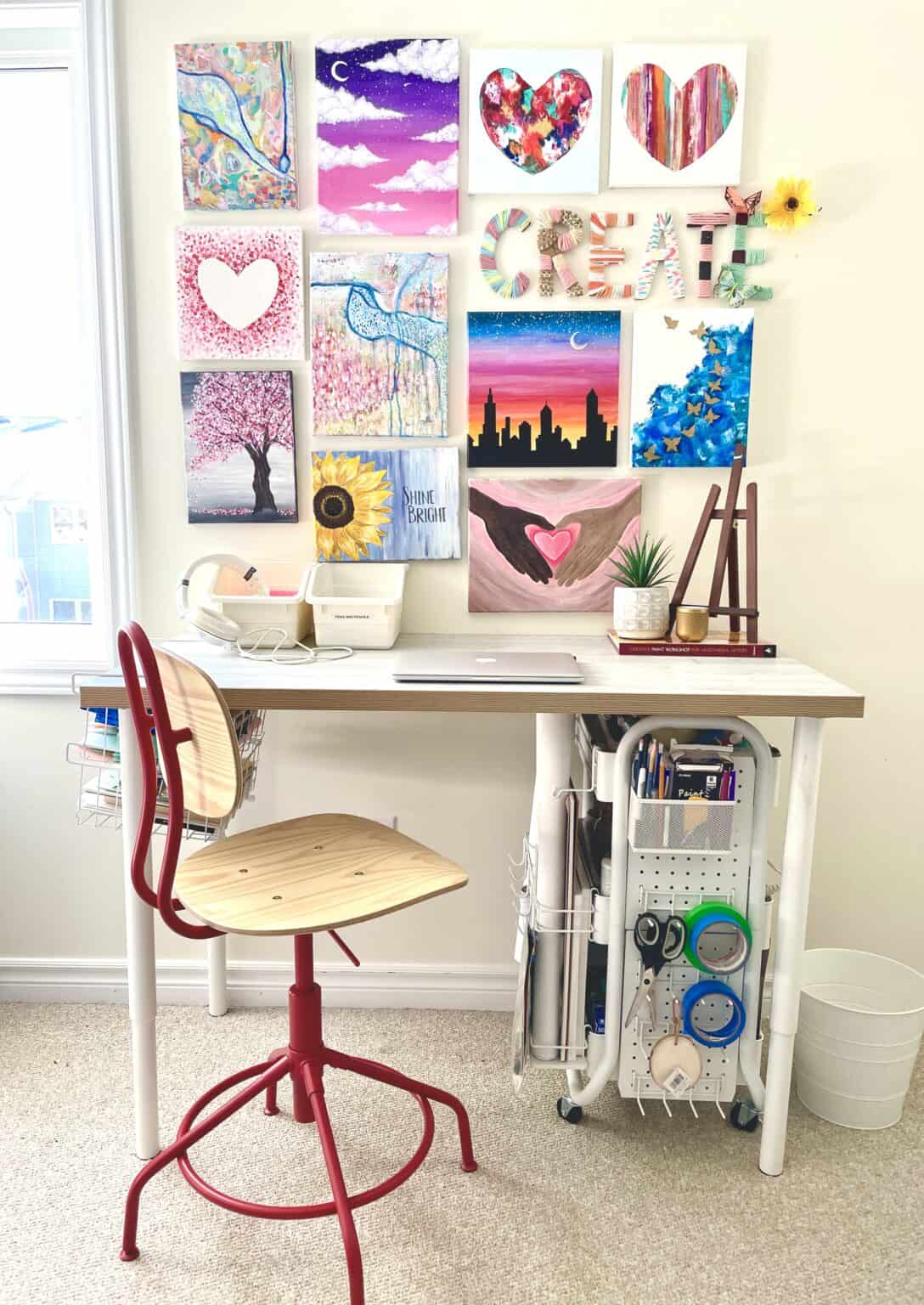
One of the easiest IKEA hacks for a craft room or flexible workspace is to combine a compatible tabletop with adjustable OLOV-style legs.
Instead of being limited to a standard seated desk height, adjustable legs allow you to raise the surface for crafting, wrapping gifts, sewing, drawing, or other projects where standing feels more comfortable.
The extra height also creates useful room underneath for a rolling cart or storage bins.
Make it look expensive: choose a simple white or wood-look top and keep the legs and nearby storage in the same finish so the setup looks like one coordinated piece rather than separate components.
Important: choose your finished height based on what you plan to do at the desk. A counter-height craft surface may not automatically be the correct standing height for computer use.
2. Create an Ultra-Budget Tabletop Desk
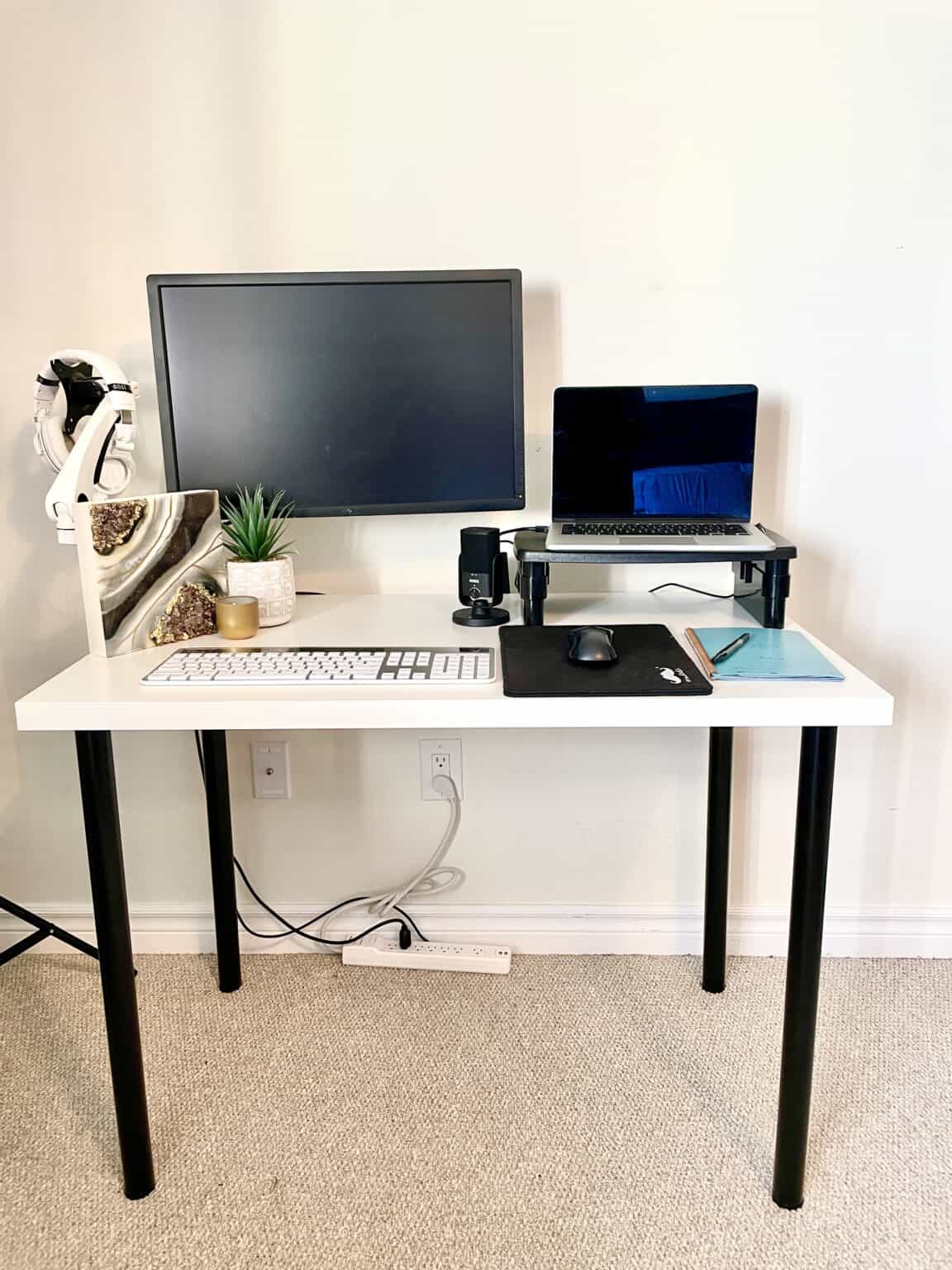
A basic IKEA tabletop paired with four simple legs is one of the cheapest ways to create a real workstation.
The simple construction is also an advantage because you can customize the desk gradually instead of paying for everything at once.
Add a monitor arm to free up surface space, place a laptop riser underneath the screen, and use a coordinated desk mat to make the inexpensive tabletop feel more finished.
Designer trick: avoid filling the inexpensive desk with cheap-looking clutter. A clean surface, one lamp, one organizer, and hidden cables can make a budget setup look surprisingly polished.
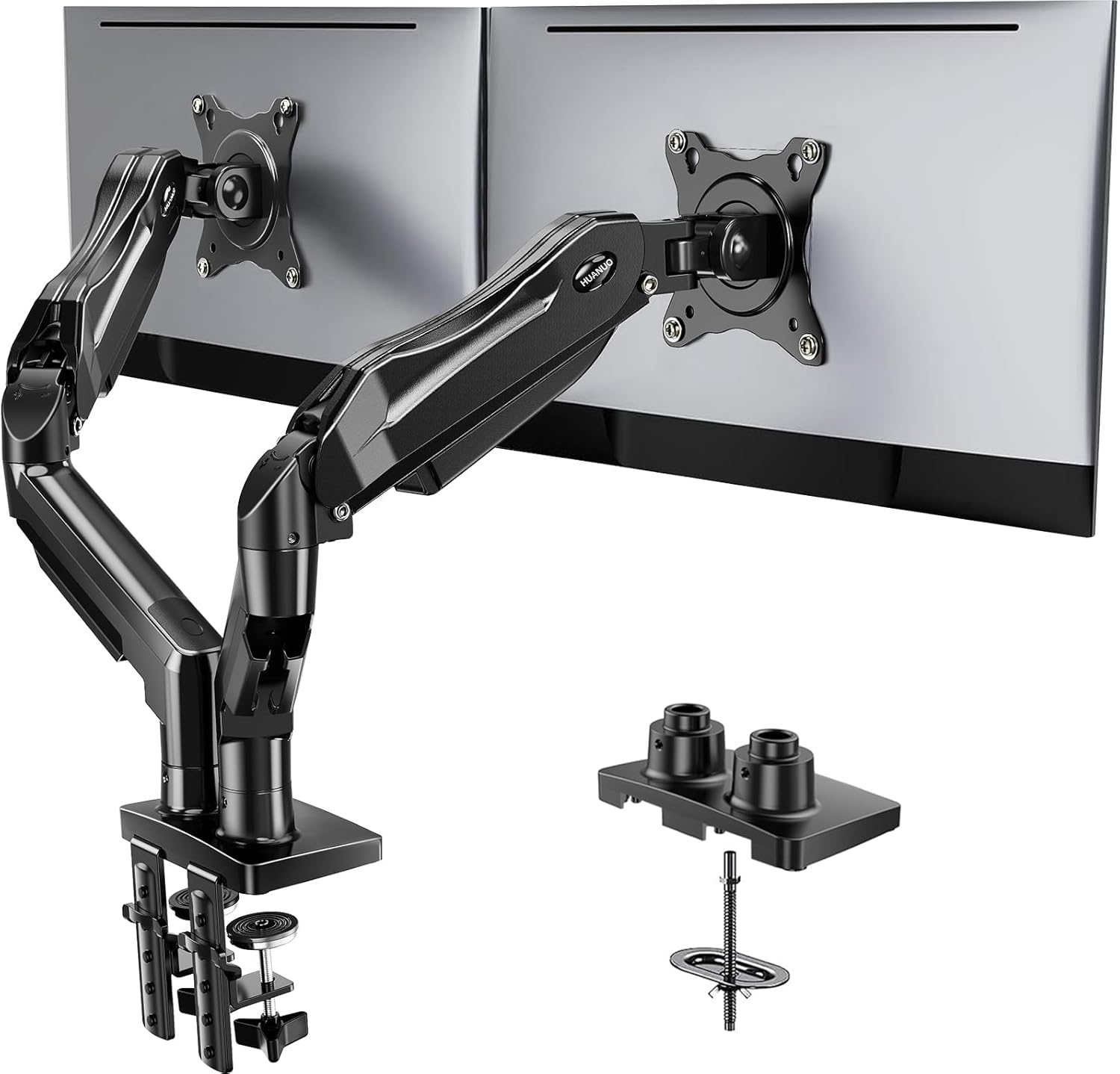
Amazon Find: Adjustable Monitor Arm
A monitor arm can free up valuable tabletop space and make a simple budget desk look cleaner and more professional.
3. Upgrade Plain IKEA Desk Legs With Gold
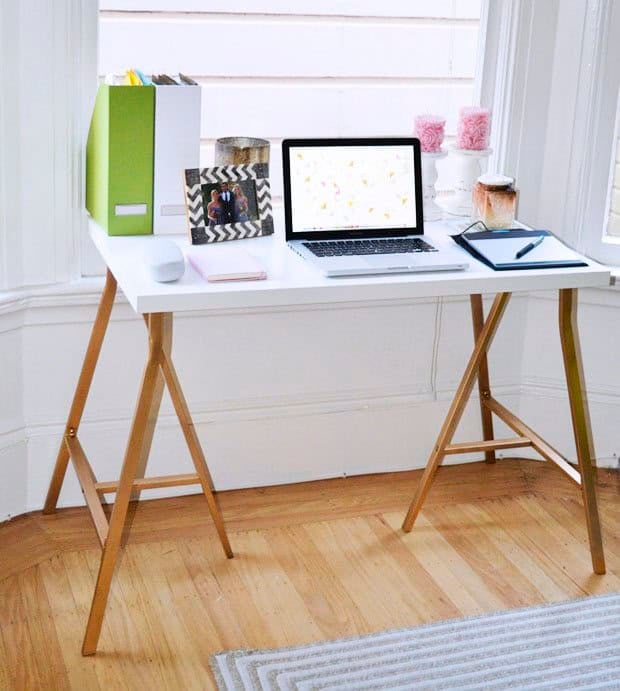
Metallic legs can completely change the appearance of an otherwise ordinary white desk.
Remove the legs if possible, prepare the surfaces properly for the selected coating, and give them a muted gold, brushed brass, or champagne finish.
Pair them with a white tabletop for a light glam office, or use a dark surface for a stronger contrast.
Expensive-looking detail: choose a satin or brushed metallic effect rather than extremely bright glittery gold.
Repeat the finish only once or twice elsewhere through a frame, lamp, or drawer pull so the desk feels coordinated instead of overly metallic.
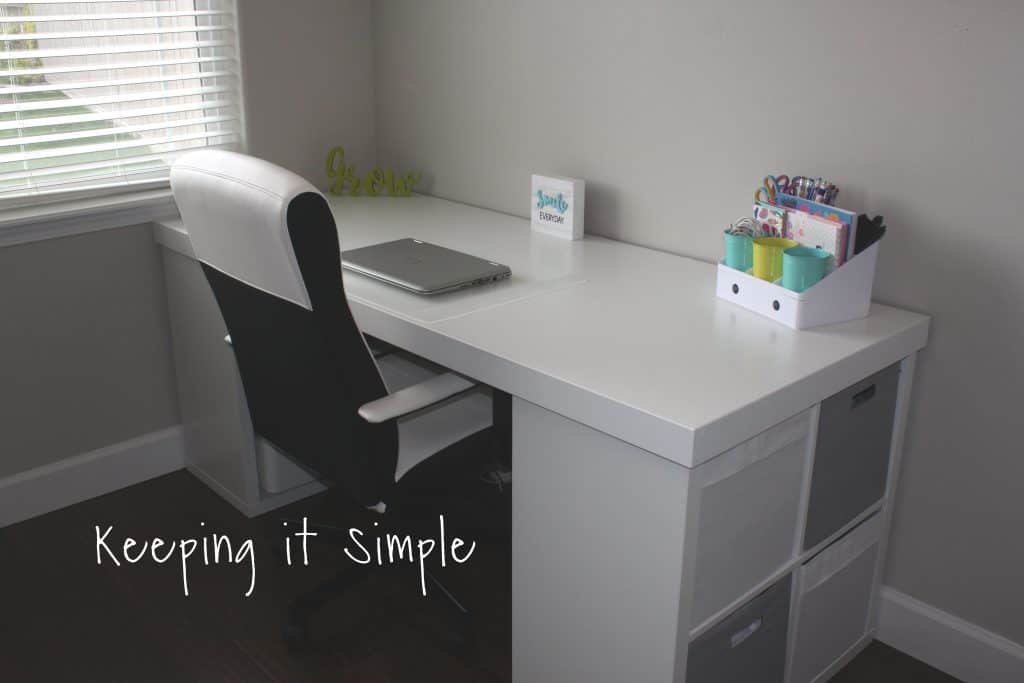
4. Turn KALLAX Storage Into a Desk Base
KALLAX-style cube storage can double as both desk support and office organization.
Place a suitable work surface across or beside the unit, then use the cubes for baskets, files, books, office supplies, printer paper, or decorative boxes.
This works particularly well in craft rooms and home offices where you need much more storage than a normal desk provides.
Make it look built-in: choose matching storage bins, keep visible clutter limited, and use a tabletop that visually connects to the rest of the room.
You can also leave some cubes open for books and use doors or baskets on others to hide less attractive supplies.
5. Build an IKEA Corner Desk
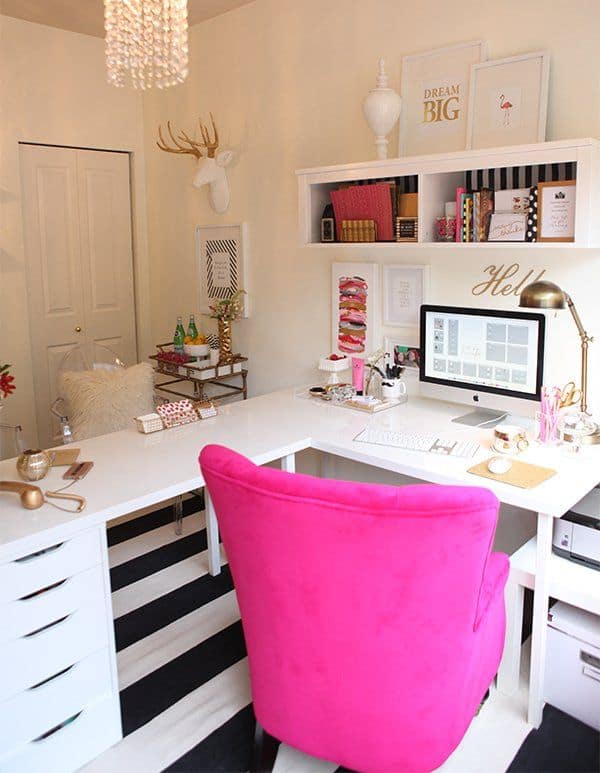
A corner workstation can turn two unused wall sections into a surprisingly large office.
Combine compatible IKEA tabletops in an L-shape and support them securely with legs, drawers, or appropriate brackets.
Use one side for the computer and the other for writing, paperwork, crafting, or a printer.
Layout tip: keep the inner corner relatively clear. Filling it with organizers can make the largest part of the desk difficult to reach.
For more ideas on making awkward corners useful, see these ways to better use corner space.
6. Make a Budget IKEA Standing Desk
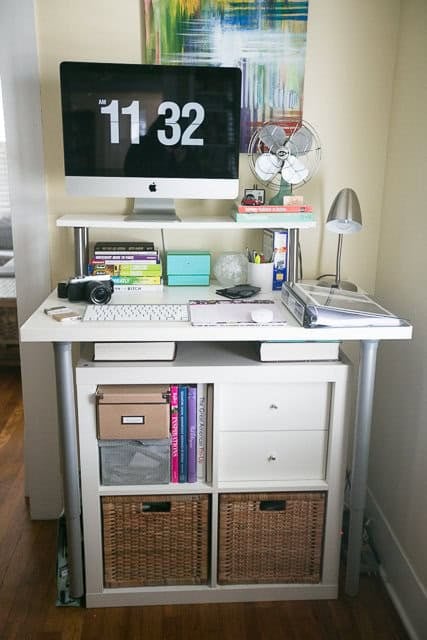
Standing desks can become expensive quickly, but an IKEA tabletop paired with adjustable supports can create a simpler DIY alternative.
The most important part is choosing the height carefully rather than simply making the desk as tall as possible.
Position the keyboard and monitor for comfortable use and make sure the structure remains stable at the intended height.
Style upgrade: use matching legs and a clean wood or white top, then route the cords down one leg so the standing desk does not look temporary.
7. Create a TROFAST Craft Desk With Hidden Storage
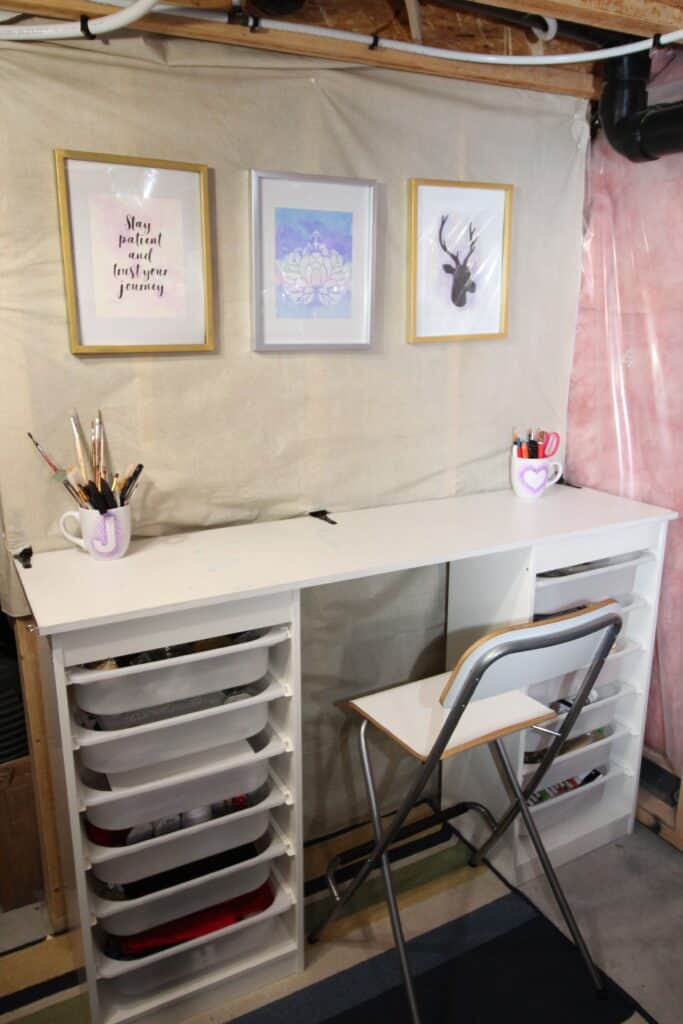
TROFAST-style storage bases are useful for a craft or hobby workstation because supplies remain close to the surface without being piled on top of it.
Use two storage frames or suitable supports beneath a sturdy worktop and assign the bins to categories such as paper, paints, fabric, tools, stationery, or wrapping supplies.
A counter-height version can also provide a comfortable surface for projects where you move around frequently.
High-end look: choose the same bin color throughout and keep the worktop simple. Repeating one neutral finish helps the storage-heavy desk look much calmer.
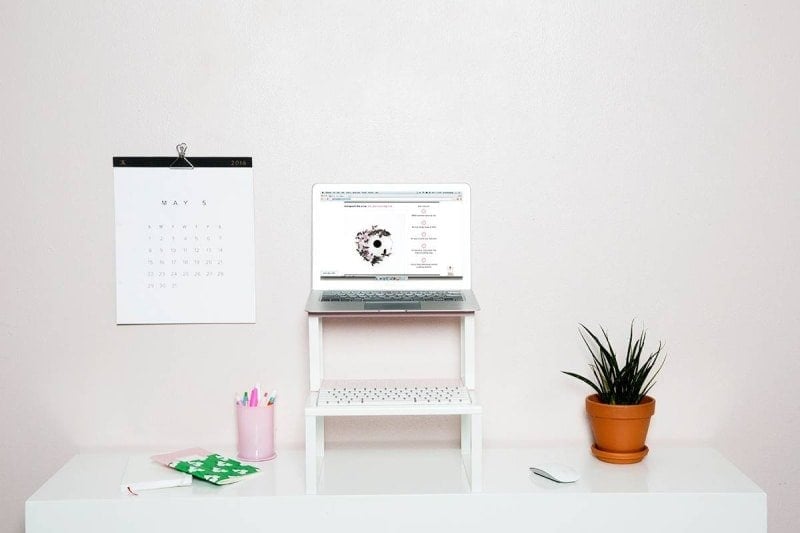
8. Make a Portable Standing Desk Riser
You do not necessarily need to replace your existing desk to experiment with standing while you work.
A removable riser made from sturdy IKEA shelf inserts or similar stackable components can raise a laptop or small work surface temporarily.
Because the setup can be removed, it works well in rental homes, multipurpose rooms, or workspaces shared by more than one person.
Best for: lightweight laptop work rather than heavy desktop equipment unless the riser is specifically designed and rated to support it.
9. Turn a RÅSKOG Cart Into a Rolling Laptop Desk
A rolling utility cart can become a compact mobile workstation when you add a fitted top surface.
The lower shelves can hold notebooks, chargers, stationery, and other supplies while the top becomes a small laptop desk.
This is especially useful when the room serves several purposes and you do not want a permanent desk taking up floor space.
Small-space advantage: roll it beside a sofa or chair while working, then move it against a wall when you finish.
Keep expectations realistic: this type of surface works better for a laptop than a full desktop monitor setup.
10. Build a Floating Wall Desk
A floating desk can give a small office a much more custom appearance because there are no visible legs breaking up the floor.
Use a substantial tabletop supported by properly installed brackets or structural wall-mounted supports suitable for the expected load.
A shallower depth can work for laptop use, while monitor setups generally benefit from a deeper work surface.
Built-in effect: paint the supporting wall and desk components in coordinating colors and add one floating shelf above it.
Important: wall-mounted desks need secure structural installation. Follow the hardware manufacturer’s requirements and use suitable wall framing or professional help when needed.
11. Slide RAST Storage Under an Existing Desk
The empty space beneath a desk can often hold far more storage than people realize.
A compact RAST-style drawer unit can slide under many open desks and provide separate storage for stationery, cables, notebooks, tech accessories, and files.
Measure both the height and width of the opening before buying anything so you preserve enough legroom.
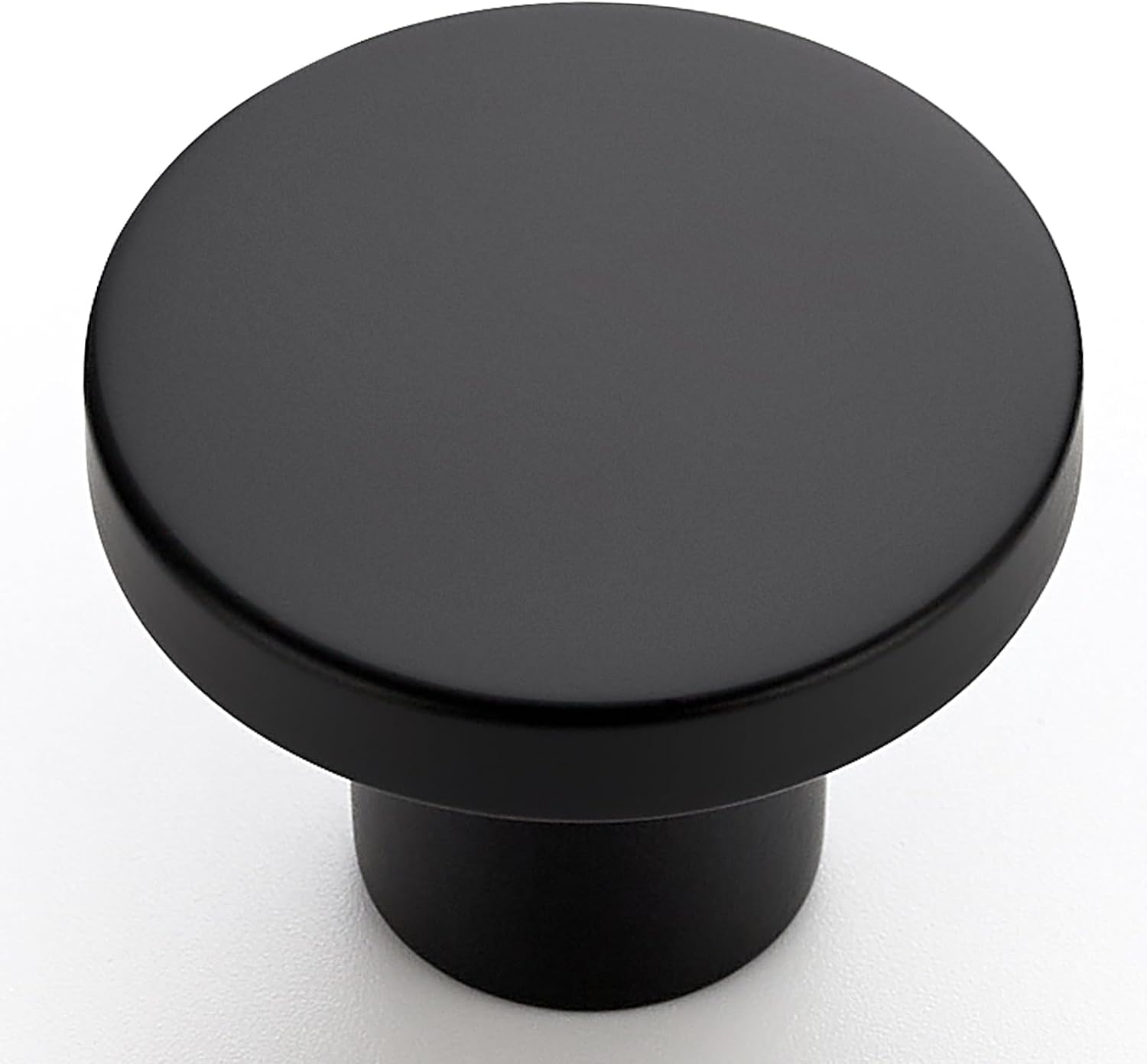
Make it look custom: paint or stain the drawer unit to coordinate with your desktop and replace simple knobs with more polished hardware.
Amazon Find: Modern Cabinet Knobs
Changing inexpensive drawer knobs is one of the easiest ways to give basic IKEA storage a more custom furniture look.
12. Add Floating Cabinet Storage With Task Lighting
A wall cabinet above the desk can solve two problems at once: unattractive office supplies disappear behind doors, while the underside becomes a useful location for task lighting.
Mount suitable cabinetry at a comfortable height and add an appropriate under-cabinet light beneath it.
The result feels closer to custom millwork than ordinary freestanding office furniture.
Designer detail: keep the cabinet fronts plain and handle-free, or add understated hardware that matches the rest of the room.
Use the closed storage for paperwork, extra chargers, stationery, and anything else you do not want visible during video calls.
13. Build a Floating Monitor Shelf Above the Desk
If your desk has enough width but feels crowded vertically, add a raised second level for the monitor.
A simple wood plank or shelf supported by short CAPITA-style legs can create a useful monitor riser with storage underneath.
Use the space beneath it for a keyboard when not in use, a laptop, notebooks, or small office supplies.
Polished look: match the riser top to the main desktop so it looks like part of the original desk rather than an accessory added later.
Measure screen positioning before building the riser so it works comfortably with your seated setup.
14. Install a SKÅDIS Pegboard Above the Desk
A modular pegboard can transform the wall above an IKEA desk into flexible storage without covering the actual work surface.
Use hooks for headphones, cups for pens and scissors, a small shelf for a speaker or decor, and cable accessories for charging cords.
The biggest advantage is that the arrangement can change as your work habits change.
Make it look expensive: keep some of the board empty. A carefully edited layout looks much better than filling every hole with an accessory.
For more ideas on organizing a compact workstation, see these budget-friendly work from home setup ideas.
15. Create a Wall-Mounted Power and Cable Station
Visible cables can make even an expensive desk look messy.
Use SKÅDIS accessories, cable hooks, reusable ties, and a safely mounted power strip to move chargers and wiring away from the main desktop.
Group device cables together and route them down one controlled path rather than letting each cord fall separately behind the desk.
Clean-desk trick: mount charging accessories beside or behind the desk where they remain reachable but are not the first thing you see.
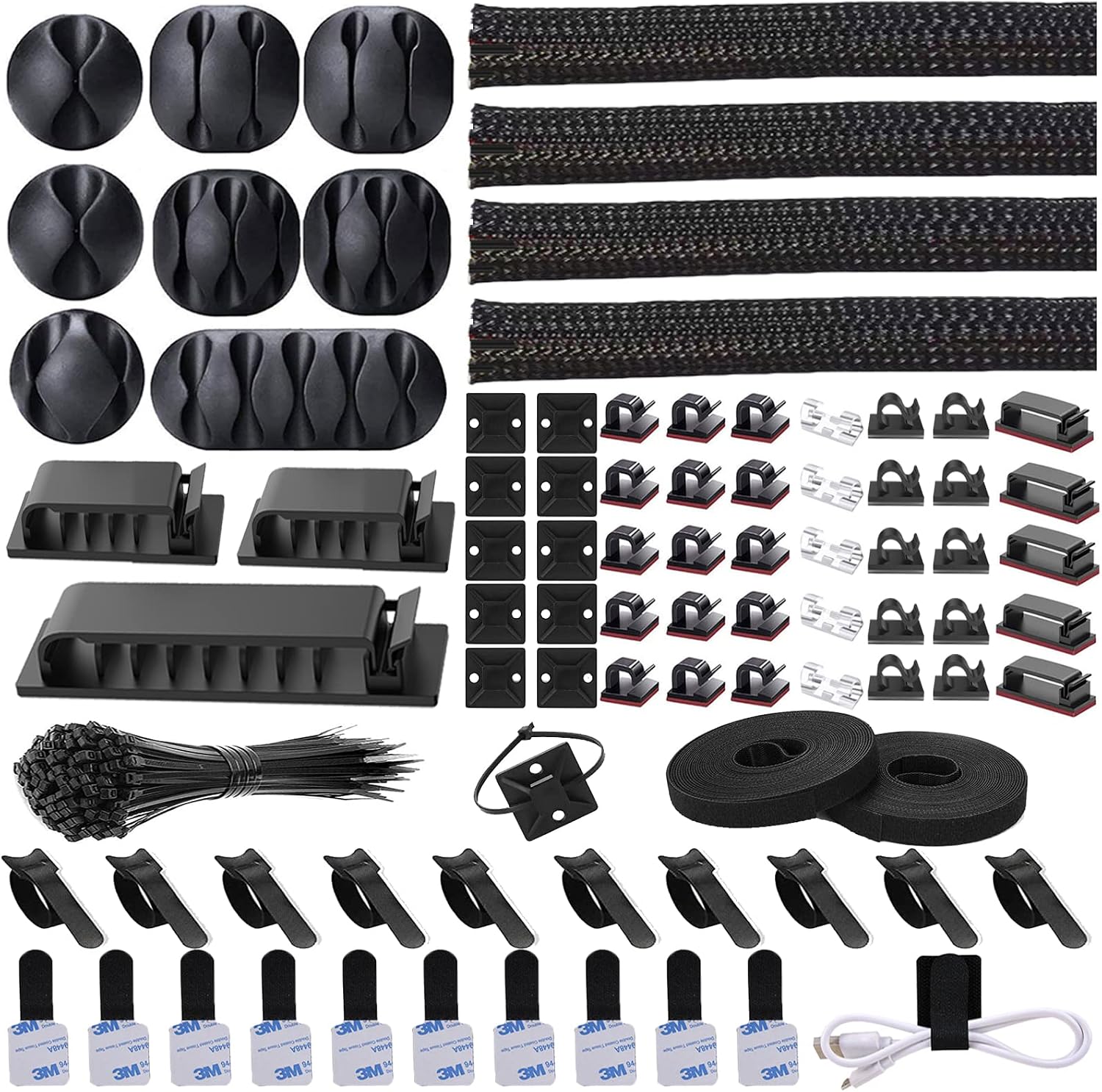
Amazon Find: Reusable Cable Ties
Reusable hook-and-loop ties can group monitor, charging, and accessory cables without permanently fastening them together.
16. Put ALEX Drawers on Locking Casters
ALEX drawers are useful desk storage on their own, but adding suitable locking casters makes them much more flexible.
You can pull the drawer unit out when you need access, move it aside for extra legroom, or reposition it when you change the office layout.
Keep frequently used stationery in the top drawers and less frequently used files or electronics below.
Custom look: match the caster finish to nearby hardware and replace the drawer pulls if your chosen ALEX version allows an easy decorative upgrade.
DIY note: use casters and fasteners appropriate for the furniture construction and expected loaded weight, and lock the wheels while the unit is stationary.
5 Finishing Touches That Make IKEA Desks Look Custom
- Upgrade the hardware: swap basic knobs for brass, black, wood, or leather-look pulls.
- Hide the wiring: route cables behind the desk instead of letting them hang freely.
- Repeat one material: use the same wood, metallic finish, or black accent several times.
- Add proper lighting: a good desk lamp or under-cabinet light instantly makes the workspace feel more finished.
- Leave open space: expensive-looking offices usually have fewer visible objects, not more.
Best IKEA Desk Hack for Different Spaces
| Space | Best Hack | Why |
|---|---|---|
| Tiny apartment | Floating wall desk | Uses little floor space |
| Craft room | TROFAST counter-height desk | Lots of accessible storage |
| Bedroom office | Simple tabletop desk | Light visual footprint |
| Large home office | Corner workstation | Maximum work surface |
| Shared room | Rolling cart desk | Easy to move away |
IKEA Desk Hack Checklist
- Measure the room: check desk width, depth, height, and chair clearance.
- Measure every IKEA component: do not assume two products will fit together.
- Plan the desk height: decide whether the surface is for sitting, standing, or craft work.
- Plan the load: consider monitors, books, equipment, and storage weight.
- Choose a finish: white, wood, black, or one metallic accent is usually enough.
- Plan storage: decide what needs drawers, bins, or vertical wall organization.
- Plan power access: know where computers, lamps, and chargers will connect.
- Manage cables before styling: do not leave cord organization until the end.
- Test stability: the finished structure should not wobble or shift.
- Add decor last: keep enough desk space available for actual work.
Common IKEA Desk Hack Mistakes
- Buying first and measuring later: IKEA components that look compatible online may have very different dimensions.
- Using unsuitable wall anchors: floating desks and loaded wall storage need appropriate structural support.
- Forgetting legroom: drawer units on both sides can leave less chair space than expected.
- Choosing style over stability: decorative legs still need to safely support the surface and equipment.
- Ignoring cable access: drilling and assembling everything before planning cables can create unnecessary work later.
- Making the desk too shallow: monitor setups generally need more depth than a laptop-only workspace.
- Overloading particleboard: use fasteners and hardware appropriate for the actual construction of each IKEA piece.
- Adding too many accessories: the desk will look more expensive when the finished setup remains visually calm.
Frequently Asked Questions
What is the easiest IKEA desk hack?
A simple tabletop with IKEA legs is one of the easiest options. You can later add drawer storage, a desk mat, monitor arm, pegboard, or upgraded legs without rebuilding the entire desk.
How do you make an IKEA desk look expensive?
Upgrade one or two visible elements rather than everything. A better-looking desktop, painted legs, new hardware, coordinated storage, hidden cables, and good lighting can make a major difference.
Can IKEA drawers support a desktop?
Some IKEA drawer units are commonly incorporated into desk configurations, but the finished design depends on the specific product, tabletop dimensions, expected load, and how everything is secured. Follow IKEA’s product guidance and add appropriate support where needed.
What is the best IKEA desk hack for a small room?
A shallow floating desk, mobile RÅSKOG-style workstation, or simple narrow tabletop desk can all work well. The best choice depends on whether you use a laptop or need enough depth for monitors.
How can I add storage without making my IKEA desk bulky?
Use vertical storage above the desk, a SKÅDIS pegboard, a compact drawer unit underneath, or a monitor shelf that creates an additional storage level.
Can I make an IKEA desk without drilling into the wall?
Yes. A freestanding tabletop-and-leg desk, KALLAX-based workstation, TROFAST craft desk, or rolling cart setup can avoid wall mounting. Floating desks and wall storage, however, need proper secure installation.
Recommended Finds for IKEA Desk Hacks
Buy accessories only after measuring your IKEA pieces and deciding how the desk will function. Small upgrades often have more impact than adding lots of decorative items.
- Adjustable monitor arm — for clearing tabletop space and creating a cleaner screen setup.
- Modern cabinet knobs — for making inexpensive drawers look more customized.
- Reusable cable ties — for grouping computer and charging cords.
- Under-desk cable tray — for keeping power strips and wires away from the visible work surface.
- Locking furniture casters — for appropriate rolling drawer and storage projects.
- LED under-cabinet task light — for desks with wall cabinetry or shelves above them.
- Drawer organizer inserts — for keeping RAST or ALEX-style storage from turning into cluttered catchall drawers.
Final Thoughts
The best IKEA desk hacks do not necessarily involve complicated woodworking or a large renovation budget.
Start with affordable IKEA components that solve the main problem in your workspace. That could mean adjustable legs for a standing desk, KALLAX or TROFAST storage, a floating surface for a tiny room, SKÅDIS organization above the desk, or ALEX drawers that can move when you need more legroom.
Then focus on the finishing details that make budget furniture look more expensive: coordinated finishes, upgraded hardware, clean cable management, proper task lighting, and enough empty space for the desk to breathe.
With careful measurements and a few thoughtful upgrades, basic IKEA pieces can become a workspace that feels much closer to custom office furniture without carrying the custom price.

Ankit is an engineer by profession and blogger by passion. He is passionate to do all the stuff such as designing the website, doing the SEO, researching for the content, writing tech blog posts and more.

