

A comfortable work-from-home setup does not need an expensive standing desk, designer chair, or completely separate office room. A few smart changes can make an ordinary desk or unused corner feel more organized, comfortable, and pleasant to work in.
The best budget-friendly work from home setup ideas usually focus on improving what you already have. Reusing furniture, organizing desk supplies, adding better lighting, moving the desk closer to natural light, and styling the walls can make a noticeable difference without requiring a large budget.
These 13 ideas combine practical workspace improvements with simple desk decor so your home office can look good while still staying functional for everyday work.
As an Amazon Associate, I earn from qualifying purchases. This article contains affiliate links, which may earn us a commission at no extra cost to you.
Quick Picks for a Budget Work From Home Setup
- For the biggest saving: repurpose a table or console you already own.
- For desk clutter: make simple organizers from jars, tins, or boxes.
- For a fresher desk: add one small plant.
- For a blank wall: create an inexpensive gallery wall or cork board.
- For better storage: install a pegboard above the desk.
- For a cozy workspace: add warm task lighting and a small rug.
- For a free refresh: rearrange the furniture before buying anything.
- For personality: display books and DIY artwork you already own.
What You Actually Need for a Work From Home Desk
Before decorating, focus on the pieces that affect how comfortably you can work.
You need enough surface space for your computer and normal work, suitable seating, usable lighting, access to power, and a basic system for organizing cables and supplies.
| Workspace Need | Budget Option | Priority |
|---|---|---|
| Desk | Existing table or console | High |
| Task lighting | Adjustable LED desk lamp | High |
| Organization | Jars, boxes, pegboard | Medium |
| Wall decor | DIY prints and photos | Optional |
| Comfort | Existing chair + cushion if appropriate | High |
If you are using an awkward corner rather than a full room, these ways to better use corner space include a dedicated corner-desk idea with planning tips for legroom, monitor depth, and outlet access.
13 Budget-Friendly Work From Home Setup & Desk Decor Ideas
1. Repurpose Furniture You Already Own
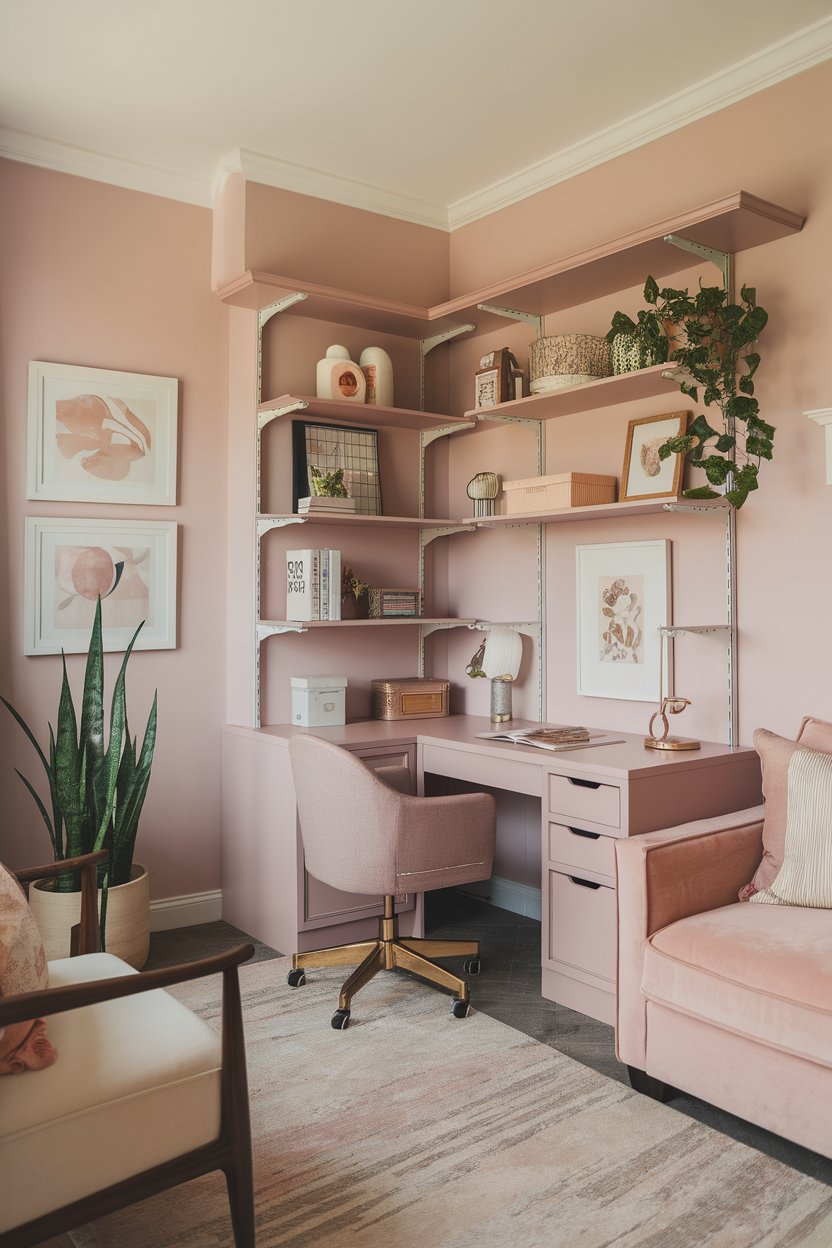
Before buying a dedicated office desk, look around your home for furniture that could do the same job.
A small dining table, console table, writing desk, or sturdy side table may already provide enough space for a laptop and basic office supplies.
If the surface is scratched or outdated, a fresh coat of paint, removable contact paper, or a simple desk mat can make it feel more intentional.
Measure the height and depth before committing to the setup. A decorative console that is too shallow may look good but leave very little room for a monitor or keyboard.
Budget tip: spend first on comfort and function rather than replacing furniture simply because it was not originally sold as office furniture.
2. Make Your Own Desk Organizers
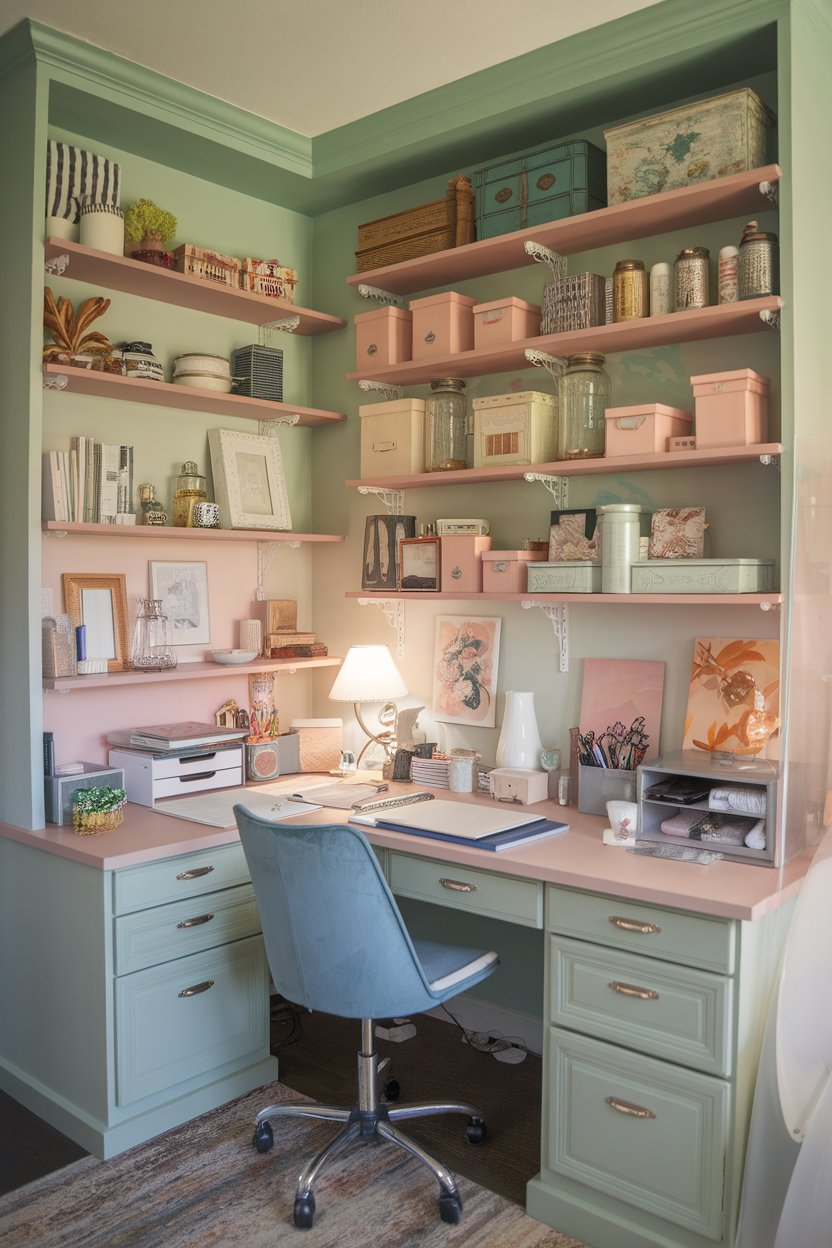
Desk organizers do not have to come from an expensive matching office collection.
Clean mason jars, food tins, small boxes, or sturdy packaging can be reused for pens, scissors, cables, sticky notes, and other everyday supplies.
Paint several containers the same color or wrap them in matching paper if you want the desk to look more coordinated.
Keep only frequently used items on the desktop and move extra supplies into drawers or shelves.
Desk rule: keep the center of the work surface open and use the outer edges for storage.
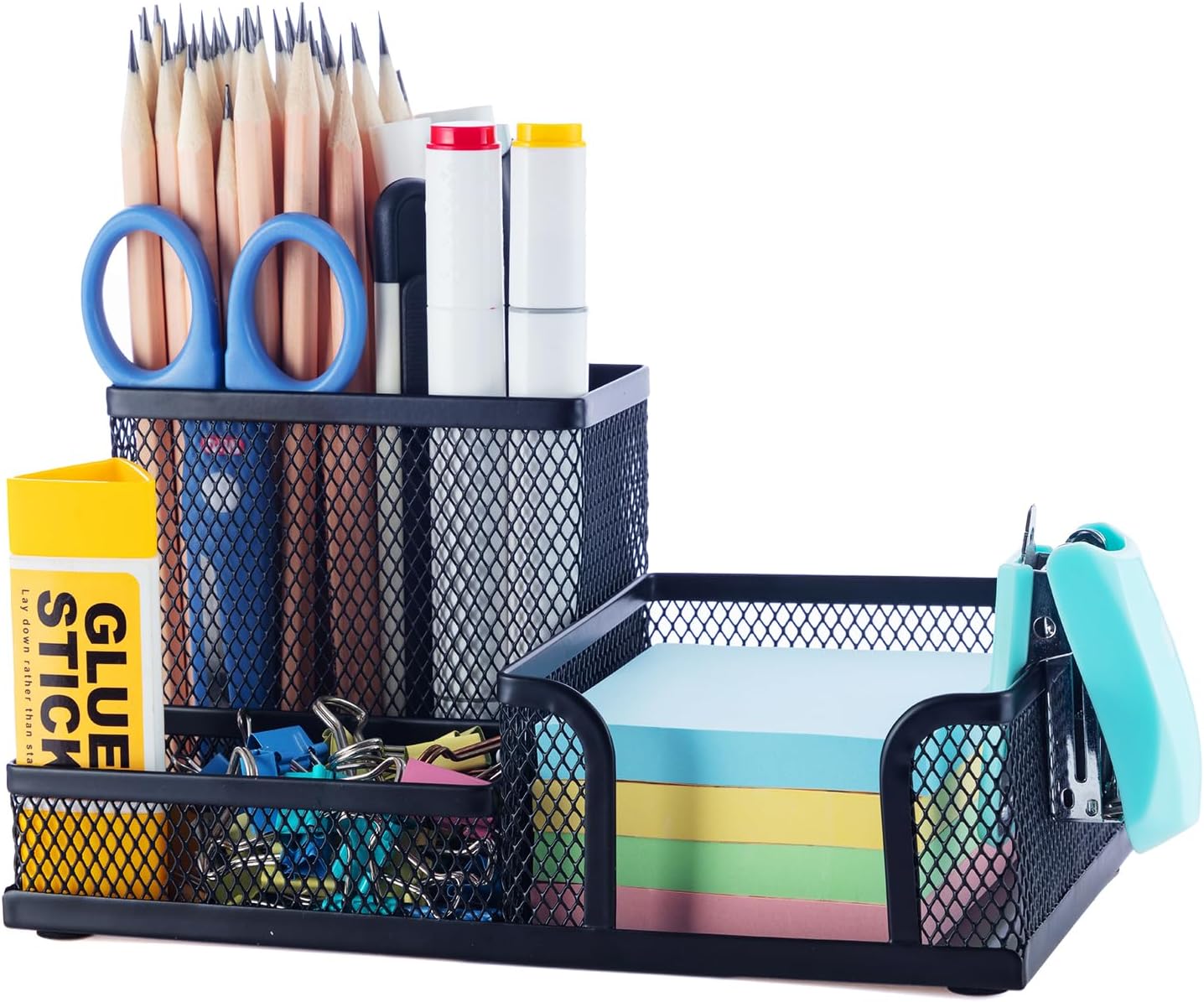
Amazon Find: Simple Desk Organizer
If you prefer a ready-made option, choose a compact organizer with only the compartments you actually need rather than a large unit that consumes desk space.
3. Add One or Two Small Plants
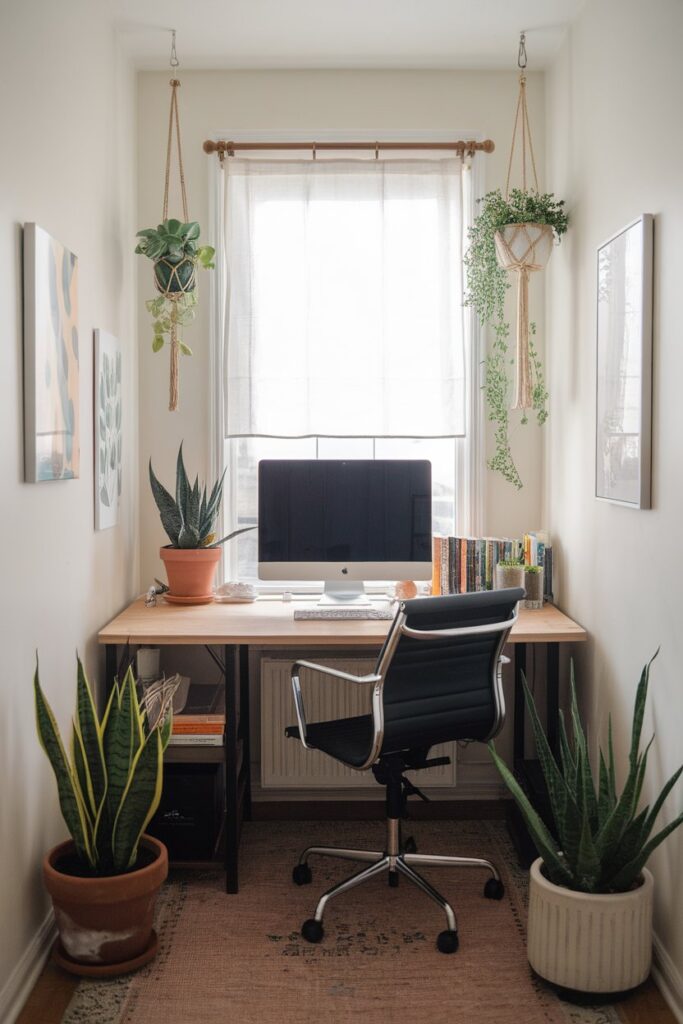
A little greenery can make a desk feel softer and less temporary.
Place one compact plant beside the monitor or use a trailing plant on a shelf above the desk.
Choose the plant according to the actual light conditions rather than simply choosing the one that photographs best.
If the workspace receives very little natural light or you do not want plant maintenance, a realistic faux plant can provide a similar visual effect.
Styling tip: one healthy plant usually looks better than several tiny pots competing for desk space.
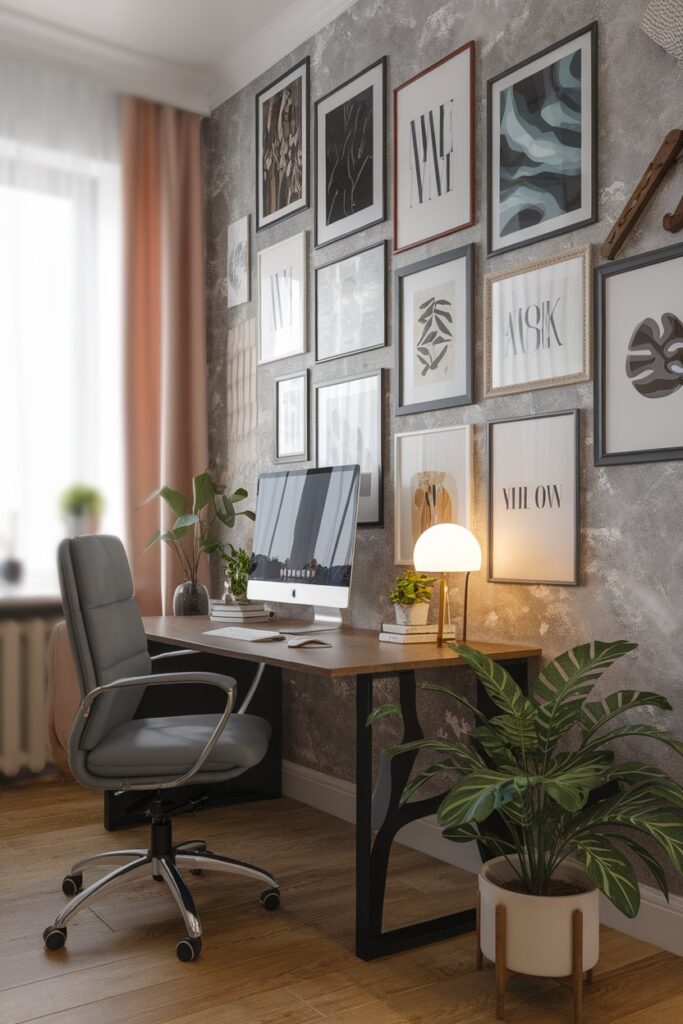
4. Build an Affordable Gallery Wall
A gallery wall can make a basic work corner feel more personal without using any desktop space.
Print favorite photographs, simple artwork, calendars, or motivating phrases and display them in inexpensive frames.
You can also skip frames and use removable tape or simple clips for a more casual look.
Plan the arrangement on the floor first so you can check spacing before putting anything on the wall.
Easy layout: use one larger print with three or four smaller pieces around it instead of filling the entire wall.
5. Shop Secondhand for Office Decor
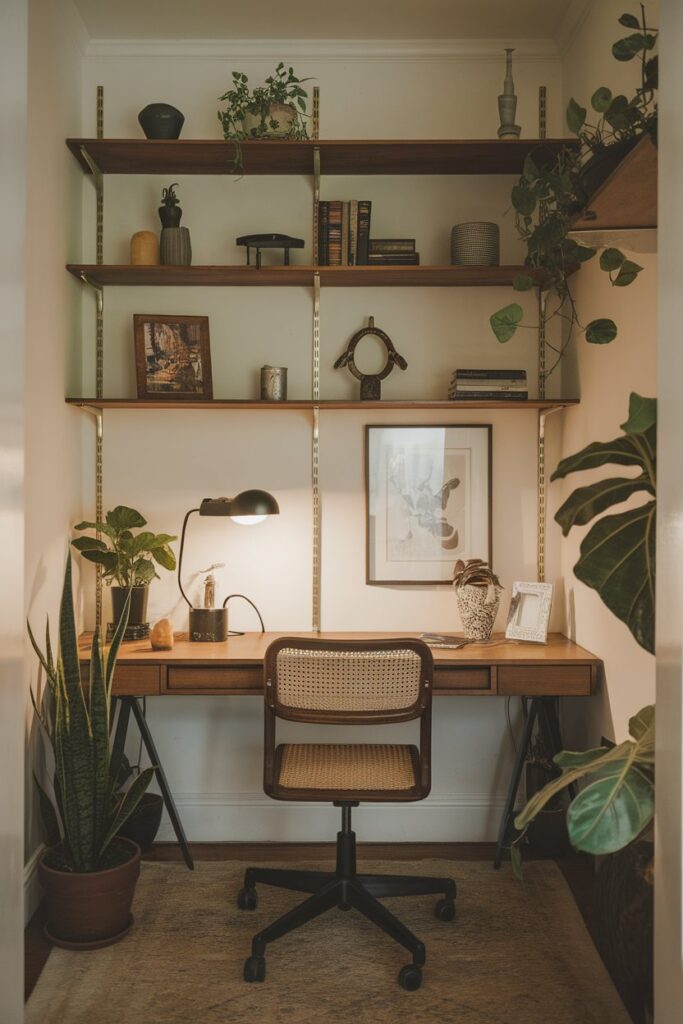
Thrift stores, resale marketplaces, and secondhand shops can be useful for pieces that do not necessarily need to be new.
Look for desk lamps, frames, baskets, small cabinets, trays, decorative storage, or occasional chairs.
Focus on sturdy construction and useful dimensions rather than the existing finish. Many pieces can be cleaned, painted, or restyled inexpensively.
Smart buy: measure the available desk and floor space before shopping so a bargain does not become another item you cannot use.
6. Make a Custom Cork Board
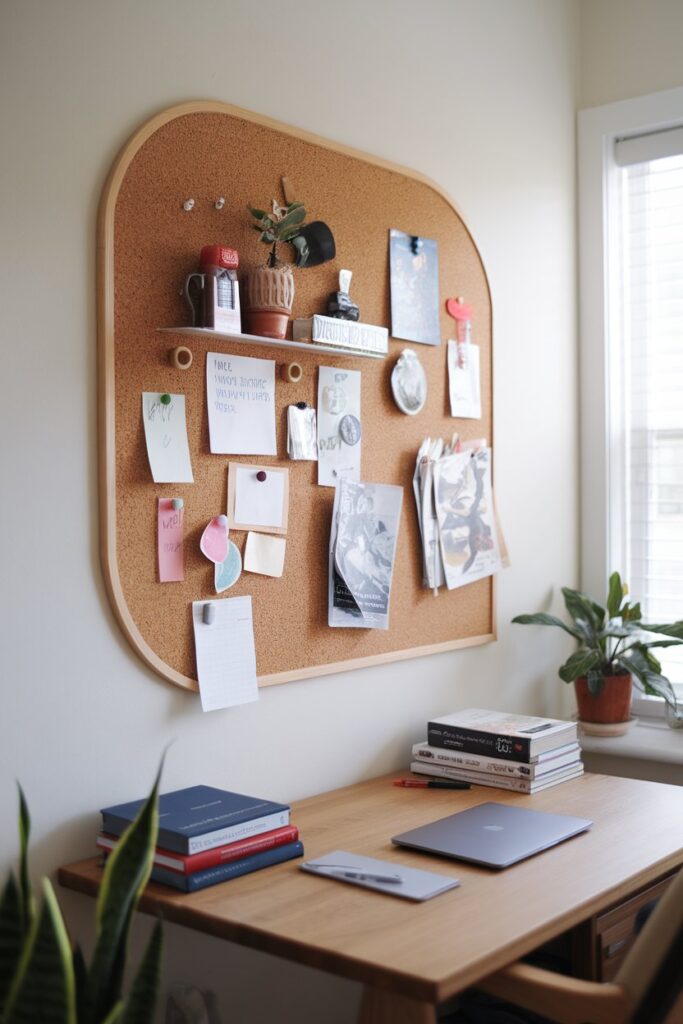
A cork board can function as both wall decor and everyday organization.
Use inexpensive cork tiles to create a board that fits the exact width above your desk.
Pin up meeting reminders, a monthly calendar, project notes, photographs, color swatches, or a small list of weekly priorities.
Instead of covering the entire board, leave some cork visible so the wall does not become visually chaotic.
Work tip: separate temporary tasks from permanent inspiration so important reminders are easier to spot.
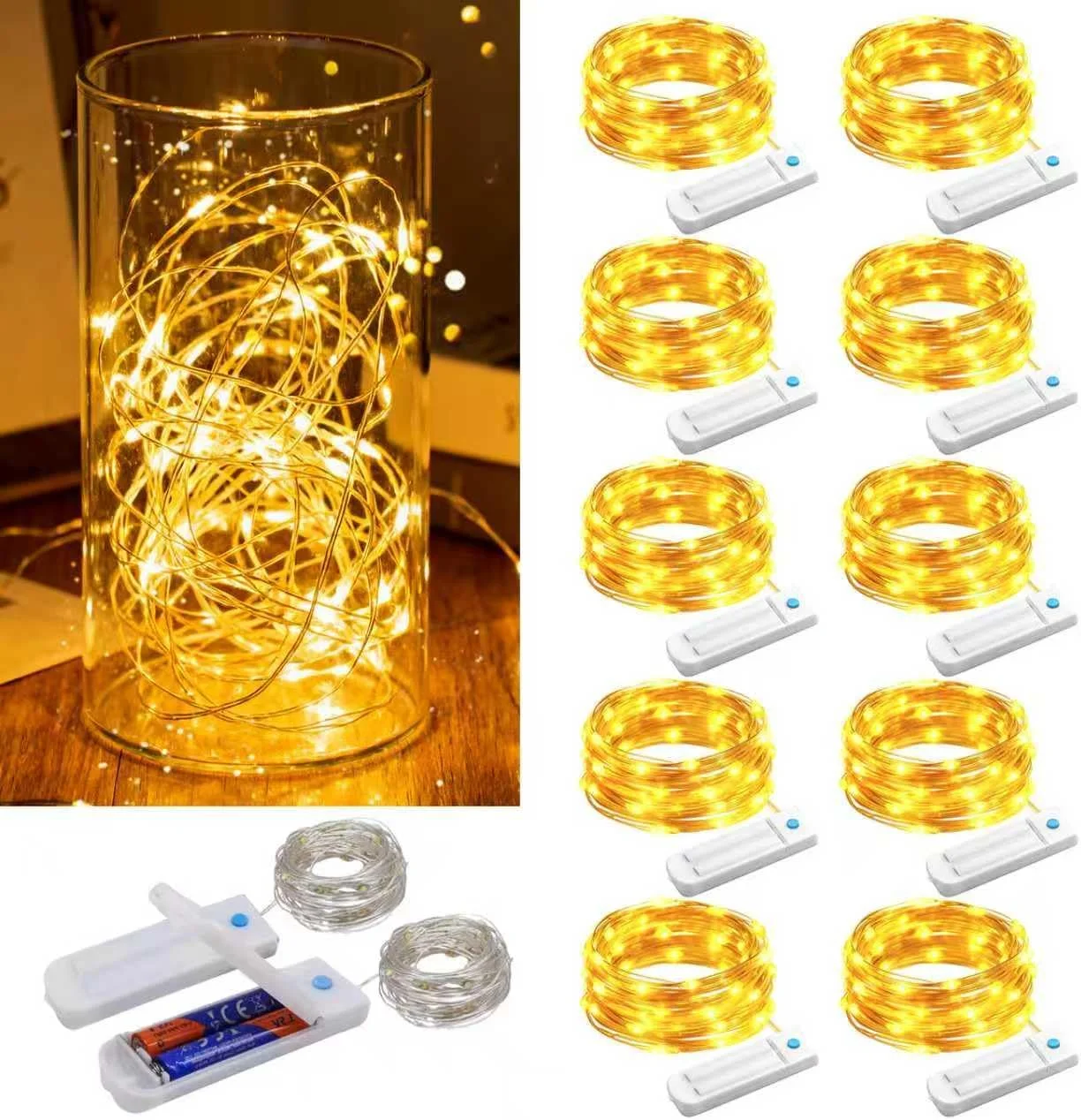
7. Add Warm String Lights for a Cozier Desk
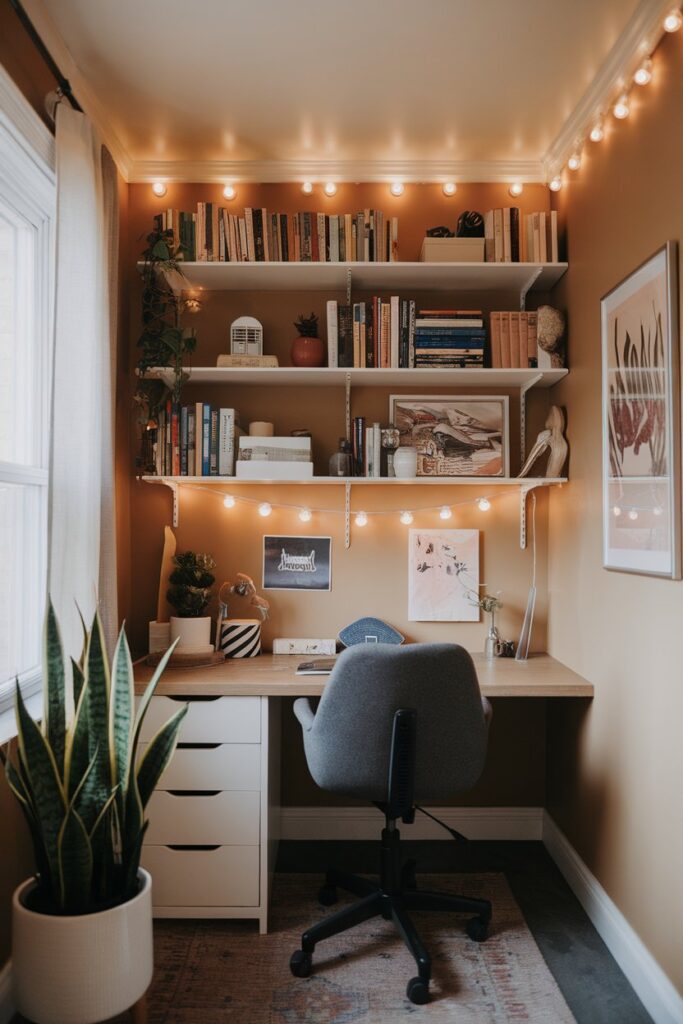
If your home office feels harsh in the evening, a small amount of warm decorative lighting can make the workspace feel more comfortable.
Use a thin strand around a shelf, cork board, or nearby wall rather than covering the entire office.
String lights should support your normal task lamp, not replace proper work lighting.
Lighting tip: keep decorative lights away from loose paper, curtains, and areas where cables could become tangled.
Amazon Find: Warm White Desk Fairy Lights
A thin warm-white strand can add soft ambient light around shelves or wall decor without taking up desk space.
8. Rearrange the Workspace Before Buying Anything
Sometimes the best home-office improvement costs nothing.
Move the desk closer to a window, rotate it so the background looks cleaner during calls, or reposition nearby storage so frequently used supplies are easier to reach.
Try to avoid sitting where strong daylight directly reflects on the screen.
If your office is part of a bedroom or living room, experiment with using a wall, rug, bookshelf, or corner to visually separate the work zone from the rest of the room.
Free refresh: live with the new layout for a few workdays before deciding what you still need to buy.
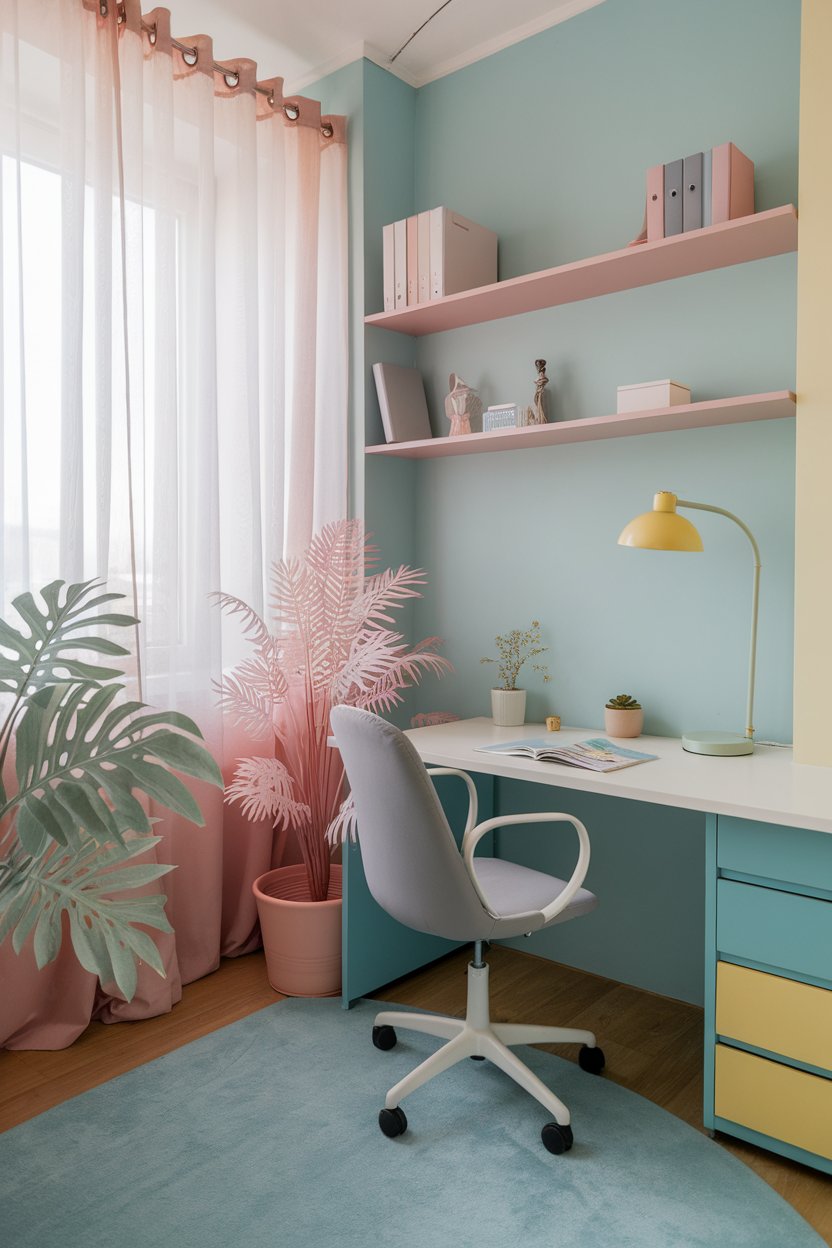
9. Paint One Small Accent Wall
A single painted wall can make an ordinary desk area feel more deliberate without the cost of redecorating the whole room.
Soft sage, pale blue, warm beige, muted terracotta, or another calm color can visually define the office zone.
If the workspace sits in a shared room, painting only the desk wall can help separate work from sleeping or living areas.
Keep surrounding desk accessories simpler if the wall color is strong.
Budget tip: a small workspace wall may require much less paint than a full room, so check whether a smaller container is enough.
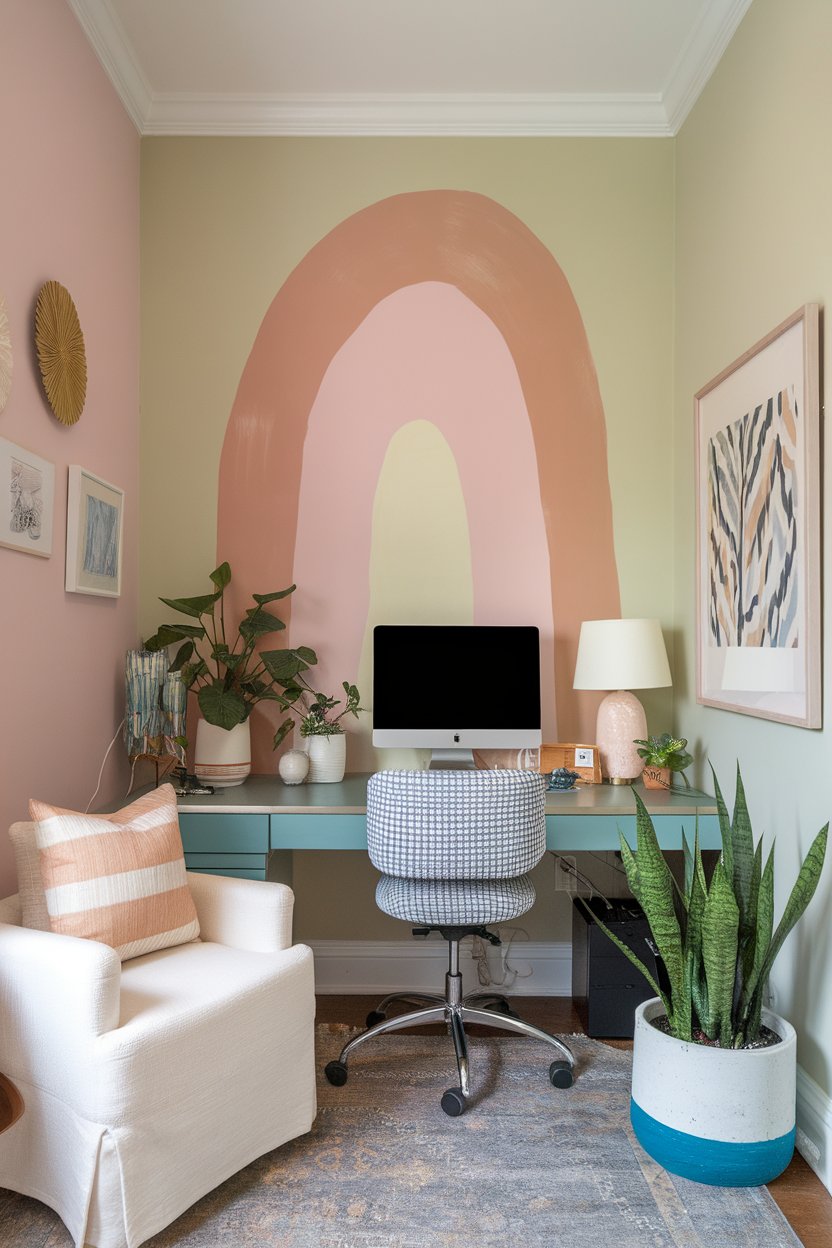
10. Install a Pegboard Above the Desk
A pegboard turns wall space into adjustable storage and is especially useful when the desk itself is small.
Add small shelves, hooks, cups, or baskets for headphones, cables, notebooks, scissors, and frequently used supplies.
Keep heavy or rarely used objects somewhere else so the board remains easy to use.
You can paint the pegboard to match the wall or leave it natural for a simple workshop-inspired look.
Organization tip: keep your most-used items between seated eye level and standing shoulder height so you can reach them easily.
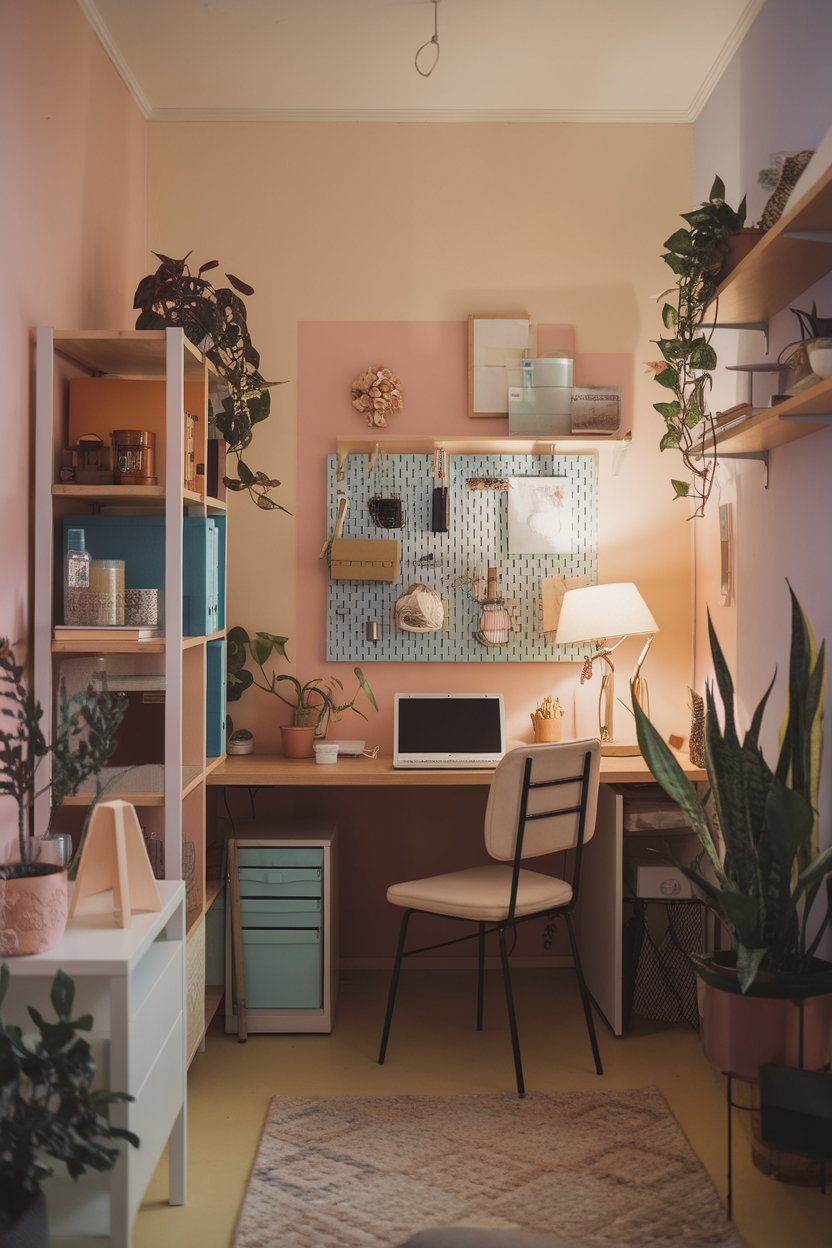
11. Decorate With Books You Already Own
Books can add color, height, and personality without requiring dedicated decorative objects.
Stand a few vertically on a floating shelf or place a short stack beside a small plant.
A sturdy stack can also raise a lightweight decorative item, although anything supporting computer equipment should remain stable and appropriate for the load.
Styling tip: choose books you actually use or enjoy instead of buying books only to match a color palette.
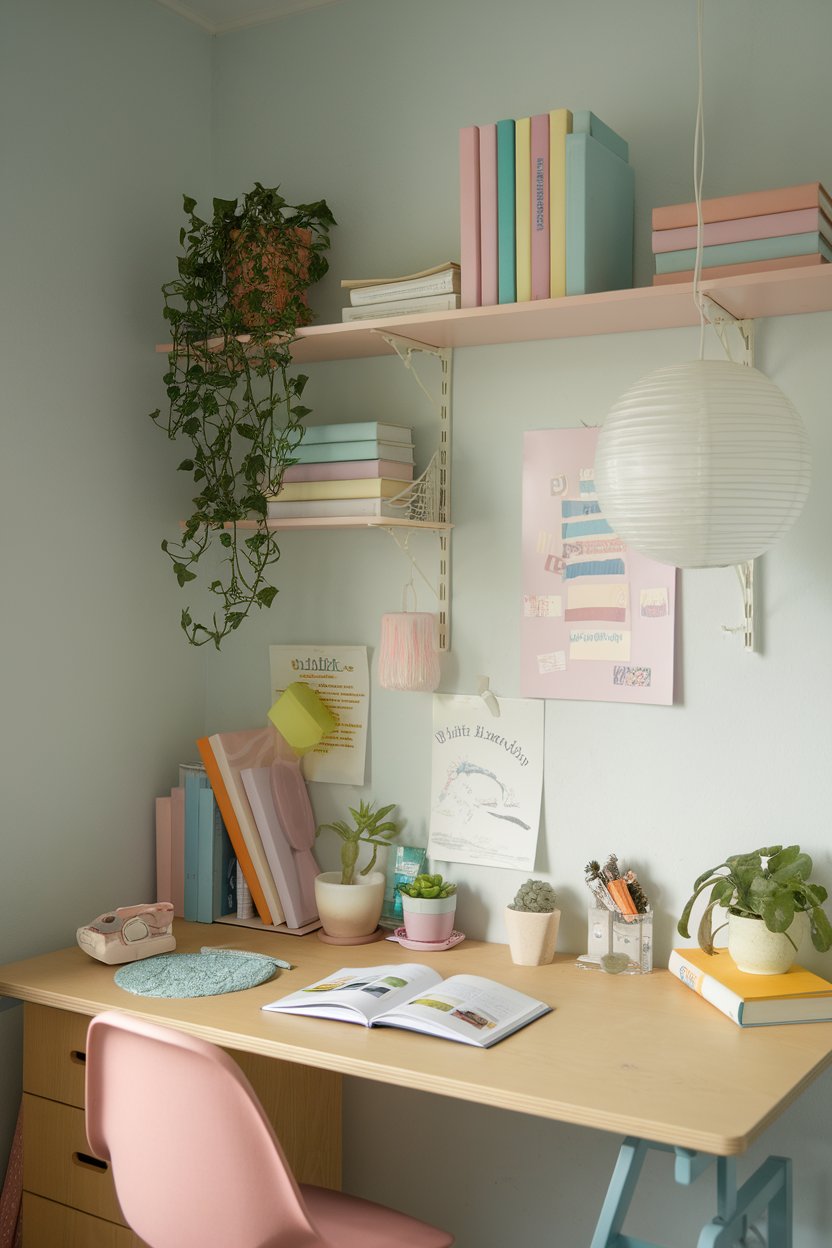
12. Create Your Own Office Wall Art
DIY art is one of the cheapest ways to make a work area feel personal.
Paint a simple abstract design, create a collage, frame decorative paper, or print your own typography or photography.
Use colors already found in the desk, chair, rug, or storage so the artwork feels connected to the room.
Easy idea: create three coordinating prints in the same size and hang them in a simple horizontal row.
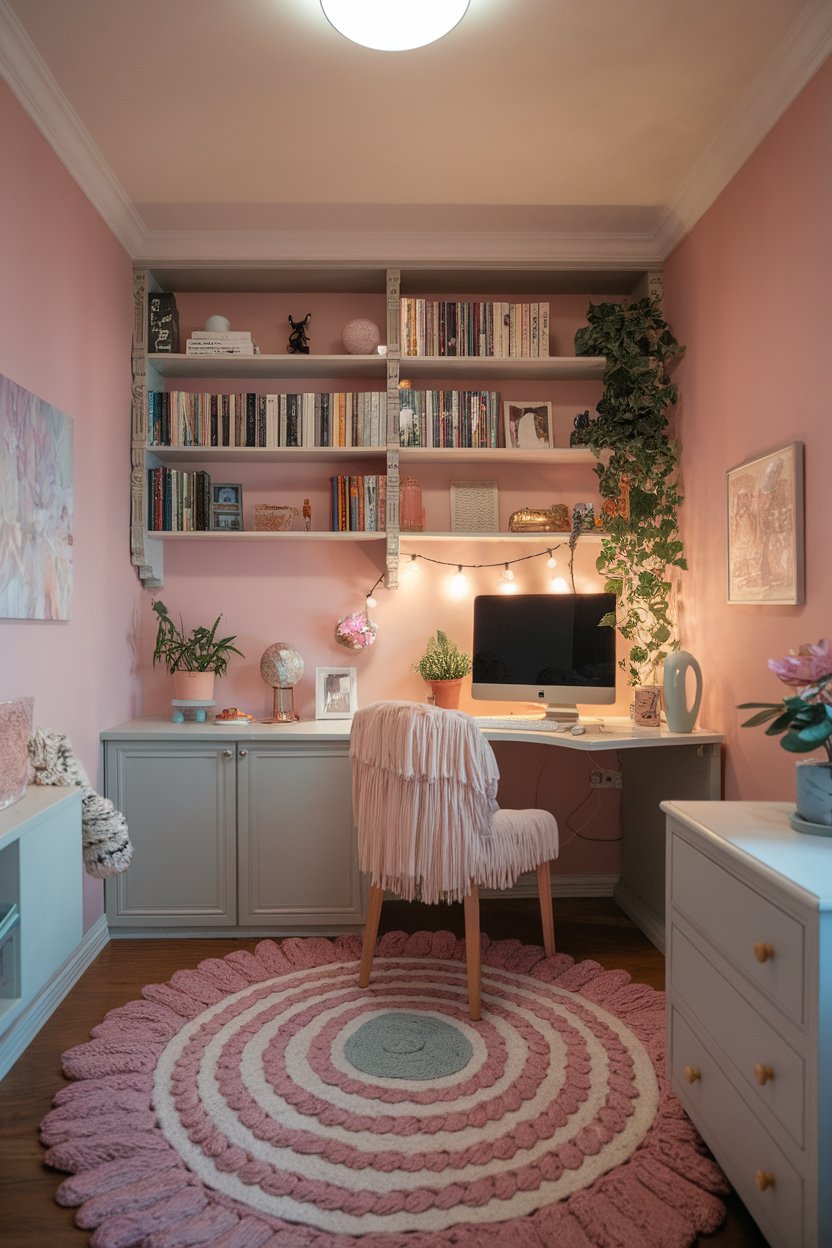
13. Use a Small Rug to Define the Workspace
A rug can visually separate a home office from the rest of a bedroom, living room, or open-plan area.
Choose a size that connects the desk and chair rather than placing a tiny rug only beneath the desk legs.
Low-pile rugs generally make rolling office chairs easier to move than thick shag styles.
If the rug sits on a smooth floor, use suitable non-slip backing where necessary.
Small-space trick: use the rug as the visual boundary of the office zone so you do not need a physical divider.
How to Set Up a Work From Home Corner in a Small Room
You do not need an entire room to build an effective home office.
A compact corner can work well when the desk, storage, and lighting are planned vertically instead of spreading across the floor.
- Choose a compact desk: use only as much surface depth as your equipment requires.
- Use the wall: add a pegboard, cork board, or floating shelf.
- Choose a chair that tucks in: this keeps walkways clearer after work.
- Place lighting carefully: use a focused task lamp instead of a large floor lamp if space is tight.
- Keep cables against the wall: avoid loose wires across walking areas.
- Limit desk decor: one plant and one small personal item may be enough.
For more inspiration, see these small corner decor ideas, which include a compact corner office with a desk, supportive chair, focused lighting, shelf storage, and concealed cables.
A Simple Budget Desk Styling Formula
If you are unsure what to put on the desk, keep it simple:
- Center: computer or laptop with open working space.
- One side: task lamp.
- Other side: compact organizer or pen cup.
- Back corner: one small plant.
- Wall: cork board, pegboard, or simple artwork.
- Below desk: cable management and minimal storage.
This keeps the desk styled without sacrificing the surface you need to work.
Work From Home Setup Checklist
- Measure the space: check desk width, depth, and chair clearance.
- Check power access: know where chargers and office equipment will connect.
- Position the screen: reduce glare from windows and strong lamps.
- Add task lighting: do not depend only on decorative string lights.
- Clear the desktop: keep only frequently used items nearby.
- Create vertical storage: use shelves, cork, or a pegboard.
- Manage cables: keep charging and power wires secured away from feet.
- Add one personal element: plant, photograph, book, or artwork.
- Check the background: make sure video-call views are reasonably tidy.
- Test the setup: work in the space before spending money on more decor.
Common Budget Home Office Mistakes
- Buying decor before solving comfort problems: prioritize desk space, seating, lighting, and screen position first.
- Covering the desk with organizers: storage should create more working space, not remove it.
- Buying furniture without measuring: even inexpensive furniture is wasted money if it does not fit.
- Ignoring cable management: visible and tangled cords can make an otherwise neat office feel cluttered.
- Using decorative lights as task lighting: use a proper lamp when reading, writing, or working after dark.
- Making the wall too busy: too many prints, notes, boards, and shelves can become distracting.
- Adding too many tiny plants: keep enough space around your computer and work materials.
- Buying matching decor sets unnecessarily: reused and secondhand pieces can look cohesive when the colors and materials repeat.
Frequently Asked Questions
How can I set up a home office on a small budget?
Start with furniture you already own, rearrange the room, reuse containers for organization, add affordable task lighting, and use wall space for storage. Buy new pieces only after identifying what the existing setup actually lacks.
What should I put on my work from home desk?
Keep the desktop practical: computer, task lamp, one organizer, and perhaps one small plant or personal item. Move less frequently used supplies to a shelf, drawer, or pegboard.
How can I make my desk look good without spending much?
Clear unnecessary items, use matching repurposed containers, add one plant, frame inexpensive prints, and choose a simple color palette that repeats across storage and accessories.
How do I create a home office if I do not have a separate room?
Use an unused corner of a bedroom or living room. A compact desk, chair that slides underneath, wall storage, task light, and small rug can define the area without needing a full office room.
How can I make a home office feel cozy?
Add warm task lighting, one plant, a rug, books, simple artwork, and a small amount of ambient lighting while keeping the actual work surface relatively clear.
What is the cheapest way to refresh a home office?
Rearrange the furniture first. Moving the desk closer to natural light, changing the background, decluttering the desktop, and repositioning storage can noticeably change the workspace without spending anything.
Recommended Finds for a Budget Work From Home Setup
You do not need everything below. Choose products based on a real workspace problem rather than buying accessories simply to fill the desk.
- Compact desk organizer — for keeping everyday stationery together without using too much surface space.
- Adjustable LED desk lamp — for focused task lighting during calls, reading, and evening work.
- Desk pegboard organizer — for moving supplies off a small work surface.
- Cork board tiles — for creating a custom notes and inspiration board.
- Cable management clips — for keeping chargers and wires closer to the desk rather than across the floor.
- Warm-white fairy lights — for adding optional ambient lighting around wall decor or shelves.
- Small low-pile office rug — for defining a work zone in a bedroom or living room.
Final Thoughts
A better work from home setup does not necessarily start with buying a new desk.
Look first at what you already have. Reuse a table, rearrange the room, clear the desktop, organize supplies in simple containers, and take advantage of the wall above the desk.
Then add the pieces that genuinely improve the experience: a useful lamp, a small plant, a cork board or pegboard, some artwork, and perhaps a rug to define the workspace.
The goal is not to create a perfectly styled office. It is to build an affordable workspace that feels organized, comfortable, personal, and easy to return to every workday.

Ankit is an engineer by profession and blogger by passion. He is passionate to do all the stuff such as designing the website, doing the SEO, researching for the content, writing tech blog posts and more.

