

A standard office cubicle can feel plain, repetitive, and overly corporate, but you do not need a full makeover to make it feel more personal. A few affordable accessories, better organization, simple wall decor, and softer lighting can completely change how your desk looks and feels.
The best DIY cubicle decor ideas also respect the fact that your desk still needs to function as a workspace. Decorations should not block your monitor, phone, papers, outlets, or shared walkways. Instead, use the walls, corners, and small unused areas around the desk to add personality without creating clutter.
These 14 ideas include colorful desk accessories, plants, gallery walls, organizers, photos, lighting, shelves, cable management, and other simple upgrades that can help transform an ordinary work desk into a workspace that feels organized, comfortable, and more like your own.
As an Amazon Associate, I earn from qualifying purchases. This article contains affiliate links, which may earn us a commission at no extra cost to you.
Quick Picks for an Easy Cubicle Makeover
- For instant color: coordinate pen cups, file trays, and sticky notes.
- For a fresher desk: add one small plant.
- For a cleaner desktop: use a desk mat and compact organizer.
- For blank cubicle walls: make a mini gallery wall.
- For more storage: use vertical shelves or a pegboard.
- For a cozy touch: drape a small throw over the chair.
- For harsh office lighting: add a compact desk lamp if permitted.
- For messy cords: use cable clips and cord sleeves.
Before Decorating Your Office Cubicle
Before attaching anything to cubicle walls, check your workplace rules. Some offices allow pins, clips, lightweight shelves, and removable tape, while others restrict lighting, plants, electrical accessories, scents, or wall attachments.
It is also worth measuring the desk before buying anything. Cubicles have limited usable surface space, so even small accessories can quickly make the workstation feel crowded.
| Cubicle Area | Best Use | Keep Clear |
|---|---|---|
| Main Desk Surface | Computer and daily work | Keyboard and paperwork zone |
| Back Corners | Plant or organizer | Monitor ventilation |
| Cubicle Walls | Photos, notes, lightweight storage | Shared or restricted surfaces |
| Under Desk | Cable control or small storage | Legroom and emergency access |
| Chair Area | Cushion or throw | Chair movement |
14 DIY Cubicle Decor Ideas to Transform Your Work Desk
1. Add a Pop of Color With Desk Accessories
You do not need to repaint anything to change the mood of a cubicle. Small colorful accessories can make a gray or beige workstation feel much more cheerful.
Choose one or two colors and repeat them through a pen holder, stapler, file tray, sticky notes, notebook, or small storage container.
Keeping the palette limited will make inexpensive pieces look more coordinated.
Easy formula: choose one main color, one neutral, and one small accent.
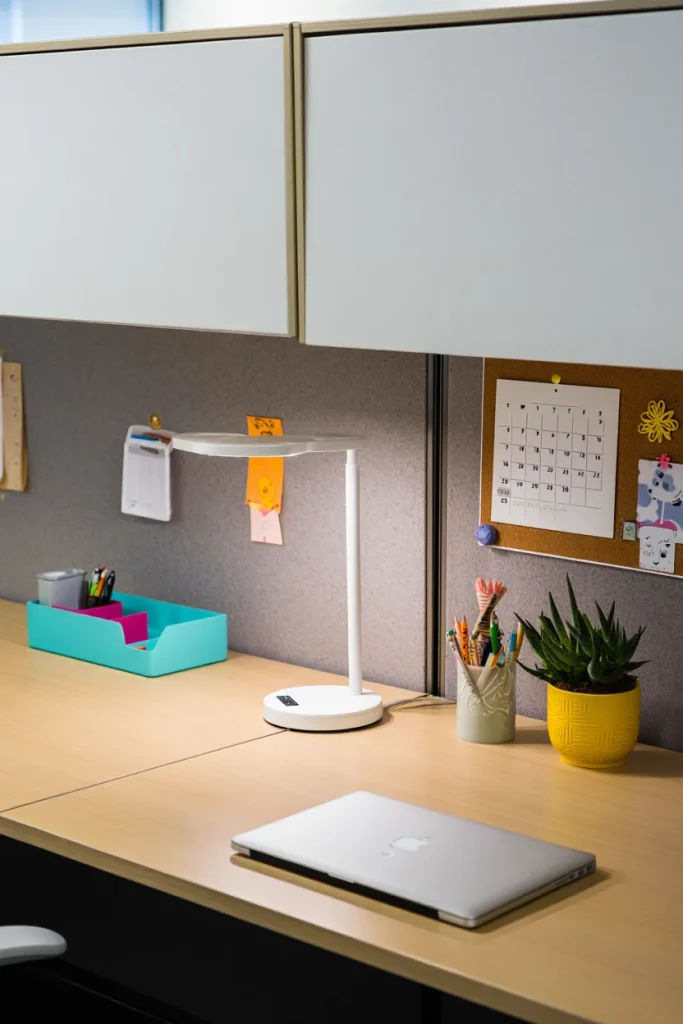
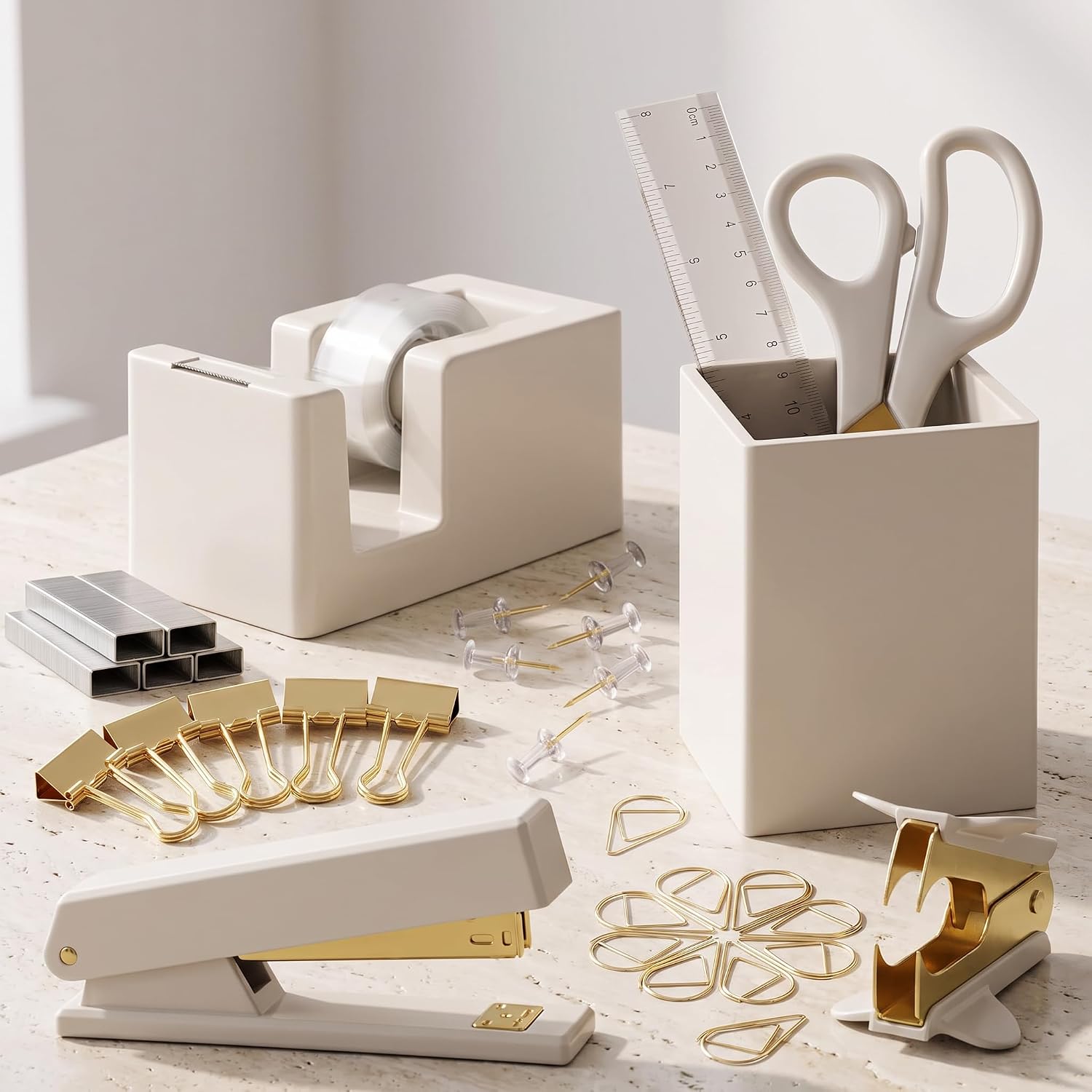
Amazon Find: Coordinated Desk Accessory Set
A compact matching set can make a cubicle feel pulled together without filling the desk with unrelated office supplies.
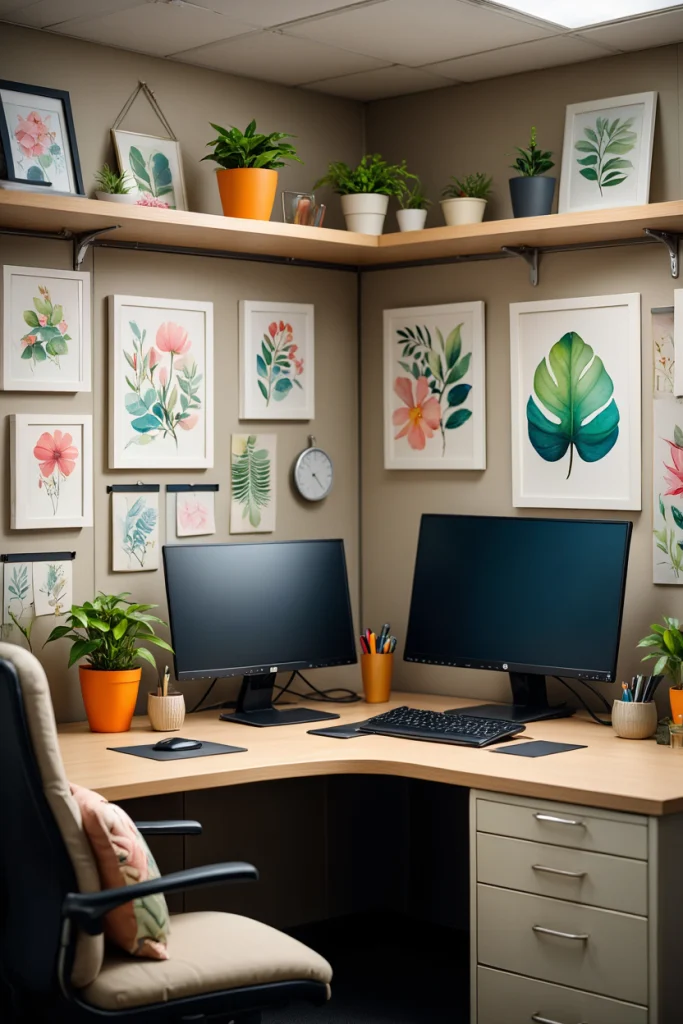
2. Bring in One Small Plant
A plant can instantly make a cubicle feel less sterile and more lived-in.
Choose a compact variety that fits in a back corner without competing with your keyboard, monitor, or paperwork.
If your office receives little natural light or live plants are not practical, use a realistic faux plant or framed botanical print instead.
Desk tip: one well-placed plant usually looks better than several small pots scattered around the workstation.
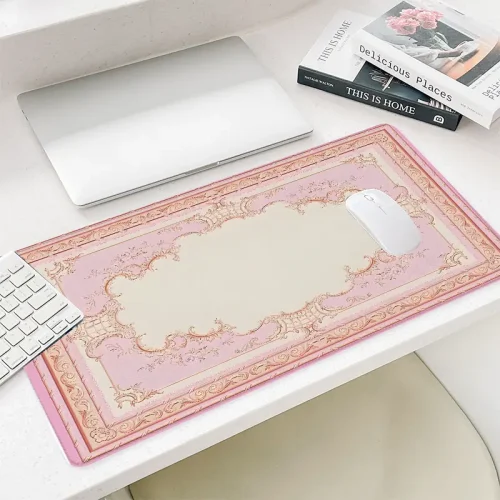
3. Use a Stylish Desk Mat or Mousepad
A desk mat is one of the fastest ways to visually define the main working area.
Choose a solid color, leather-look finish, subtle pattern, or neutral tone that coordinates with the rest of your accessories.
Besides making the desk look more intentional, a larger mat can visually hide small scratches or mismatched surfaces.
Practical tip: measure the usable desktop before buying so the mat does not interfere with your phone, files, or monitor base.
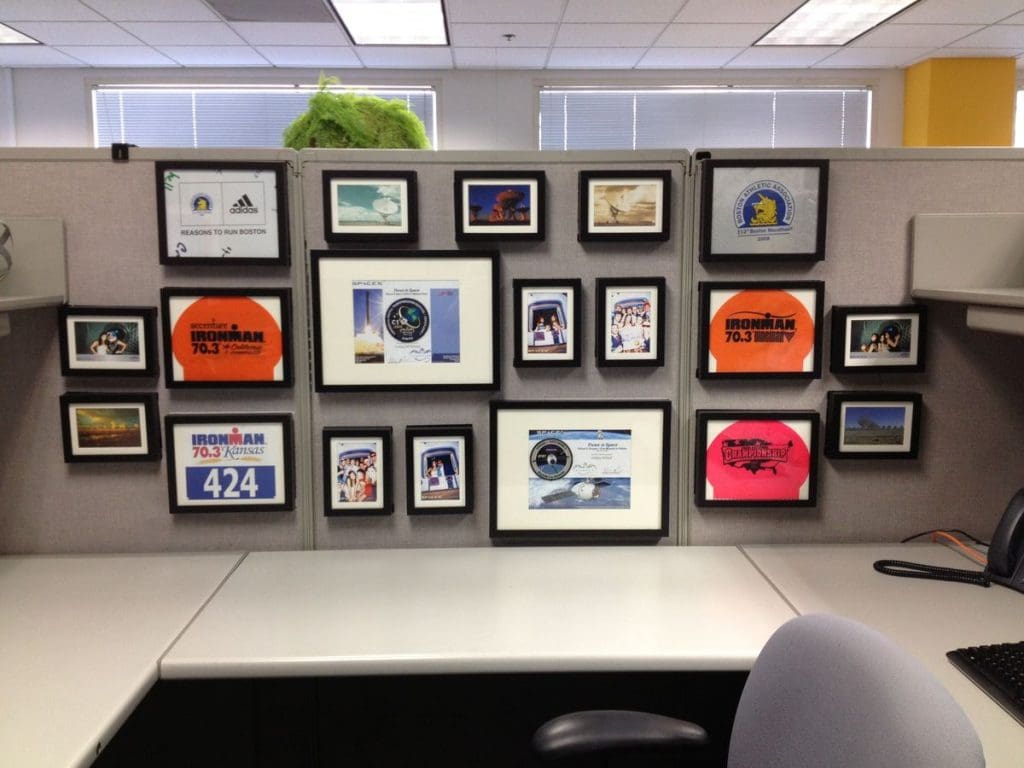
4. Create a Mini Gallery Wall
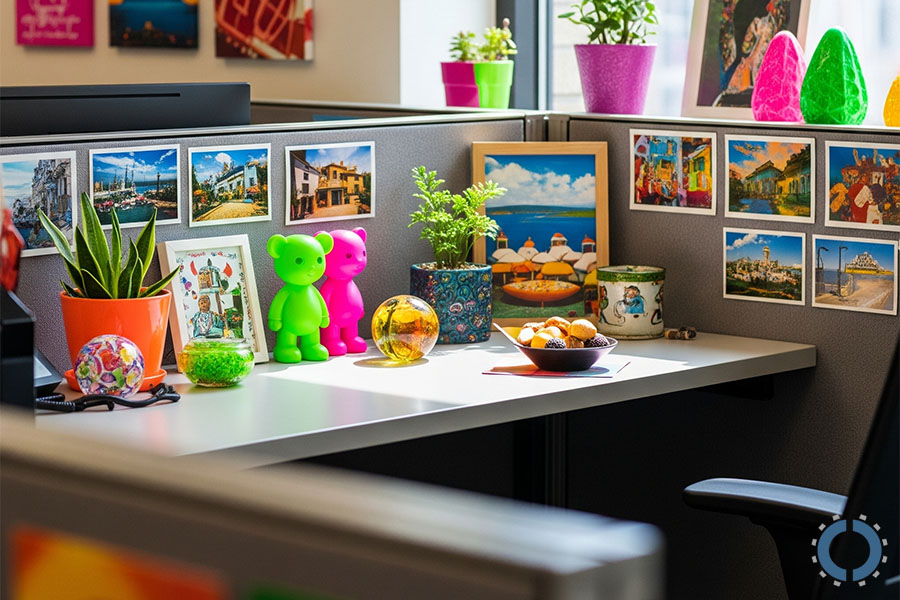
Turn one cubicle panel into a small personal gallery using photos, prints, postcards, artwork, or quotes.
Arrange everything in a loose grid or use one larger image with several smaller pieces around it.
Removable clips, pins, or office-approved adhesive options can make the arrangement easier to change.
Styling tip: leave visible wall space between the pieces so the gallery does not become visually distracting.
5. Add Lightweight Vertical Shelves
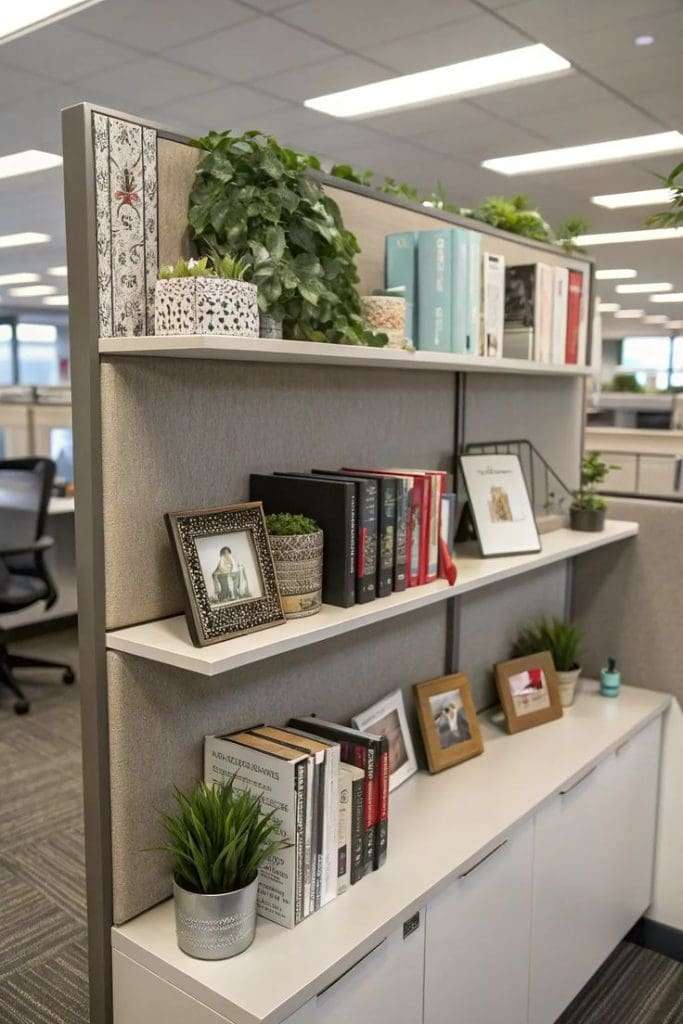
When desk space is limited, the cubicle walls can provide useful storage.
If your workplace allows it, use lightweight cubicle shelves or small ledges for notebooks, framed photos, or tiny plants.
Keep heavier files and equipment on the desk or in approved cabinets rather than loading decorative shelves.
Small-space rule: move display items upward so the work surface remains open.
For more ways to use vertical space efficiently, see these ways to better use corner space.
6. Use a Tiered Organizer or Compact Rolling Cart
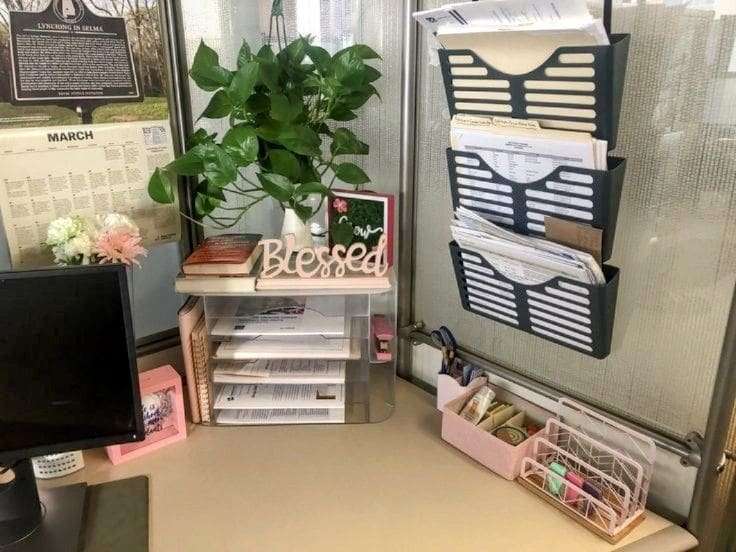
A tiered organizer can store frequently used supplies without spreading them across the entire desk.
Use the top level for daily items such as pens and sticky notes, then place less frequently used supplies on the lower tiers.
If your cubicle has enough floor space and company rules allow it, a narrow rolling cart can hold extra notebooks, snacks, craft supplies, or personal items.
Organization tip: assign each tier one purpose instead of using the organizer as a catchall.
7. Drape a Cozy Throw Over Your Chair
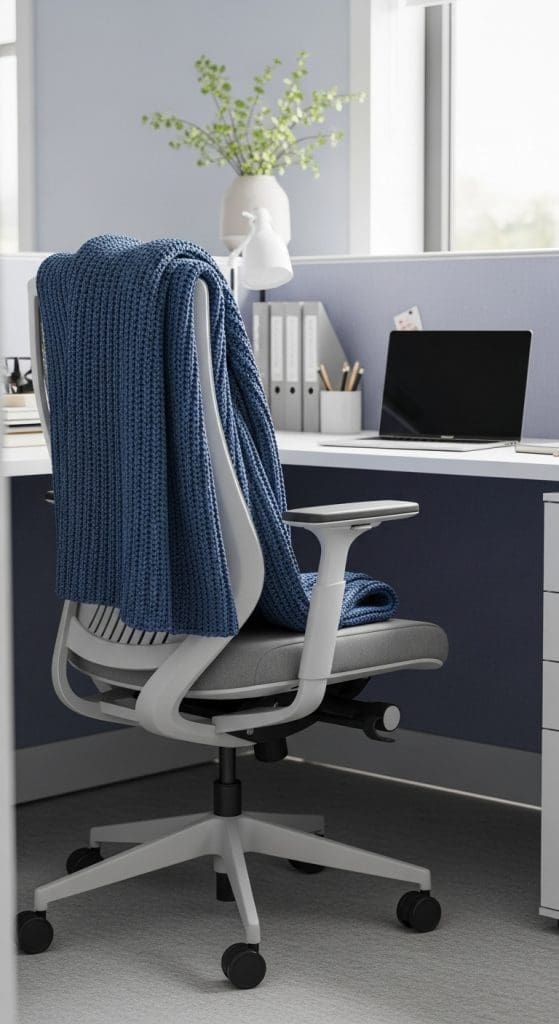
If your office tends to feel cold, a compact throw blanket can be both practical and decorative.
Choose a neutral knit, plaid, or solid-color throw and fold it neatly over the chair back.
Keep it lightweight enough that it does not interfere with the chair’s back support or wheels.
Simple styling tip: match the throw to one color already used in your desk accessories or gallery wall.
8. Improve the Cubicle Lighting
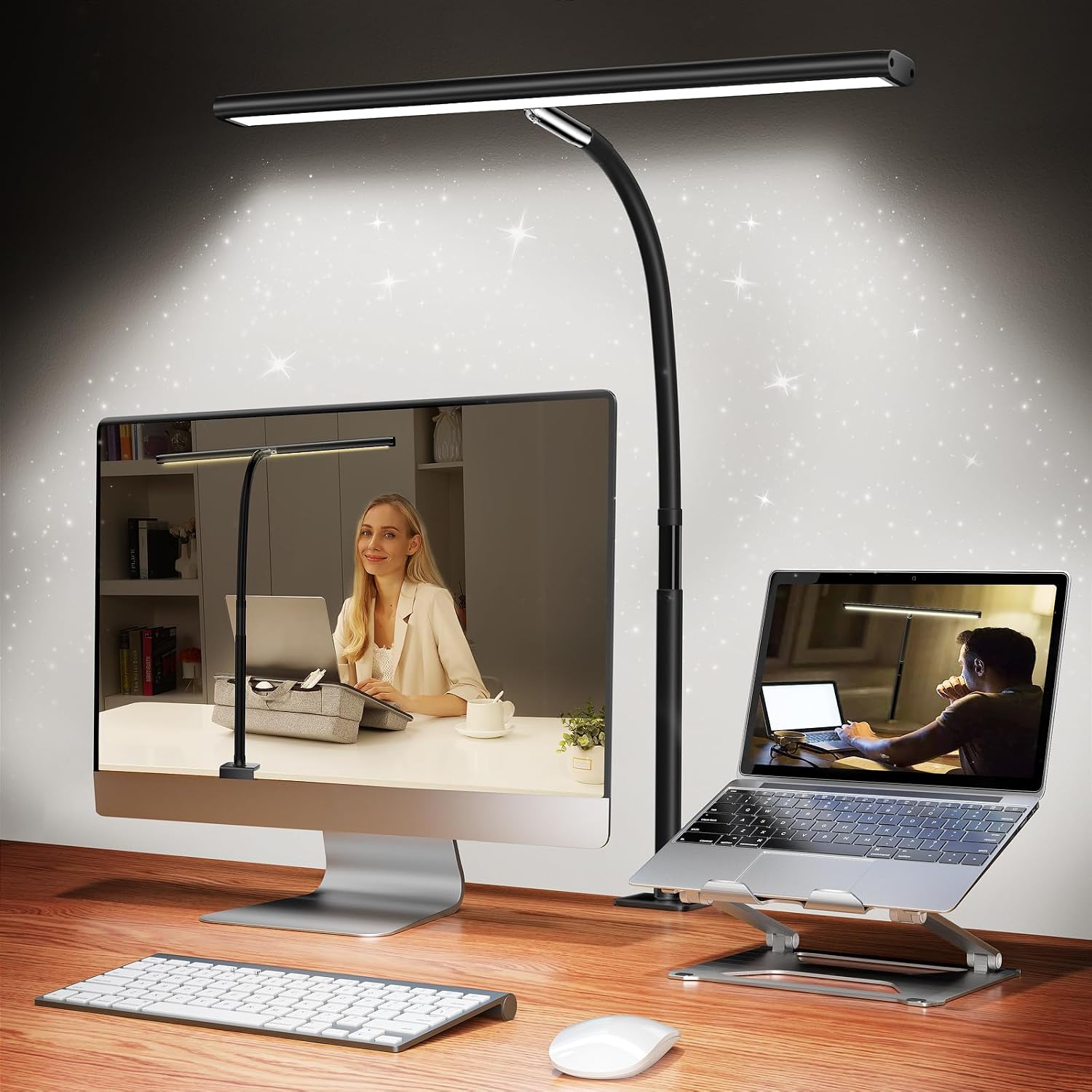
Office overhead lighting can feel harsh, so a small task lamp can make the desk more comfortable if your workplace allows personal electrical items.
Choose an adjustable lamp that directs light onto paperwork without creating strong monitor glare.
A warm-neutral light can also make the cubicle feel less clinical in the morning or late afternoon.
Important: check office electrical rules before bringing in lamps, LED strips, or decorative lights.
Amazon Find: Compact Adjustable Desk Lamp
A small adjustable lamp can provide focused task lighting without taking over a narrow workstation.
9. Control Clutter With Smart Organization
A decorated desk will still feel messy if papers, chargers, and office supplies have no assigned place.
Use file holders for active documents, small compartments for stationery, and cable clips for charging cords.
Move rarely used items into drawers or cabinets so the desktop contains only what you need during a typical workday.
Daily reset: spend one minute at the end of the day returning everything to its assigned location.
10. Display Photos and Small Mementos
A few personal photographs or souvenirs can make a corporate workstation feel more familiar.
Use one or two small frames on the desk or clip photos to the cubicle wall.
You can also display a postcard, travel ticket, small souvenir, or another lightweight item that has personal meaning.
Keep it professional: choose a few meaningful pieces rather than turning the desk into a full collection display.
11. Make an Inspirational Wall Panel
Instead of scattering notes everywhere, dedicate one cubicle panel to ideas, reminders, and inspiration.
Use a small cork board, pinboard, or removable grid for project goals, quotes, photos, postcards, and a weekly priority list.
You can give the wall one theme such as travel, nature, career goals, or creative inspiration.
Focus tip: remove outdated notes regularly so important reminders remain easy to notice.
12. Choose One Coordinated Color Palette
A limited color palette helps inexpensive accessories feel intentional.
You might choose black and wood, sage and cream, navy and gray, blush and gold, or a brighter combination that suits your personality.
Repeat those colors through the desk mat, organizer, notebook, frame, and one or two small decorative pieces.
Easy rule: use three main colors at most so the desk does not become visually busy.
13. Upgrade Everyday Office Accessories
Useful objects can also become part of the decor.
Replace mismatched items with a coordinated mousepad, coaster, notebook, pen cup, clock, or laptop stand.
You do not need to replace everything at once. Start with the objects that remain visible all day.
Budget tip: upgrading three frequently used items often has more impact than buying several purely decorative objects.
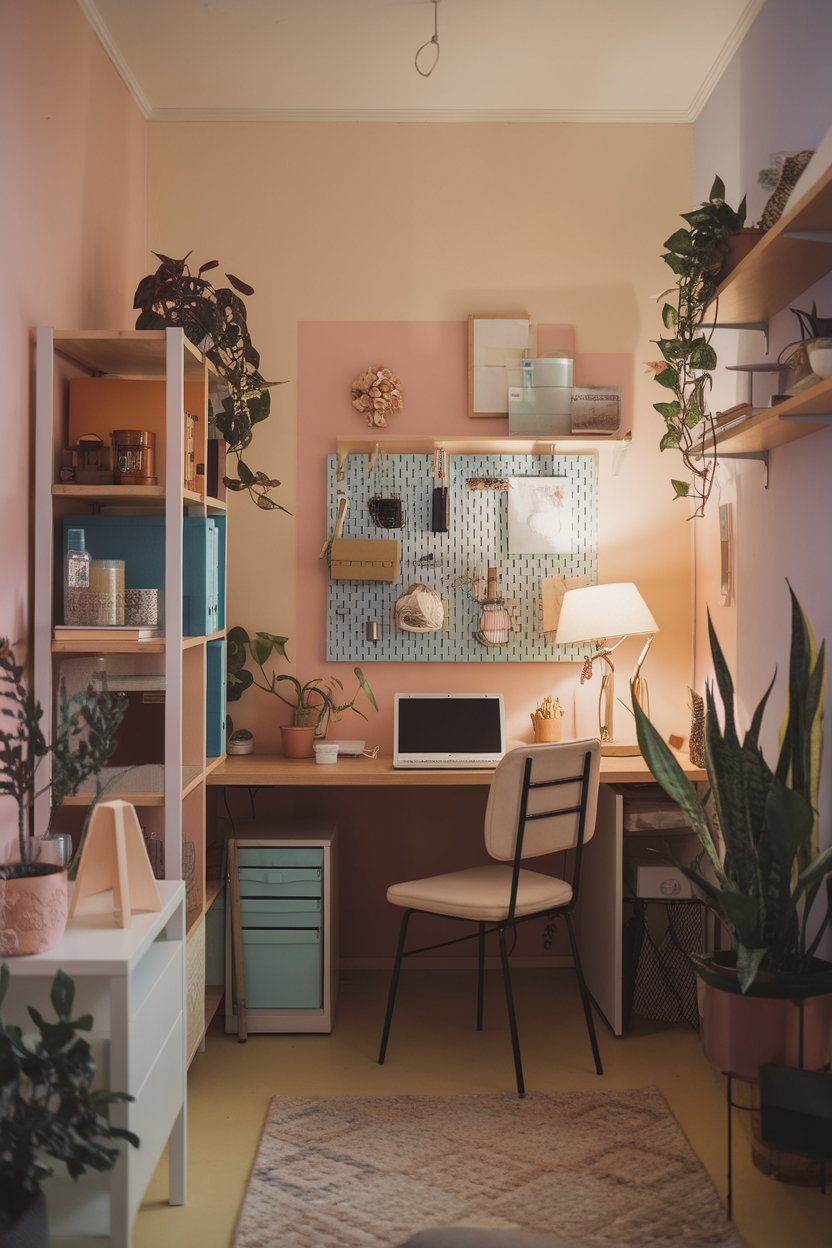
14. Use Vertical Space With a Pegboard or Grid Organizer
A pegboard or grid organizer can combine storage and decoration in one small wall area.
Use hooks or small containers for headphones, scissors, stationery, notes, and lightweight accessories.
Add one photo or small plant if you want the organizer to feel decorative as well as practical.
Small-cubicle advantage: wall storage keeps more of the desk available for actual work.
If your cubicle is especially compact, you may also like these small corner decor ideas, including vertical storage and compact office layouts.
A Simple Cubicle Decor Formula
If you want a polished desk without overthinking it, start with six elements:
- One desk mat to visually anchor the workspace.
- One organizer for daily supplies.
- One plant or botanical accent.
- One personal feature such as photos or a mini gallery wall.
- One practical upgrade such as a lamp or laptop stand.
- One color palette repeated across the accessories.
This gives the workstation personality without covering every available surface.
How to Decorate a Very Small Cubicle
- Decorate vertically: use walls instead of the desktop.
- Choose compact accessories: avoid oversized pen holders and planters.
- Limit the palette: two or three colors prevent visual clutter.
- Use one personal area: keep photos and decor on one wall panel.
- Hide cables: clean cord management makes a small desk feel bigger.
- Keep the keyboard area empty: preserve enough room for everyday work.
- Use one plant: a single greenery accent can be enough.
Cubicle Decorating Checklist
- Check office rules: confirm what can be attached, plugged in, or displayed.
- Measure the desk: know the available depth and width.
- Choose a palette: select two or three coordinating colors.
- Clear the desktop: remove unused supplies first.
- Add organization: assign storage for paper, stationery, and cables.
- Use vertical space: add lightweight wall storage if permitted.
- Add one personal touch: photos, art, or a meaningful object.
- Add one soft detail: plant, throw, or small textile.
- Improve lighting if allowed: use a practical task lamp.
- Test the setup: make sure nothing interferes with normal work.
Common Cubicle Decorating Mistakes
- Covering the entire desk: decor should not reduce the working area you actually need.
- Ignoring company rules: some offices restrict shelves, electrical items, scents, lights, or wall attachments.
- Using too many colors: a limited palette creates a calmer workstation.
- Letting cords remain visible: messy cables can undo the effect of an otherwise organized desk.
- Adding too many personal items: leave enough visual space for the cubicle to remain professional.
- Using unstable wall storage: do not place heavy objects on lightweight cubicle panels.
- Blocking airflow around electronics: keep decorations and papers away from computer vents.
- Using strong fragrance: candles, diffusers, and scented products may affect coworkers and may be restricted.
- Blocking shared walkways: rolling carts, bags, and decor should stay within your assigned area.
Frequently Asked Questions
How can I make my cubicle look better on a budget?
Start with a coordinated desk mat, one plant, simple wall photos, repurposed organizers, and cable management. A limited color palette can make inexpensive pieces look more intentional.
What should I put on my cubicle desk?
Keep the desk mostly practical. A computer, task lamp, compact organizer, plant, and one or two personal pieces are usually enough.
How can I decorate cubicle walls?
Use office-approved pins, clips, lightweight frames, photos, prints, cork boards, pegboards, or other removable solutions. Avoid anything that could damage the panels or interfere with shared spaces.
How do I make a small cubicle feel less cluttered?
Use vertical storage, keep the main desk surface clear, hide cables, limit decorative objects, and group personal items on one wall instead of spreading them throughout the workstation.
Can I put plants in an office cubicle?
Usually yes if workplace policies allow them. Choose a compact plant suited to the available light and make sure watering cannot damage electronics, documents, or shared surfaces.
How can I make my cubicle feel cozy?
Add softer task lighting where permitted, a small plant, a throw over the chair, personal photos, and a consistent color palette while keeping the workstation uncluttered.
Recommended Finds for Cubicle Decor
Choose compact items that solve a real workspace problem. Cubicles have limited space, so smaller accessories are usually more useful than large decorative pieces.
- Desk mat — for defining the main work area and introducing color.
- Compact tiered desk organizer — for storing stationery without spreading it across the desk.
- Small desk plant — for bringing a little greenery into low-maintenance workspaces.
- Compact adjustable desk lamp — for improved task lighting if workplace policies allow it.
- Cable management clips — for keeping chargers and device cables controlled.
- Cubicle pegboard organizer — for moving small supplies onto vertical surfaces.
- Small office chair throw — for adding warmth and texture in colder workplaces.
Final Thoughts
The best DIY cubicle decor ideas balance personality with practicality.
Start by clearing the desk and choosing a simple color palette. Then add one or two useful upgrades such as a desk mat, organizer, lamp, or vertical storage system.
After the functional pieces are in place, introduce personality through a plant, photographs, artwork, a cozy throw, or a few meaningful objects.
You do not need to fill every wall or corner. A clean desk, coordinated accessories, better organization, and a few thoughtful personal details can make even a basic office cubicle feel much more inviting and enjoyable to work in.

Ankit is an engineer by profession and blogger by passion. He is passionate to do all the stuff such as designing the website, doing the SEO, researching for the content, writing tech blog posts and more.

