

A kitchen bookshelf can do much more than hold cookbooks. It can create extra storage, warm up an empty wall, turn an unused island end into something practical, and give everyday kitchen items a more intentional place to live.
The best kitchen bookshelf ideas balance function with personality. Cookbooks should stay easy to reach, while ceramics, jars, plants, glassware, and a few decorative pieces can help the shelves feel like part of the kitchen rather than simple utility storage.
These 15 ideas include built-in cookbook nooks, island shelves, farmhouse displays, corner storage, floating shelves, industrial bookcases, countertop solutions, and full-height kitchen libraries for both large and small spaces.
As an Amazon Associate, I earn from qualifying purchases. This article contains affiliate links, which may earn us a commission at no extra cost to you.
Quick Picks for Kitchen Bookshelf Storage
- For bakers: create a cookbook shelf above drawers near the mixer.
- For an island: use the end panel or lower overhang for books.
- For farmhouse kitchens: mix cookbooks with vintage kitchen objects.
- For small kitchens: use a compact cookbook nook or corner shelf.
- For flexibility: choose simple wall-mounted bracket shelves.
- For warmth: use oak or walnut floating shelves.
- For an industrial look: use dark metal shelving with wood and copper accents.
- For renters: display favorite cookbooks on a tray or dresser instead of installing built-ins.
What Should Go on a Kitchen Bookshelf?
A kitchen bookshelf looks best when most of the items have a real purpose. Start with cookbooks, plates, mugs, jars, or glassware, then add only a few decorative pieces.
| Shelf Type | Best Items | Keep Off |
|---|---|---|
| Near baking zone | Cookbooks, tins, jars, baking tools | Rarely used clutter |
| Above backsplash | Favorite cookbooks, small ceramics | Anything sensitive to heat or splashes |
| Island shelves | Books, glassware, baskets | Fragile items near foot traffic |
| Floating shelves | Cookbooks, plates, jars, plants | Too many heavy objects |
| Full-height bookcase | Large cookbook collection, baskets, decor | Anything that blocks walkways |
15 Kitchen Bookshelf Ideas to Add Style & Storage
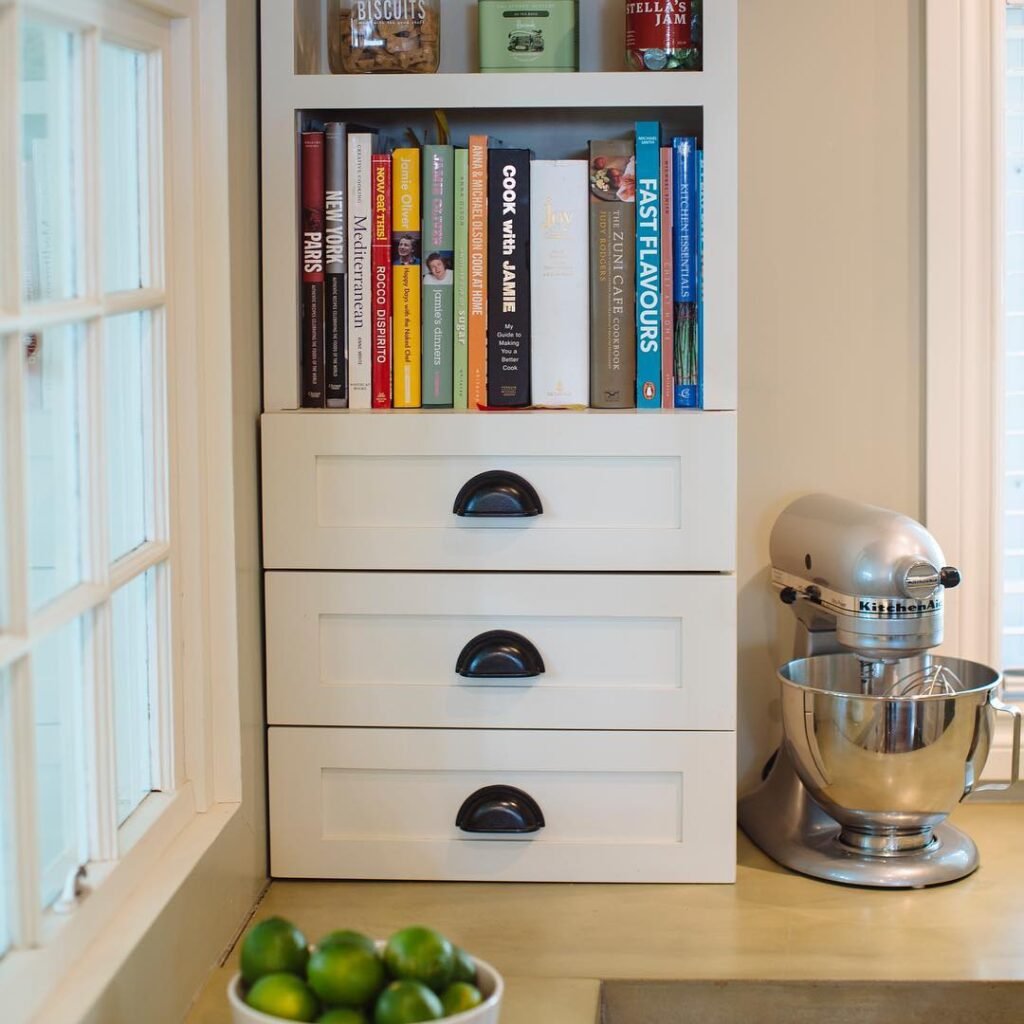
1. Create a Cookbook Shelf Above Kitchen Drawers
A low set of kitchen drawers can become a dedicated baking or recipe station when you add a cookbook shelf above it.
Keep your most-used baking books upright on the lower shelf and use the space above for jars, tins, or pantry staples.
Place the setup near your stand mixer or baking counter so the books are easy to reach while you work.
Styling tip: dark cup pulls or black hardware can add contrast to white drawers while still letting colorful cookbook spines stand out.
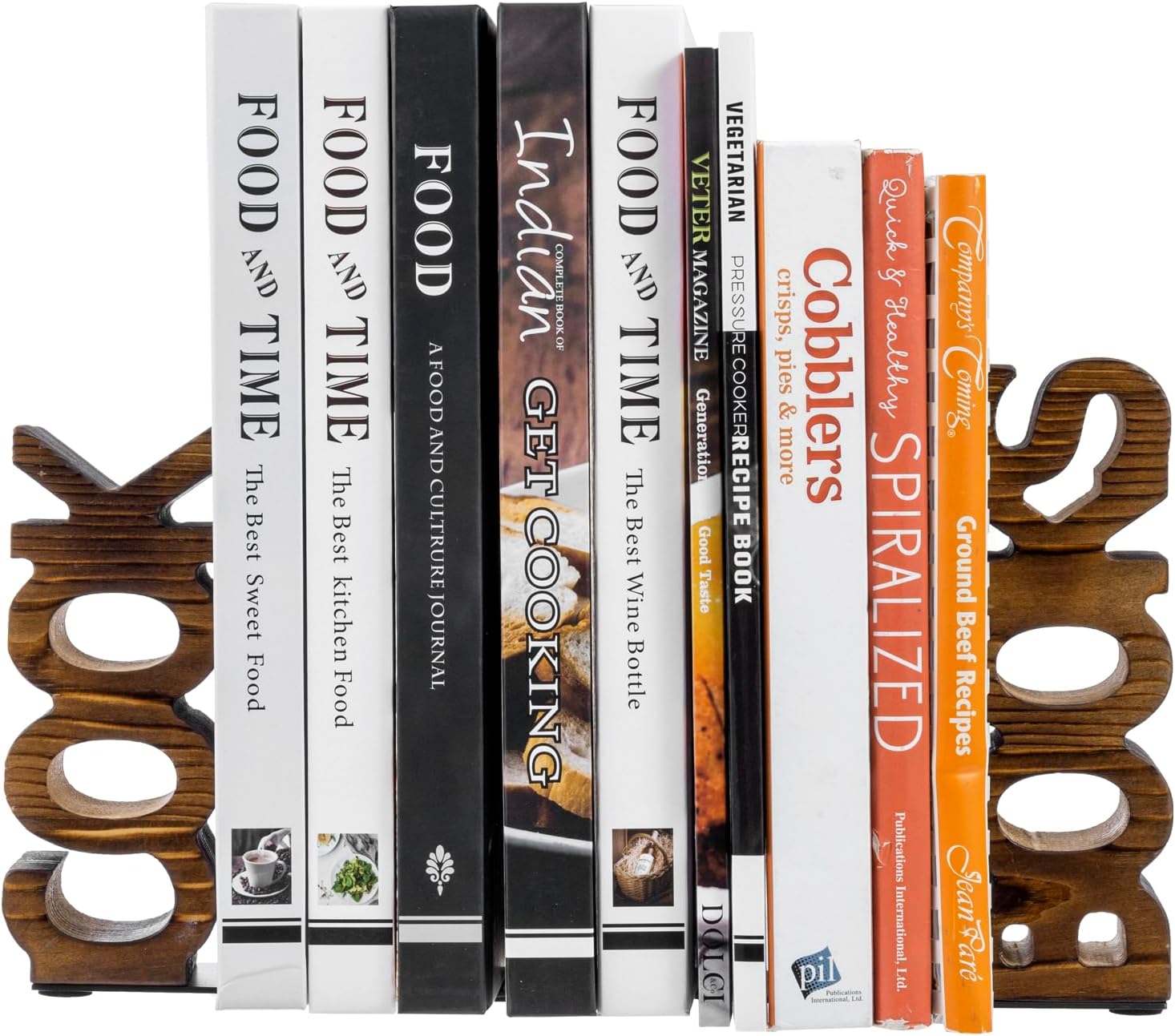
Amazon Find: Metal Cookbook Bookends
Simple bookends can keep frequently used cookbooks upright without making a small kitchen shelf feel crowded.
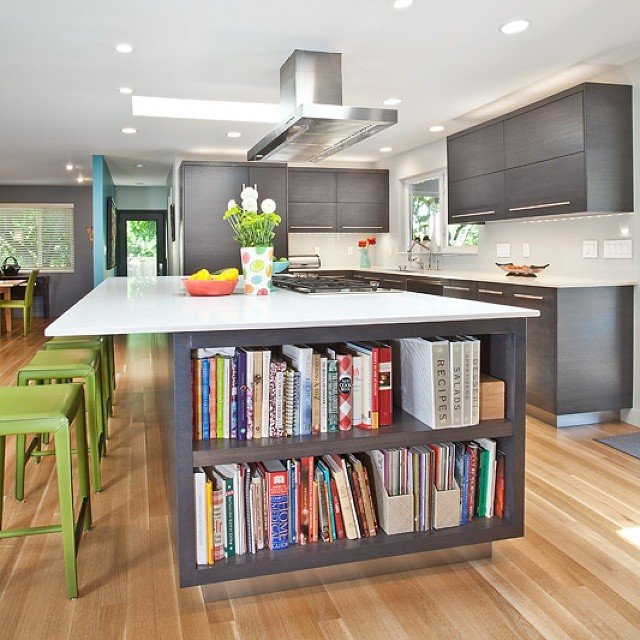
2. Turn the End of the Kitchen Island Into a Cookbook Library
The end of a kitchen island is often wasted space, but it can become one of the best places for open cookbook storage.
Add one or two shelves and store recipe books, binders, and food magazines vertically or in short horizontal stacks.
A darker wood island can make bright book covers stand out, while white or pale cabinetry creates a cleaner contemporary look.
Practical tip: keep books slightly recessed from the island edge so they are less likely to be bumped while people walk past.
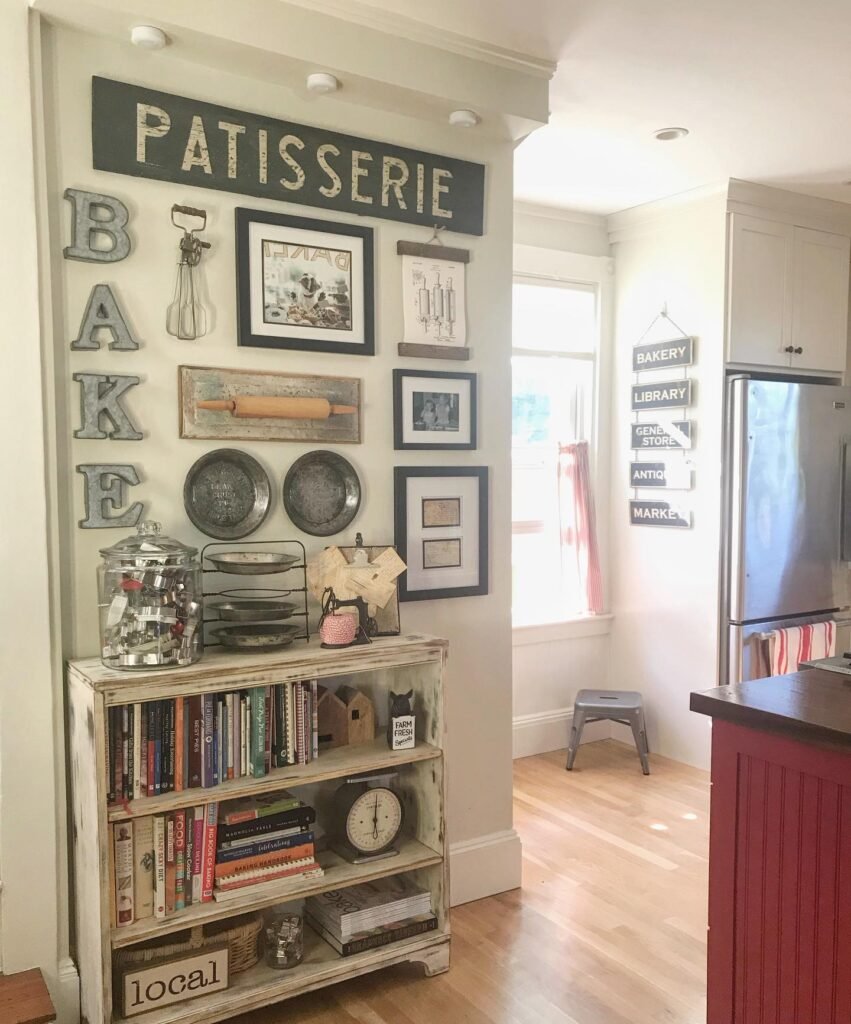
3. Pair a Rustic Bookshelf With a Kitchen Gallery Wall
A freestanding vintage or distressed bookshelf can turn a blank kitchen wall into a highly personal feature.
Fill the shelves with cookbooks, baskets, antique kitchen scales, bowls, and useful storage, then extend the display upward with framed prints or vintage kitchen pieces.
This approach works especially well in farmhouse and eclectic kitchens where a slightly collected look feels natural.
Editing rule: let books and useful kitchen items remain the main feature rather than covering every shelf with decorative objects.
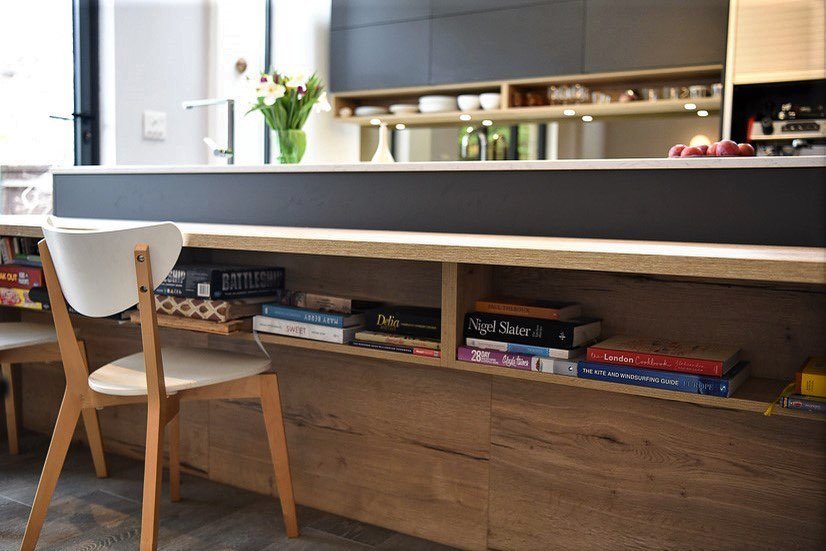
4. Add a Low Shelf Under the Island Overhang
A shallow shelf tucked underneath a countertop overhang can provide storage without changing the visible footprint of the island.
Store cookbooks flat in low stacks, then use the remaining space for a board game, tray, or serving piece.
Oak or another warm wood can make the shelf feel softer and more Scandinavian, particularly in a white or neutral kitchen.
Layout tip: keep the shelf clear of knees, stools, and normal seating positions around the island.
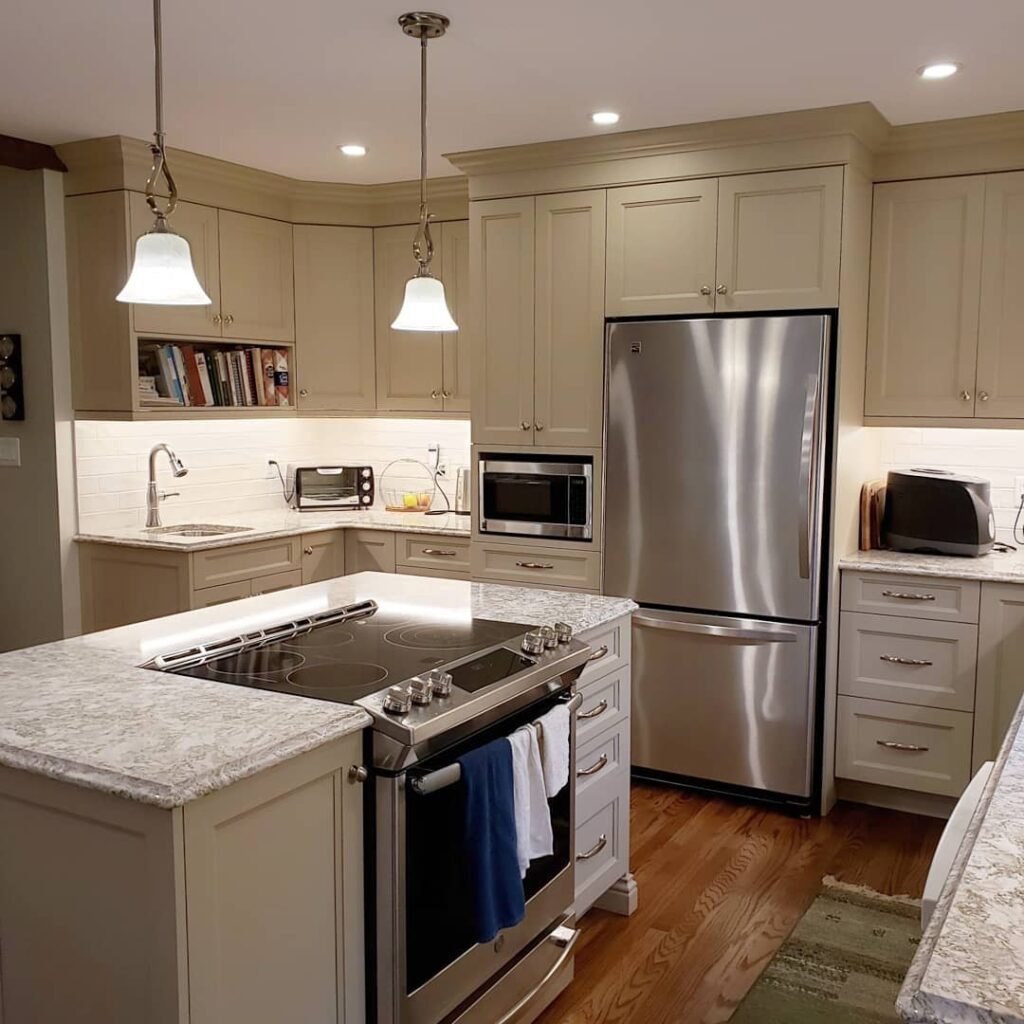
5. Build a Small Cookbook Nook Above the Backsplash
You do not need a full bookcase to give cookbooks a permanent home.
A small open niche built between upper cabinets can hold the eight or ten books you use most often.
This works particularly well in kitchens where you want most storage behind doors but still like a little open display.
Best use: reserve the niche for frequently used books rather than turning it into overflow storage.
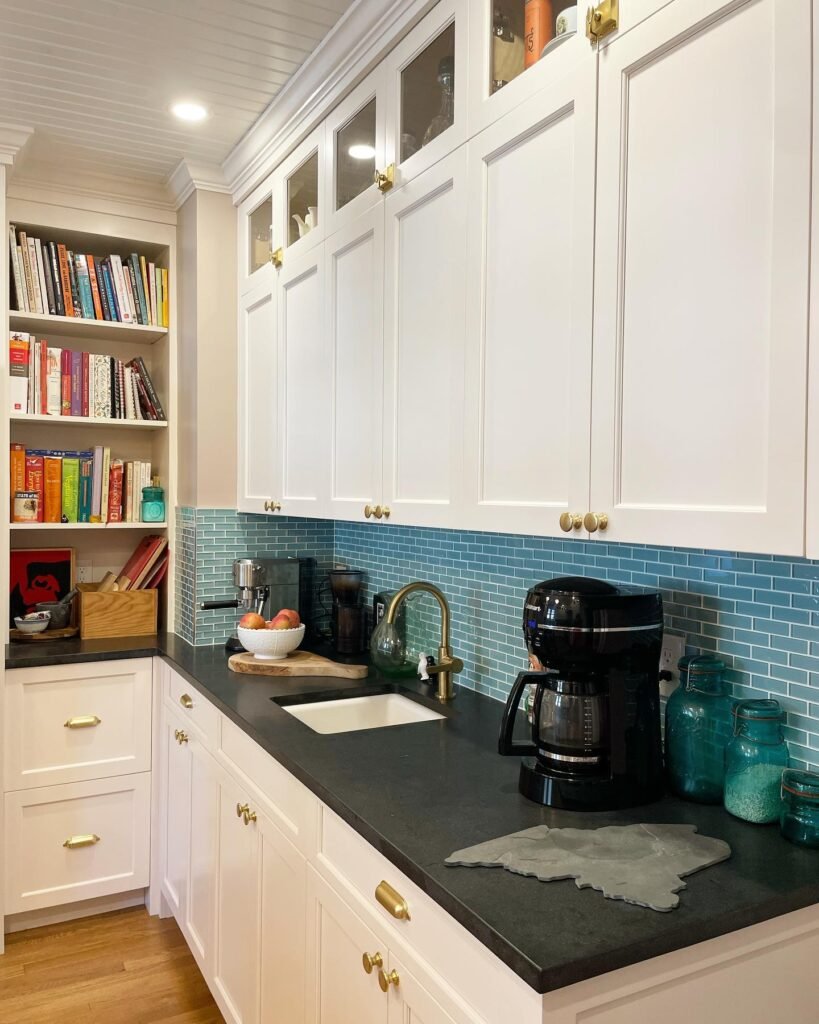
6. Use Open Corner Shelves Beside Pantry Cabinets
Corners beside tall pantry cabinets can be difficult to use efficiently, which makes them good candidates for open shelving.
Install several shelves vertically and use them for cookbooks, small jars, mugs, or serving pieces.
Because corner shelves are highly visible, you can let the book collection look slightly relaxed rather than perfectly arranged.
Space-saving idea: keep heavier or less decorative items lower and lighter books or plants higher.
For more ways to use awkward kitchen corners, see these ways to better use corner space.
7. Install Simple Bracket Shelves Between Windows
A pair of wall-mounted bracket shelves can turn an unused section between windows into useful storage.
Use them for a small group of cookbooks, a trailing plant, a few mugs, or kitchen ceramics.
White shelves disappear visually against a light wall, while darker brackets can connect to cabinet hardware or pendant lights.
Flexible option: bracket shelves are often easier to change later than custom built-ins, but they still need proper hardware and wall support for the expected load.
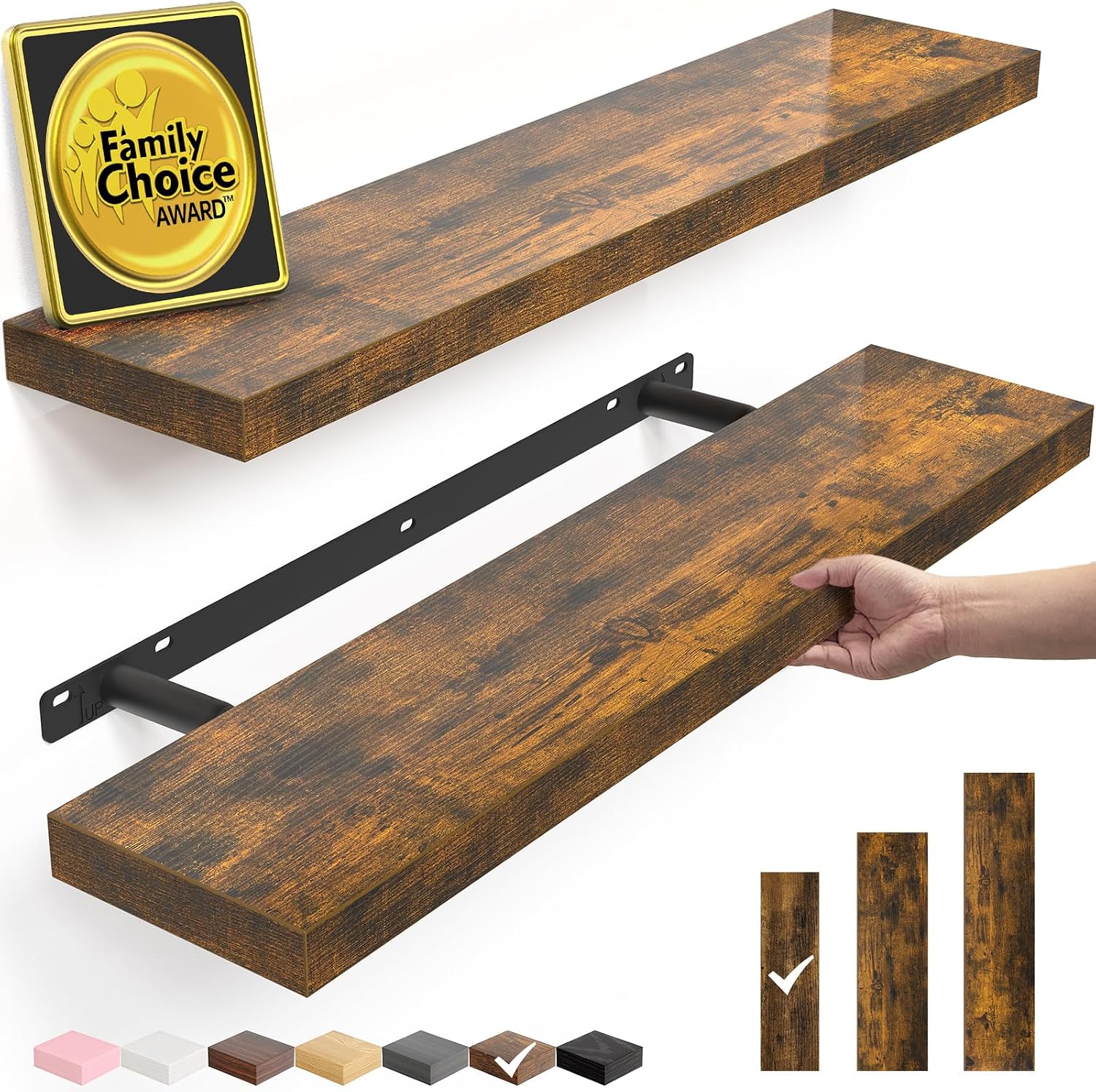
8. Style Chunky Oak Floating Shelves With Books and Ceramics
Oak floating shelves are a good way to bring warmth into a kitchen with painted cabinets or dark walls.
Mix upright cookbooks with copper measuring cups, pasta jars, blue-and-white china, or brass accessories.
One shelf can lean more functional while the other is slightly more decorative.
Designer trick: avoid perfect symmetry. Repeat several materials instead, such as warm wood, white ceramics, and one metallic finish.
Amazon Find: Wooden Floating Shelves
Wood shelves can add warmth while providing open storage for cookbooks, ceramics, jars, and small kitchen accessories.
9. Create a Dark Industrial Cookbook Shelf
Black metal or pipe-style shelves can give a cookbook collection a more dramatic background.
Mix vertical books with horizontal stacks and add one copper pot, small plant, or ceramic piece between sections.
Dark shelving works especially well when the rest of the kitchen includes warm wood, brick, black hardware, or moody paint.
Balance tip: add at least one warm material so the industrial shelving does not make the kitchen feel cold.
10. Add Open Shelves to a Sage Green Island End
Painted island cabinetry can become an even stronger focal point when the end includes open storage.
Deep sage green works beautifully with natural stone, black hardware, and colorful cookbooks.
Stack larger books flat on the lower shelf and reserve the upper shelf for glassware or frequently used smaller items.
Color tip: repeat the island color somewhere else in the kitchen through art, a towel, or a small accessory so the color does not feel isolated.
11. Make a Portable Rainbow Cookbook Tray
If you do not want to install shelves, a large wooden tray can create a small countertop cookbook station.
Stand a short row of favorite books inside the tray and arrange them by color for a cheerful rainbow effect.
Add one small plant or vase, but keep the display compact enough that you can lift the entire tray when you need the counter.
Best for: renters, small kitchens, and anyone who likes changing their displays often.
If countertop space is tight, use the same rule from these kitchen counter organization ideas: group items intentionally and leave visible prep space open.
12. Stack Colorful Cookbooks on a Kitchen Dresser
A freestanding kitchen dresser or side cabinet can double as cookbook storage without any construction.
Mix several upright books with one horizontal stack and leave one favorite cookbook open on a stand when you are actively using it.
Books covering different cuisines can make the display feel personal and well traveled without requiring additional decorative objects.
Styling tip: add one practical object such as a wooden spoon pot, teapot, or serving bowl to keep the display connected to the kitchen.
13. Use Walnut Open Shelves in a Kitchen Corner
Walnut shelves bring a richer, darker wood tone into kitchens with pale cabinets.
Mix cookbooks with stacked plates, glassware, a coffee brewer, one plant, and a decorative plate.
The shelf looks more natural when it holds things the household actually uses rather than objects chosen only for styling.
Easy formula: books + tableware + one appliance or brewing item + one decorative accent.
14. Build a Floor-to-Ceiling Kitchen Bookcase
If you own a large cookbook collection, treat it almost like a living-room library rather than trying to squeeze the books into a few small shelves.
A floor-to-ceiling bookcase can hold cookbooks, baskets, plants, fruit bowls, kitchen decor, and even a television if the room layout allows it.
Painting the shelving gray, olive, navy, or another architectural color can help it feel built into the room.
Storage tip: use lower shelves and baskets for heavier or less attractive items and reserve eye-level shelves for books and everyday display pieces.
15. Display Cookbooks Face-Out in the Island Base
Instead of showing only the book spines, create shallow island shelving that allows selected cookbook covers to face outward.
The setup feels almost like a small bookstore display and works particularly well when the covers themselves are colorful or beautifully illustrated.
In a white or minimalist kitchen, the covers can become the main decorative color in the room.
Practical benefit: face-out storage makes favorite cookbooks easy to identify without pulling several books from a tightly packed shelf.
How to Style Kitchen Shelves Without Making Them Cluttered
- Start with books: let cookbooks take most of the space.
- Mix vertical and horizontal stacks: this creates visual rhythm.
- Repeat materials: wood, white ceramics, glass, or brass can connect different items.
- Use real kitchen items: plates, bowls, mugs, and jars make the shelves feel useful.
- Add only one or two plants: greenery softens books without overwhelming them.
- Leave gaps: visible shelf space makes even a large collection look calmer.
Best Places for a Kitchen Bookshelf
| Location | Best For | Main Advantage |
|---|---|---|
| Island end | Cookbooks and glassware | Uses otherwise wasted space |
| Above counter | Everyday cookbooks | Easy reach while cooking |
| Empty corner | Vertical book storage | Makes awkward space useful |
| Kitchen dresser | Renters and flexible storage | No built-ins required |
| Full wall | Large collections | Maximum storage |
Kitchen Bookshelf Organization Checklist
- Keep frequently used cookbooks easy to reach.
- Store heavier books on lower shelves.
- Mix upright books with short horizontal stacks.
- Keep shelves away from direct stove heat and splashes.
- Use bookends where needed.
- Leave open space between groups.
- Add useful kitchen items rather than random decor.
- Choose shelves rated for the expected weight.
- Check that shelves do not block cabinet doors or walkways.
- Review the collection periodically and move rarely used books elsewhere.
Common Kitchen Bookshelf Mistakes
- Installing shelves too close to the stove: grease, steam, and heat are not ideal for books.
- Overloading floating shelves: books are heavy, so use appropriate wall structure and hardware.
- Filling every inch: shelves need some open space to avoid looking cluttered.
- Using too much purely decorative decor: let useful kitchen pieces do most of the styling.
- Storing frequently used books too high: beautiful storage should still be practical.
- Blocking prep space: countertop books should stay contained on one tray or small zone.
- Ignoring moisture: avoid shelves where sink splashes or heavy steam are common.
- Forgetting the rest of the kitchen: shelf finishes should relate to cabinetry, hardware, countertops, or flooring.
Frequently Asked Questions
Where should cookbooks be stored in a kitchen?
Store them somewhere dry and easy to reach but away from direct heat, grease, and frequent water splashes. Island shelving, a nearby wall shelf, a dresser, or a corner bookcase can all work well.
How do I display cookbooks without making the kitchen cluttered?
Group books in one defined zone, mix vertical and horizontal stacks, keep decorative objects limited, and leave visible empty shelf space between groups.
Can I use floating shelves for cookbooks?
Yes, but books are heavy. Use shelves, brackets, anchors, and wall structure rated for the expected load and follow the manufacturer’s installation guidance.
What else can I put on kitchen bookshelves?
Try plates, glassware, mugs, jars, bowls, coffee equipment, baskets, small plants, or a few decorative kitchen objects that relate to the way you use the room.
How can I store cookbooks in a very small kitchen?
Use a small open niche, narrow corner shelf, island-end shelving, one countertop tray, or a short stack on a freestanding dresser. Keep only the books you use regularly in the kitchen itself.
Should cookbooks be organized by color?
They can be if you enjoy the visual effect, but organize frequently used books in whatever way makes them easiest to find. A small rainbow display works particularly well when the shelf is mainly decorative.
Recommended Finds for Kitchen Bookshelf Styling
Choose accessories that improve the way the shelf works rather than adding decor simply to fill space.
- Cookbook bookends — for keeping upright books organized on open shelves.
- Wood floating shelves — for combining cookbook storage with ceramics and glassware.
- Wooden counter tray — for creating a portable cookbook display.
- Woven shelf baskets — for hiding small kitchen items on larger bookcases.
- Cookbook stand — for keeping a recipe open while you cook.
- Glass pantry jars — for mixing useful storage with cookbook displays.
- Small trailing plant — for softening the edges of open shelving.
Final Thoughts
The best kitchen bookshelf ideas make storage easier while giving the kitchen more personality.
You can use an island end for a full cookbook library, tuck a few favorite recipe books into a small cabinet nook, add warm floating shelves, or simply group a colorful row of books on a portable tray.
The shelves do not need to look perfectly styled. In fact, kitchen book storage often looks better when it includes the books, plates, jars, coffee equipment, and other pieces you genuinely use.
Keep the shelves functional, protect books from heat and water, leave enough breathing room, and let your cookbook collection become part of the character of the kitchen rather than something hidden behind cabinet doors.

Ankit is an engineer by profession and blogger by passion. He is passionate to do all the stuff such as designing the website, doing the SEO, researching for the content, writing tech blog posts and more.

