

A bedroom rug can make the entire room feel softer, warmer, and much more finished, but the way you position it matters just as much as the rug itself.
A rug placed too far underneath the bed can almost disappear, while one that is too small can make the room feel disconnected. The right placement helps anchor the bed, create comfortable walking zones, and visually organize the floor.
These bedroom rug placement ideas include classic under-bed arrangements, runners, foot-of-bed rugs, shared rugs for twin beds, sideways statement rugs, floating layouts, layered rugs, and solutions for bedrooms with carpet or platform beds.
As an Amazon Associate, I earn from qualifying purchases. This article contains affiliate links, which may earn us a commission at no extra cost to you.
Quick Bedroom Rug Placement Guide
- For a luxe bedroom: use one large rug beneath most of the bed.
- For a balanced everyday layout: start the rug around the lower third of the mattress.
- For a narrow room: use runners along both sides.
- For beautiful wood floors: place the rug only at the foot.
- For a compact bedroom: keep more floor visible around the edges.
- For twin beds: connect both beds with one shared area rug.
- For a bold look: turn the rug sideways across the walking zone.
- For carpeted rooms: layer a vintage-style rug over the existing carpet.
Plan the Rug Before You Buy It
Before ordering a rug, measure the bed frame, room width, nightstands, bench, and any doors or drawers near the planned placement.
Painter’s tape can help you outline a rug size directly on the floor. This makes it much easier to see whether enough of the rug will remain visible once the furniture is in place.
| Placement | Best For | Main Effect |
|---|---|---|
| Full under-bed | Larger bedrooms | Luxurious and grounded |
| Lower two-thirds | Most bedrooms | Balanced and efficient |
| Two runners | Tighter bedrooms | Symmetrical softness |
| Sideways rug | Multi-zone bedrooms | Defines walking or lounge area |
| Layer over carpet | Rental or carpeted rooms | Adds pattern and character |
12 Bedroom Rug Placement Ideas – Smart, Stylish & Timeless Floor Inspiration
1. Create a Luxe Look With a Large Rug Under the Bed
A generously sized rug underneath the bed creates one of the most classic and polished bedroom layouts.
Center the rug beneath the bed and allow a generous amount to remain visible beyond both sides and the foot.
This gives your feet a soft landing in the morning while visually connecting the bed to the surrounding floor.
The arrangement works especially well in larger primary bedrooms where a small rug would look out of proportion with the furniture.
Placement tip: aim for roughly 18–24 inches of visible rug beyond the sides and foot where your room and rug size allow.

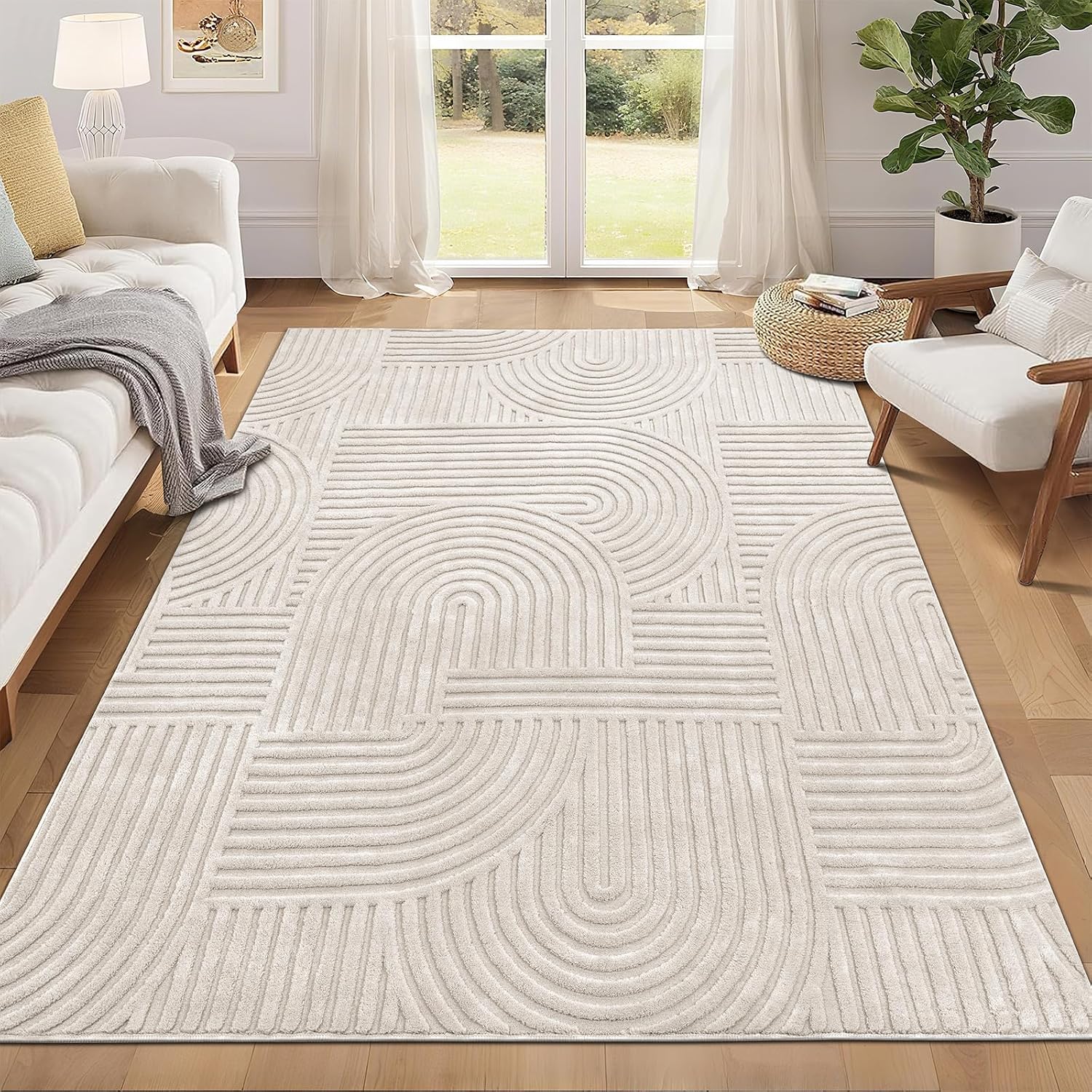
Amazon Find: Large Neutral Bedroom Rug
A generously sized neutral rug can anchor the bed while keeping the room calm enough for changing bedding and seasonal accents.
2. Try the Lower Two-Thirds Placement
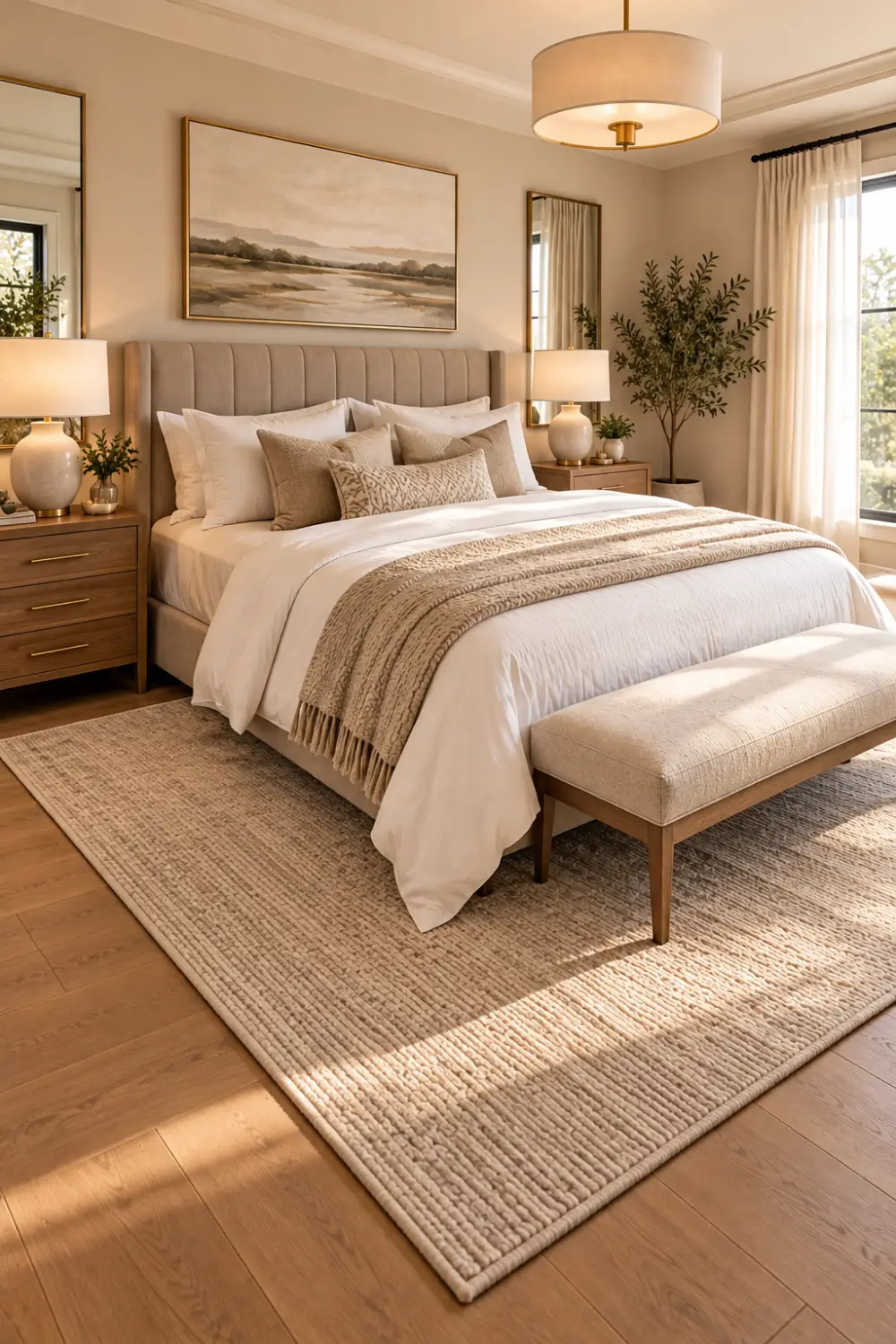
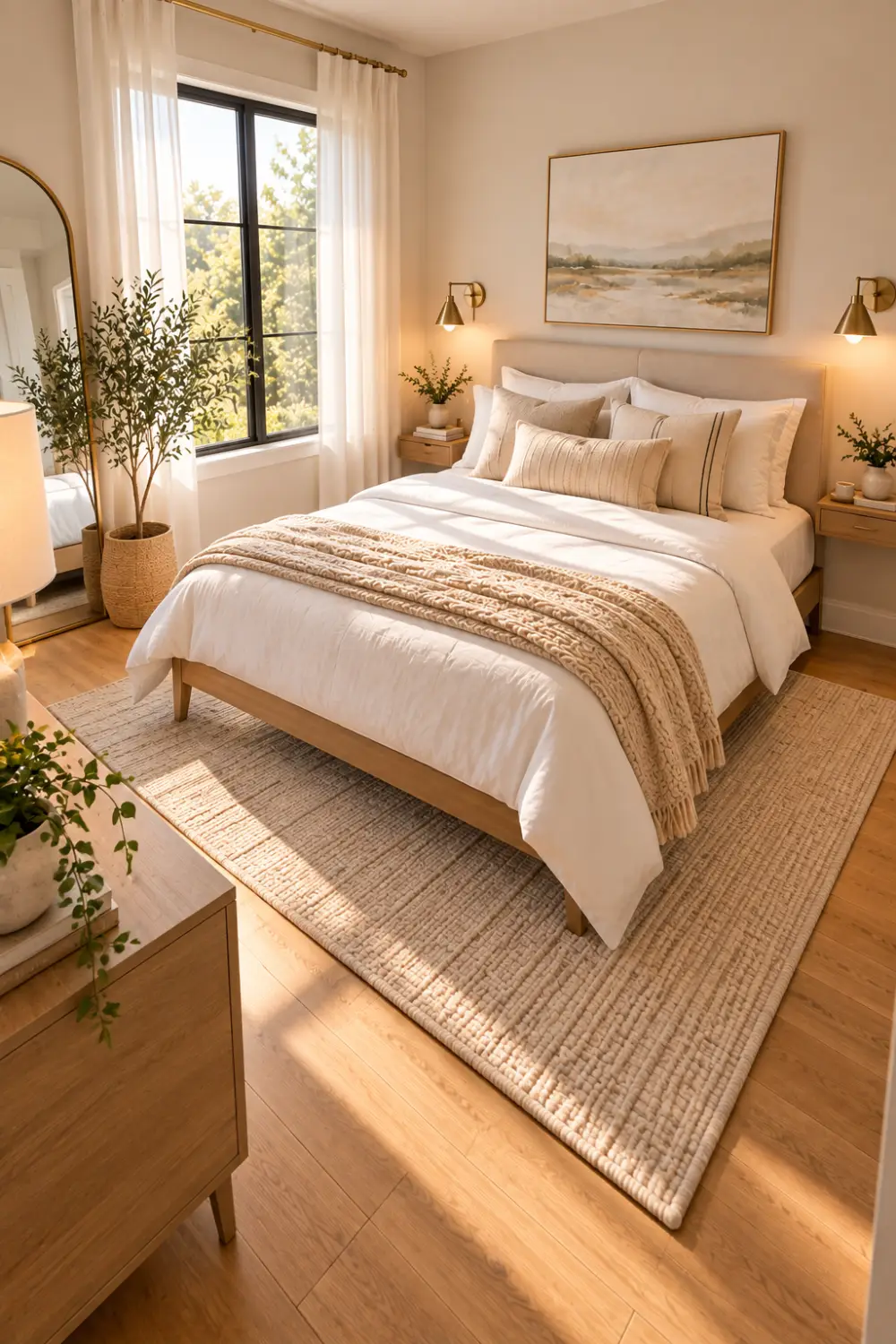
If you want the look of an under-bed rug without hiding most of it, slide the rug down so it begins around the lower third of the mattress.
The bottom portion of the bed rests on the rug while the upper section and nightstands stay directly on the main floor.
This layout makes more of the rug visible and can reduce the size you need compared with a full under-bed arrangement.
Best for: queen beds, compact primary bedrooms, and spaces where you want to keep attractive flooring visible.
3. Place Matching Runner Rugs Along Both Sides
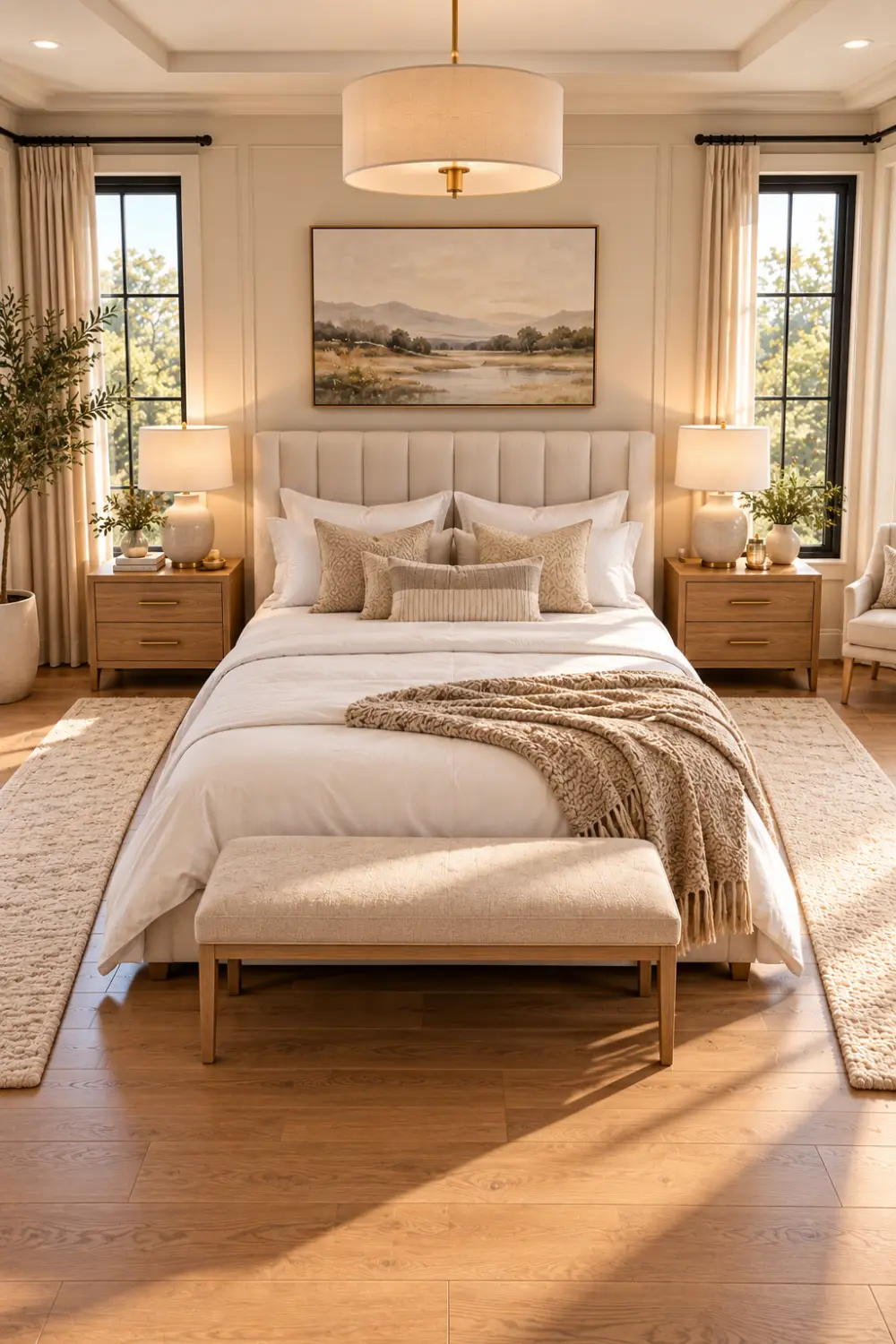
Two matching runners can provide softness without requiring one oversized area rug.
Place one runner parallel to each side of the bed and align them at approximately the same point for a balanced layout.
This gives both sleepers a comfortable landing spot while keeping much of the main flooring exposed.
Cream, beige, gray, and subtle woven textures work particularly well when you want the runners to feel calm rather than decorative.
Small-space advantage: runners can create the softness of a rug without visually shrinking a narrow room.
4. Put a Statement Rug at the Foot of the Bed
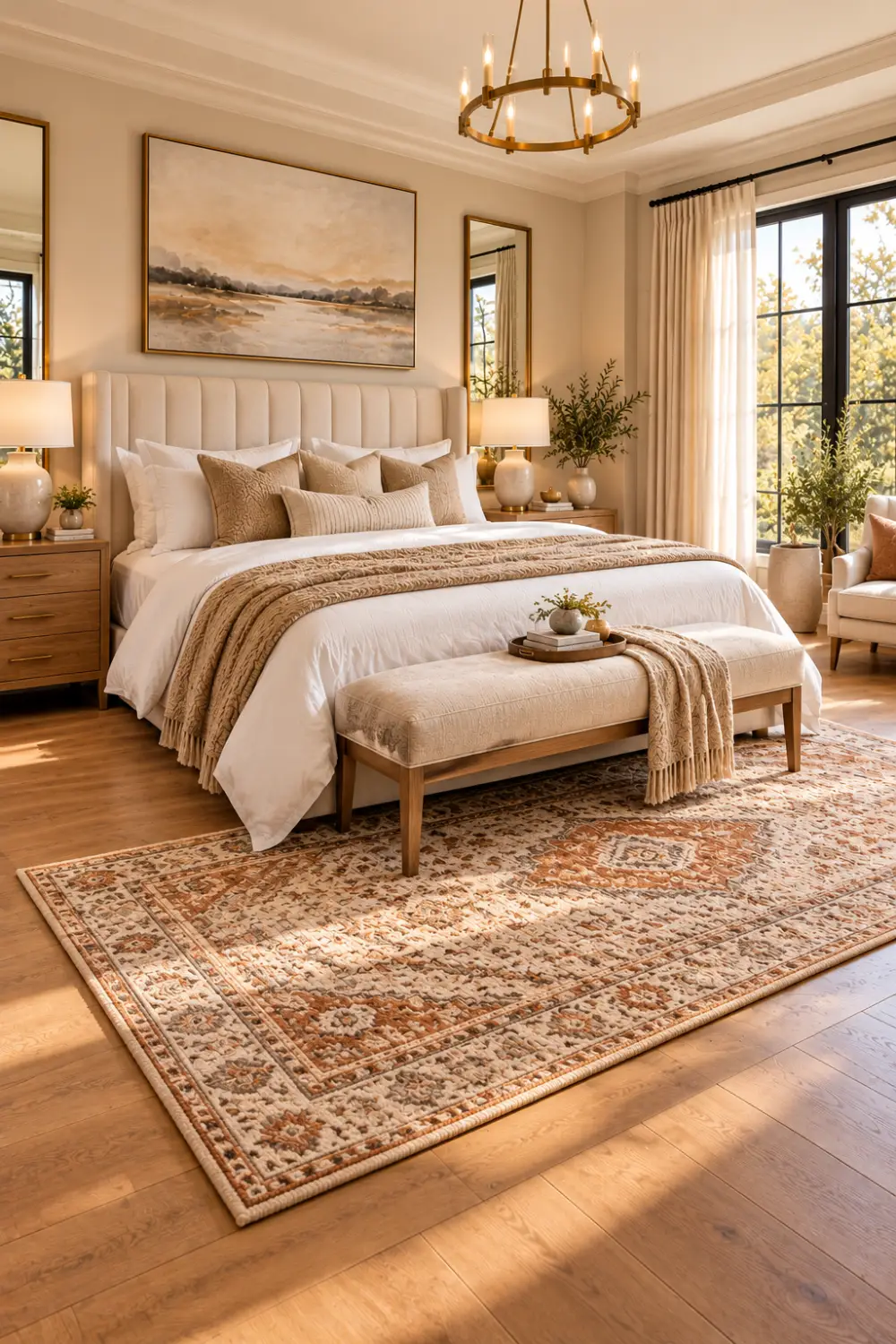
If you have hardwood, tile, or another floor you do not want to hide, position the rug completely or mostly beyond the foot of the bed.
Choose a rectangular rug roughly related to the width of the bed and center it horizontally.
Because the rug remains fully visible, you can use a stronger pattern or richer color than you might choose for a large under-bed rug.
Designer tip: repeat one rug color in the throw, pillow, or artwork to connect the floor visually to the bed.
5. Use a Light Rug to Open Up a Small Bedroom
Small bedrooms benefit from rugs that soften the floor without breaking it into too many visual sections.
Use a light-colored rug with a subtle pattern and position it beneath the lower section of the bed.
Leave a visible border of flooring around the rug so the room still has breathing space.
Avoid a rug that crowds wardrobes, doors, or bedside furniture simply for the sake of going larger.
Easy palette: oatmeal, cream, soft gray, faded beige, or a low-contrast vintage pattern.
6. Connect Twin Beds With One Shared Area Rug
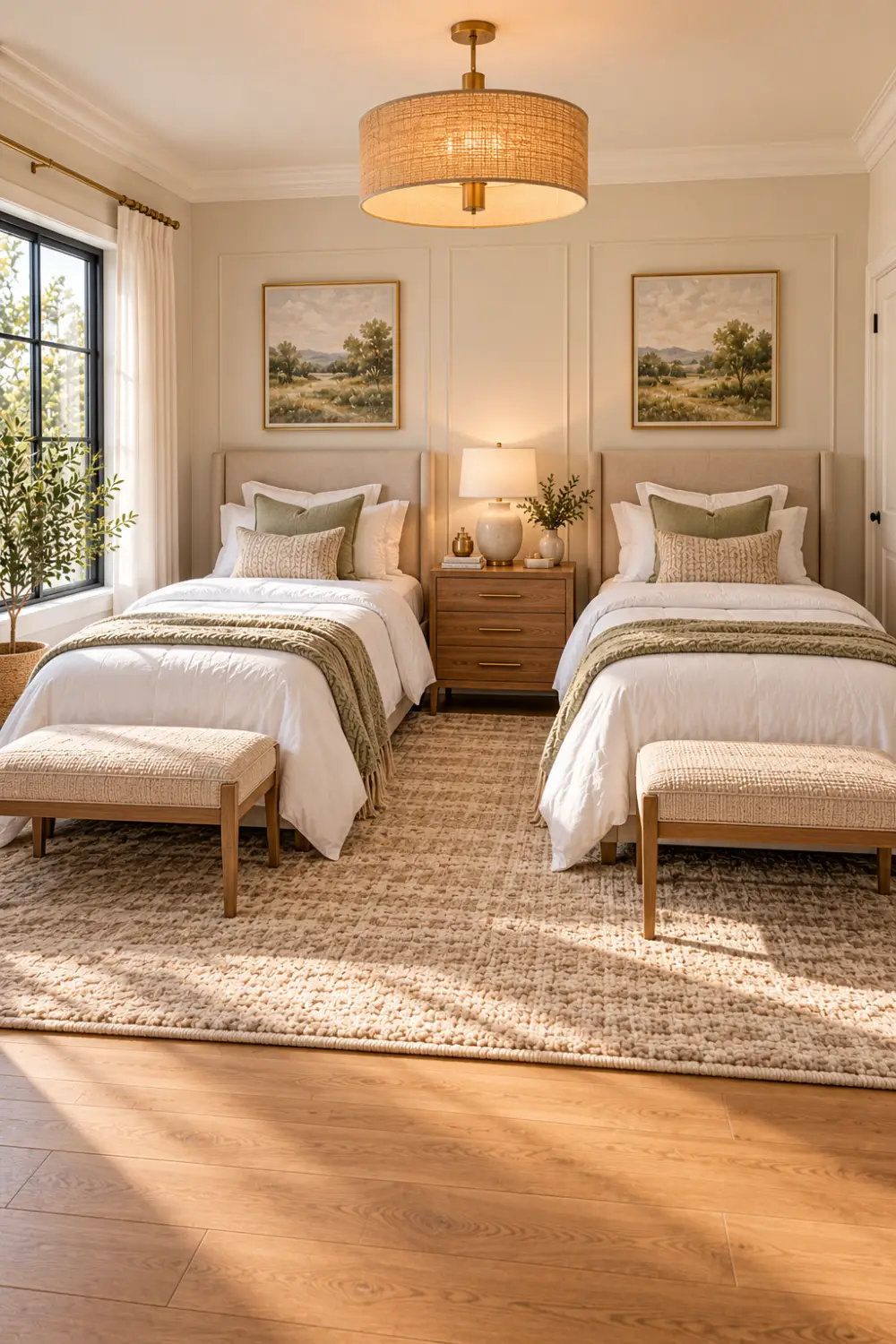
One large rug can visually connect twin beds in a guest room, children’s bedroom, or shared sleeping space.
Center the rug between the beds or choose a size large enough for both beds to partially rest on it.
This creates one unified floor zone rather than making each bed feel like a separate island.
A soft neutral rug is particularly useful if the two beds use slightly different bedding or accent colors.
Balance tip: keep approximately equal amounts of rug visible around each bed whenever the floor plan allows.
7. Turn a Statement Rug Sideways Across the Room
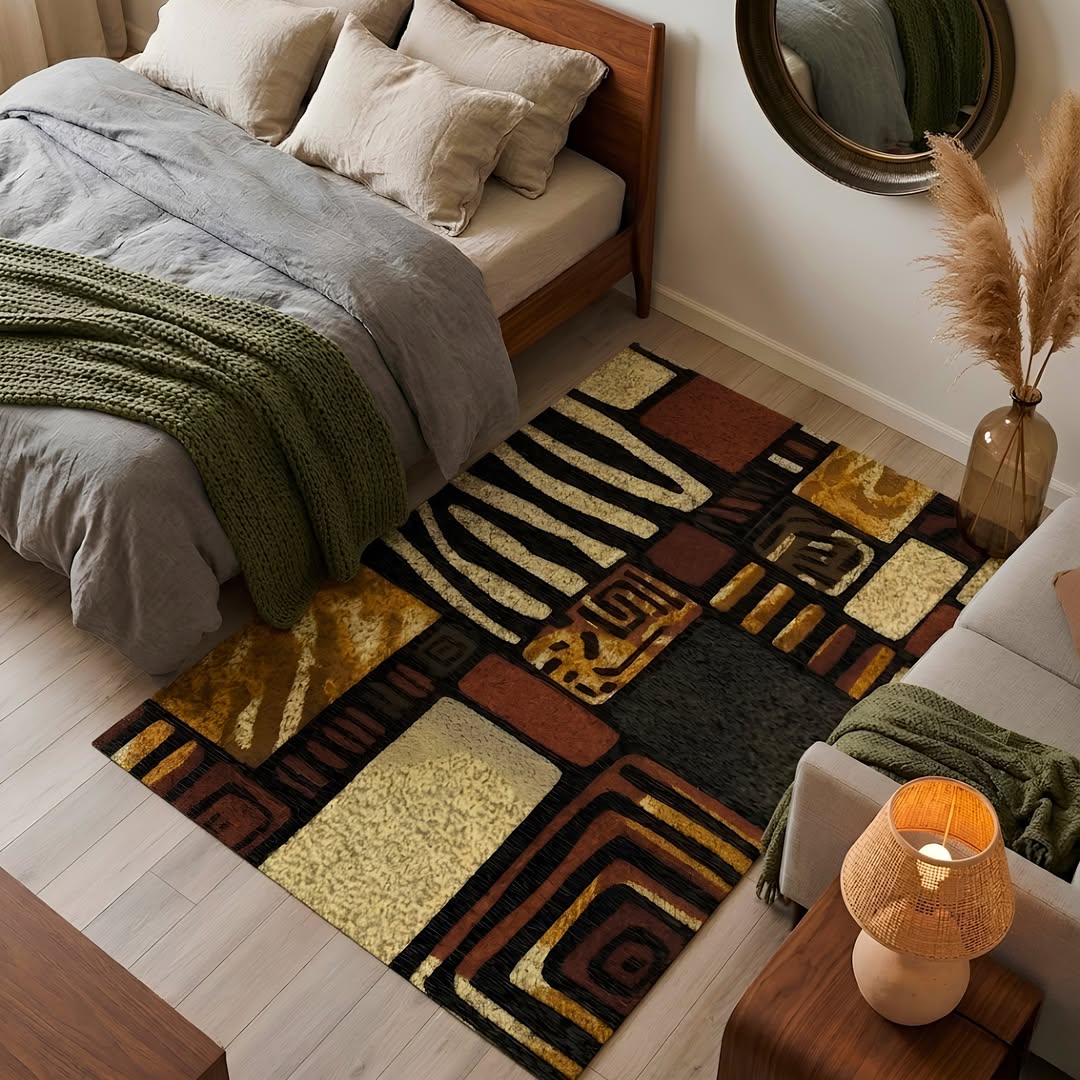
Not every bedroom rug needs to run in the same direction as the mattress.
Turn a patterned rug perpendicular to the bed and let it stretch across the main walking zone or between the bed and a nearby sofa, bench, or lounge area.
The sideways orientation can make the rug act almost like a soft room divider.
This works especially well in compact bedrooms where one space performs several jobs.
Color strategy: when the rug is bold, pull two or three shades from it into bedding or accessories instead of adding another unrelated pattern.
8. Float the Rug as a Centerpiece
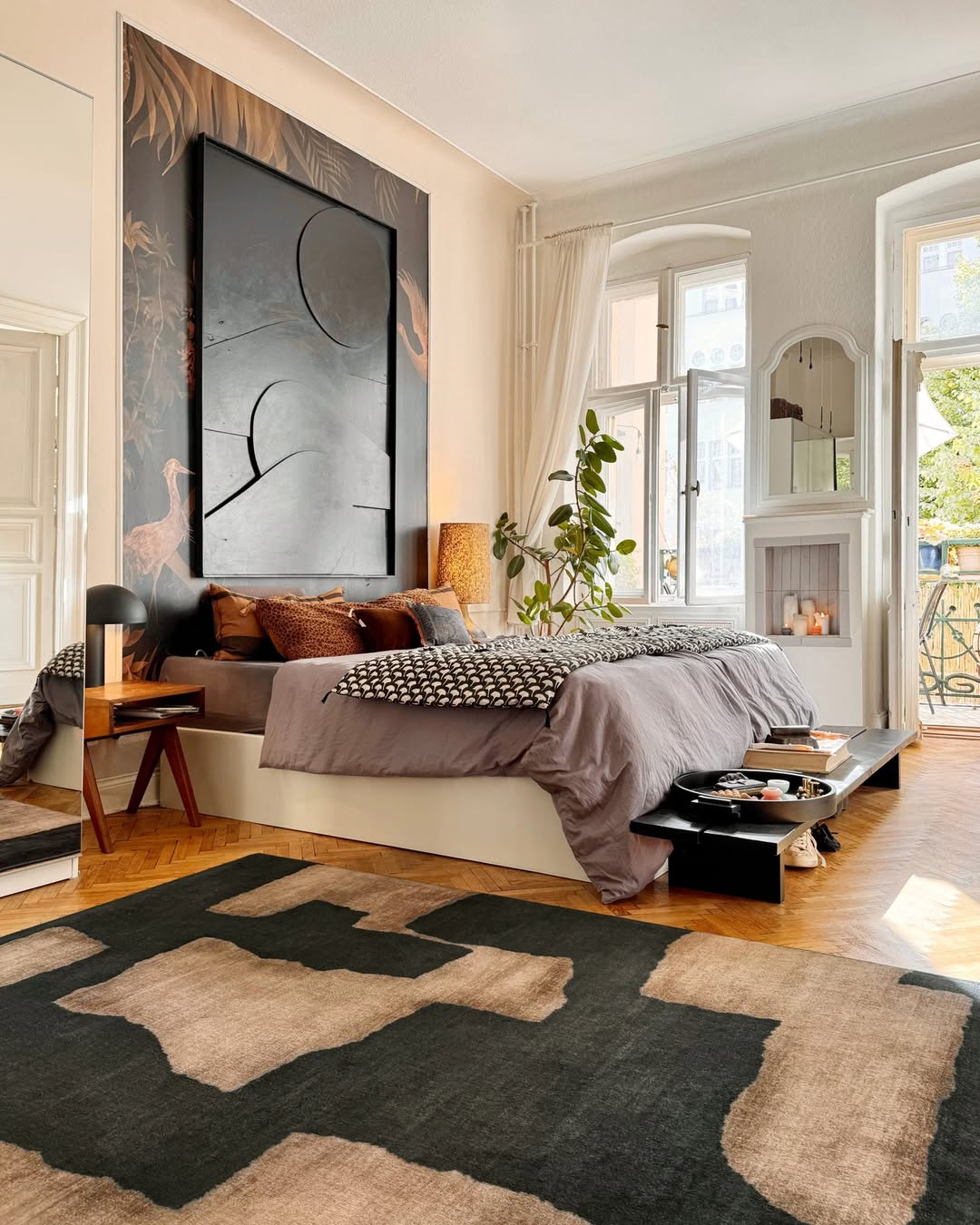
A rug does not always have to disappear under furniture.
In a larger bedroom, center a graphic or patterned rug on an open section of floor and leave visible flooring around every side.
The bed can sit slightly beyond the rug rather than directly on top of it, allowing the full pattern to remain visible.
This layout works particularly well when the flooring itself is attractive and you want both materials to be part of the design.
Important: floating rugs need enough scale. A very small rug in the middle of a large room may look accidental rather than intentional.
9. Layer Rugs Across Most of the Bedroom Floor
Layering can add more depth than a single area rug, particularly in boho, cottage, and relaxed bedrooms.
Start with a large natural or neutral base rug, then add a patterned rug over one part of it.
Let the edges of both rugs remain visible so the layering looks deliberate.
A woven jute-style base with a softer patterned upper rug creates useful contrast between rough and plush textures.
Safety note: make sure layered edges stay flat and secure, particularly along walking paths.
10. Let the Rug Frame a Bench at the Foot of the Bed
If your bed has an upholstered bench or ottoman at the foot, include it in the rug arrangement rather than letting it visually float outside the bed zone.
Place the rug beneath the lower half of the bed and extend it far enough forward for the bench to sit comfortably within the rug boundary.
This creates a finished vignette where the bed, rug, and bench read as one group.
Best result: leave some rug visible beyond the front and sides of the bench so it does not appear squeezed onto the edge.
To make the upper half of the arrangement feel equally polished, use these bed layering ideas for the duvet, quilt, pillows, and throw.
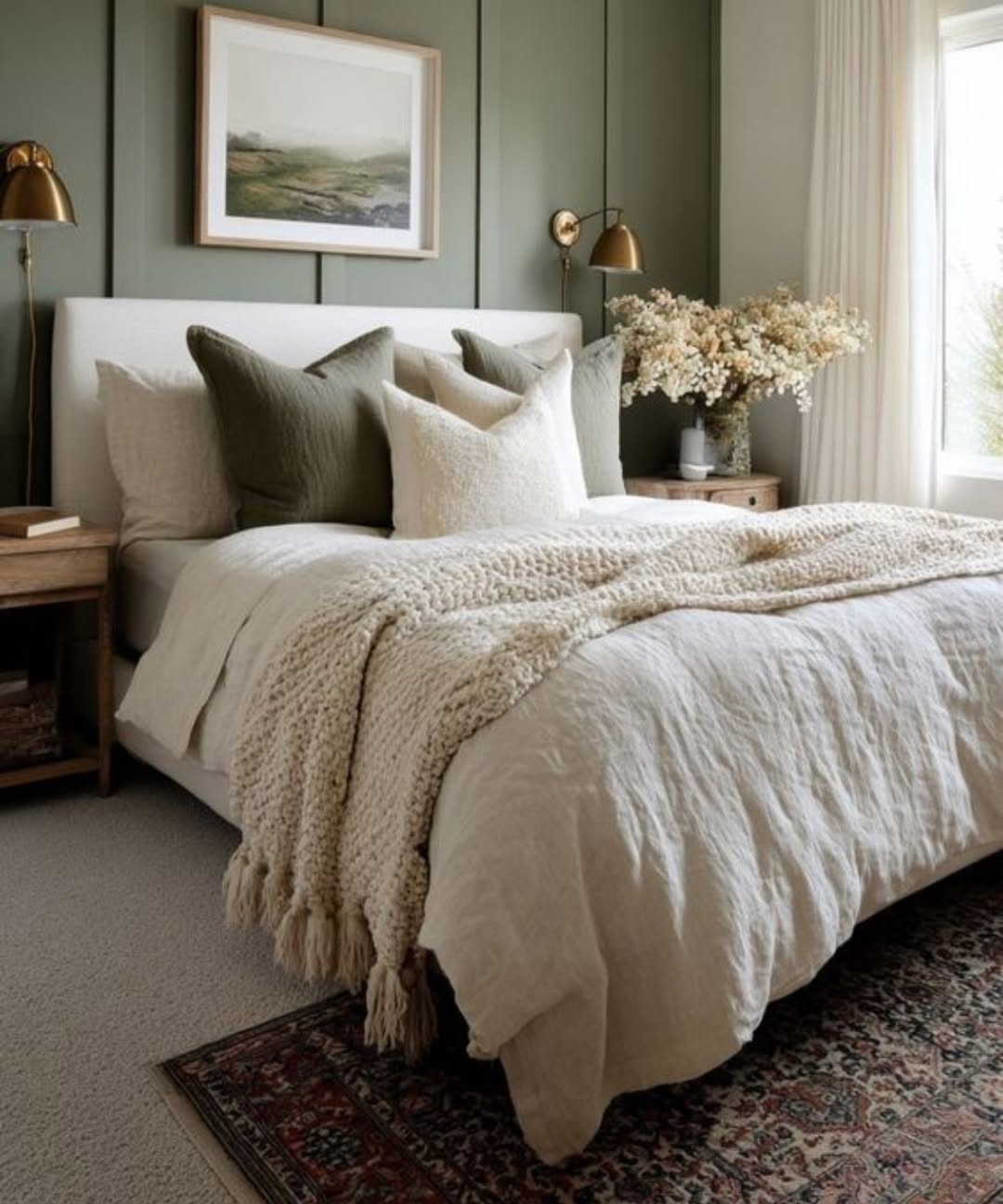
11. Layer a Vintage Rug Over Existing Carpet
Wall-to-wall carpet does not mean you have to skip an area rug.
A faded Persian-style or vintage-inspired rug placed over carpet can introduce pattern, color, and a more collected feeling without changing the existing flooring.
Try tucking part of the rug beneath the lower half of the bed and letting the rest extend into the room.
This can be especially useful in rentals where the carpet is practical but not visually interesting.
Practical note: use a rug-on-carpet solution designed to reduce shifting or bunching, and make sure edges remain flat.
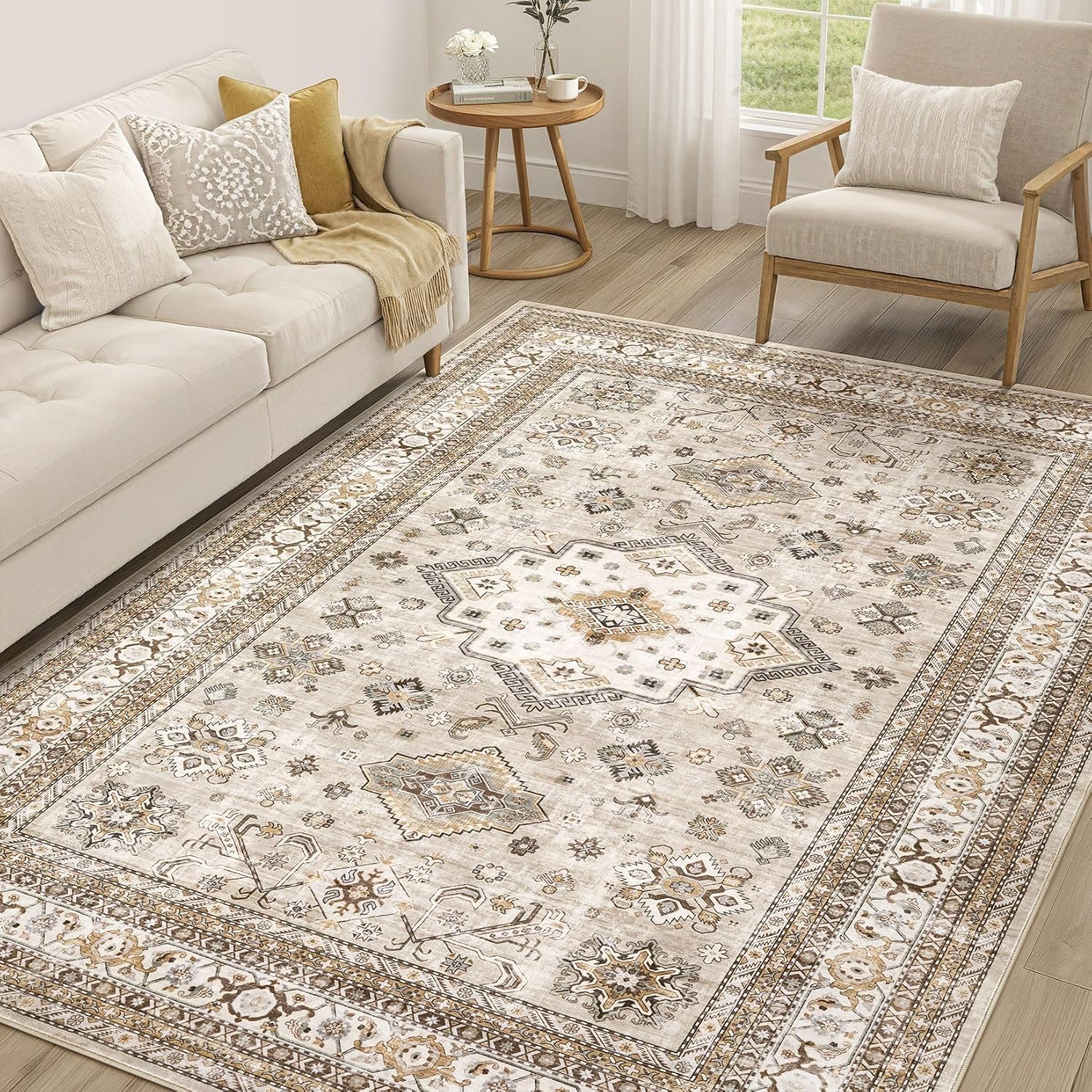
Amazon Find: Vintage-Style Bedroom Rug
A softly distressed rug can add pattern over plain carpet or flooring without overwhelming neutral bedding.
12. Place a Rug Beside a Platform Bed to Define Another Zone
A platform bed that sits close to a wall does not always need an under-bed rug.
Instead, position a small or medium rug beside the bed and use it to define a desk, chair, or window area.
This allows the rug to solve a zoning problem rather than simply decorating the sleeping area.
The arrangement is particularly useful in studio-style rooms where the bed, desk, and lounge area all share one compact footprint.
Small-space trick: let the rug establish the boundary of the secondary zone instead of adding a physical divider.
How Much Rug Should Show Around the Bed?
There is no single measurement that works for every room, but the visible rug should look substantial enough to relate to the bed.
- Along the sides: leave enough exposed rug for a comfortable step beside the bed.
- At the foot: extend the rug visibly beyond the bed or bench.
- Near nightstands: decide whether they will sit on or off the rug before choosing the size.
- Near a bench: include the entire bench within the rug zone if possible.
- Near doors: leave clearance for the door to swing freely.
Rug Placement Ideas by Bedroom Type
| Bedroom | Try This Placement | Why It Works |
|---|---|---|
| Large primary bedroom | Large full under-bed rug | Matches the room scale |
| Small bedroom | Lower two-thirds | Keeps more floor visible |
| Narrow bedroom | Side runners | Adds softness without crowding |
| Twin guest room | One shared rug | Connects both beds |
| Bedroom with carpet | Vintage rug layered on top | Adds pattern without remodeling |
| Studio bedroom | Sideways or zone rug | Defines separate functions |
How to Make the Rug and Bedding Work Together
Your rug and bedding do not need to match exactly. They only need enough visual connection to feel like they belong in the same bedroom.
- Bold rug + neutral bedding: let the floor become the focal point.
- Neutral rug + patterned bedding: use the rug as a quiet foundation.
- Vintage rug + linen bedding: creates a relaxed collected look.
- Jute rug + soft quilt: contrasts rough and soft textures.
- Striped rug + simple duvet: introduces movement without overwhelming the room.
Bedroom Rug Placement Checklist
- Measure the bedroom floor.
- Measure the full bed frame.
- Decide whether nightstands sit on or off the rug.
- Mark the planned rug dimensions with tape.
- Check door and drawer clearance.
- Leave enough rug visible beyond furniture.
- Use a suitable rug pad or grip where needed.
- Keep layered rugs flat at the edges.
- Choose pile height for the way the area is used.
- Coordinate at least one rug color with the room.
Common Bedroom Rug Placement Mistakes
- Buying a rug that is too small: it can make the bed feel oversized and disconnected.
- Hiding almost all of the rug: enough material should remain visible to make the placement meaningful.
- Ignoring walkways: raised or curling rug corners can create trip hazards.
- Blocking doors or drawers: always check furniture movement before ordering.
- Using runners of different lengths: matching proportions usually create a more intentional look.
- Layering unstable rugs: both layers need to remain secure under normal use.
- Choosing pattern without considering the bedding: decide which element will visually lead.
- Forcing an under-bed rug into an awkward room: sometimes a side rug or floating placement works better.
Frequently Asked Questions
Should a bedroom rug go completely under the bed?
It can, but it does not have to. A large full under-bed rug creates a luxurious look, while lower two-thirds placement keeps more of the rug visible and may require a smaller size.
How far should the rug extend beyond the bed?
The exact amount depends on room size, but around 18–24 inches beyond the bed can create a comfortable visible border when the layout allows. Always measure your actual furniture first.
Can I put an area rug over bedroom carpet?
Yes. Layering a patterned area rug over plain carpet can add color and structure. Use an appropriate rug-on-carpet solution to help prevent movement and bunching.
Are runners good for bedrooms?
Yes. Matching runners beside the bed work particularly well in narrow rooms where a large area rug would take up too much visual or physical space.
Should a bedroom bench sit on the rug?
It often looks more intentional when the bench sits fully within the rug zone, particularly when the rug begins beneath the lower half of the bed.
Can a rug sit completely beside the bed?
Yes. In compact rooms or platform-bed layouts, a rug beside the bed can define a workspace, reading area, or main walking zone rather than sitting beneath the mattress.
Should the rug match the bedding?
No. Exact matching is unnecessary. Repeating one or two colors, similar undertones, or complementary textures is normally enough to make the bed and rug feel connected.
Recommended Finds for Bedroom Rug Styling
Measure the room first and choose your placement before shopping. Correct scale usually has more visual impact than chasing a particular rug trend.
- Large neutral bedroom rug — for full or partial under-bed placement.
- Matching bedside runners — for creating symmetrical soft landing zones.
- Vintage-style rug — for layered or carpeted bedrooms.
- Natural jute-style rug — for a neutral base beneath a smaller patterned rug.
- Patterned statement rug — for sideways or foot-of-bed placement.
- Non-slip rug pad — for helping area rugs remain stable on suitable floors.
- Rug-on-carpet gripper — for layered rugs in carpeted bedrooms where compatible.
Final Thoughts
The best bedroom rug placement ideas are less about following one rigid rule and more about choosing a layout that works with your bed, available floor space, and the way you use the room.
For a timeless look, a large rug or lower two-thirds placement can anchor the bed beautifully. Runners are useful in narrow rooms, while a foot-of-bed rug lets attractive flooring remain part of the design.
You can also treat the rug as a zoning tool by turning it sideways, floating it in an open area, using it beneath a bench, or placing it beside a platform bed to define another part of the room.
Measure before buying, leave enough rug visible to feel intentional, and make sure every edge stays safe and comfortable underfoot. When the placement is right, even a simple rug can make the entire bedroom feel much more finished.

Ankit is an engineer by profession and blogger by passion. He is passionate to do all the stuff such as designing the website, doing the SEO, researching for the content, writing tech blog posts and more.

