

A gallery wall does not have to be perfectly symmetrical, filled with matching black frames, or arranged like a showroom display. Some of the most interesting walls are the ones that mix old frames, bold artwork, mirrors, plants, textiles, photographs, and objects that feel collected over time.
The key to a successful funky gallery wall is giving all that variety at least one visual connection. That might be a repeated color, a consistent spacing rhythm, one oversized anchor piece, or several related frame finishes.
These 15 eclectic gallery wall ideas include maximalist frame mixes, floor-to-ceiling layouts, mirrors, greenery, botanical prints, textile art, vintage finds, and softer neutral versions for anyone who wants personality without visual overload.
As an Amazon Associate, I earn from qualifying purchases. This article contains affiliate links, which may earn us a commission at no extra cost to you.
Quick Picks for a Funky Gallery Wall
- For a maximalist look: mix brass, black, wood, and painted frames.
- For better balance: start with one oversized anchor piece.
- For a small room: use mirrors to reflect light.
- For a tall wall: take the arrangement almost floor to ceiling.
- For a boho look: mix frames with macramé or textile art.
- For a calmer wall: keep the palette cream, taupe, terracotta, and green.
- For plant lovers: combine botanical art with trailing greenery.
- For vintage character: thrift frames slowly rather than buying one matching set.
Plan the Gallery Wall Before You Hang Anything
Eclectic does not mean completely random. Before putting holes in the wall, decide what will hold the arrangement together.
| Decision | Eclectic Option | Helpful Rule |
|---|---|---|
| Frames | Gold, wood, black, painted | Repeat at least one finish |
| Art | Photos, botanicals, abstracts, vintage prints | Repeat two or three colors |
| Anchor | Large mirror or artwork | Place it first |
| Spacing | Relaxed and organic | Still keep gaps intentional |
| Shape | Wide, vertical, asymmetrical | Relate it to the furniture below |
For more layout options before you start, see these gallery wall layout ideas.
15 Funky Gallery Wall Ideas for Bold Eclectic Home Decor
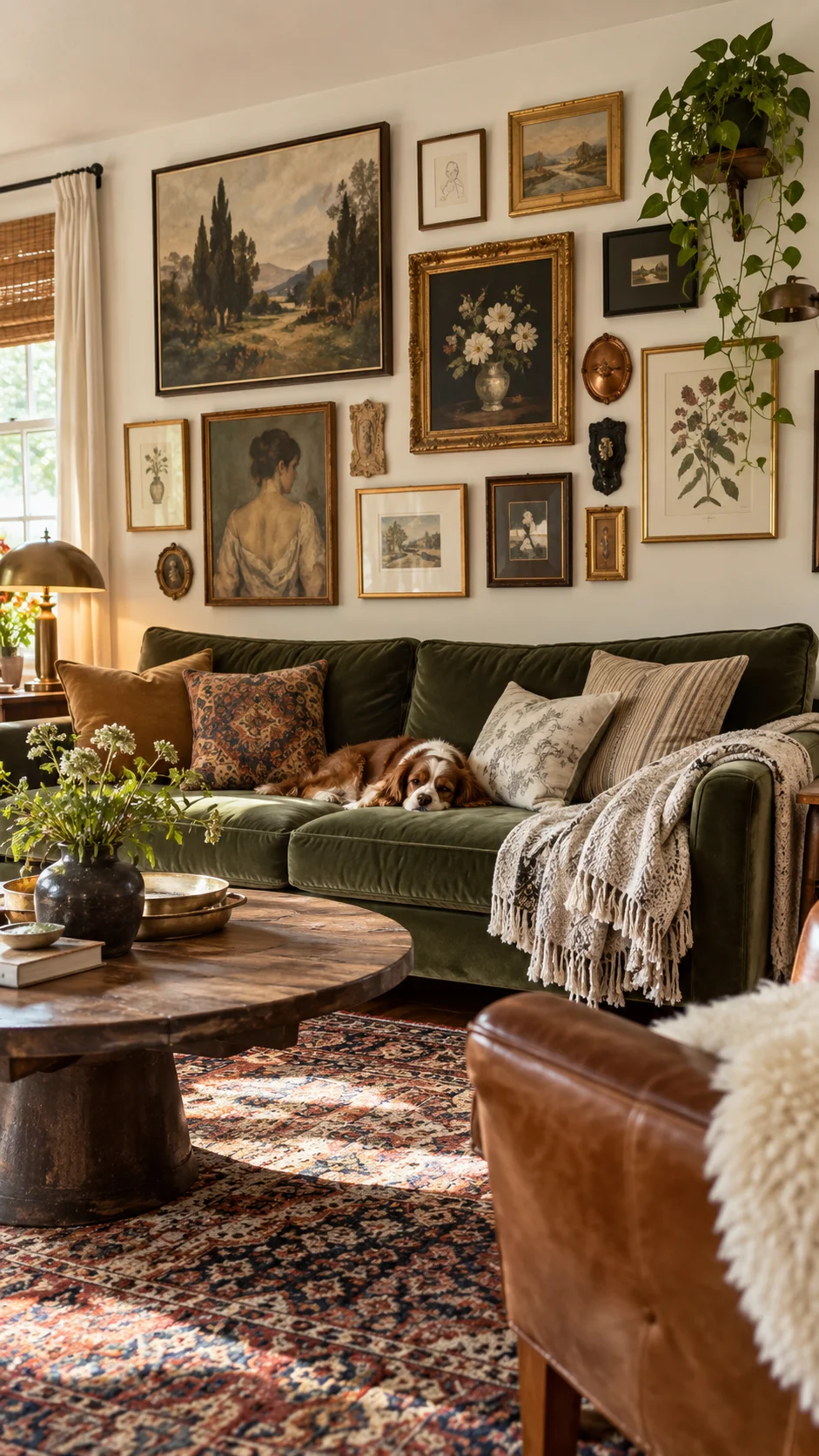
1. Mix Brass, Copper, Gilded Wood, and Black Frames
A funky gallery wall becomes much more interesting when every frame does not match.
Mix aged brass, copper, black, dark wood, and gilded finishes across the wall. The slight differences in shine and texture help each piece catch light in a different way.
Keep the arrangement from becoming chaotic by repeating several finishes at least twice.
Eclectic rule: mixed frames look intentional when the artwork shares several related colors or the gaps between pieces remain visually consistent.
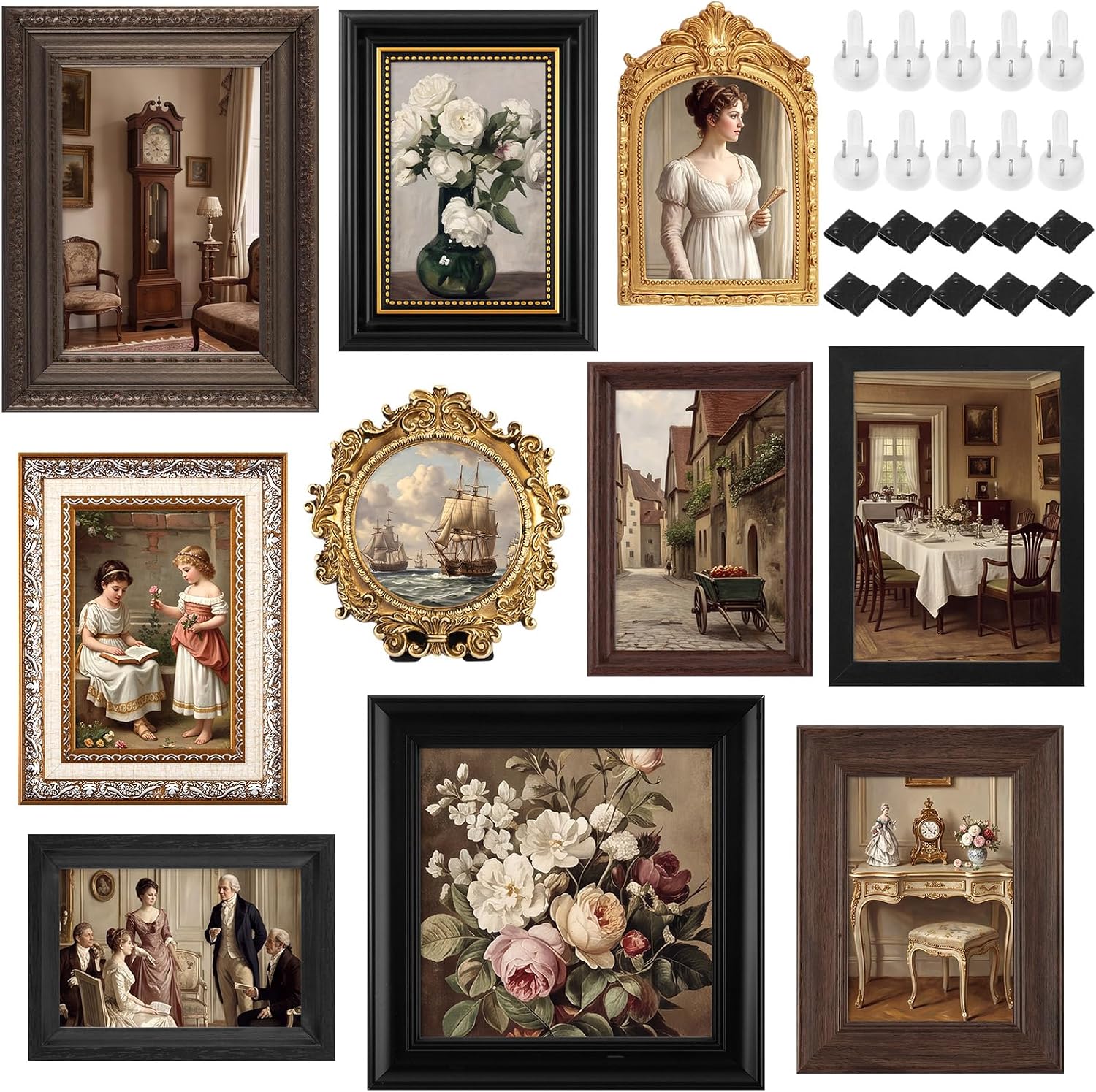
Amazon Find: Vintage-Style Gallery Frames
A mix of gold, black, and wood-look frames can help you build an eclectic arrangement without needing every piece to match.
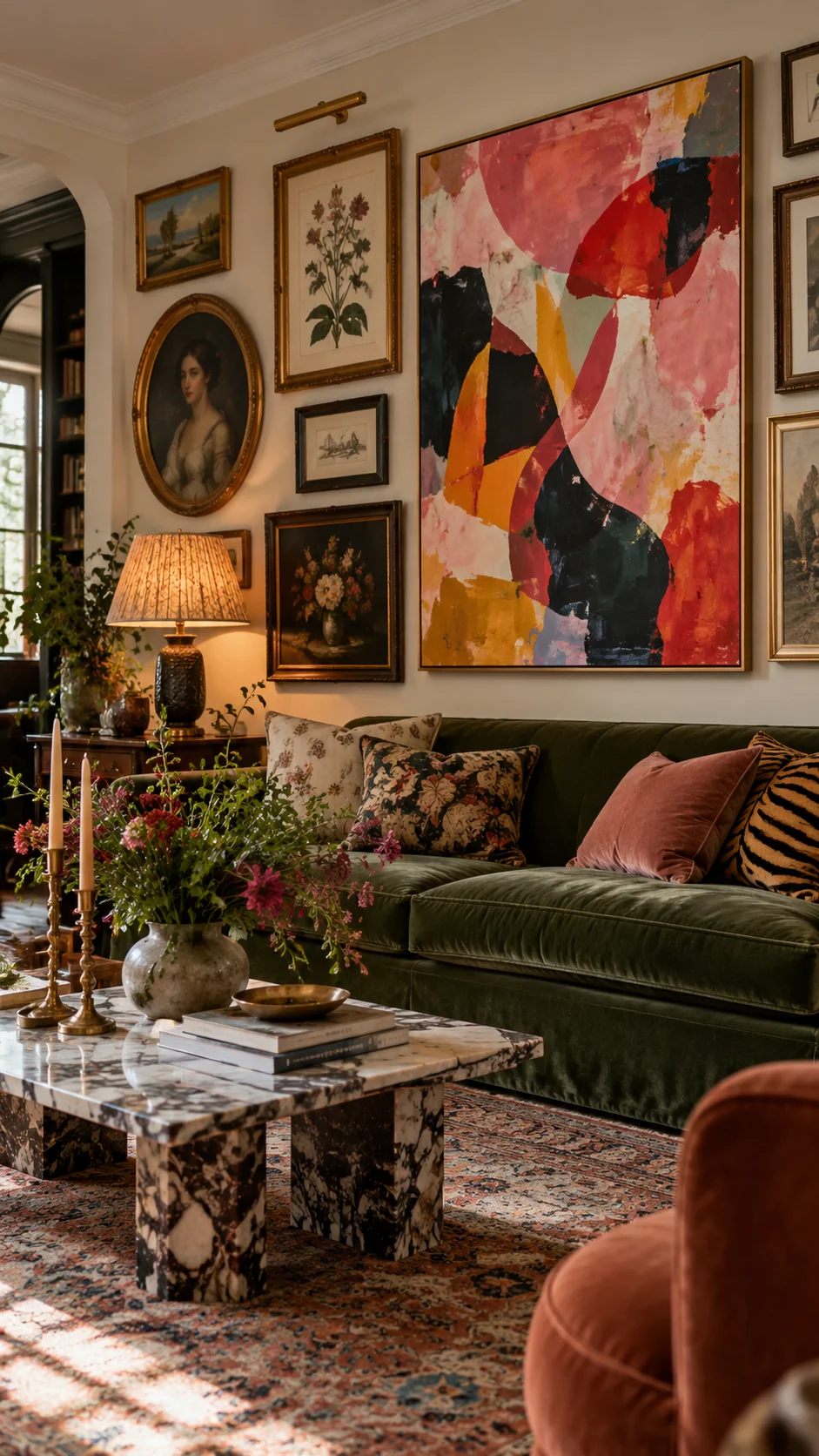
2. Mix Victorian Prints With Bold Abstract Art
One of the easiest ways to make a gallery wall feel truly eclectic is to combine artwork from completely different visual eras.
Pair vintage etchings, botanical illustrations, or classical portraits with bold modern abstracts.
Use one large colorful piece as the visual anchor, then distribute smaller traditional prints around it.
Connection trick: repeat one color from the abstract artwork in several smaller pieces so the wall still feels connected.
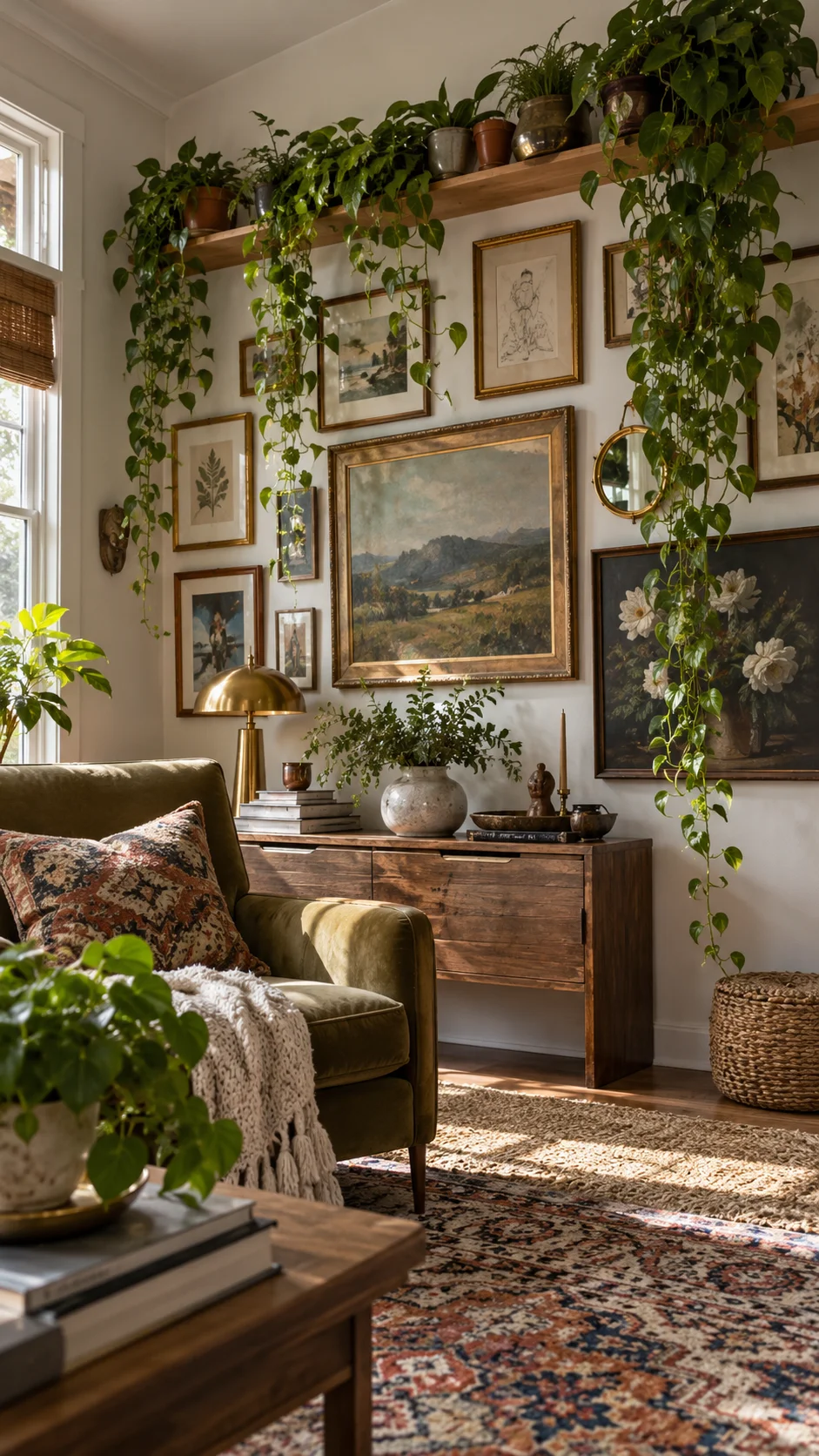
3. Add Trailing Greenery Above the Frames
Plants soften the sharp edges created by a wall full of rectangular frames.
Place a trailing plant on a secure shelf above the gallery or let greenery fall beside one edge of the display.
Botanical prints can reinforce the natural theme without requiring every artwork piece to feature plants.
Safety note: keep watering away from frames and electrical fixtures, and make sure shelves and planters are securely supported.
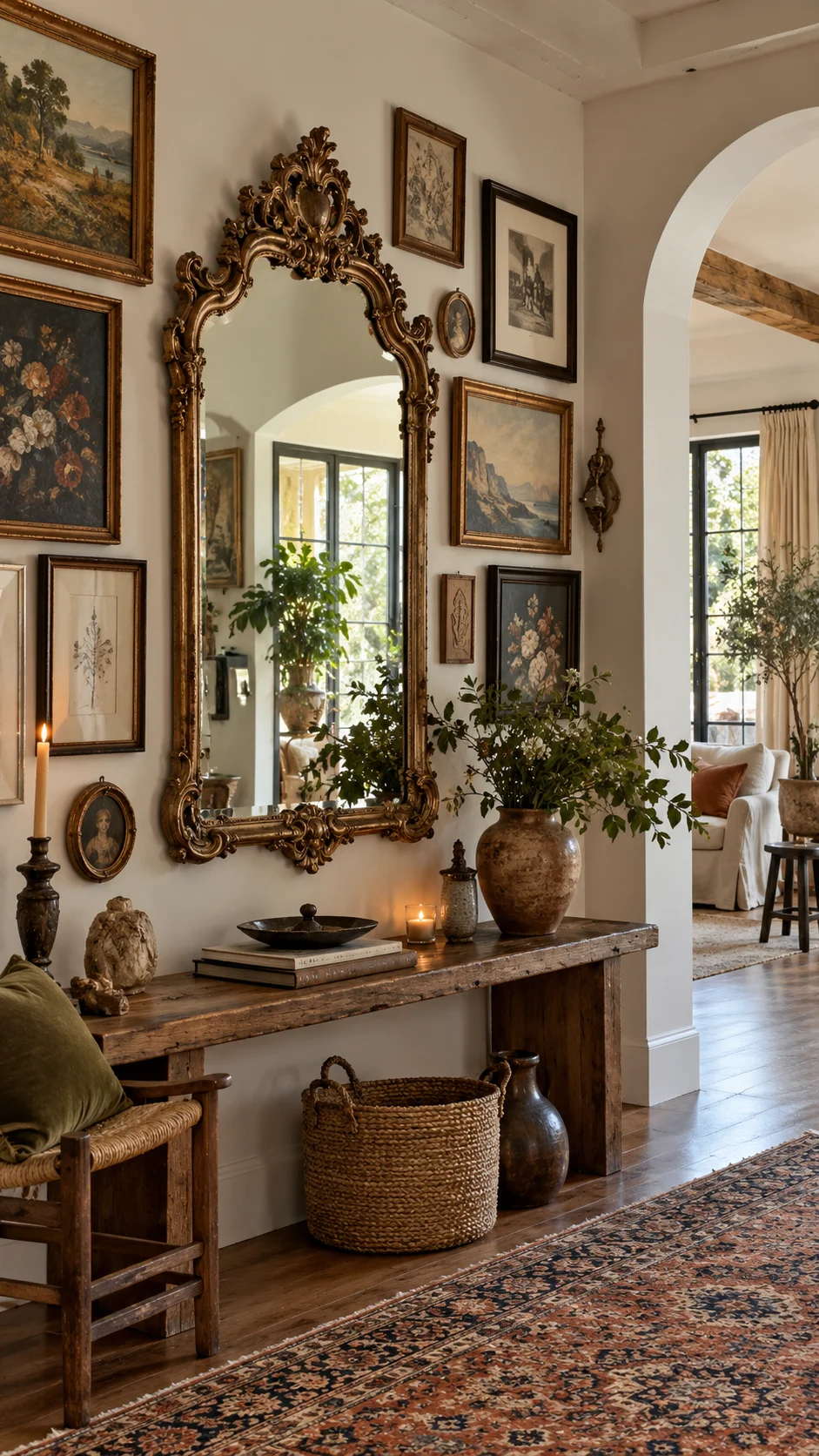
4. Combine Ornate Mirrors With Rustic Wood Frames
Pairing refined and rough finishes creates tension that makes an eclectic room feel collected rather than coordinated.
Try a baroque-style mirror beside weathered wood frames, vintage prints, and simple black picture frames.
The mirror also reflects light into the arrangement and breaks up the repetition of flat artwork.
Easy approach: use one ornate piece and keep the surrounding frames simpler so it remains the focal point.
5. Take the Gallery Wall Floor to Ceiling
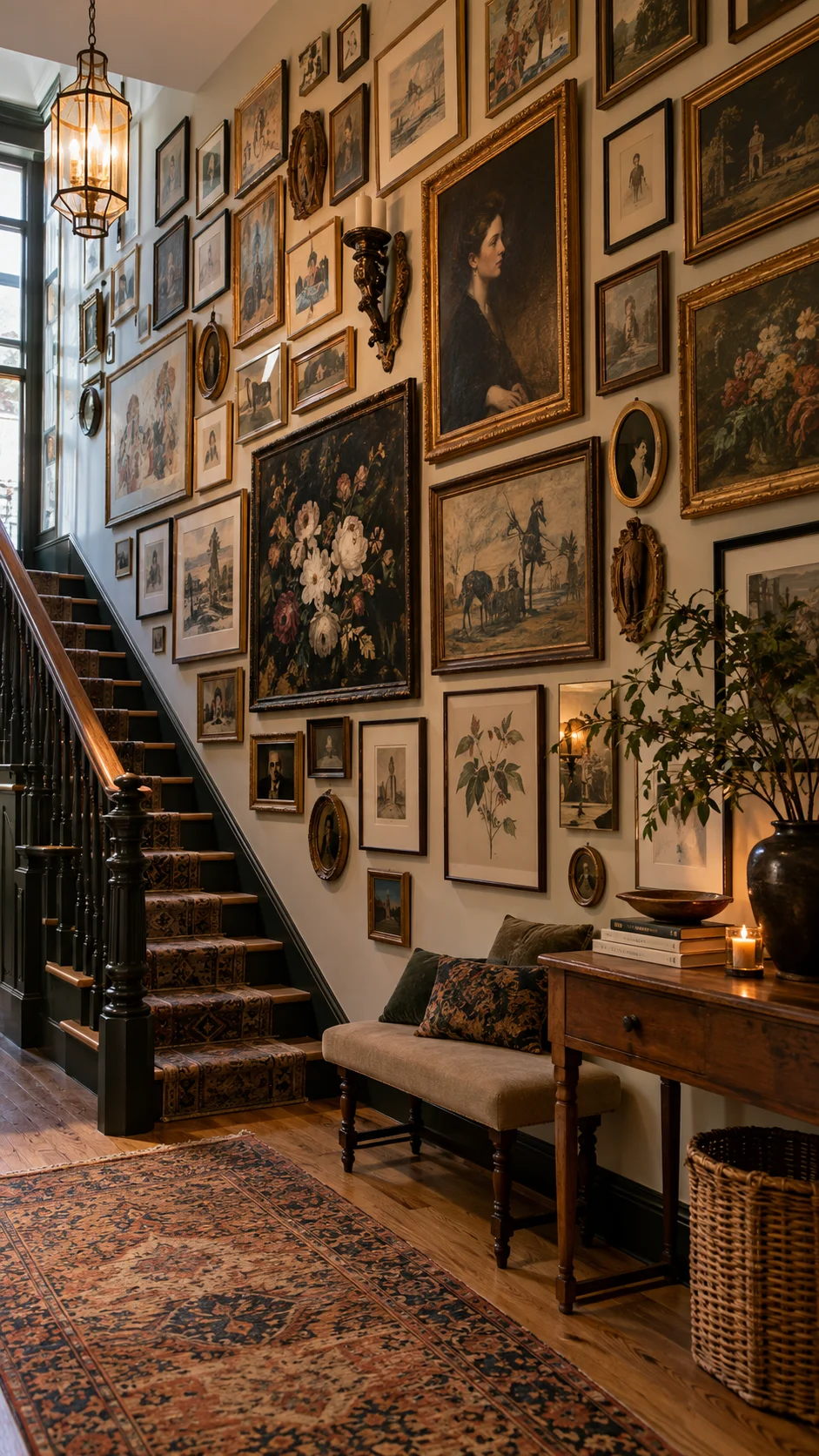
A full-height gallery can make a small room feel taller while turning an ordinary wall into a major feature.
Start with larger frames around normal eye level, then gradually add smaller pieces above and below.
Vary the frame sizes dramatically so the wall does not feel like a giant grid.
Layout tip: establish the outer boundaries of the display first so the arrangement looks finished instead of endlessly expanding.
6. Build an Asymmetrical Wall Around One Hero Piece
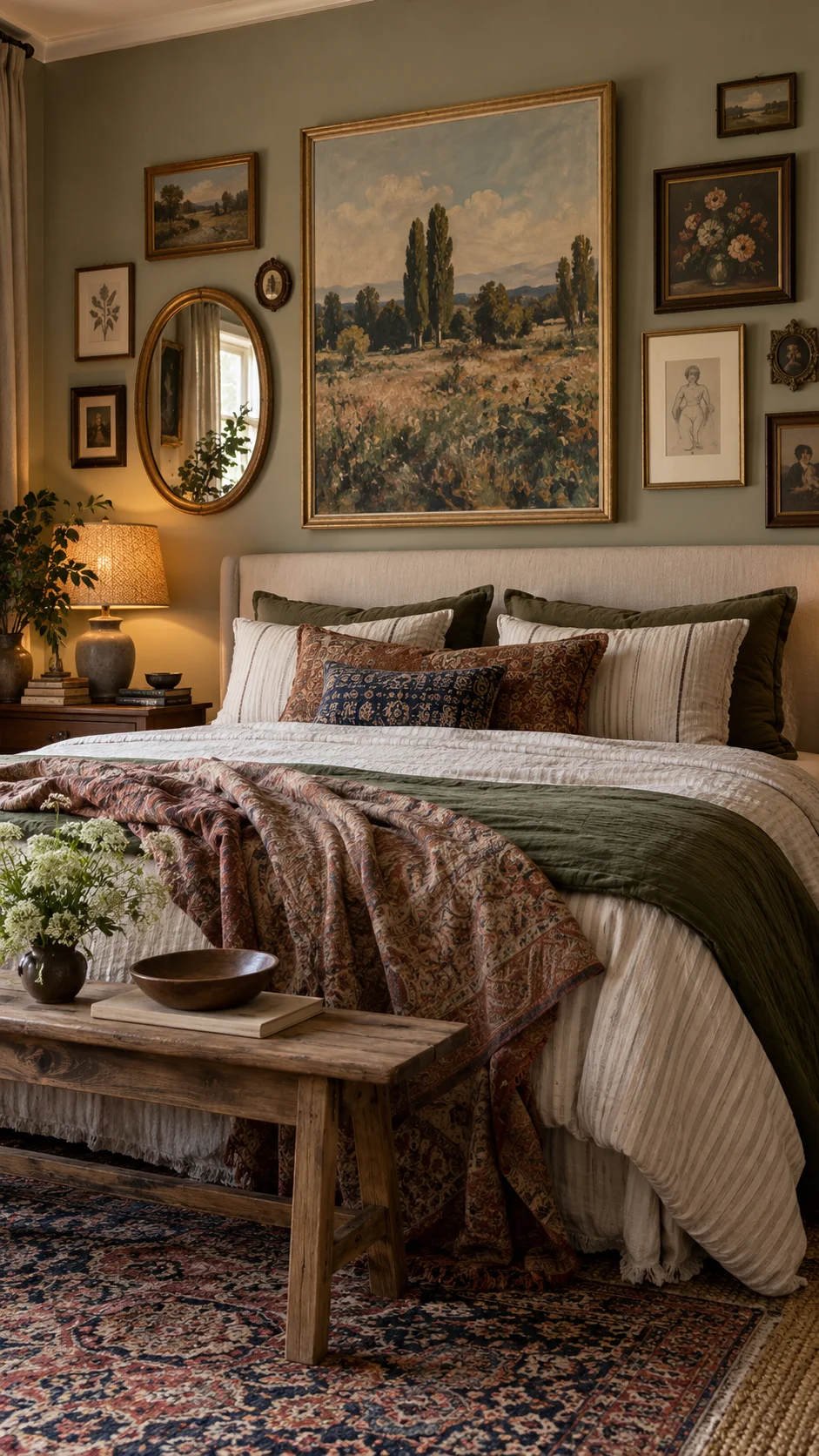
Starting with one statement piece makes planning a funky gallery wall much easier.
Choose an oversized mirror, large painting, textile, or sculptural artwork and place it slightly off center.
Build outward using smaller pieces that visually balance the weight without mirroring the arrangement perfectly.
Best for: living rooms and bedrooms where a perfectly centered grid would feel too formal.
7. Hunt for Chipped, Patinated, and Carved Frames
Frame texture can be just as important as the art itself.
Look for chipped paint, worn wood, tarnished brass, carved details, and old gilding that give each frame its own character.
Thrift stores, flea markets, estate sales, and secondhand marketplaces are often better sources for this look than matching frame sets.
Collected look: add frames slowly instead of trying to complete the whole wall in one shopping trip.
For more help keeping mixed finishes cohesive, see how to mix gallery wall frames without chaos.
8. Stretch the Gallery Across an Extra-Wide Wall
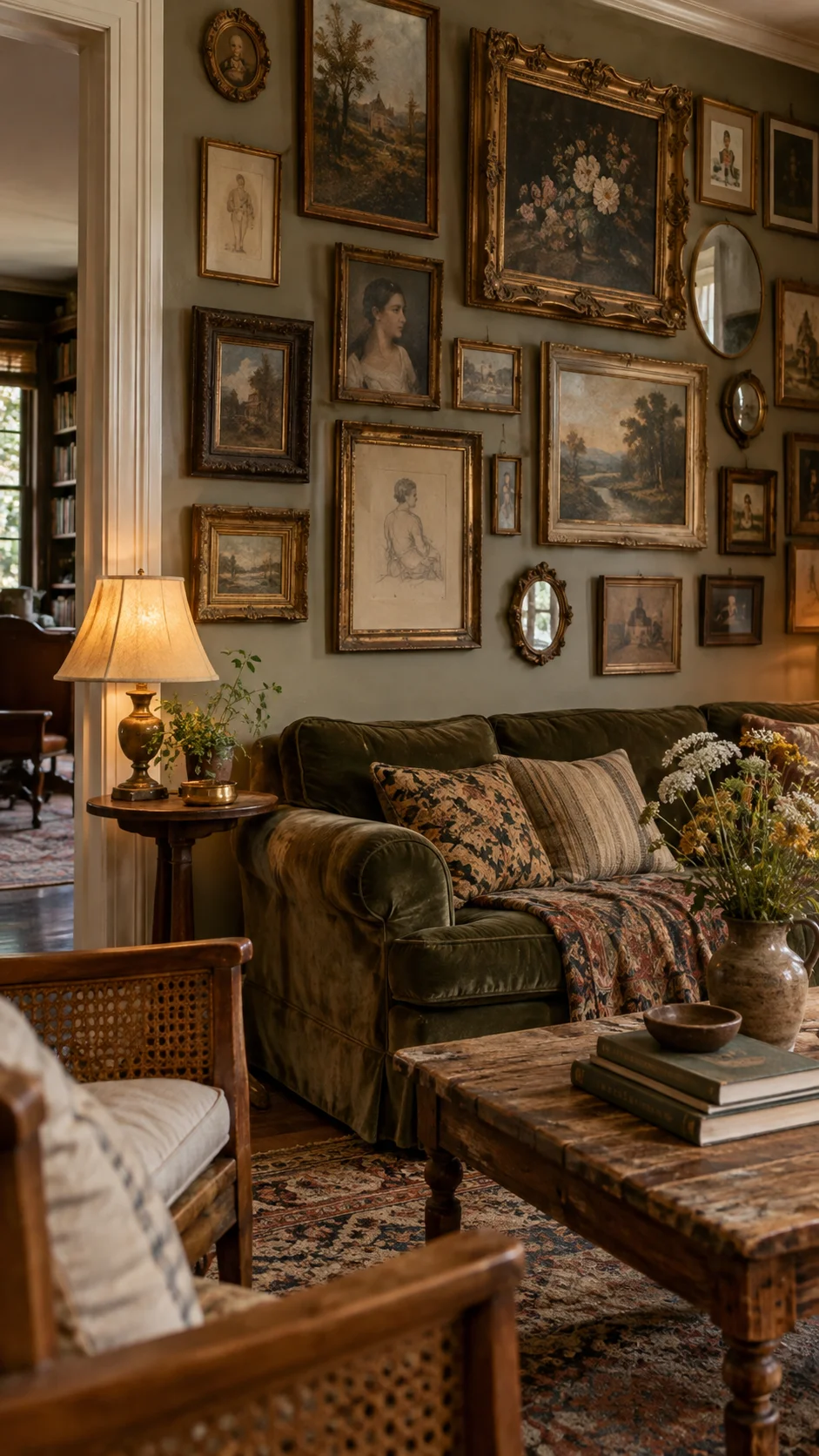
A single artwork can look undersized on a very long wall, especially above a wide sofa or sectional.
Instead, spread the gallery horizontally and vary the frame heights to create rhythm.
Use the furniture below as the visual anchor and let the artwork move organically across the wall above it.
Wide-wall tip: do not force perfect symmetry. Repeated spacing and balanced visual weight matter more.
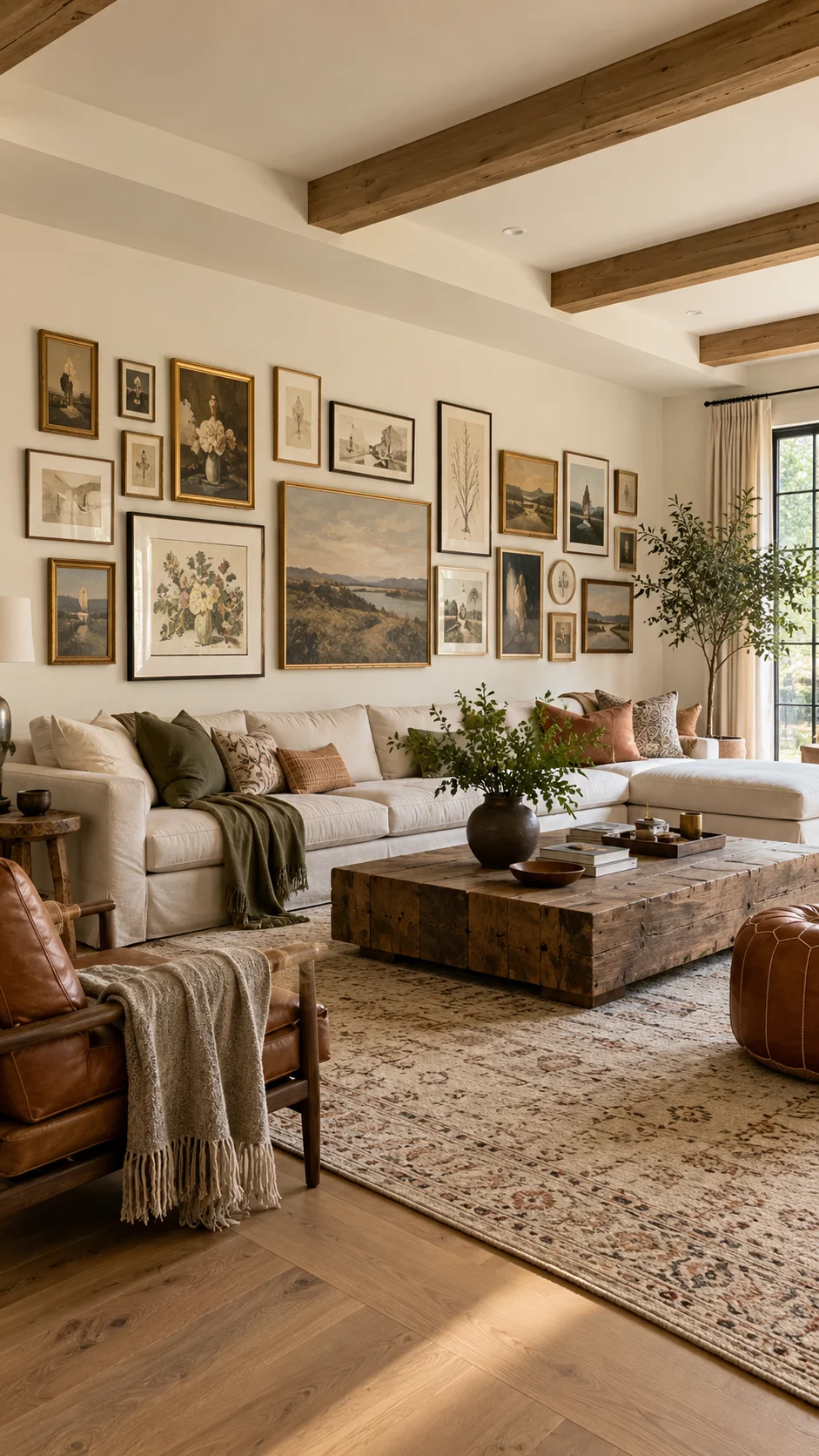
9. Style the Console or Sofa Area Below the Gallery
The wall should feel connected to the furniture beneath it rather than floating independently.
Style a console with books, a vase, lamp, bowl, or sculptural object that repeats colors or materials from the gallery above.
Above a sofa, repeat a gallery color through cushions, throws, or a nearby lamp.
Important: leave enough space between the furniture styling and the artwork so the two areas do not visually collide.
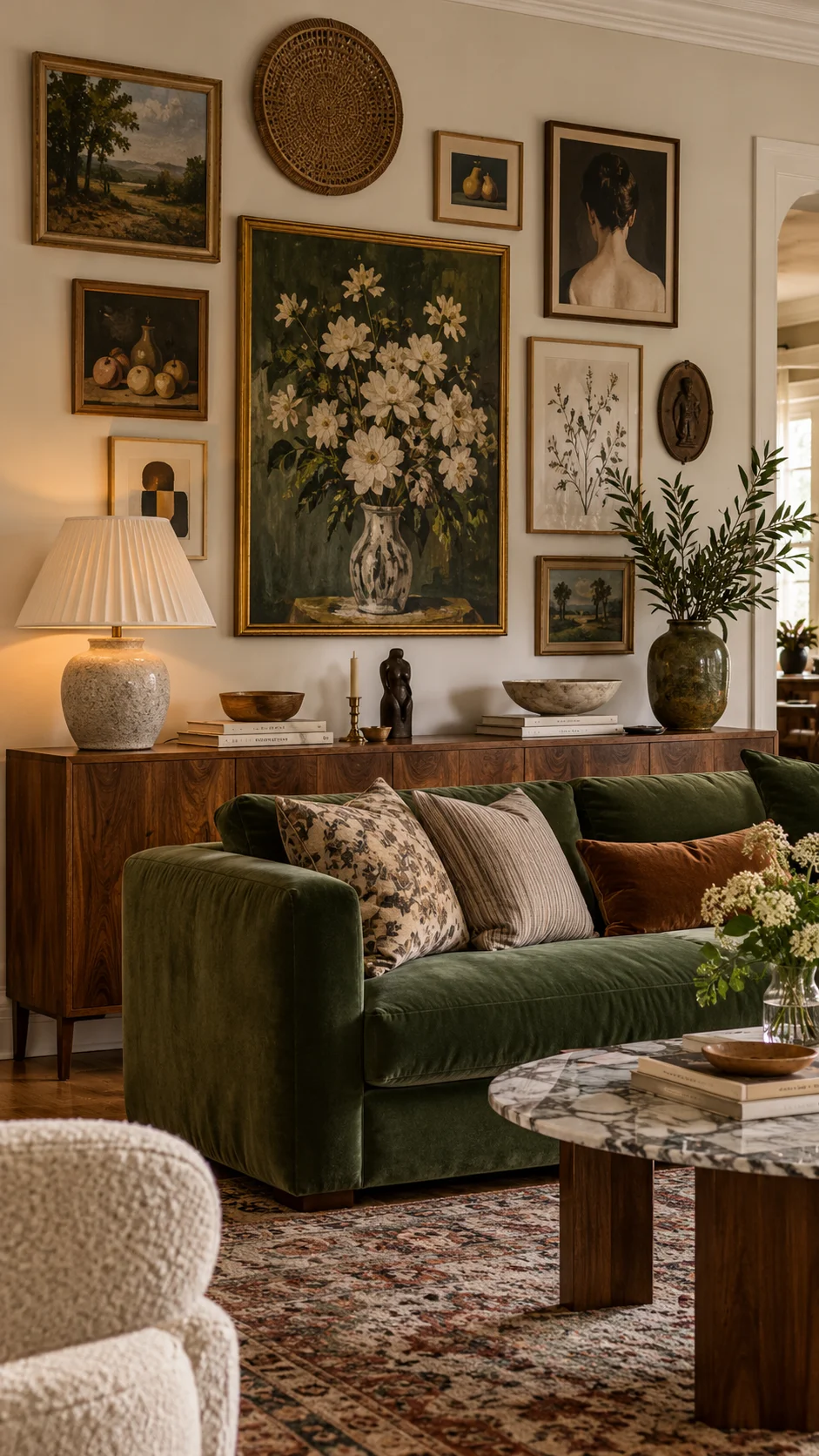
10. Build a Botanical Art Corner
Botanical prints are useful in a bold gallery because their muted greens and browns can calm louder pieces around them.
Mix old plant illustrations with modern abstract art, a mirror, and one sculptural object.
This works particularly well in a corner where the gallery can wrap from one wall onto the next.
Extra depth: add one three-dimensional object such as a woven wall piece, mask, plate, or small sculptural form among the frames.
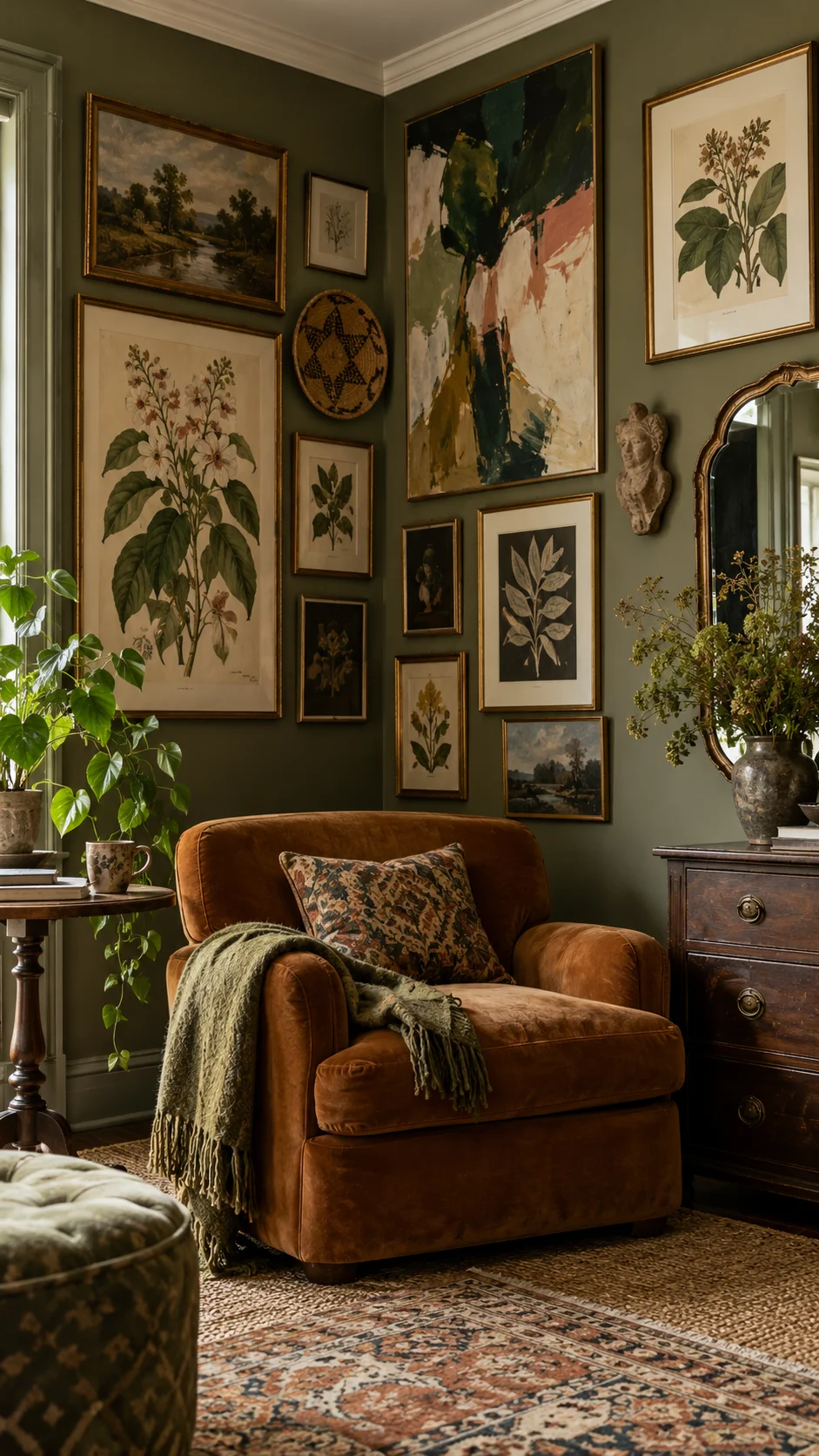
11. Ground the Wall With a Jewel-Toned Sofa
Bold furniture can help a busy gallery wall feel anchored.
An emerald, deep blue, rust, or burgundy sofa can pull one color from the artwork and repeat it on a much larger scale.
The wall itself can remain mixed and vintage while the furniture supplies the strong color foundation.
Color trick: choose one gallery-wall shade and repeat it once in upholstery, a rug, or a large cushion.
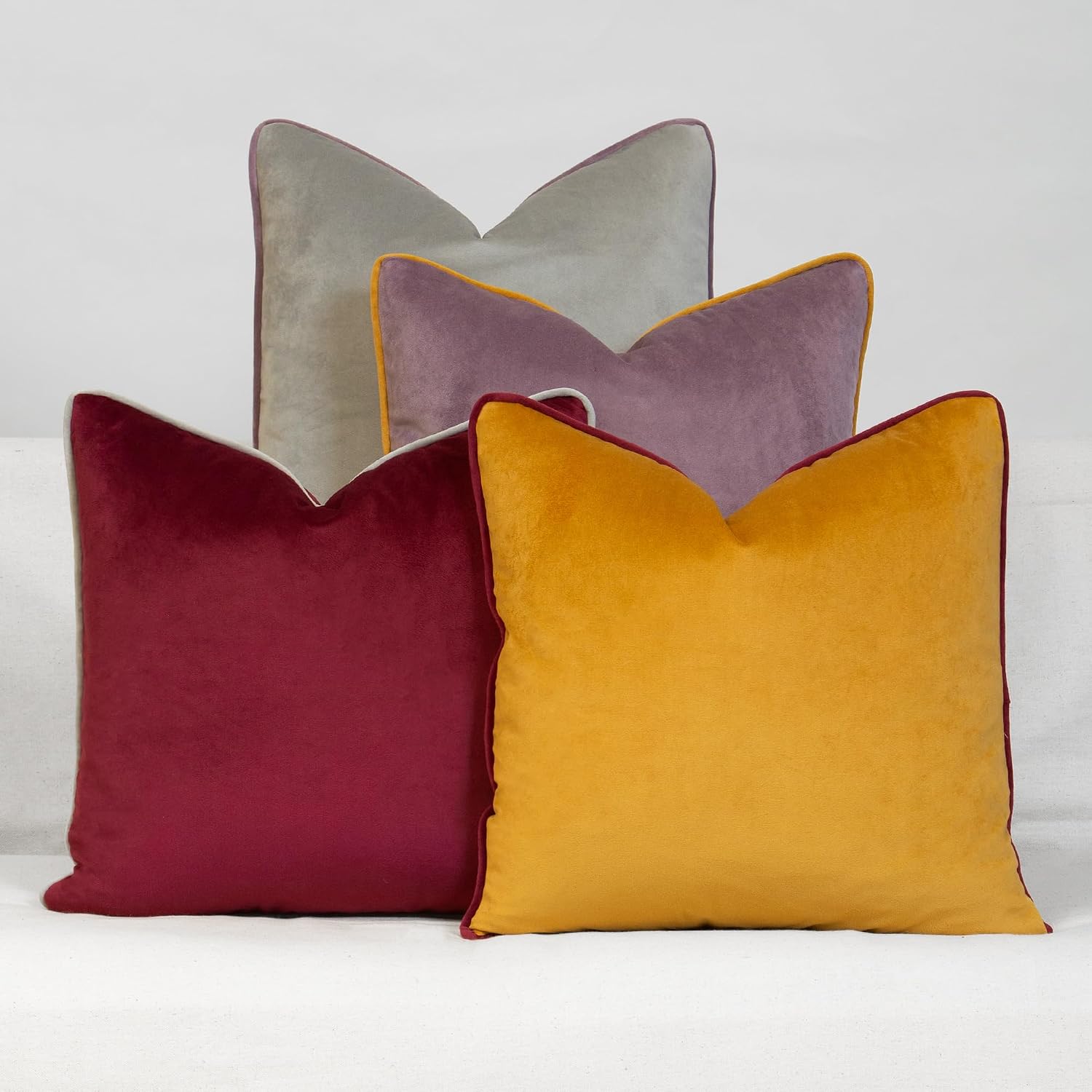
Amazon Find: Jewel-Toned Velvet Pillow Covers
If replacing a sofa is not practical, saturated velvet pillow covers can repeat gallery-wall colors on the furniture below.
12. Make a Sunburst Mirror the Centerpiece
A vintage-style sunburst mirror is perfect for an eclectic gallery because it introduces both a different shape and a reflective surface.
Place it near the center and arrange smaller artworks around it in a loose circular or asymmetrical pattern.
Tarnished brass, antique gold, or aged bronze usually feels more collected than a highly polished finish.
Small-room bonus: mirrors can bounce light and make a dense gallery feel less visually heavy.
13. Layer Frames at Slightly Different Depths
A gallery wall can feel more sculptural when every piece does not sit completely flat at the same depth.
Use deeper frames, shadow boxes, small wall objects, and slightly projected pieces to create real shadows across the arrangement.
The wall will change subtly throughout the day as the light shifts.
Safety note: use hardware appropriate for each object’s weight and wall type, especially for dimensional pieces.
14. Keep the Palette Neutral but the Frames Eclectic
A funky gallery wall does not have to be extremely colorful.
Use cream, taupe, terracotta, warm brown, muted green, and yellowed paper tones while letting the frame shapes and finishes provide the personality.
This approach works especially well in Scandinavian, vintage-modern, and earthy interiors.
Best approach: keep the artwork quieter and let carved frames, worn wood, and antique metallic finishes create the visual variety.
15. Mix Macramé and Textile Art With Frames
Rectangular picture frames can become repetitive when there are many of them together.
Break up the geometry with macramé, embroidery, woven pieces, fabric art, or another soft textile element.
The irregular outline and texture help the arrangement feel more relaxed and bohemian.
Eclectic tip: repeat one textile color in the artwork or furniture below so the fabric piece feels integrated rather than added randomly.
How to Make a Funky Gallery Wall Look Cohesive
You can mix a lot of styles as long as something repeats throughout the wall.
- Repeat two frame finishes: for example, gold and dark wood.
- Choose three recurring colors: repeat them across photos, prints, and textiles.
- Use one hero piece: let one large mirror or artwork provide a focal point.
- Keep spacing deliberate: organic does not mean accidental.
- Connect to the furniture: repeat gallery colors below the wall.
- Mix scale: combine large, medium, and small pieces.
- Include different shapes: mirrors, textiles, plates, or sculptural objects can break up rectangles.
Easy Floor-Layout Method Before Hanging
- Measure the wall area you want to fill.
- Mark roughly the same area on the floor with painter’s tape.
- Place the largest or most important piece first.
- Add medium pieces around it.
- Use smaller frames to fill awkward gaps.
- Check the overall outer shape.
- Photograph the layout before moving anything.
- Trace frames onto paper and tape the templates to the wall.
- Step back and adjust before installing hardware.
You can also find more room-specific arrangements in these photo wall ideas.
Best Art to Mix in an Eclectic Gallery Wall
- Vintage botanical prints
- Abstract paintings
- Family photographs
- Travel photos and postcards
- Old portraits or etchings
- Textile art
- Mirrors
- Maps
- Illustrations
- Small sculptural wall objects
Funky Gallery Wall Checklist
- Choose one main anchor piece.
- Select a loose color palette.
- Mix at least two frame finishes.
- Vary artwork size noticeably.
- Add one non-frame object.
- Plan the complete shape on the floor.
- Use paper templates before hanging.
- Check the arrangement against furniture below.
- Use hardware rated for each piece and wall.
- Leave room to add future finds if you want the collection to grow.
Common Eclectic Gallery Wall Mistakes
- Mixing everything with no repeated element: repeat color, frame finish, subject, or material somewhere across the wall.
- Using only tiny frames: include at least one substantial piece to anchor the arrangement.
- Spacing every gap randomly: the arrangement can be organic without looking careless.
- Hanging the wall too high: relate the display to the sofa, console, or other furniture below.
- Buying all the frames at once: eclectic walls often look better when the mix feels genuinely collected.
- Ignoring dimensional pieces: textiles and mirrors can stop a wall full of rectangles from looking flat.
- Using inadequate mounting hardware: follow the hardware instructions and weight limits for your wall type.
- Forgetting the surrounding room: repeat at least one gallery color or material in the furniture, lighting, or textiles nearby.
Frequently Asked Questions
Do gallery wall frames have to match?
No. Mixed frames often work especially well in eclectic spaces. The arrangement will feel more cohesive if you repeat one or two finishes, a consistent color palette, or similar matting.
How do I make a gallery wall look funky without looking messy?
Choose one strong anchor piece, repeat several colors or frame finishes, vary the scale, and keep the overall spacing intentional.
What should go in an eclectic gallery wall?
Mix artwork, family photographs, vintage prints, botanical illustrations, mirrors, textiles, travel keepsakes, and small sculptural pieces that reflect your style.
Can I make a gallery wall in a small room?
Yes. Use one vertical arrangement, a compact asymmetrical cluster, or a mirror-centered display. A floor-to-ceiling arrangement can also emphasize height without using floor space.
How do I plan a gallery wall without making lots of holes?
Lay everything out on the floor first, photograph the arrangement, trace each piece on paper, and tape the templates to the wall before installing suitable hardware.
Can I mix mirrors and art in one gallery wall?
Yes. Mirrors can add shape, depth, and reflected light. One larger mirror can also serve as the focal point around which smaller artwork is arranged.
Recommended Finds for an Eclectic Gallery Wall
You do not need a matching gallery-wall kit. Start with art and frames you already own, then add pieces only where the display needs more scale, texture, or variety.
- Mixed vintage-style frames — for combining gold, black, and wood finishes.
- Vintage-style sunburst mirror — for creating a reflective centerpiece.
- Vintage botanical prints — for adding calmer green and brown tones among brighter artwork.
- Small macramé wall hanging — for breaking up rectangular frame shapes.
- Picture hanging template kit — for testing placement before installing hardware.
- Battery picture light — for highlighting a focal artwork where appropriate.
- Jewel-tone pillow covers — for repeating gallery colors in the furniture below.
Final Thoughts
The best funky gallery wall ideas feel collected rather than perfectly purchased.
Start with one piece you genuinely love, then build around it with artwork, photographs, mirrors, botanical prints, old frames, and textured pieces that reflect your style.
Do not worry about making every frame match. Instead, repeat several colors, finishes, or materials so the wall has a visual thread running through all the variety.
A gallery wall becomes much more interesting when it looks like a story of things you found, kept, photographed, inherited, painted, or simply could not leave behind.

Ankit is an engineer by profession and blogger by passion. He is passionate to do all the stuff such as designing the website, doing the SEO, researching for the content, writing tech blog posts and more.

