


White kitchen cabinets are timeless, versatile, and incredibly easy to decorate around. But choosing the perfect backsplash can feel surprisingly difficult. Should you go with classic white subway tile, a colorful glass mosaic, a warm neutral finish, or something bold like emerald green? The right backsplash can make your white cabinets look more expensive, add personality to your kitchen, and bring the entire design together.
These 18 best kitchen backsplash ideas for white cabinets include traditional subway tiles, elegant herringbone patterns, glossy glass finishes, textured ceramics, beautiful sage green accents, and patterned statement tiles. Whether you love modern farmhouse kitchens, cozy cottage interiors, coastal decorating, or clean contemporary designs, you’ll find inspiring combinations for different budgets and kitchen sizes.
Each idea includes styling suggestions, coordinating countertop and hardware combinations, and practical tips to help you select a backsplash that’s beautiful, durable, and suitable for everyday cooking.
Affiliate disclosure: As an Amazon Associate, I earn from qualifying purchases. This article contains affiliate links, which may earn us a commission at no extra cost to you.
More Kitchen Decorating and Remodeling Ideas
If you’re refreshing a white kitchen, these related articles from Android Nature can help you coordinate your backsplash with your cabinets, countertops, and overall room design.
- 13 Trending Kitchen Cabinet Colors That Will Transform Your Kitchen for beautiful cabinet and backsplash color combinations.
- 12 Small Kitchen Remodel Ideas That Actually Maximize Space for practical storage, layout, and kitchen upgrades.
- How to Fix Orange Oak Cabinets Without Stripping or Painting for coordinating backsplash tiles with warm wood finishes.
- 12 Ways to Modernize Honey Oak Cabinets Without Painting for more cabinet, hardware, and backsplash inspiration.
How to Choose the Perfect Backsplash for White Kitchen Cabinets
White cabinets provide a flexible foundation, but the best backsplash depends on more than the cabinet color alone. Your countertops, flooring, hardware, lighting, and decorating style all influence how the finished kitchen will look.
Start by identifying the undertone of your cabinets. Some white cabinets have warm cream or yellow undertones, while others lean toward cool gray or blue. Warm white cabinetry often looks beautiful with ivory, beige, sage green, and soft stone finishes. Crisp white cabinets pair naturally with cool gray, blue glass, black accents, and bright white tile.
Next, consider the countertop pattern. If you have heavily veined marble-look countertops, a simple backsplash usually creates a more balanced design. If your countertops are plain white or a subtle neutral, you have more freedom to introduce decorative patterns, textured tile, and stronger colors.
Easy white kitchen backsplash formula: Cabinet undertone + countertop pattern + backsplash material + grout color + coordinated hardware.
Always bring real tile samples home before ordering. Place them vertically against the cabinets and compare them with your countertop in natural daylight and under your kitchen lighting. A tile that looks creamy in a showroom may appear more yellow or gray in your own space.
Kitchen Backsplash Style Comparison Guide
| Backsplash Style | Best Kitchen Style | Visual Effect |
|---|---|---|
| White Subway Tile | Traditional and Farmhouse | Clean and Timeless |
| Stacked Subway Tile | Modern and Minimalist | Structured and Sleek |
| Herringbone Tile | Transitional and Classic | Elegant Movement |
| Diamond Glass Tile | Contemporary | Reflective Geometry |
| Colorful Glass Mosaic | Eclectic and Coastal | Color and Shine |
| White Picket Tile | Organic Modern | Subtle Geometry |
| Cream Kit Kat Tile | Mid-Century and Japandi | Warm Linear Texture |
| Sage Green Accent Tile | Modern Farmhouse | Gentle Organic Color |
| Deep Green Tile | Contemporary and Moody | Rich Contrast |
| Blue Pearl Mosaic | Coastal and Elegant | Soft Iridescence |
| Spanish Patterned Tile | Mediterranean and Rustic | Warm Decorative Detail |
18 Best Kitchen Backsplash Ideas for White Cabinets
1Classic White Subway Tile Backsplash
Classic white subway tile remains one of the most versatile backsplash choices for white kitchen cabinets. Its familiar rectangular shape creates a clean appearance that works with traditional shaker cabinets, modern farmhouse kitchens, and simple contemporary spaces. Because the color is understated, the backsplash can complement almost any countertop or hardware finish.
Choose white ceramic subway tiles and install them in a traditional running-bond pattern for a timeless look. Use warm white grout if you prefer a soft transition between tiles, or choose a light gray grout to make the brick pattern more noticeable. Pair the backsplash with brushed nickel hardware, natural oak shelves, and white or lightly veined quartz countertops. Make sure the grout and tile are suitable for kitchen walls and follow the manufacturer’s recommendations for joints, sealing, and maintenance.
Styling tip: Choose a slightly warm white tile if your cabinets have creamy undertones. Bright blue-white tiles can make warm white cabinets appear more yellow by comparison.

Image credit: @refreshrestyle.com
Amazon Find: White Subway Backsplash Tiles
Traditional white subway tiles create a timeless kitchen backsplash. Order a physical sample to check its undertone and surface finish alongside your cabinets.

2Modern Stacked White Subway Tile
Stacked subway tile offers a modern alternative to the traditional brick pattern. Instead of staggering the joints, the tiles are aligned in neat horizontal or vertical rows. This simple change gives white cabinets a cleaner, more architectural appearance while maintaining the practicality of ceramic or porcelain tile.
Use rectangular tiles with a consistent finish and carefully aligned grout lines. A horizontal stacked layout can emphasize the width of a kitchen backsplash, while a vertical arrangement can draw attention upward, particularly around a range hood or open shelving. Pair the finish with flat-front white cabinets, black hardware, and light wood countertops or shelving for a contemporary look. Precise layout matters because even small alignment differences are more visible in a stacked pattern.
Design tip: Use matching white grout for a calm minimalist appearance. A darker grout makes the grid more prominent and creates a stronger graphic feature.
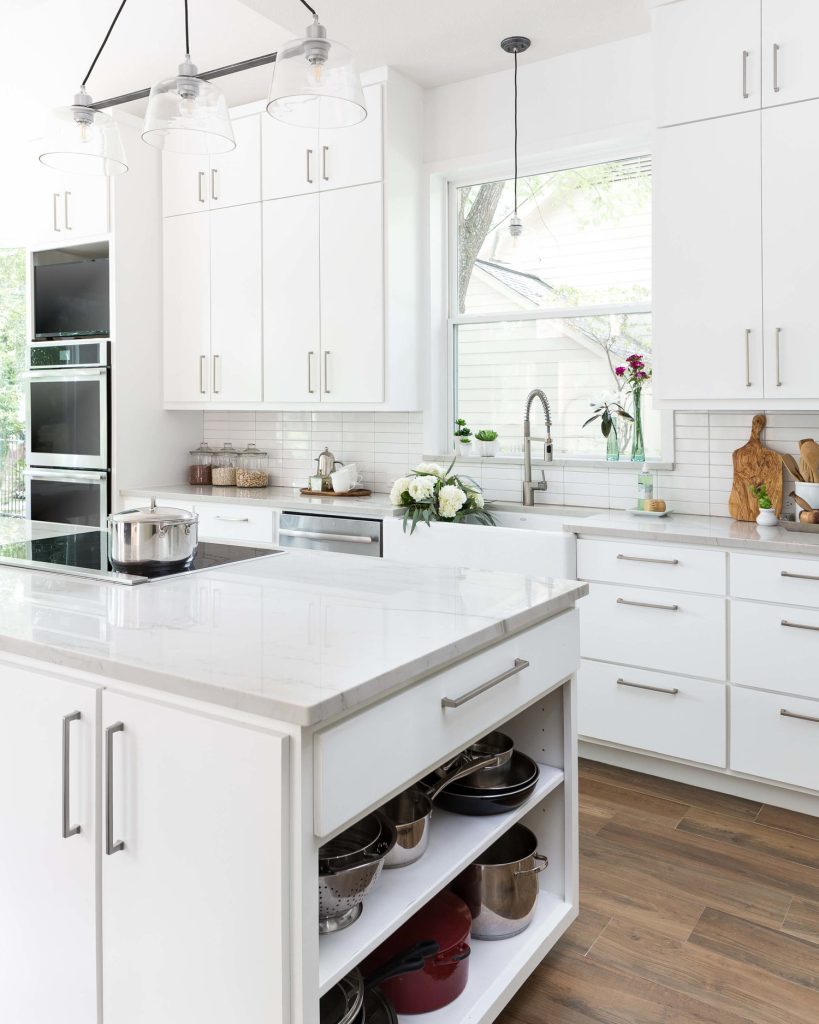
Image credit: @refreshrestyle.com
3Elegant Herringbone Subway Tile
A herringbone backsplash adds movement and sophistication without requiring a bold color. The angled tile arrangement creates a subtle zigzag pattern that looks beautiful against white cabinets and natural stone countertops. It’s an excellent choice when you want the kitchen to feel a little more custom while preserving a classic color palette.
Choose white or soft ivory subway tiles and arrange them in a balanced herringbone layout. You can use the pattern across the entire backsplash or create a feature section behind the range. If your countertop has noticeable veining, select tiles with a relatively simple finish to avoid competing patterns. Warm gray grout can emphasize the shape gently, while matching grout creates a quieter effect. Plan the installation carefully because herringbone layouts generally require additional cutting around edges and outlets.
Budget tip: Use herringbone only in a smaller range-wall feature and install regular subway tile on the surrounding walls. This can create a distinctive design while reducing detailed cutting and installation work.

Image credit: @refreshrestyle.com
Amazon Find: White Herringbone Backsplash Mosaic Tiles
Prearranged herringbone mosaic sheets may simplify some layouts. Check the sheet dimensions, material, grout-joint requirements, and compatibility with your kitchen wall.
4Wide White Subway Tile for an Airy Kitchen
Wide-format subway tiles can give white kitchen cabinets a fresh, uncluttered backdrop. Their elongated proportions create fewer vertical joints across the wall, which may help a narrow kitchen appear more continuous. This style is particularly attractive in galley kitchens, compact apartments, and bright modern interiors with limited wall space.
Look for elongated ceramic or porcelain tiles with a subtle glaze and relatively simple edges. Install them horizontally to create a broad, streamlined appearance or vertically for a stronger sense of height. Pair the tiles with cream or white countertops, simple cabinet hardware, and understated under-cabinet lighting. If your kitchen has a low ceiling, avoid adding too many competing horizontal details elsewhere in the room. A continuous backsplash can create a more cohesive appearance.
Styling tip: Choose a soft gloss rather than an extremely reflective finish if your kitchen receives strong direct sunlight. Test samples to understand how the glaze behaves under different lighting conditions.
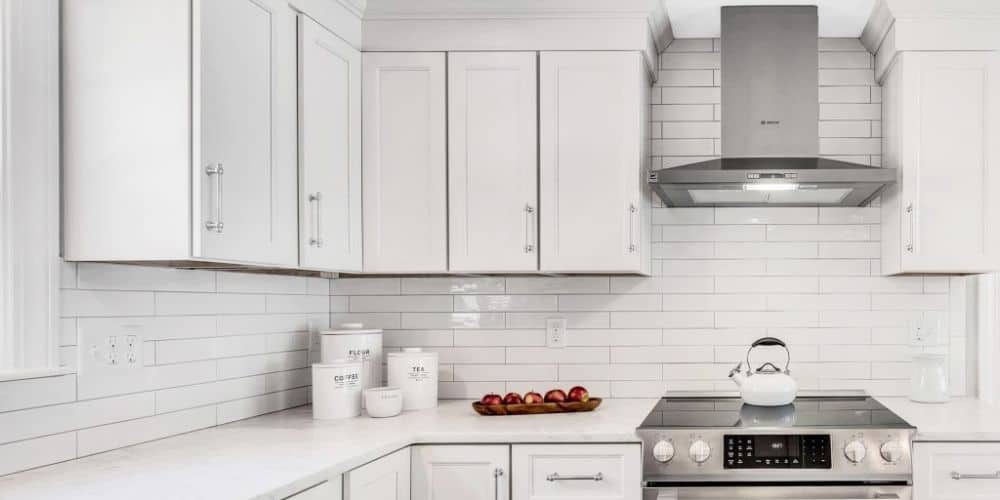
Image credit: @refreshrestyle.com
5Diamond Pattern Glass Tile Backsplash
Diamond-pattern glass tile adds a beautiful reflective quality to white kitchen cabinets. Its geometric shape creates decorative interest, while the smooth glass surface catches natural and artificial light. This makes it an appealing option for contemporary kitchens where you want a backsplash with a little more personality than ordinary rectangular tile.
Choose glass mosaic tiles in clear, white, pale gray, or subtle metallic-inspired tones. Arrange the diamonds as a repeating pattern that complements the cabinetry and countertops. In a kitchen with white quartz counters, soft gray glass can introduce enough contrast to make the design visible without overwhelming the room. Coordinate the grout with the tile’s overall appearance and confirm the required setting materials, substrate preparation, and cutting methods for glass. Some translucent glass products also require particular adhesive colors to avoid visible shadows behind the tile.
Design tip: Keep the surrounding wall decorations simple. The reflective diamond pattern is often enough to create an attractive focal point.

Image credit: @refreshrestyle.com
6Mixed-Size Glass Mosaic Backsplash
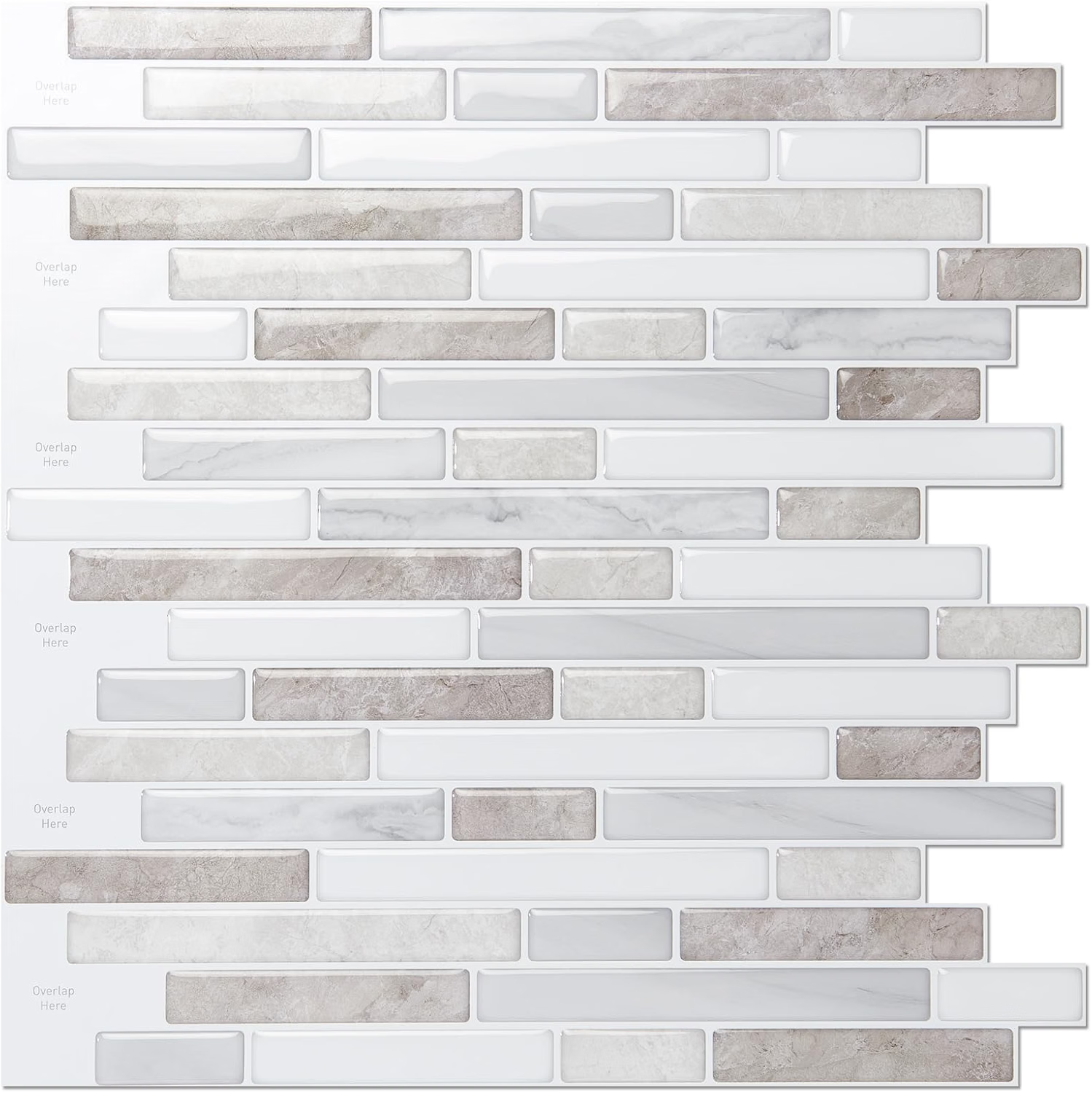
A mixed-size glass mosaic introduces texture and movement through variation in the tile dimensions. Instead of repeating the same rectangle across the entire backsplash, this design combines smaller and larger pieces for a layered effect. It can look especially attractive with simple white cabinets because the cabinetry provides a quiet backdrop for the detailed arrangement.
Choose mosaic sheets with a coordinated palette, such as pale gray, soft beige, cream, and translucent white. Use the same material across the backsplash so the variation feels intentional rather than random. A slim white countertop and simple cabinet pulls can help balance the detail. Before ordering, inspect a sample sheet and check how the repeated pattern will look across the full wall. More complex mosaics may require additional time for alignment, grouting, and cleaning, especially around outlets and corners.
Styling tip: Limit the color palette to two or three related shades. Mixed tile sizes already provide visual interest, so strong additional colors may make the design feel busy.

Image credit: @refreshrestyle.com
Amazon Find: Glass Mosaic Kitchen Backsplash Tile
Glass mosaic sheets are available in different sizes, shapes, and finishes. Compare sample sheets and verify the recommended installation materials before purchasing.

7Colorful Glass Tile for a Bold Accent
White cabinets create the perfect foundation for a colorful glass backsplash. Shades of turquoise, teal, sea glass green, and rich blue can introduce personality without requiring you to replace the cabinets. A glossy colored surface catches the light beautifully and can transform a plain white kitchen into a cheerful, expressive space.
Choose one dominant color that complements your existing flooring and countertops. Soft aqua glass works well in a coastal kitchen, while deep teal can create a sophisticated contemporary appearance. Install the tile across the main backsplash area or use it on one feature wall. Repeat the accent shade in a small number of accessories, such as a vase or kitchen towel, rather than filling the room with matching decorations. If the cabinets are already warm white, test the glass samples carefully because cool blue-green finishes can create a stronger undertone contrast than expected.
Styling tip: Pair a bold colored backsplash with neutral countertops and restrained hardware. Let the glass tile become the main decorative feature of the kitchen.

Image credit: @refreshrestyle.com
8Glossy Glass Subway Tile Backsplash
Glass subway tile combines a familiar classic shape with a sleek reflective surface. It’s a lovely choice when you appreciate the simplicity of rectangular backsplash tiles but want something more luminous than traditional ceramic. White, pale gray, and softly tinted glass can create a polished appearance beside white kitchen cabinets.
Choose a glass subway tile with an appropriate kitchen-wall rating and decide whether you want a running-bond or stacked layout. Pale gray glass can coordinate beautifully with stainless steel appliances, while warm ivory or translucent white provides a softer effect. Under-cabinet lighting can highlight the surface without adding another strong color. Use installation materials approved for glass tile, and follow the manufacturer’s guidance for cutting, handling, and grout selection. Because reflective surfaces make irregularities more noticeable, careful substrate preparation is especially important.
Design tip: A glossy glass backsplash looks beautiful with simple cabinets and understated countertops. Avoid combining it with several other highly reflective finishes if you prefer a calm, balanced kitchen.

Image credit: @refreshrestyle.com
9Colorful Herringbone Glass Tile
Colorful herringbone glass tile makes a beautiful statement when paired with simple white kitchen cabinets. The diagonal pattern introduces energy and movement, while the glass finish reflects light across the wall. This combination works especially well if you want a decorative backsplash that feels modern, artistic, and more distinctive than conventional tile.
Choose a cohesive shade family, such as sea glass blue, muted green, soft lavender, or layered gray. Use the herringbone pattern across a compact feature area or continue it between the countertops and upper cabinets. Pair with a simple countertop to prevent too many competing patterns. For a small kitchen, choose a lighter color and subtle grout to keep the design from feeling overwhelming. Check mosaic-sheet alignment carefully before installation so the herringbone pattern continues smoothly across the wall.
Budget tip: Use colorful herringbone glass behind the range or sink as an accent and install simpler coordinating tile on the remaining backsplash. This can reduce material and installation costs.

Image credit: @refreshrestyle.com
10Layered White Picket Tile Backsplash
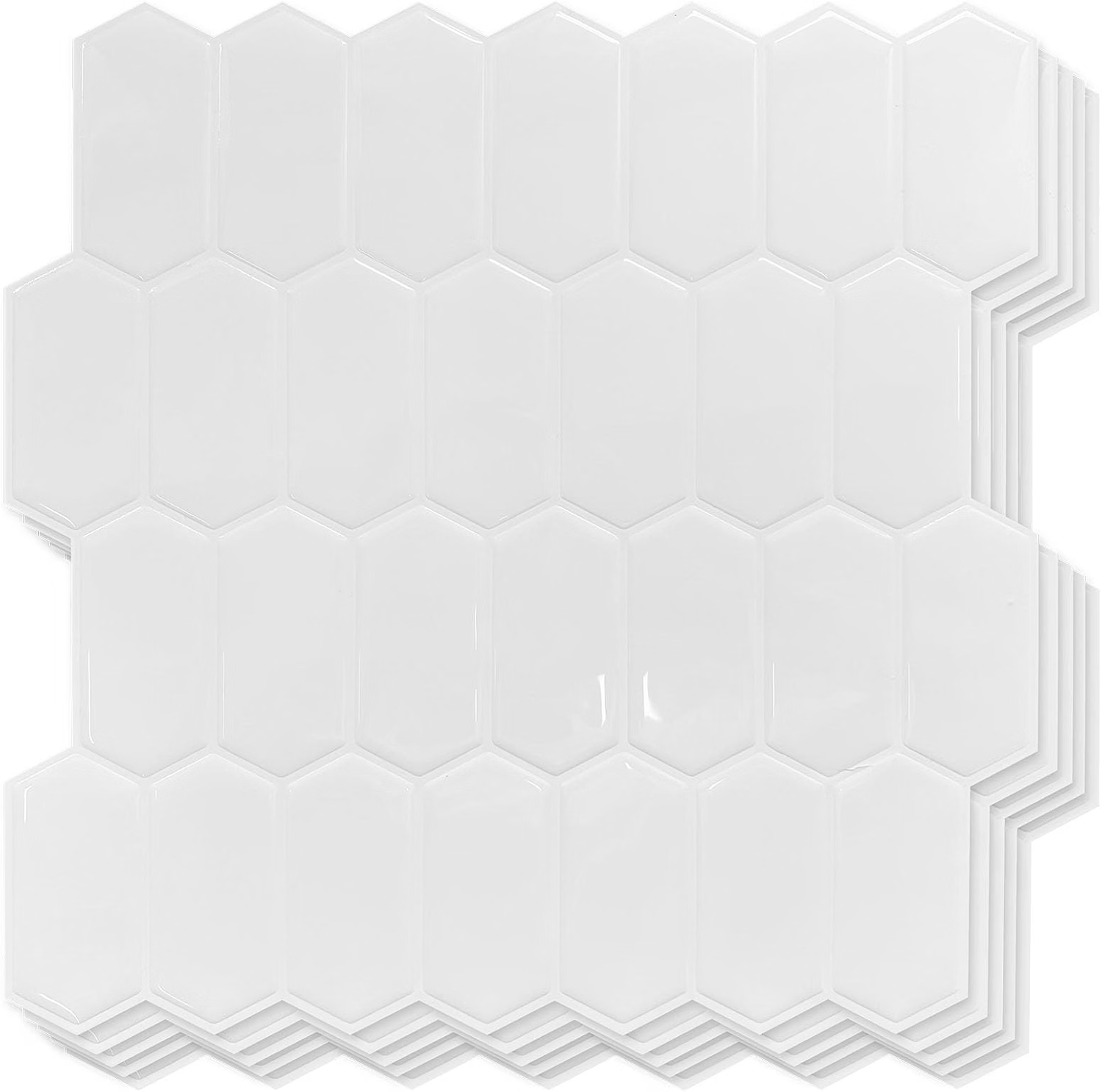
White picket tiles offer an elegant alternative to ordinary subway tiles. Their elongated geometric shape resembles a narrow hexagon, creating subtle visual movement while keeping the kitchen bright. This style is perfect for homeowners who want a white-on-white kitchen with more detail and character but don’t want to introduce another strong color.
Choose a white picket tile with a gentle glossy glaze and subtle surface variation. Arrange the shapes in a consistent pattern and use a closely coordinated grout color for a seamless effect. Pair the backsplash with white shaker or flat-front cabinets, cream stone countertops, and natural oak accessories. Warm brass or brushed nickel hardware adds a polished finishing touch. The geometric shape is particularly attractive beneath under-cabinet lighting, where subtle reflections can emphasize the tile’s edges.
Styling tip: Keep grout contrast low if your countertops have visible veining. The picket shape provides enough decorative detail without needing a bold grid around every tile.

Image credit: @tileclub.com
Amazon Find: White Picket Backsplash Tiles
White picket tiles bring subtle geometric interest to a white kitchen. Check tile dimensions, edge details, and grout requirements before selecting a design.
11Cream Kit Kat Tile for Warm Texture
Cream Kit Kat tile, also called finger tile, features narrow linear pieces that bring a modern textured appearance to white kitchen cabinets. Its small-scale repetition creates an interesting surface without relying on bold patterns or dramatic colors. A warm cream finish can also soften the appearance of bright white cabinets, especially in kitchens with wood floors or natural stone countertops.
Choose slim ceramic tiles in ivory, oatmeal, or pale beige. A vertical arrangement can emphasize the height of the backsplash, while horizontal lines create a wider visual effect. Use matching or closely related grout so the texture remains the focus. Pair this style with natural wood shelves, a simple cream countertop, and brushed brass or matte black hardware. Consider the cleaning requirements before choosing deeply textured tiles behind a busy cooking area, since raised surfaces and numerous grout joints can need extra attention.
Design tip: Choose one warm cream shade rather than several mismatched whites. A coordinated palette gives the narrow tiles a calmer, more expensive-looking appearance.
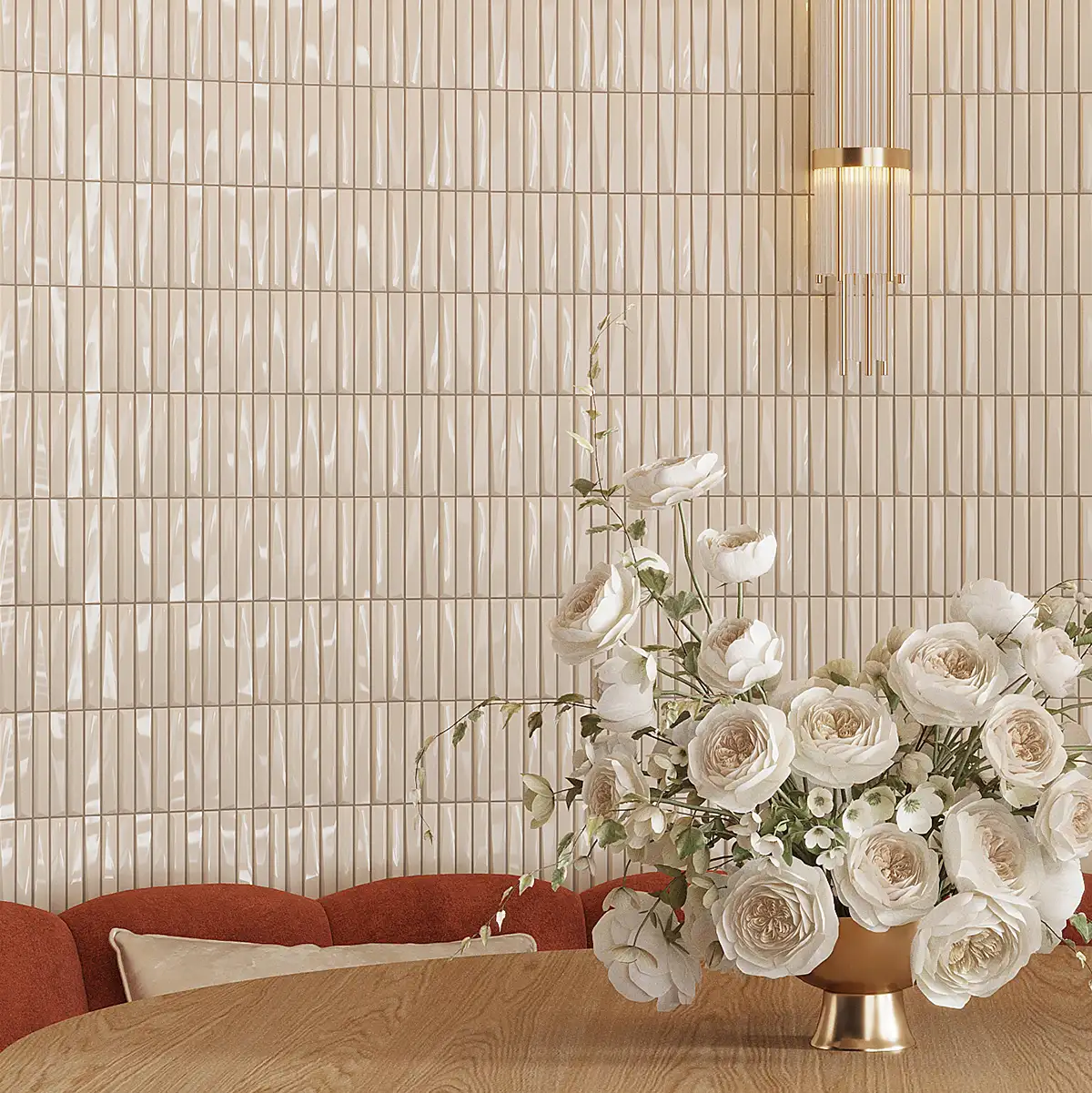
Image credit: @tileclub.com
12Elongated White Brick Tile Backsplash
Extra-long white brick-style tiles create a fresh and streamlined backsplash behind white kitchen cabinets. Their narrow, elongated shape produces a distinctive horizontal rhythm that can make a compact kitchen feel visually wider. They offer the familiar simplicity of subway tile with a more contemporary proportion.
Look for elongated ceramic wall tiles with a subtle glossy or satin glaze. Arrange them horizontally in a stacked or staggered pattern, depending on the effect you prefer. A vertical installation can also look attractive behind open shelves or a range hood. Use a simple grout color that coordinates with the cabinet finish, and plan the starting point carefully to avoid awkward narrow cuts at the ends of the backsplash. Pair the tile with white quartz countertops and a few natural wood details for warmth.
Styling tip: Long tiles look especially effective when the layout is carefully centered around major features such as the range or sink. Check the wall dimensions before choosing the exact tile size.
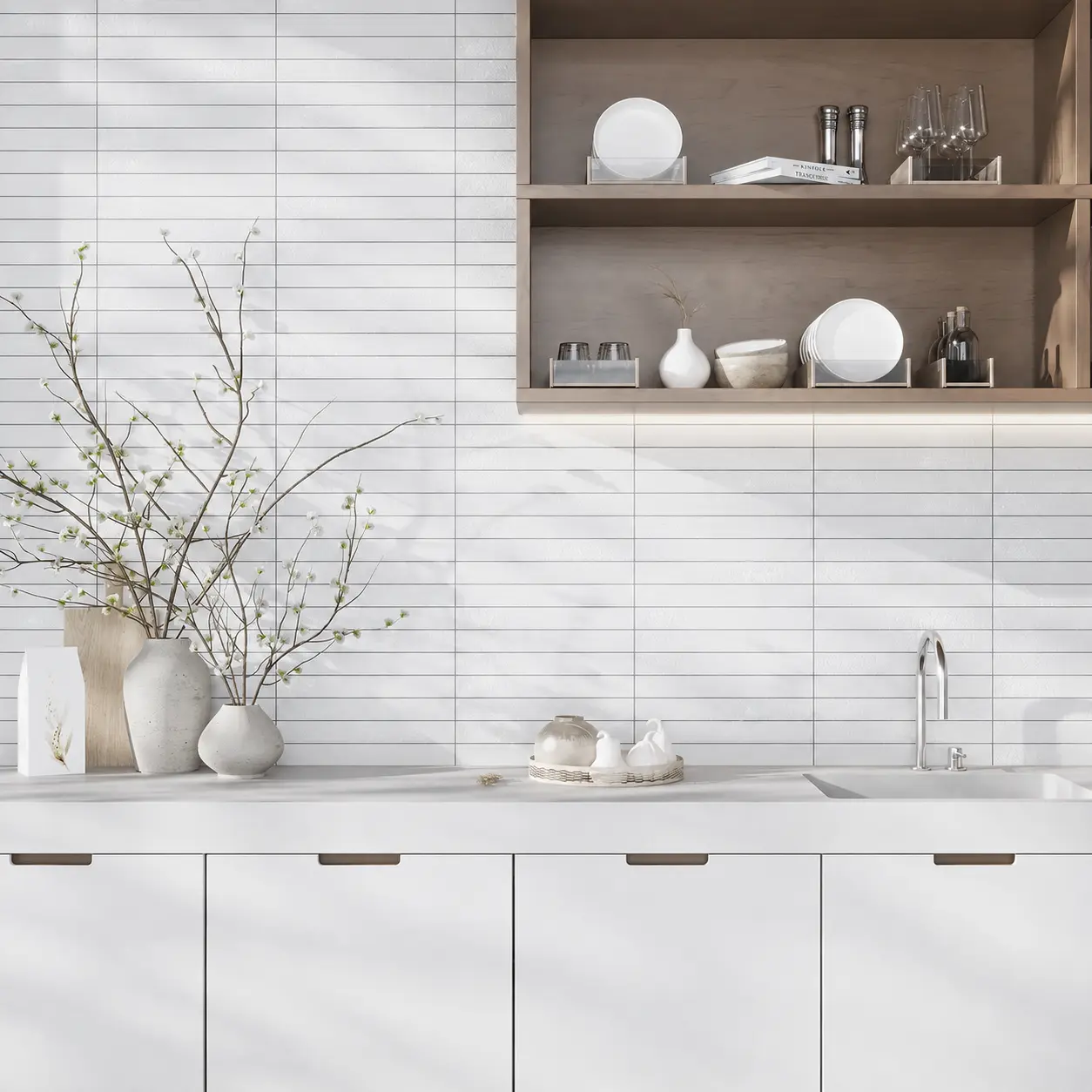
Image credit: @tileclub.com
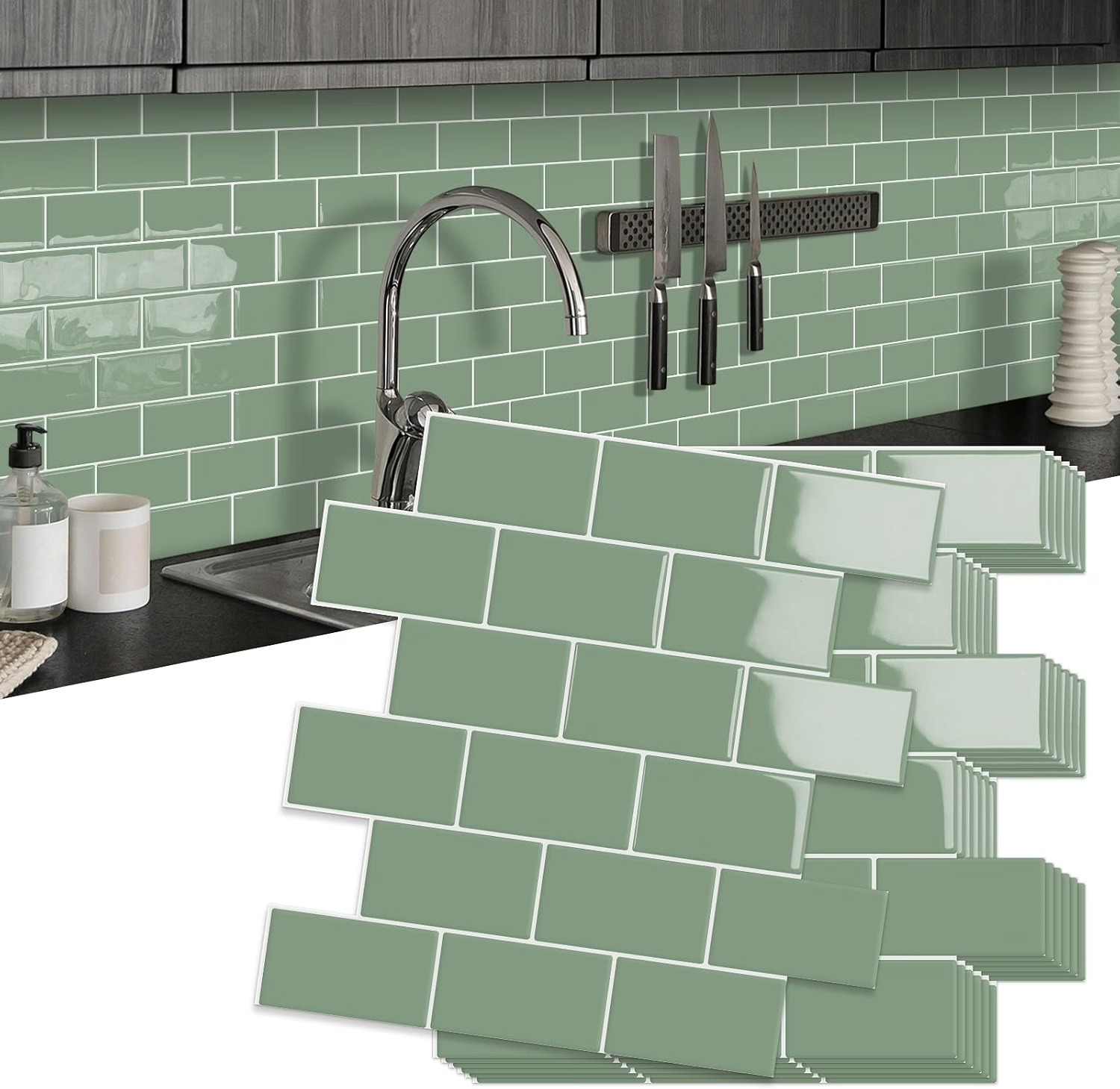
13Subtle Sage Green Accent Tile
Sage green is a beautiful accent color for white kitchen cabinets because it adds a natural, calming touch without overwhelming the space. You can introduce the color through pale green tiles or choose mostly white tile with small sage-colored details. This restrained approach works particularly well in modern farmhouse, cottage, and organic contemporary kitchens.
Choose muted sage rather than a highly saturated green. A white tile with a small green decorative element can create a subtle pattern, while a pale sage subway tile produces a more continuous color statement. Pair the backsplash with natural oak shelving, warm white countertops, and brushed brass hardware. Repeat the green in one or two small accessories or plants to connect the look. If the cabinet white is cool, bring home samples to check how the green undertone appears alongside it.
Styling tip: Use a soft white or warm gray grout rather than a very dark grout. The gentle contrast allows sage green to feel relaxed and timeless.

Image credit: @tileclub.com
Amazon Find: Sage Green Ceramic Backsplash Tiles
Muted sage green tile adds soft natural color to a white kitchen. Compare samples against your cabinets and countertops before ordering.
14Deep Green Textured Statement Tile
Deep green backsplash tiles can make white kitchen cabinets look sophisticated and beautifully defined. Rich forest, emerald, and bottle-green shades introduce dramatic contrast while remaining connected to nature. Textured or glossy green tiles add another layer of visual interest as daylight and kitchen lighting move across the surface.
Choose a deep green ceramic or porcelain tile with a subtle three-dimensional design, handcrafted appearance, or gentle glaze variation. Use it across the main backsplash or concentrate the color behind the range for a more controlled statement. Pair it with white quartz countertops, natural wood accents, and brass or bronze hardware. If your kitchen is small, keep surrounding walls and countertops light so the dark backsplash doesn’t dominate the room. Under-cabinet lighting can help bring out the tile texture in the evening.
Design tip: Choose one bold green tone and repeat it sparingly. Avoid combining a deep green textured backsplash with several competing countertop or floor patterns.

Image credit: @tileclub.com
15Pearlescent Blue Herringbone Mosaic
A pearlescent blue herringbone backsplash gives white cabinets a soft coastal-inspired elegance. The combination of pale blue, silver, and white can create a luminous surface that changes slightly with the light. Because the shades remain relatively gentle, the backsplash introduces color without making the kitchen feel dark or visually heavy.
Choose a glass or suitable pearlescent mosaic in a small herringbone pattern. Use white grout for a light, fluid appearance, and pair the tile with a simple white countertop and understated cabinet pulls. Polished nickel hardware reinforces a cool, refined palette, while warm wood stools or brass details can add contrast. The mosaic can be installed along the entire backsplash or featured around a range hood. Check that any glass or shell-based product is suitable for the heat, cleaning, and moisture conditions of its intended location.
Styling tip: Add pale wood accents and warm lighting if the kitchen feels too cool. The blue-and-white palette looks more inviting when balanced with natural materials.

Image credit: @tileclub.com
16Glossy Blue and Neutral Mixed Tile
A mixed blue-and-neutral backsplash offers an attractive balance between color and simplicity. Rather than covering the entire wall with strong blue tile, you can combine glossy blue pieces with white, cream, or soft greige. This creates a custom-looking design that works especially well with white kitchen cabinets and uncomplicated countertops.
Choose tiles that belong to a compatible collection so the thickness, dimensions, and installation requirements are consistent. Create a sample arrangement on a flat surface before deciding on the final pattern. You might include one blue row between several neutral rows or arrange the colors in an alternating design. Keep the grout restrained so the color combination remains the focus. Pair with white cabinets, a warm neutral countertop, and simple brushed nickel or black hardware. A limited blue accent looks particularly attractive in kitchens with a nearby window or pale wood flooring.
Practical tip: Don’t mix unrelated tile products without checking their thickness and installation compatibility. Uneven tile surfaces can create difficult transitions and additional labor.

Image credit: @tileclub.com
17Warm Spanish-Inspired Patterned Tile
Spanish-inspired patterned tile introduces warmth, charm, and personality into an all-white kitchen. Decorative floral, geometric, and traditional motifs in cream, coffee brown, terracotta, or muted blue can create a collected Mediterranean appearance. White cabinets provide a clean foundation that helps the pattern stand out without making the entire room feel busy.
Choose a ceramic or porcelain patterned tile in warm, coordinated shades. Use it across a short backsplash or install a feature panel behind the range, surrounded by simple neutral tile. Pair the pattern with white or cream countertops, walnut furniture, woven lighting, and aged brass hardware. If your kitchen already has patterned flooring, choose a quieter backsplash design to avoid competing details. Order enough tile from the same production batch when possible, and examine how the pattern repeats across multiple tiles before installation.
Styling tip: Keep decorative accessories simple when using patterned tile. A wooden cutting board, neutral pottery, and one small plant can complement the backsplash without overwhelming it.

Image credit: @tileclub.com
Amazon Find: Spanish-Inspired Patterned Backsplash Tile
Patterned ceramic and porcelain tiles can introduce traditional motifs and warm color into white kitchens. Compare several sample tiles to see the complete repeating pattern.

18Rich Green Coffee Bar Backsplash
A coffee bar is a wonderful place to experiment with a rich backsplash color without updating the entire kitchen. Deep green tile can transform a small beverage station into a stylish feature, especially when paired with white cabinets and warm wood shelves. This idea works well in kitchens with a dedicated coffee counter, breakfast nook, or small beverage alcove.
Choose a deep green matte or subtly varied porcelain tile and install it behind the coffee machine and storage shelves. A clean stacked layout creates a contemporary appearance, while a staggered pattern feels more traditional. Pair the green with cream countertops, brass hardware, and natural wood accessories. Keep mugs, coffee containers, and small appliances organized to avoid hiding the new tile. Select a backsplash material suitable for the location, and ensure the coffee machine has appropriate clearance, ventilation, and access to electrical outlets.
Budget tip: Tiling only the coffee station can be a practical way to introduce a richer material or more decorative finish without paying for a full kitchen backsplash renovation.

Image credit: @tileclub.com
Best Backsplash Colors to Pair With White Cabinets
White cabinets work with a wide variety of backsplash colors, but some combinations feel warmer, more dramatic, or more contemporary than others. Use the following pairings as starting points and compare real samples before committing.
- White and Ivory: Ideal for timeless kitchens that feel bright, clean, and understated.
- Soft Greige: Adds subtle contrast and works with natural wood, stainless steel, and warm neutral countertops.
- Sage Green: Brings a calm nature-inspired appearance to modern farmhouse and cottage kitchens.
- Deep Forest Green: Creates rich contrast with white cabinetry and looks beautiful with brass or natural wood details.
- Pale Blue: Gives a kitchen a gentle coastal character, particularly with white quartz and light oak.
- Rich Navy or Teal: Introduces a dramatic color statement while keeping the cabinets as a bright surrounding element.
- Coffee Brown and Terracotta: Adds Mediterranean-inspired warmth, especially with cream countertops and natural wood.
- Black or Charcoal: Creates a crisp modern contrast when balanced with good lighting and simple countertops.
How to Match Your Backsplash With White Cabinets and Countertops
A beautiful backsplash should relate to both the cabinets and countertops. Instead of choosing a tile based only on its appearance in a showroom, compare the actual finishes together in your kitchen.
| Countertop | Recommended Backsplash | Styling Tip |
|---|---|---|
| Plain White Quartz | Sage, Blue, Herringbone, or Patterned Tile | Add Interest Through Tile |
| Strongly Veined Marble-Look Quartz | Simple White Subway or Elongated Tile | Keep Backsplash Quiet |
| Warm Beige Stone | Cream Kit Kat or Warm White Tile | Coordinate Warm Undertones |
| Black Countertop | White Picket or Classic Subway Tile | Balance Dark and Light Finishes |
| Wood Countertop | Warm White, Sage, or Deep Green | Repeat Natural Materials |
| Subtle Gray Quartz | White Glass or Pale Blue Tile | Keep the Palette Connected |
| Cream Solid Surface | Spanish Pattern or Ivory Subway | Bring in Warm Character |
Best Backsplash Materials for a White Kitchen
Before choosing a tile shape or color, compare the material itself. Different backsplash surfaces have different maintenance, installation, and cleaning requirements.
- Glazed ceramic: A versatile option available in many colors, sizes, and finishes. Commonly used for kitchen backsplash walls.
- Porcelain: Offers a wide range of durable decorative surfaces, including stone-look and patterned tiles. Check the product’s intended applications.
- Glass: Creates reflective effects and rich color. Requires suitable setting materials and careful installation.
- Natural marble: Brings distinctive veining and an elegant appearance but often needs compatible sealing and careful cleaning.
- Textured ceramic: Adds depth and handcrafted character, although deeply raised details can require additional cleaning.
- Peel-and-stick tile: May provide a smaller budget-friendly update on suitable surfaces, but heat, moisture, wall preparation, and removal requirements vary significantly.
For installations near cooktops and other heat-producing appliances, verify the tile or panel manufacturer’s required clearances and any applicable appliance and building requirements. Products that are suitable behind a sink aren’t necessarily suitable immediately behind a high-temperature cooking surface.
Kitchen Backsplash Shopping Checklist
Use this checklist to plan your kitchen backsplash project before ordering materials. The supplies you need will depend on the tile type, wall condition, and installation method.
| Item | Best For | Amazon Search |
|---|---|---|
| Tile Samples | Comparing Color and Texture | Shop Samples |
| Measuring Tape | Checking Coverage | Shop Measuring Tools |
| Ceramic or Porcelain Tile | Main Backsplash Surface | Shop Tile |
| Suitable Tile Adhesive | Installing Compatible Tile | Shop Adhesive |
| Grout | Filling Approved Tile Joints | Shop Grout |
| Tile Spacers | Maintaining Joint Spacing | Shop Spacers |
| Grout Float | Applying Suitable Grout | Shop Grout Floats |
| Tile Cutting Tools | Cutting Tile to Fit | Shop Cutting Tools |
| Compatible Sealant | Required Perimeter and Change-of-Plane Joints | Shop Sealant |
| Stone-Safe Cleaner | Maintaining Appropriate Natural Stone | Shop Cleaner |
Shopping tip: Confirm the tile’s required adhesive, grout, substrate, and sealant before buying supplies. Glass, ceramic, porcelain, and natural stone can require different installation materials.
How to Make a White Kitchen Backsplash Look More Expensive
You don’t have to purchase the most expensive tile to create a beautiful kitchen backsplash. Thoughtful color choices, a balanced layout, and careful finishing can make affordable materials look polished and coordinated.
- Choose a consistent palette: Coordinate the backsplash with the cabinet white, countertop, and flooring instead of introducing unrelated undertones.
- Pay attention to grout: Matching grout produces a calmer surface, while contrasting grout emphasizes the tile pattern.
- Use one statement feature: If your backsplash has a bold pattern, keep countertops and accessories simpler.
- Consider the tile layout: Stacked, running-bond, herringbone, and vertical patterns can create different looks with similar tile materials.
- Plan tile terminations: Decide where the backsplash ends and how exposed edges will be finished before installation.
- Coordinate hardware finishes: Brass, nickel, matte black, and bronze can support different backsplash palettes.
- Improve task lighting: Suitable under-cabinet illumination can highlight the backsplash while making counters more functional.
- Keep countertop decor restrained: A wooden cutting board, small plant, and a few useful accessories can complement the tile without hiding it.
Common Kitchen Backsplash Mistakes to Avoid
Choosing Tile Without Checking Cabinet Undertones
Not all white cabinets have the same undertone. A tile that appears beautifully creamy in the store may look yellow beside cool white cabinets. Bring samples home and compare them directly with the cabinet doors and countertop in different lighting conditions.
Using Too Many Competing Patterns
A heavily veined countertop combined with a colorful herringbone backsplash and patterned flooring can make the kitchen feel visually crowded. Choose one dominant pattern and support it with quieter surfaces. This helps the design feel coordinated rather than overwhelming.
Ignoring the Grout Color
Grout can change the appearance of a backsplash significantly. Dark grout emphasizes each tile edge, while matching grout makes the wall feel more continuous. Test grout choices with your actual tile before committing to the final color.
Installing Decorative Panels Too Close to Heat Sources
Peel-and-stick products, certain decorative panels, and some adhesives may have heat limitations. Check the manufacturer’s instructions and appliance clearances before installing any backsplash material behind a cooktop or other heat-producing equipment.
Skipping Proper Surface Preparation
Tile installation requires a suitable substrate that’s stable, clean, and prepared for the selected setting materials. Painting over an unstable surface or tiling over damaged wall material can lead to problems. Correct moisture damage, loose surfaces, and unsuitable substrates before starting the backsplash project.
Forgetting About Everyday Cleaning
Highly textured tiles, numerous small grout joints, and some natural stone surfaces may require more maintenance than smooth glazed ceramic or porcelain. Choose a backsplash that suits the way you cook and clean. Follow the tile manufacturer’s care guidance and use compatible cleaners.
Measuring Only the Main Wall
Backsplash projects often include corners, outlets, cabinet returns, and other details that increase material needs. Measure all intended surfaces and account for cuts, pattern alignment, and a suitable waste allowance. Complex herringbone and decorative layouts may require more extra material than straightforward rectangular installations.
Frequently Asked Questions
1. What Color Backsplash Looks Best With White Kitchen Cabinets?
White, cream, greige, sage green, pale blue, and deep green are all beautiful options. White and ivory create a classic look, while green and blue introduce color. The best choice depends on your cabinet undertone, countertop, natural light, and decorating style.
2. Are White Subway Tiles Still a Good Choice for White Cabinets?
Yes. White subway tile remains a versatile option because it works with traditional, farmhouse, and contemporary kitchens. You can create different appearances using a running-bond, stacked, vertical, or herringbone layout. Tile proportions and grout color also influence the finished design.
3. What Backsplash Makes a Small White Kitchen Look Bigger?
Light-colored tiles with subtle grout contrast can help a small kitchen feel more visually continuous. Wide or elongated subway tiles, white picket tiles, and soft glossy glass finishes can create a bright appearance. Good lighting and uncluttered countertops also contribute to a more open feeling.
4. Should the Backsplash Match White Cabinets Exactly?
No. The backsplash can be a slightly warmer or cooler white, a soft neutral, or a contrasting color. The important consideration is whether the undertones work together. Test physical samples beside your cabinets and countertops instead of relying on color names or online photographs.
5. What Is a Budget-Friendly Backsplash Idea for White Cabinets?
Simple ceramic subway tile is often an accessible starting point, although installation costs vary. For a small area, suitable peel-and-stick backsplash products may offer a less involved cosmetic update. Always check wall compatibility, heat restrictions, moisture conditions, and removal requirements before selecting an adhesive product.
Recommended Finds on Amazon
Before choosing a backsplash for your entire kitchen, compare real tile samples and check installation requirements. These shopping searches can help you explore different designs and prepare for a small renovation.
- White Ceramic Subway Tiles: A timeless option for traditional, farmhouse, and contemporary white kitchens.
- Sage Green Ceramic Backsplash Tiles: Add a soft nature-inspired accent to white cabinetry.
- Peel-and-Stick Backsplash Tiles: Explore cosmetic updates for suitable kitchen walls, subject to heat and moisture restrictions.
- Backsplash Tile Installation Supplies: Find measuring, spacing, and installation tools for compatible tile projects.
Final Thoughts
These 18 best kitchen backsplash ideas for white cabinets show how much personality a beautiful backsplash can bring into your kitchen. Classic subway tile, elegant herringbone patterns, reflective glass mosaics, warm cream ceramics, subtle sage accents, and dramatic green tiles all offer different ways to make white cabinetry feel more thoughtfully designed.
Start by deciding whether you want a calm, timeless backsplash or a decorative statement. Compare a few tile samples with your existing cabinets and countertops, choose a suitable grout color, and plan the installation carefully. With the right materials and proportions, even a simple white kitchen can feel elegant, welcoming, and beautifully finished.