
Love indoor plants but running out of places to put them? In a small apartment, bedroom, or compact living room, every inch of floor and shelf space matters. Fortunately, the empty wall area above your doors can become a beautiful place to display greenery without adding bulky furniture or crowding your everyday surfaces.
These 17 over-the-door plant ideas to maximize small spaces include cascading vines, floating plant ledges, decorative clay pots, miniature container gardens, and compact houseplants. You’ll discover ways to style the area above interior doors, select plants for different lighting conditions, and create a vertical indoor garden that feels organized and natural. Each idea includes practical placement advice, affordable alternatives, and important installation tips.
Affiliate disclosure: As an Amazon Associate, I earn from qualifying purchases. This article contains affiliate links, which may earn us a commission at no extra cost to you.
More Small-Space Decorating Ideas
If you’re looking for more ways to bring greenery into a small home without sacrificing valuable floor space, these related Android Nature guides offer useful inspiration.
- 15 Small Corner Decor Ideas You’ll Love to Try for indoor plant displays, compact shelves, and unused corners.
- 12 Cute and Chic Small Apartment Ideas for smart vertical storage and compact greenery.
- 15 Ways to Better Use Corner Space for space-saving shelves and clever room layouts.
How to Decorate Above a Door With Plants Safely
The area above an interior doorway is often overlooked, but it can provide an attractive location for small plants when there’s enough wall space and suitable natural light. Unlike a traditional floor-standing plant display, an elevated arrangement keeps the ground clear and draws attention upward.
Before installing anything, measure the space between the top of the door trim and the ceiling. Check how the door swings, whether the wall contains electrical wiring or plumbing, and how easily you can reach the plants for watering and pruning. A fixed shelf mounted to suitable wall structure is generally more appropriate for potted plants than a lightweight organizer hanging from a moving door.
Simple over-the-door plant styling formula: One securely mounted shelf or hanger + lightweight planters + suitable natural light + accessible watering + a clear doorway.
Remember that a planter becomes heavier after watering. Check the weight of the pot, soil, plant, and retained water against the shelf and hardware ratings. Use suitable mounting hardware for the actual wall material, and never place an unsecured planter above a frequently used doorway. Avoid blocking smoke detectors, vents, emergency exits, or required door clearances.
Best Over-the-Door Plant Display Options for Small Spaces
| Display Type | Best Plants | What to Check |
|---|---|---|
| Fixed Floating Ledge | Pothos, Pilea, Small Hoya | Load Rating and Pot Stability |
| Wall-Mounted Planter | Air Plants, Compact Trailing Plants | Mounting and Water Protection |
| Wooden Plant Shelf | Small Clay-Potted Plants | Moisture Resistance and Drainage |
| High Window Ledge | Mini Succulents, Spider Plants | Actual Light and Temperature |
| Trailing Vine Display | Pothos, Hoya, String of Hearts | Vine Length and Door Clearance |
| Vertical Plant Arrangement | Spider Plant Babies, Air Plants | Secure Supports and Accessibility |
| Bright Succulent Shelf | Echeveria, Haworthia, Small Succulents | Adequate Light and Fast Drainage |
17 Over-the-Door Plant Ideas to Maximize Small Spaces
1. Let Colorful Trailing Plants Spill Across a Black-and-White Room
A room decorated in black, white, and neutral tones can look beautiful, but sometimes it needs a little natural color. Trailing plants above a doorway provide a wonderful contrast against pale walls and dark furniture. Their leaves soften the room’s straight architectural lines and add movement without taking up space on the floor.
Install a suitable floating ledge above the doorway and place one or two compact trailing plants in lightweight pots. Variegated pothos can create a lively green-and-cream combination, while a suitable trailing succulent works well in a brighter location. Choose simple black or white planters to connect the display with the room’s existing palette. Allow the foliage to trail down one side of the doorway, trimming it whenever it approaches hinges, handles, or walking areas.
Styling tip: Use just one or two trailing varieties rather than filling the entire ledge. The contrast between green leaves and a simple black-and-white room is most effective when the arrangement has room to grow.
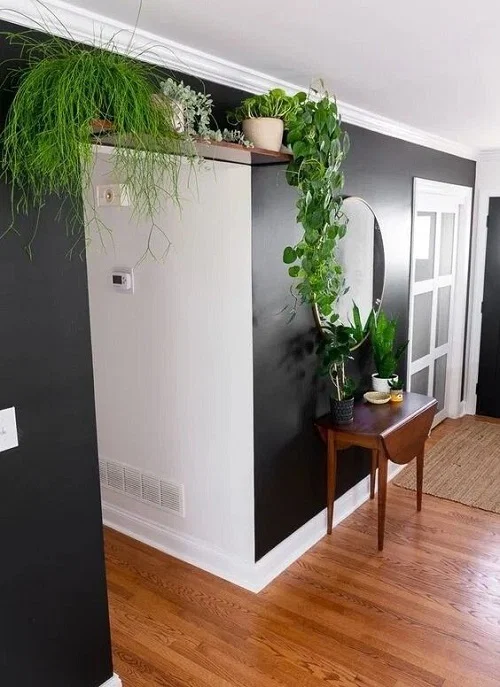
Image credit: @balconygardenweb.com
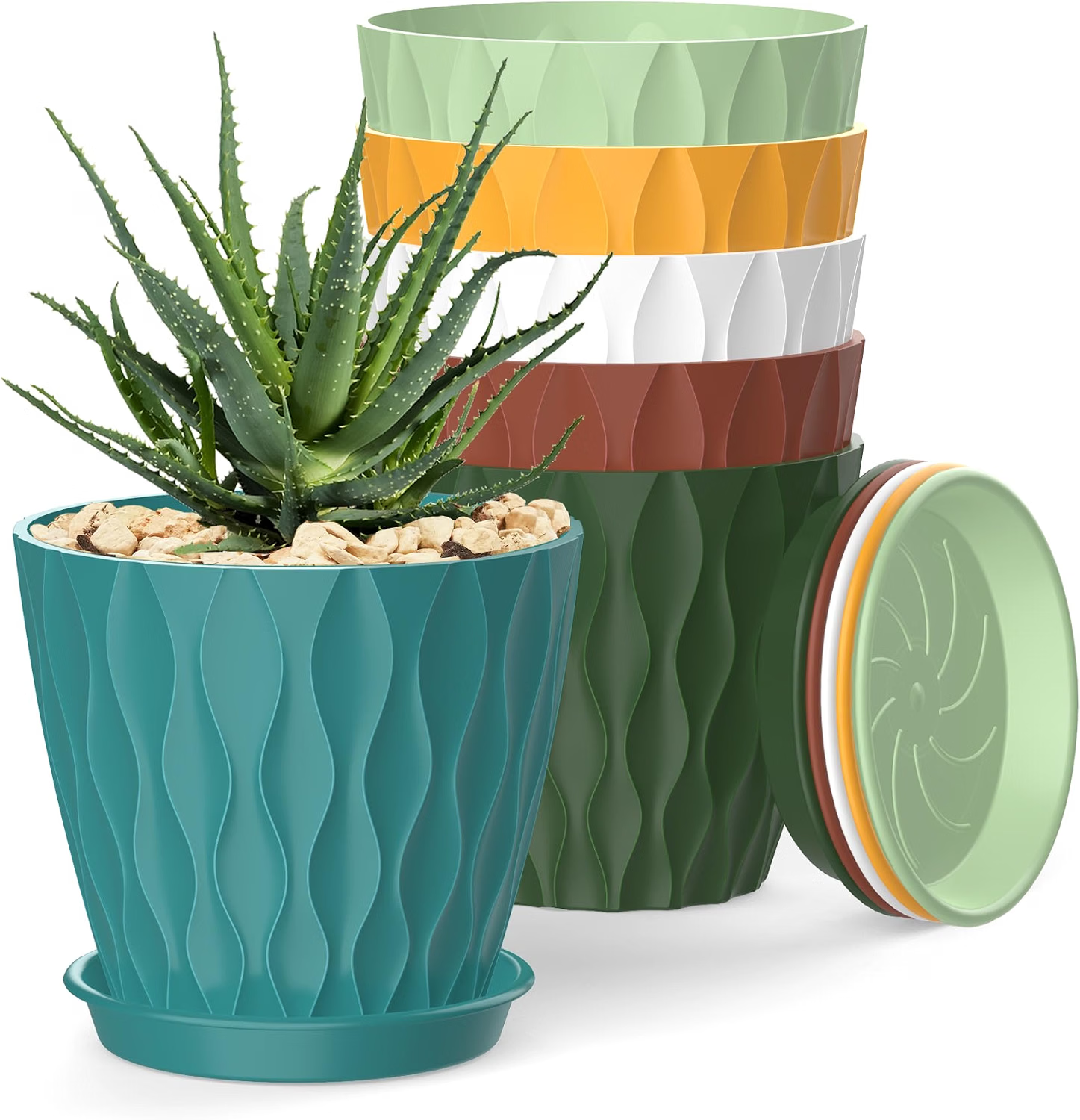
Amazon Find: Small Indoor Plant Pots With Drainage
Compact planters help create a coordinated display above a doorway. Look for stable, lightweight containers with appropriate drainage and a way to protect the shelf from excess water.
2. Create Hanging Botanical Decor With Cascading Vines
Hanging botanical decor is perfect for a small apartment because the greenery can occupy upper wall space instead of another table or plant stand. Cascading vines create a soft, relaxed look and can make an ordinary doorway feel like a beautiful transition between rooms. This style works particularly well in bedrooms, reading corners, and cozy living areas.
Choose a trailing pothos or another vine that suits the actual light conditions. Place it on a securely installed shelf above the door or inside a wall-mounted planter positioned beside the upper door trim. Guide the stems along a suitable small trellis or wall clips, keeping them away from the moving door. If you prefer a more natural appearance, allow a few stems to hang freely on one side. Use clips rated for the surface and don’t rely on lightweight adhesive hooks to support the pot itself.
Practical tip: Train new growth while the stems are flexible. Regular pruning helps prevent vines from catching on the door or growing into areas that are difficult to reach.
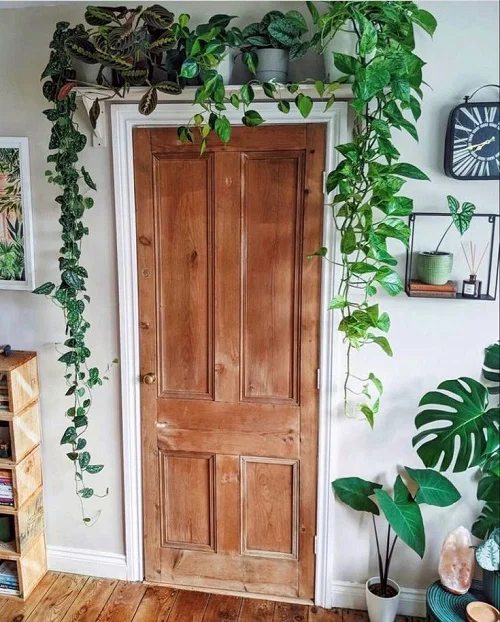
Image credit: @balconygardenweb.com
3. Install a Simple Plant Ledge Above the Door
A slim plant ledge is one of the most practical ways to make use of unused wall space above a doorway. It creates an organized horizontal display while keeping small pots off countertops and furniture. Painting the shelf to coordinate with the wall or door trim can help it blend naturally with your interior.
Measure the available width and choose a ledge with enough depth to support the selected planters safely. Install it with brackets and fasteners rated for the combined weight, following the manufacturer’s instructions for the wall structure. Arrange two or three lightweight pots rather than filling the shelf completely. A small upright plant in the middle and a trailing plant at one end can create a balanced look. Use a raised front lip or suitable plant-retaining system when needed, and make sure the shelf doesn’t obstruct the upper door trim or door operation.
Budget tip: Use one shelf above a doorway rather than buying a large plant stand. A simple design in a matching finish can look built-in without requiring a major decorating project.
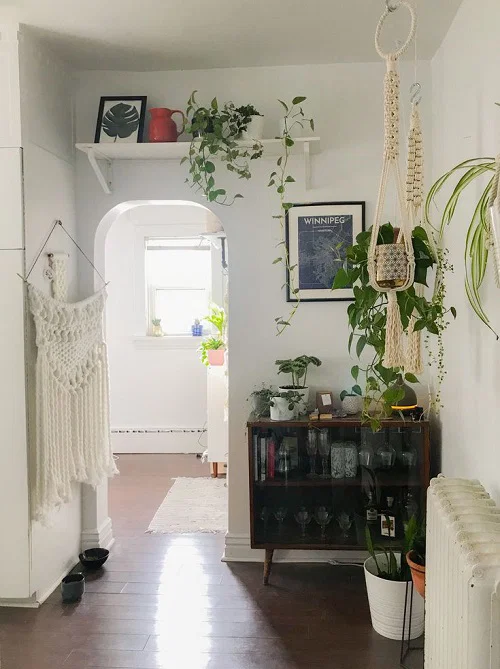
Image credit: @balconygardenweb.com
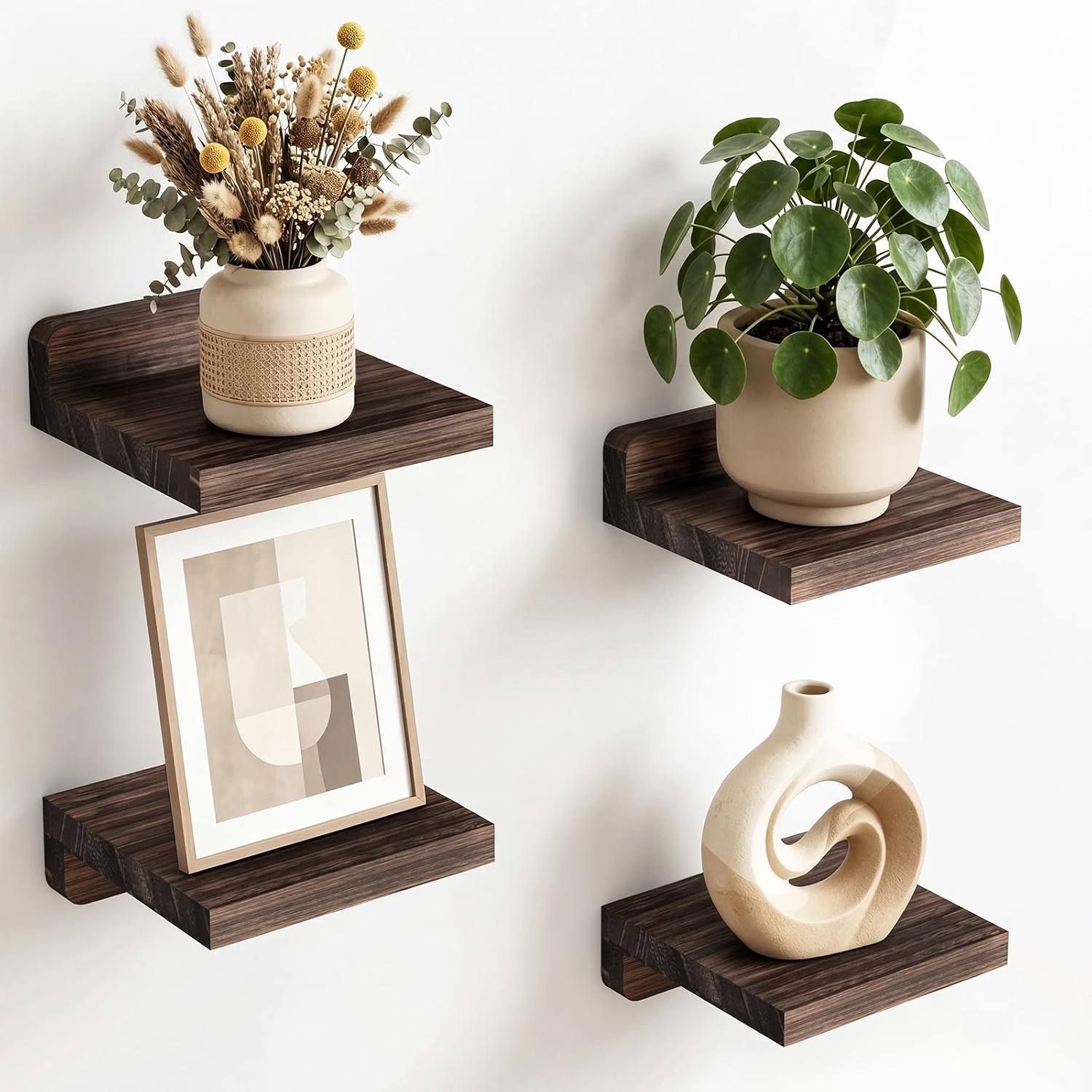
Amazon Find: Narrow Floating Wall Shelves
A narrow wall shelf can provide space for small plants above a doorway. Check the shelf depth, load capacity, mounting hardware, and suitability for holding planters before purchasing.
4. Make a Cascading Green Foliage Curtain
A cascading foliage curtain creates the feeling of a small indoor jungle. Instead of hanging a traditional fabric curtain, you can arrange trailing plants along the upper wall so their leaves form a natural green border. This is especially attractive around a wide opening between rooms or beside a bright interior doorway.
Install a secure plant shelf over a suitable opening and place several small trailing pots along it. Choose plants with similar light requirements so they can grow comfortably together. Guide the stems downward in loose sections, leaving enough space for the door to open fully and for people to pass without touching the foliage. If you want a thicker arrangement, use two or three plants rather than one overcrowded pot. Prune regularly and watch for stems that become tangled around hinges or handles.
Small-space tip: Use this look above an open passageway or an arch rather than a frequently used narrow doorway if the hanging foliage could interfere with movement.
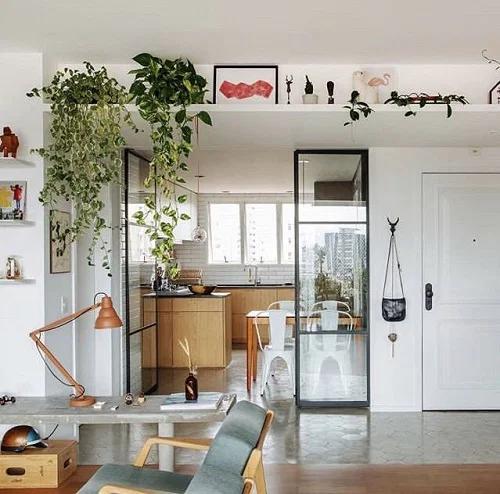
Image credit: @balconygardenweb.com
5. Build a Compact Over-the-Door Container Garden
A small collection of potted plants can make the area above a doorway look like a miniature indoor garden. This approach is ideal for plant lovers who want to grow several varieties but don’t have room for another shelving unit. A neat row of compact containers provides greenery while leaving the floor and furniture completely clear.
Choose a securely mounted shelf and arrange three small pots with similar sizes but different leaf shapes. For example, combine an upright compact plant with two trailing varieties suited to the same lighting conditions. Use consistent planters to keep the display organized. Avoid overcrowding the shelf and leave enough clearance to lift each pot down for watering. Place waterproof saucers beneath suitable planters, and check the mounting system after installation and whenever you change the arrangement.
Budget tip: Start with two small plants and add another only after confirming the location provides enough light and the shelf is easy to maintain.
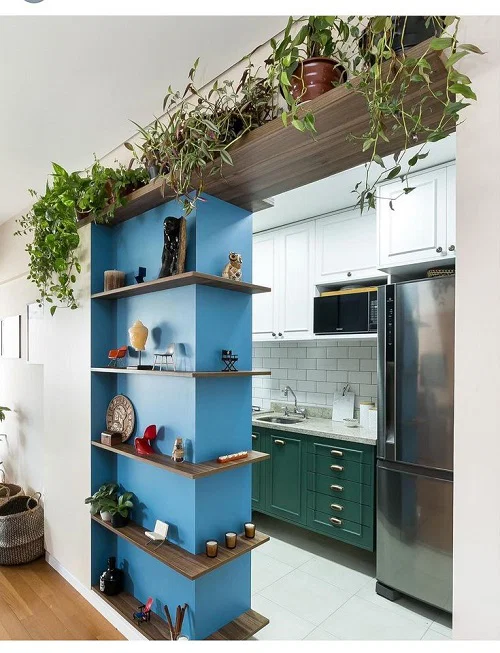
Image credit: @balconygardenweb.com
6. Mix Small Plants With Decorative Accessories
Your over-the-door plant display doesn’t have to contain greenery alone. Mixing small plants with lightweight decorative objects can make the arrangement feel like an intentional part of your home decor. A combination of simple pottery, small framed pieces, and foliage works beautifully in modern, farmhouse, and eclectic interiors.
Begin with one trailing plant and one compact upright plant on a securely mounted ledge. Add one lightweight decorative piece, such as a small wooden ornament or an unbreakable sculptural object, while leaving the planters room to grow. Repeat colors or materials already present in the room. For example, natural wood accents pair well with terracotta, while white ceramic pots complement neutral walls. Avoid heavy framed pictures, unstable glass objects, or loose decorations that might fall when the door closes.
Styling tip: Keep the plants as the main attraction. One small decorative accessory usually looks more polished than filling every gap along the ledge.
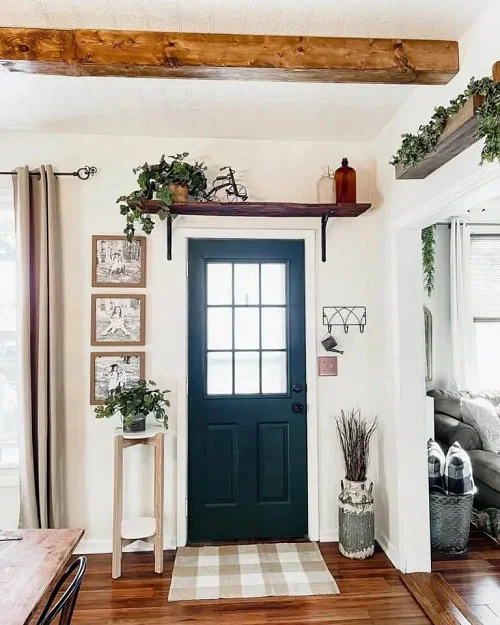
Image credit: @balconygardenweb.com
7. Design a Modern Wall Garden Around the Doorway
A modern wall garden can make a plain doorway feel like an architectural feature. Instead of placing every pot on one shelf, combine a horizontal ledge above the door with a few small wall-mounted planters along one side. The result is a clean, structured arrangement that adds greenery without filling the room with floor-standing pots.
Choose wall planters in a consistent finish, such as matte white or black, and arrange them in a simple stepped pattern that follows the upper corner of the doorway. Use compact plants with similar watering and lighting requirements. A small mirror on an adjacent wall can help reflect daylight, although it won’t replace the light plants need to grow. Before drilling, check the wall structure and verify that the mounting hardware supports each planted container. Keep the installation clear of light switches, electrical equipment, and the opening door.
Designer-style tip: Repeat one planter shape and use different leaf textures to create variety. The consistent containers make the display feel organized and contemporary.
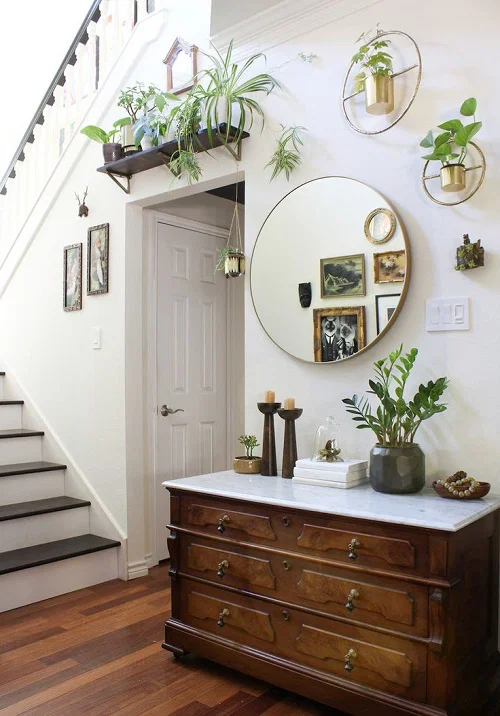
Image credit: @balconygardenweb.com
Amazon Find: Indoor Wall-Mounted Plant Holders
Wall-mounted plant holders can create a compact vertical garden beside a doorway. Select designs that suit the planter dimensions and support the full weight of the watered plants.

8. Arrange Clay Pots on a Natural Wooden Ledge
Natural wood and terracotta create a warm, earthy combination that’s perfect for a rustic or farmhouse-style home. A wooden ledge above a doorway can hold a small collection of clay pots, making the empty wall area feel more welcoming. The reddish-brown pots add subtle color while allowing the plants to remain the main feature.
Choose a properly finished, moisture-protected wooden shelf and install it with suitable structural support. Place two or three small clay pots on the ledge, using waterproof saucers to protect the wood. Choose plants that suit the available light, and remember that terracotta pots can be heavy, especially after watering. If weight is a concern, select lightweight planters with a terracotta-style appearance instead. Arrange the pots with a little space between them so you can inspect the leaves and remove the containers for maintenance.
Budget tip: Reuse a small number of existing clay pots and refresh the shelf rather than purchasing an entirely new plant display. Check the actual combined weight before installation.
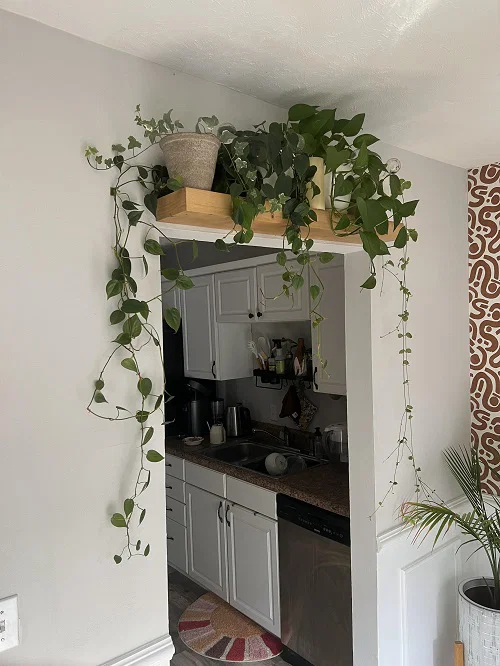
Image credit: @balconygardenweb.com
9. Use the Window Ledge Above an Entrance Door
Some homes and apartments have a transom window or a small window area above an entrance door. This feature can create a lovely location for plants because it may provide more natural light than an ordinary interior doorway. A carefully arranged display can draw attention to the window while adding greenery to a narrow entryway.
First, check whether there’s an actual load-bearing ledge designed to support objects. Never place pots directly on fragile window trim or an unsupported glazing frame. If appropriate, install a separate secure shelf below the window without blocking the glass, ventilation, or door operation. Choose compact plants that suit the actual light, such as a small spider plant or a suitable succulent in a bright location. Leave enough space for leaves to grow without pressing against the glass, which may become very cold or hot during different seasons.
Practical tip: Observe how much direct sunlight the entrance receives throughout the day before choosing plants. A bright-looking entryway doesn’t always provide enough light for sun-loving succulents.
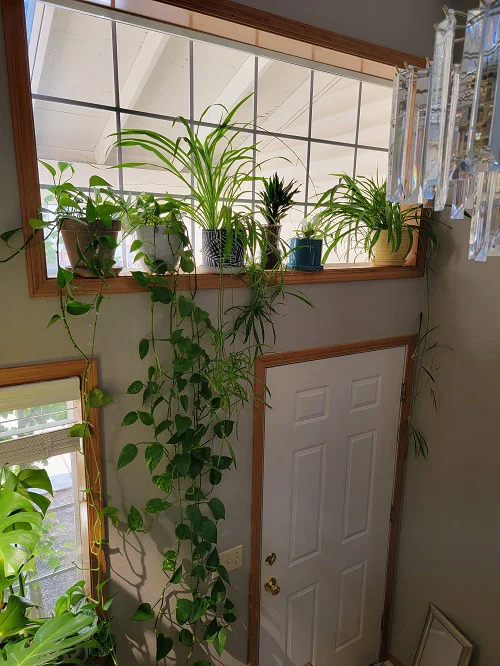
Image credit: @balconygardenweb.com
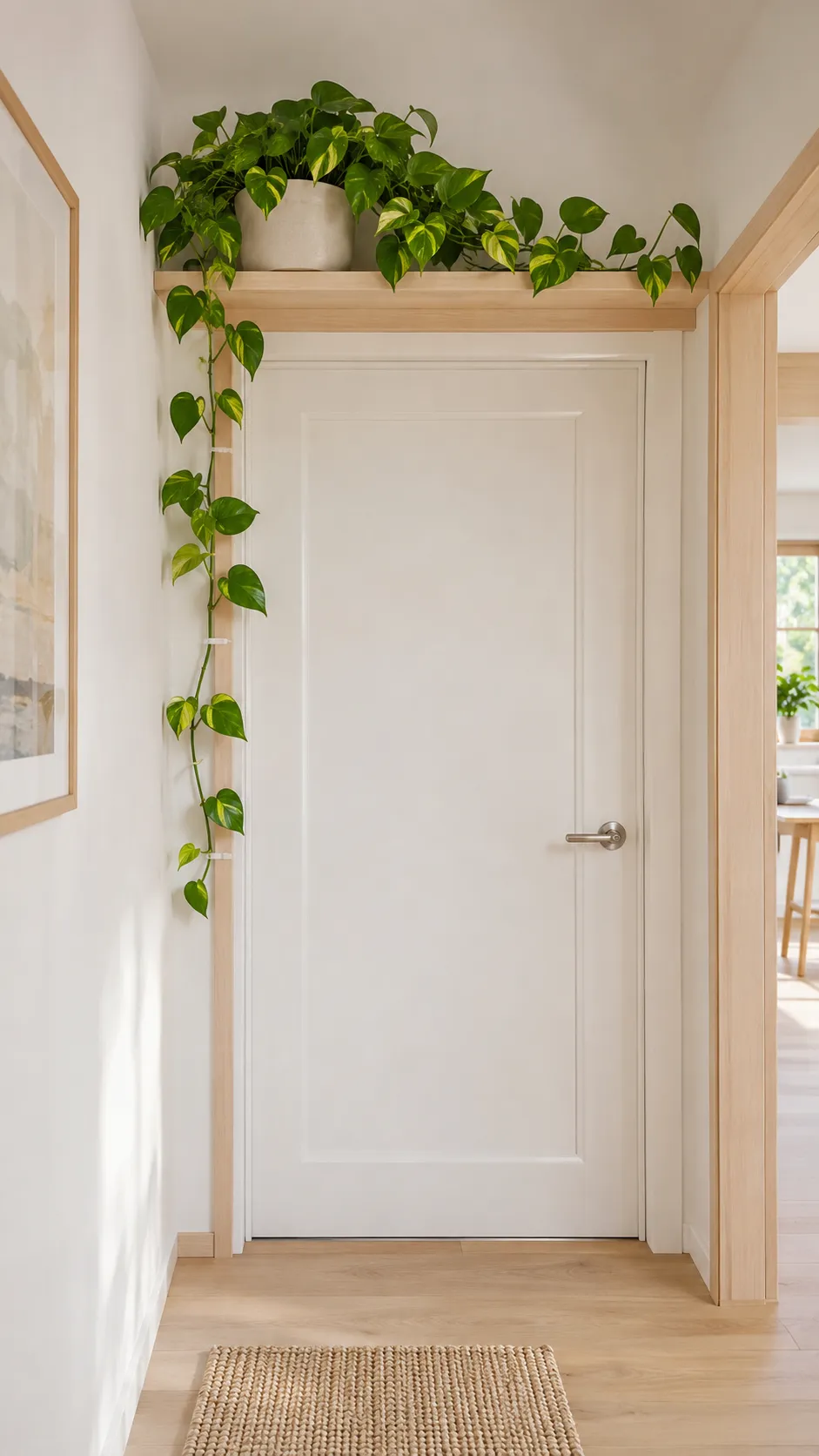
10. Grow a Cascading Pothos Above the Door
Pothos is a popular plant for small apartments because its vines can trail from a shelf or climb along a supported surface. Its heart-shaped foliage can soften the upper edges of a doorway, and it doesn’t require a large floor planter to create an attractive display. Variegated varieties can also add cream or yellow-green detail to a neutral room.
Place a pothos in a small pot on a secure ledge above a door that receives sufficient indirect light. Allow the stems to trail along one side or guide them with suitable wall clips placed away from the door’s moving parts. Check the soil before watering rather than following a rigid schedule, and avoid leaving water sitting in the decorative container. As the plant grows, trim long stems and propagate healthy cuttings if you want to create more small plants. Pothos is toxic to cats and dogs if chewed, so consider household access carefully.
Styling tip: Choose a plain light-colored pot to let the leaves stand out. A single healthy pothos can make a beautiful doorway feature without needing additional plants.
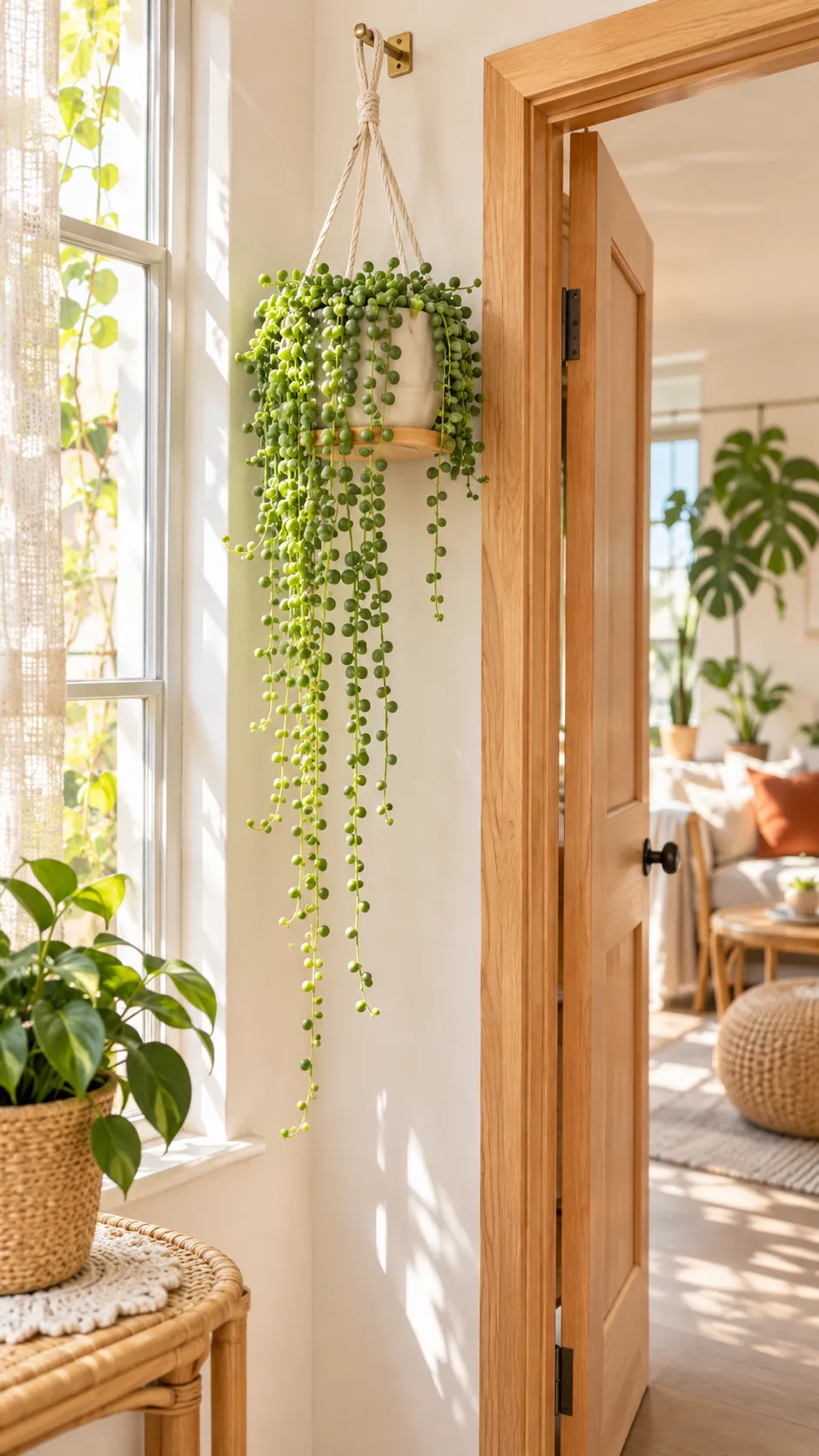
11. Display String of Pearls in a Bright Doorway
String of pearls creates an unusual trailing display with its tiny round leaves that resemble a delicate beaded necklace. Its compact root system and cascading growth make it attractive for a small shelf or hanging planter. The long strands can look particularly beautiful beside a bright doorway where the rounded leaves are easy to appreciate.
Choose a location with plenty of suitable bright light, ideally near a window rather than above a dark interior door. Plant it in a well-draining succulent potting mix inside a container with drainage. Allow the growing medium to dry appropriately between waterings, adjusting care for the actual temperature, season, and pot size. Keep the strands from hanging across the opening or getting caught when the door moves. String of pearls is toxic if ingested and isn’t a good choice where children or pets might reach fallen leaves or stems.
Plant care tip: Don’t place string of pearls above a dark doorway simply because the planter fits. Adequate light and careful watering matter much more than the decorative location.
12. Mount Lightweight Air Plants Above the Doorframe
Air plants are an appealing choice for small-space decorating because they don’t need traditional soil-filled pots. Their sculptural shapes can look beautiful in tiny holders, on a piece of driftwood, or inside an open geometric display. Since they are lightweight, they can create visual interest without the bulk of a large container garden.
Arrange a few air plants in small, secure wall-mounted holders beside or above an interior doorway that receives appropriate indirect light and air circulation. Avoid sealed containers, as air plants need to dry after watering. Water according to the species and growing conditions, then allow the plants to drain and dry completely before returning them to their holders. Keep them away from strong heating vents and avoid gluing living plants directly onto surfaces that may damage their tissue.
Small-space tip: Start with two or three small air plants rather than covering the entire doorframe. A simple arrangement is easier to inspect, remove, and water correctly.
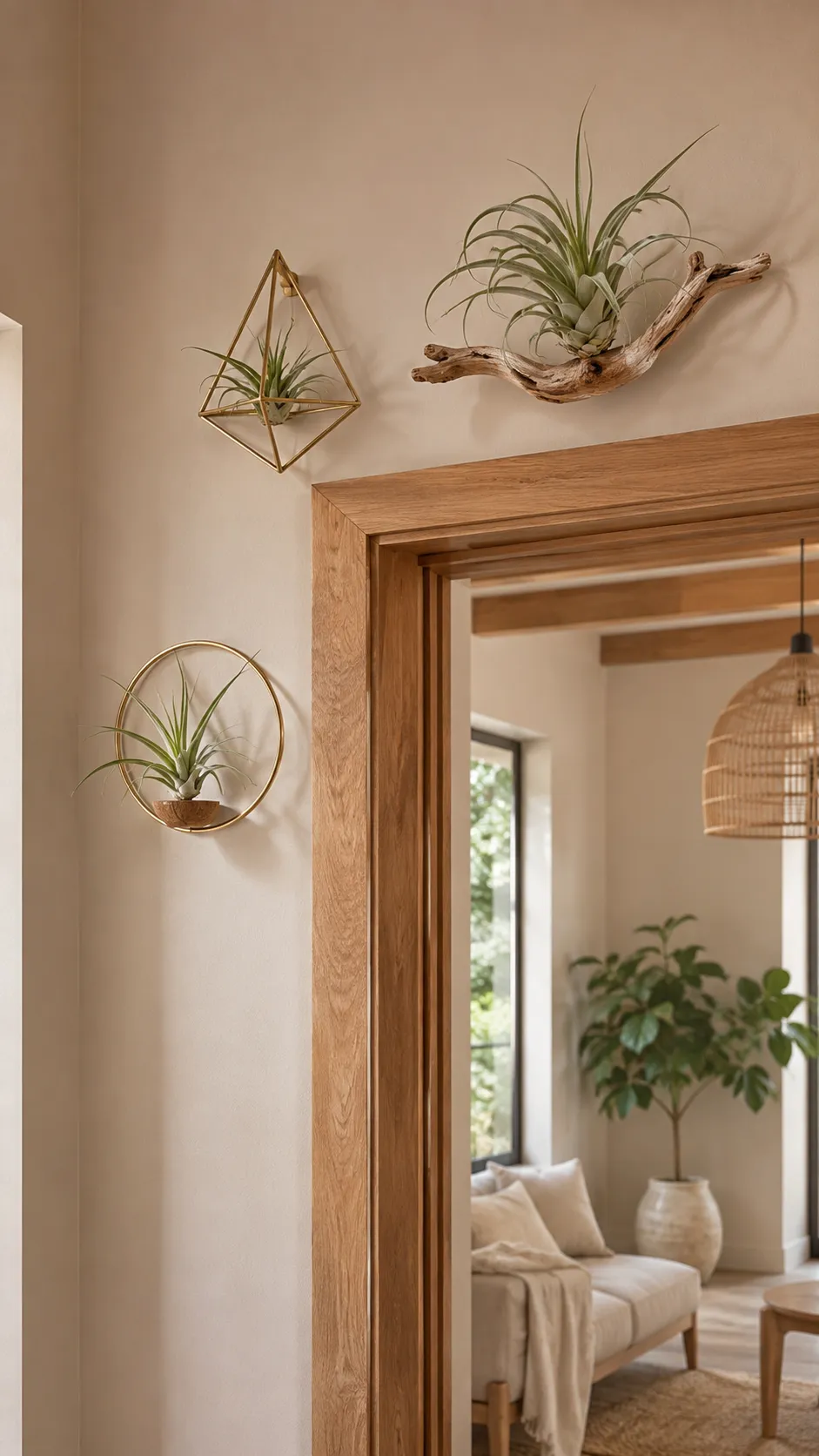
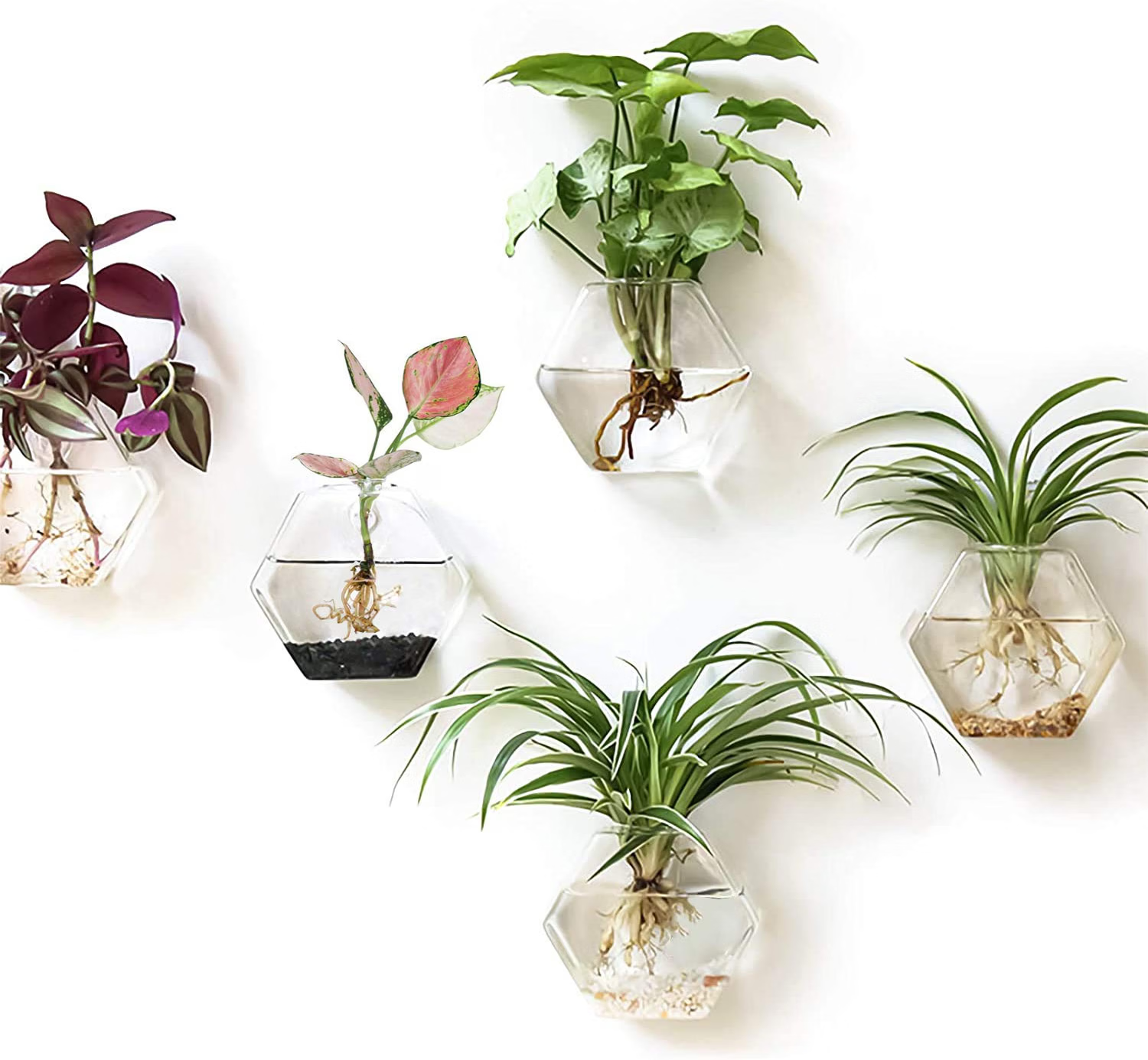
Amazon Find: Wall-Mounted Air Plant Holders
Small air plant holders can create a lightweight display above or beside a doorway. Choose open designs that allow airflow and make watering and maintenance easy.
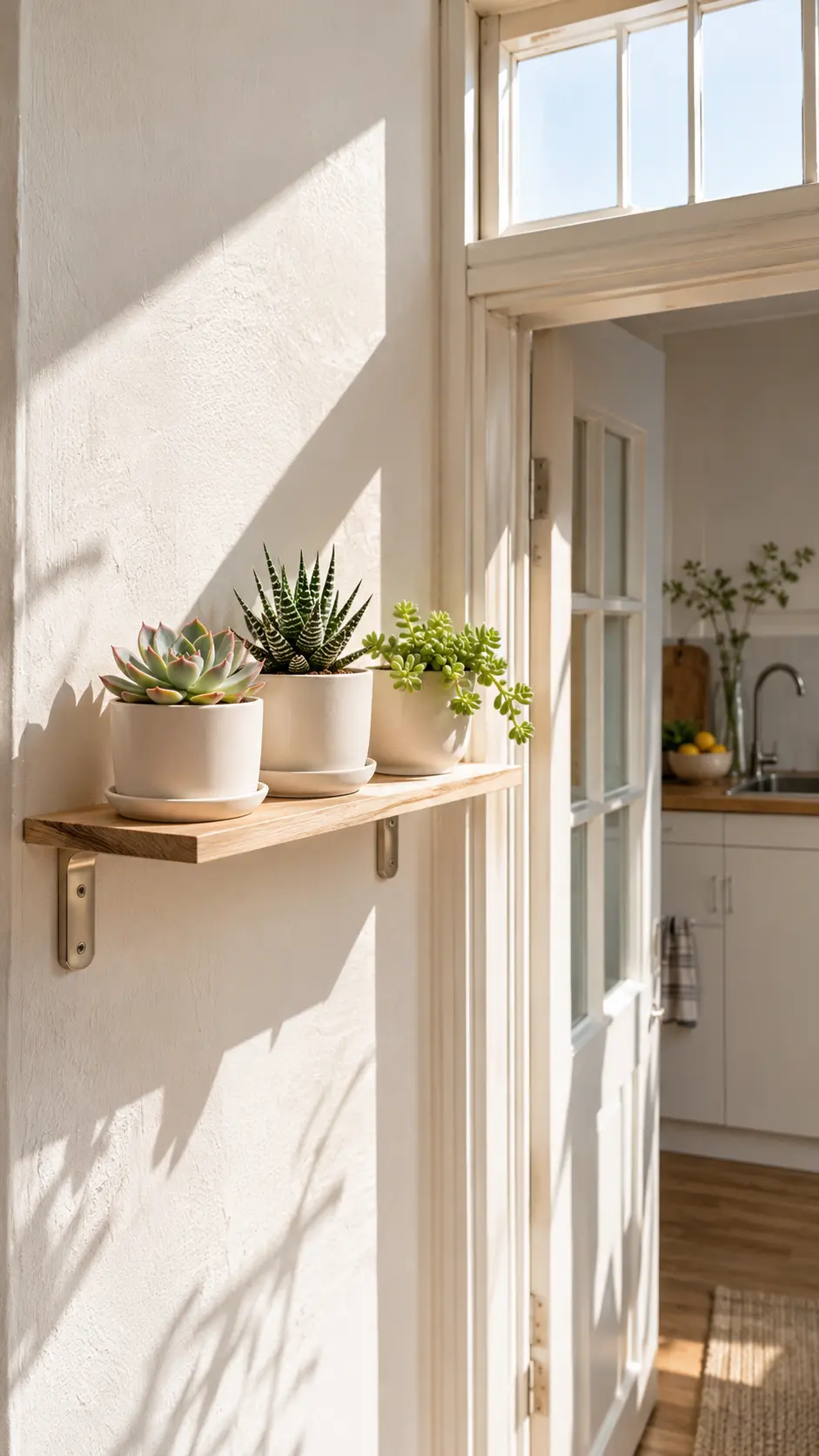
13. Create a Mini Succulent Garden on a Sunny Ledge
Miniature succulents are excellent for small plant displays because many varieties remain compact and come in attractive shapes. Rosette-forming echeverias, small haworthias, and other suitable succulents can create an organized miniature garden without requiring a large shelf. Their different leaf shapes offer plenty of visual interest in a small arrangement.
Choose a sunny or very bright doorway area that provides the light required by the specific plants. Arrange two or three small succulents in separate containers with suitable drainage rather than placing too many in one shallow pot. A secured shelf near a transom window may be appropriate when sunlight and temperature conditions are suitable. Use a well-draining succulent mix and allow the potting medium to dry as appropriate before watering again. Avoid putting light-loving varieties above a dark interior doorway, where they may become weak or stretched.
Styling tip: Choose planters in one finish, such as white ceramic or terracotta, and let the different succulent shapes create the visual variety.
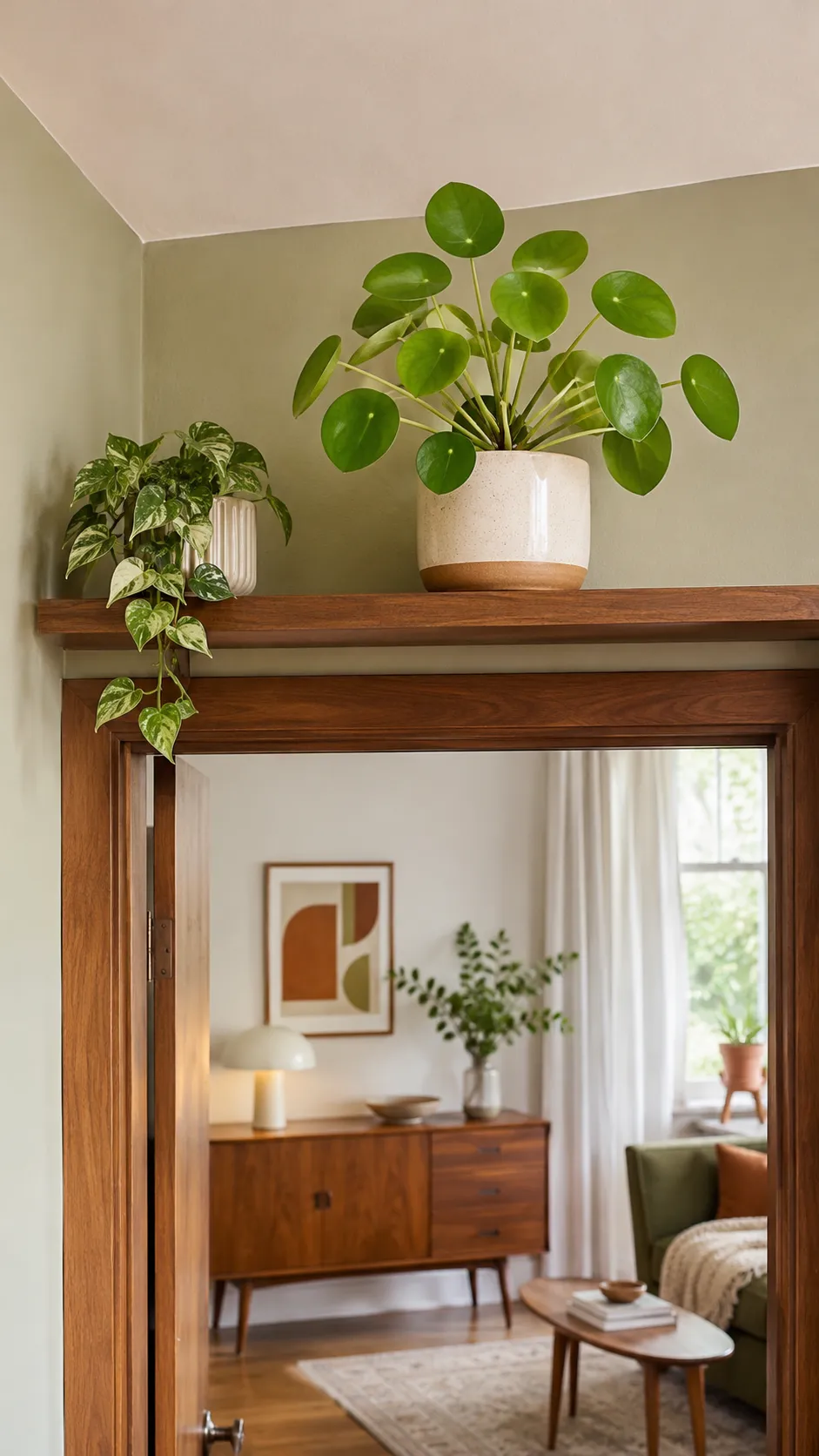
14. Display a Compact Chinese Money Plant
The Chinese money plant, or Pilea peperomioides, has distinctive round leaves on slender stems that create a cheerful, modern appearance. Unlike long trailing vines, it grows in a more upright shape, making it useful for compact shelf arrangements where you want greenery without leaves hanging down across a doorway.
Place a small Pilea in a stable pot on a secure ledge above a doorway with bright indirect light. Leave enough vertical clearance for the leaves and new growth rather than squeezing the plant between the shelf and ceiling. Rotate the pot occasionally for more even growth and water when the upper portion of the growing medium has dried appropriately. If the plant produces small offsets, you can separate established baby plants when they’re ready and use them in other suitable small-space displays.
Decorating tip: Pair a Pilea with one trailing plant to contrast round upright foliage with soft cascading stems. Avoid crowding both plants into a shelf that’s too narrow for their mature size.
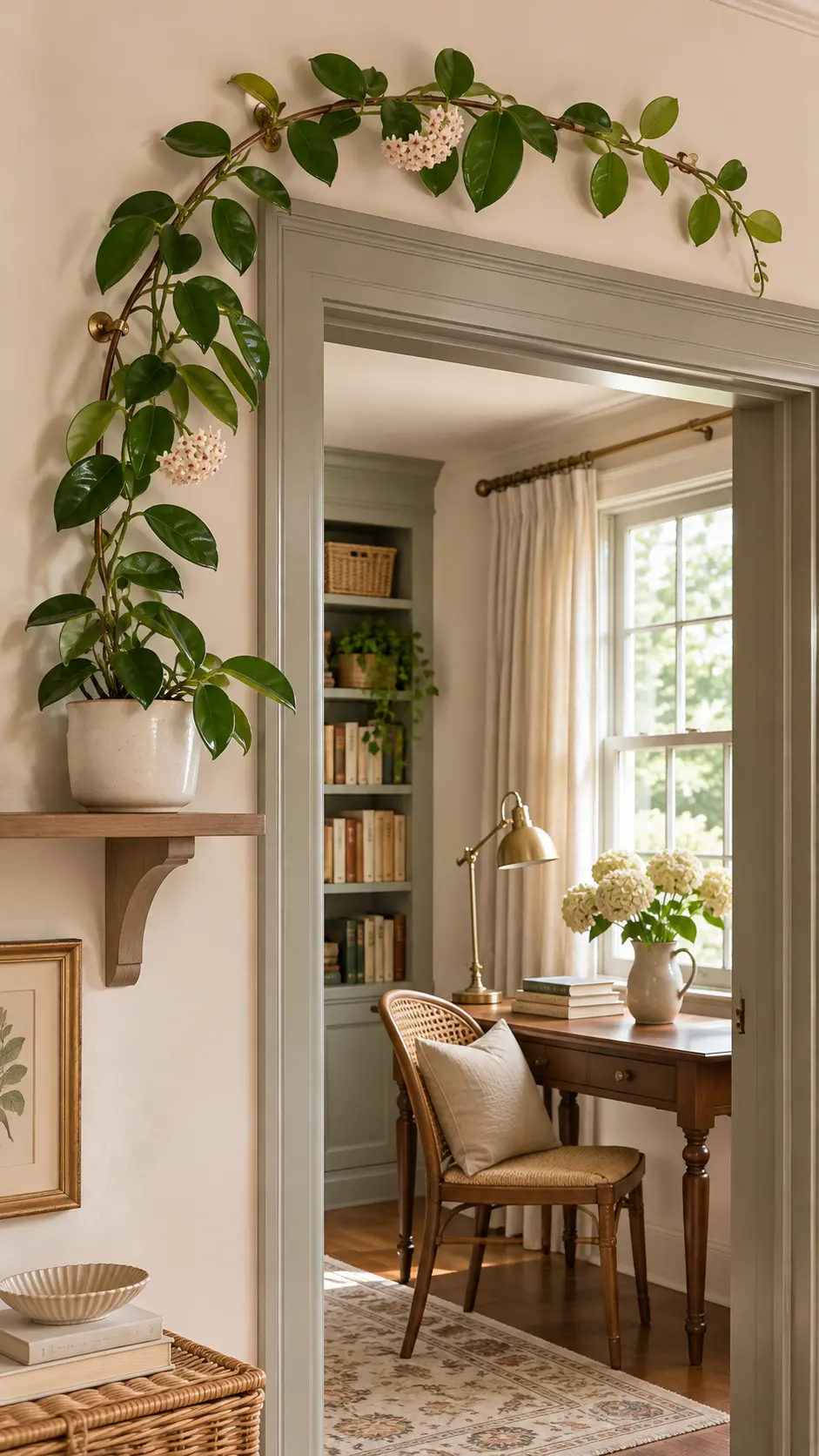
15. Train a Hoya Vine Around the Upper Doorway
Hoya plants are beautiful for compact indoor displays because many varieties have waxy leaves and flexible vines that can be trained or allowed to trail. Their foliage creates a slightly different appearance from pothos, and some mature Hoyas may produce fragrant clusters of star-shaped flowers when their growing conditions are suitable.
Place a compact Hoya on a secure shelf near a bright window and provide a small trellis or suitable wall support. Guide a few stems around the upper corner of the door rather than stretching them across the whole opening. Use light, non-damaging plant ties and leave room for future growth. Provide a well-draining growing medium and water according to the variety, pot size, and environmental conditions. Avoid frequent repositioning if the plant develops flower buds, and keep stems away from door hinges and moving hardware.
Styling tip: A Hoya looks especially attractive in a simple ceramic planter with a small curved trellis. The plant itself provides enough detail without a large collection of extra decorative objects.
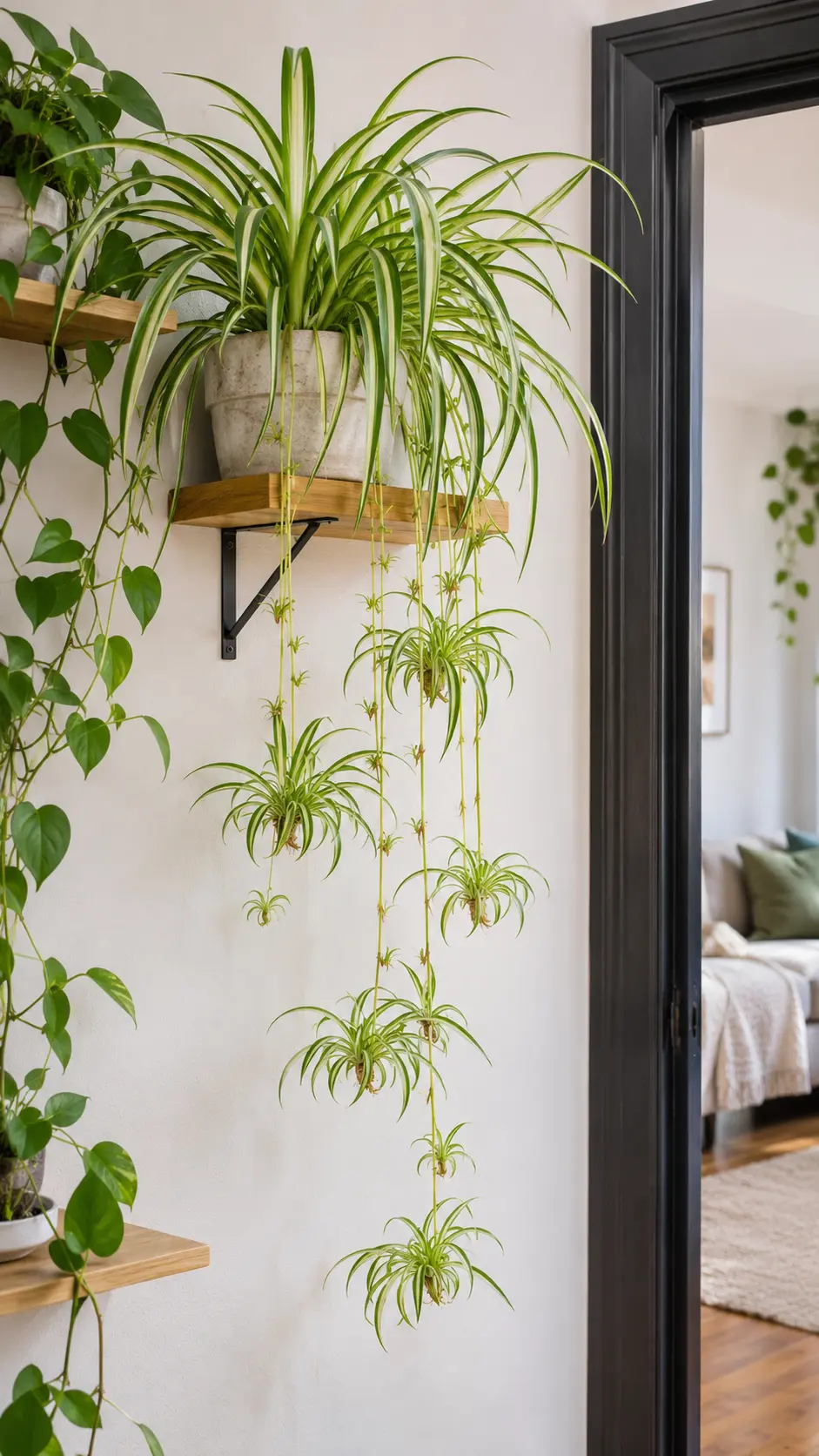
16. Hang Spider Plant Babies in a Vertical Arrangement
Spider plants are a lovely option for compact homes because mature plants often produce long stems carrying miniature baby plants. These little plantlets can form a naturally cascading arrangement, giving an upper doorway shelf the appearance of a miniature hanging garden. Their arching leaves also soften rectangular doorframes and simple interior walls.
Place a healthy spider plant in a stable planter on a secure ledge where it receives suitable indirect light. Allow established plantlets to hang naturally while keeping them away from the moving door. If you want a more structured arrangement, root suitable babies in small pots and place them along a wall-mounted plant shelf near the doorway. Avoid suspending multiple planted pots from thin runners or improvised supports that aren’t designed to carry their weight. Water according to the potting mix and conditions, and trim damaged leaves when necessary.
Budget tip: A healthy spider plant may provide new plantlets that you can root and share. It’s an easy way to expand a collection without purchasing a separate mature plant for every display.
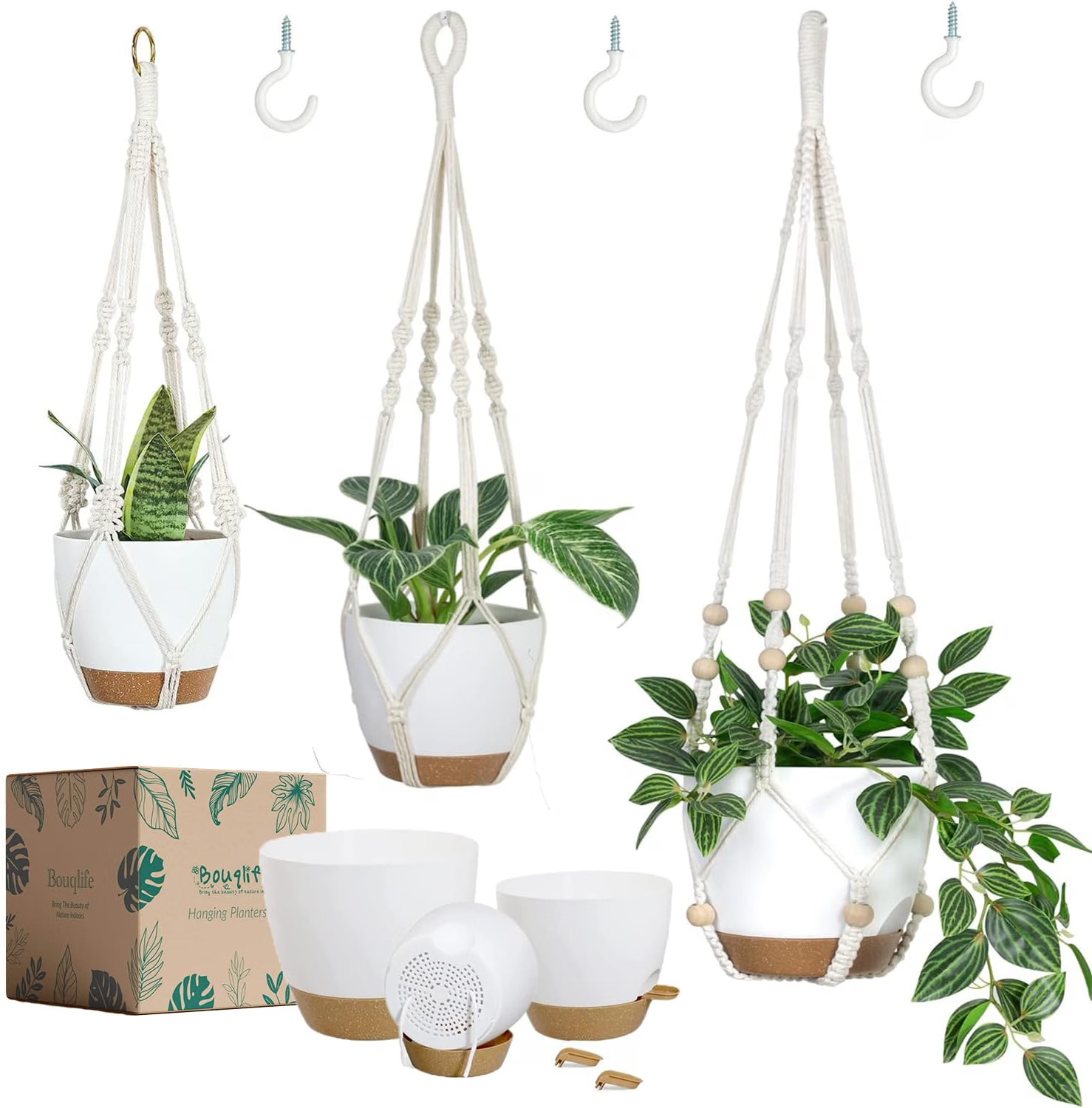
Amazon Find: Lightweight Indoor Hanging Planters
Lightweight hanging planters can work for compact spider plants and trailing greenery when securely mounted to suitable structural supports. Compare the wet weight capacity and drainage design before buying.
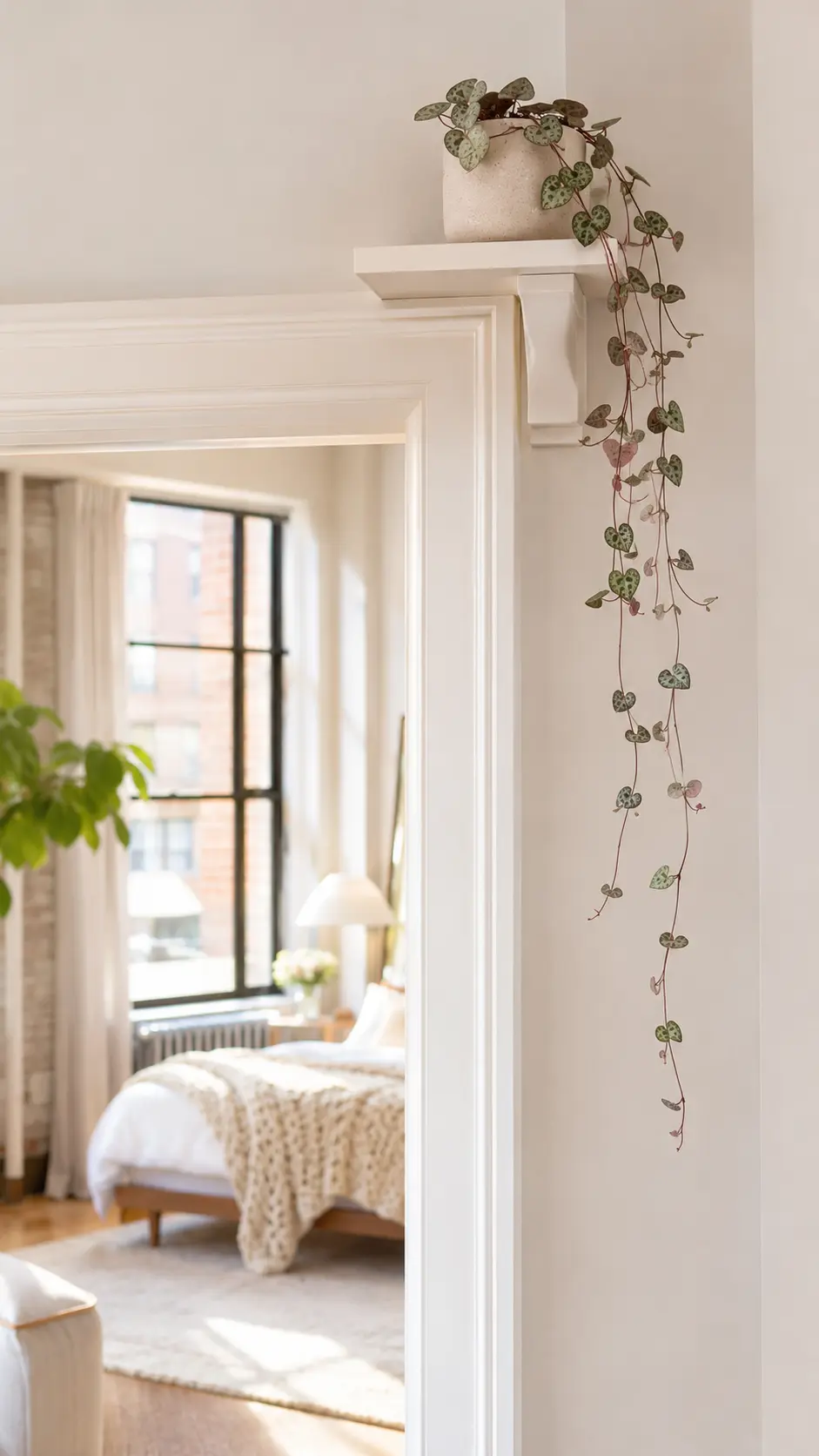
17. Add a Delicate String of Hearts Plant
String of hearts is a charming trailing houseplant for anyone who loves delicate greenery. Its long, slender vines carry small heart-shaped leaves, creating a beautiful curtain-like effect without the visual bulk of larger foliage plants. It can be especially attractive above a bright bedroom or living room doorway where the tiny leaves are easy to see against a plain wall.
Place the plant in a small, stable container on a securely mounted ledge that receives suitable bright indirect light. Allow a few vines to trail along one side of the doorway, keeping them clear of handles and hinges. Use a well-draining potting mix and water based on the condition of the soil rather than a fixed calendar. Trim overly long vines and propagate healthy cuttings if desired. Since the stems are delicate, position the plant where it won’t be brushed against frequently.
Styling tip: A string of hearts plant often looks best on its own in a small neutral planter. The fine heart-shaped foliage provides a subtle decorative detail without needing extra accessories.
Best Plants for Different Doorway Lighting Conditions
Not every over-the-door location receives enough natural light for a healthy indoor plant. Before choosing your greenery, observe the light at the actual shelf position throughout the day. A plant located near the ceiling may receive different light from another plant at window height.
| Light Condition | Possible Plant Choices | Care Consideration |
|---|---|---|
| Bright Indirect Light | Pilea, Hoya, Spider Plant, Air Plants | Avoid Excessive Heat and Leaf Scorch |
| Moderate Indirect Light | Suitable Pothos and Spider Plants | Watch for Slow or Leggy Growth |
| Very Bright or Sunny Area | Appropriate Mini Succulents | Check Temperature and Sun Exposure |
| Bright Window Nearby | String of Pearls, String of Hearts | Use Fast-Draining Soil |
| Dark Interior Doorway | Faux Greenery or Properly Supported Grow Light | Most Live Plants Need Additional Light |
Plant requirements vary by species, cultivar, season, and home conditions. Use these suggestions as starting points, then confirm the care requirements for the specific plant you choose.
How to Make Over-the-Door Plants Look Stylish Without Clutter
A successful over-the-door plant display should feel like part of the room instead of an improvised storage shelf. The easiest approach is to limit the number of planters, choose complementary finishes, and leave space for plants to grow.
- Repeat planter finishes: Use matching ceramic, terracotta-look, or simple neutral containers to create visual consistency.
- Mix leaf shapes: Pair an upright plant with a trailing variety instead of selecting several identical plants.
- Leave growing room: Don’t push leaves against the ceiling, wall, or door hardware.
- Keep vines to one side: Guide trailing foliage away from the door swing and frequently used handles.
- Protect the shelf: Use stable waterproof trays or saucers and remove planters when watering if necessary.
- Choose realistic plant sizes: Plan for how large the plants may become, not just how they look when newly purchased.
- Limit accessories: Keep decorative objects to a minimum so the greenery remains the focus.
- Check the display regularly: Inspect supports, planters, and foliage for changes that could affect stability or clearance.
Over-the-Door Plant Shopping Checklist
You don’t need expensive plant displays to create a beautiful green doorway. Choose supplies that support your specific plants and wall structure, and reuse suitable pots and shelves you already own when possible.
| Item | Best Use | Priority |
|---|---|---|
| Measuring Tape | Checking Doorway Space | Essential |
| Weight-Rated Wall Shelf | Supporting Small Planters | Essential for Shelf Displays |
| Appropriate Mounting Hardware | Secure Installation | Essential |
| Lightweight Plant Pots | Reducing Shelf Load | As Needed |
| Waterproof Pot Saucers | Protecting Shelves and Walls | Useful Basic |
| Indoor Potting Mix | Growing Suitable Houseplants | Plant-Specific |
| Succulent Potting Mix | String of Pearls and Mini Succulents | Plant-Specific |
| Small Plant Trellis | Training Hoya or Vines | Optional |
| Plant Pruning Scissors | Controlling Trailing Growth | Useful Basic |
| Watering Can With Narrow Spout | Controlled Watering | Optional |
| Suitable Grow Light | Low-Light Areas | Only if Necessary |
Common Over-the-Door Plant Decorating Mistakes to Avoid
Overloading a Shelf Above the Door
Wet soil, ceramic pots, and decorative containers can be heavier than expected. Don’t place several potted plants on a shelf without checking its full load rating and structural mounting. A lightweight decorative shelf isn’t automatically safe for living plants.
Choosing Plants That Don’t Receive Enough Light
A doorway located far from a window may be too dark for healthy plant growth. Don’t assume a shade-tolerant plant can survive indefinitely without meaningful light. Measure the light conditions, choose suitable species, or use faux greenery in locations that can’t support living plants.
Letting Water Drip Onto the Doorframe
Water leaking from pots can damage paint, wood trim, and nearby walls. Use suitable drainage saucers and avoid leaving standing water on shelves. For easier maintenance, take small planters down to water them, allow excess water to drain, and return them only when appropriate.
Allowing Vines to Interfere With the Door
Trailing stems may eventually reach door hinges, handles, or walking areas. Prune vines regularly and guide growth along a safe wall section. Plants should never obstruct emergency exits or prevent a door from opening fully.
Ignoring Pet and Child Safety
Several common houseplants, including pothos and string of pearls, can be harmful if eaten. Elevated placement doesn’t eliminate the risk from fallen leaves, cuttings, or dropped pots. Check the toxicity of each plant for your household and choose safer alternatives where needed.
Making the Display Too Difficult to Maintain
A beautiful high shelf isn’t practical if you can’t safely reach the plants for watering and inspection. Choose an accessible location and use a stable, appropriate way to remove pots for care. Avoid standing on chairs or furniture to reach them. For a very tall doorway, a lower wall-mounted display may be a better solution.
Frequently Asked Questions
1. What Are the Best Plants to Grow Above a Door?
Pothos, compact Hoyas, spider plants, Pilea, and string of hearts can work well in suitable elevated displays. The best choice depends on the natural light, available space, and how easily you can maintain the plant. Select smaller containers and check mature growth before installing the arrangement.
2. Can I Put Plants Above a Door Without Drilling?
Some lightweight decorative options may be possible, but a shelf holding live potted plants typically needs secure structural support. Avoid relying on ordinary removable adhesive hooks to hold heavy or watered pots above a doorway. In a rental, consider a nearby freestanding plant stand or other approved setup.
3. How Do You Water Plants on a High Shelf?
For small plants, it is often safest to remove the containers, water them in a suitable sink or tray, and let excess moisture drain before returning them. Use a stable, appropriate method of access, and avoid leaning over an open doorway or balancing on furniture.
4. What If My Doorway Doesn’t Get Enough Natural Light?
Consider using realistic faux plants or installing a properly supported grow light that meets the needs of your chosen species. Even plants described as low-light tolerant still need enough light for ongoing growth. Choose the display based on the actual conditions rather than appearance alone.
5. How Can I Make an Over-the-Door Plant Display Look Organized?
Use two or three planters in coordinating finishes and combine different foliage shapes. Keep the pots within the shelf’s safe load rating, leave space for growth, and guide trailing vines away from the door. A simple arrangement often looks better than a crowded collection of mismatched containers.
Recommended Finds on Amazon
These practical supplies can help you build a compact indoor plant display. Always confirm the installation requirements and full planted weight before purchasing shelves or hangers.
- Narrow Floating Plant Shelves: Create an elevated place for compact plants without using floor space.
- Lightweight Indoor Plant Pots: Keep small plant arrangements easier to manage while providing appropriate drainage.
- Small Indoor Plant Trellises: Support suitable climbing vines and help guide their growth away from the moving doorway.
Final Thoughts
These 17 over-the-door plant ideas to maximize small spaces show how an overlooked wall area can become a charming indoor garden. From trailing pothos and decorative clay pots to air plant displays, compact Pilea, spider plant babies, and delicate string of hearts, there are plenty of ways to introduce greenery without filling your floor with additional plant stands.
Start with one securely mounted ledge and a plant suited to your doorway’s light conditions. Keep the arrangement lightweight, allow room for the door to operate, and choose pots you can maintain easily. A small, thoughtfully planned display can bring natural texture and personality into your home while preserving the valuable space you use every day.