

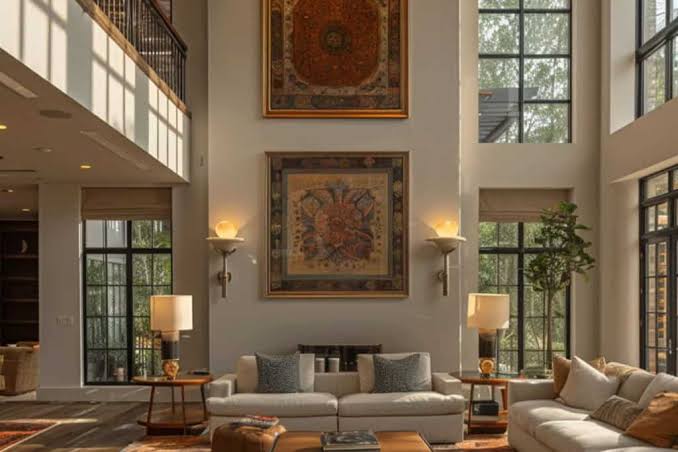
A large, empty wall can be one of the most challenging parts of decorating a home. High ceilings, open-concept living rooms, double-height entryways, and spacious staircases offer beautiful architectural features, but they can also make regular artwork and small decorations look strangely out of place. The secret is choosing pieces that match the scale of the room without making the walls feel crowded.
This big wall styling guide shares 17 ideas for high ceilings and open layouts, including oversized artwork, vintage map murals, statement tapestries, architectural wall panels, gallery walls, tall shelving, large photography, and creative arrangements for two-story spaces. Each idea includes practical placement advice, styling details, and budget-friendly alternatives to help you decorate large walls with confidence.
Affiliate disclosure: As an Amazon Associate, I earn from qualifying purchases. This article contains affiliate links, which may earn us a commission at no extra cost to you.
More Wall Decorating Ideas to Explore
If you’re working with a large living room wall, staircase, or open-concept space, these related guides offer useful inspiration for planning artwork and frame arrangements.
- 3 Reasons Your Gallery Wall Looks Tacky (Fix It With Better Gallery Wall Layout Ideas) for balanced frame spacing and gallery wall layouts.
- 15 Funky Gallery Wall Ideas for Bold Eclectic Home Decor for oversized art arrangements and mixed frames.
- 21 Photo Wall Ideas 2026 for staircases, living rooms, and family photo displays.
- Picture and Shelf Arrangements on Walls for layered picture ledges and flexible gallery displays.
How to Decorate Big Walls With High Ceilings
Before choosing decorations, look at the wall as part of the entire room rather than an isolated empty surface. Consider the ceiling height, furniture below, nearby windows, architectural features, and the amount of open space surrounding the wall. A decoration that looks large in a store may appear tiny against a two-story living room wall.
Start by identifying the wall’s purpose. A wall behind a sofa usually needs a wide visual anchor, while a narrow wall beside a staircase may benefit from a tall vertical arrangement. An open-concept room may need an accent that defines one functional area without interrupting the flow between spaces.
Easy big wall styling formula: One appropriately scaled focal point + repeated colors or materials + a clear connection to the furniture below + enough negative space to let the design stand out.
For art above a sofa or console, a common starting point is an arrangement approximately two-thirds to three-quarters the width of the furniture, adjusted for the room and artwork. For gallery walls, plan the overall outer shape before hanging individual frames. For very tall walls, balance vertical height with the human-scale seating and activity areas rather than feeling obligated to fill every inch up to the ceiling.
Always confirm the wall material and the weight of the items you’re installing. Large mirrors, shelving, architectural panels, and oversized artwork may require stud-mounted brackets, specialized anchors, or professional installation.
Big Wall Decor Planning Guide
| Wall Type | Best Styling Approach | Important Detail |
|---|---|---|
| Wide Living Room Wall | Oversized Artwork or Gallery | Connect Art Width to Sofa |
| Two-Story Entryway | Large Painting or Vertical Feature | Consider Both Floors’ Sightlines |
| Tall Narrow Wall | Vertical Gallery or Mural | Emphasize Height Without Crowding |
| Staircase Wall | Stepped Frame Arrangement | Follow Staircase Angle |
| Open-Concept Dining Wall | Mural or Textured Panels | Define the Dining Zone |
| Wall Beside Tall Windows | Vertical Art or Wood Slats | Respect Window Proportions |
| Double-Height Family Room | Architectural Paneling or Large Art | Create a Strong Focal Point |
| Large Home Office Wall | Tall Shelving or Photography | Combine Display and Storage |
17 Big Wall Styling Ideas for High Ceilings and Open Layouts
1. Make a Statement With Oversized Abstract Artwork
An oversized abstract painting is one of the simplest ways to decorate a large wall without creating a busy arrangement. A single piece with generous dimensions gives the room a clear focal point and introduces color, movement, and personality. Abstract art works particularly well in modern living rooms with high ceilings because the shapes can balance spacious architecture without requiring lots of additional accessories.
Choose a painting that relates to the colors already present in your sofa, rug, curtains, or accent chairs. Above a wide sofa, select a horizontal canvas that visually connects the seating area. For a narrow double-height wall, a vertical composition may feel more balanced. Hang the artwork at a comfortable viewing height relative to the furniture rather than automatically centering it between the floor and ceiling. Keep the surrounding wall mostly clear so the painting remains the main feature.
Budget tip: Paint your own oversized canvas using broad shapes and a limited color palette. A simple abstract composition with textured brushstrokes can look polished when the size and colors suit the room.
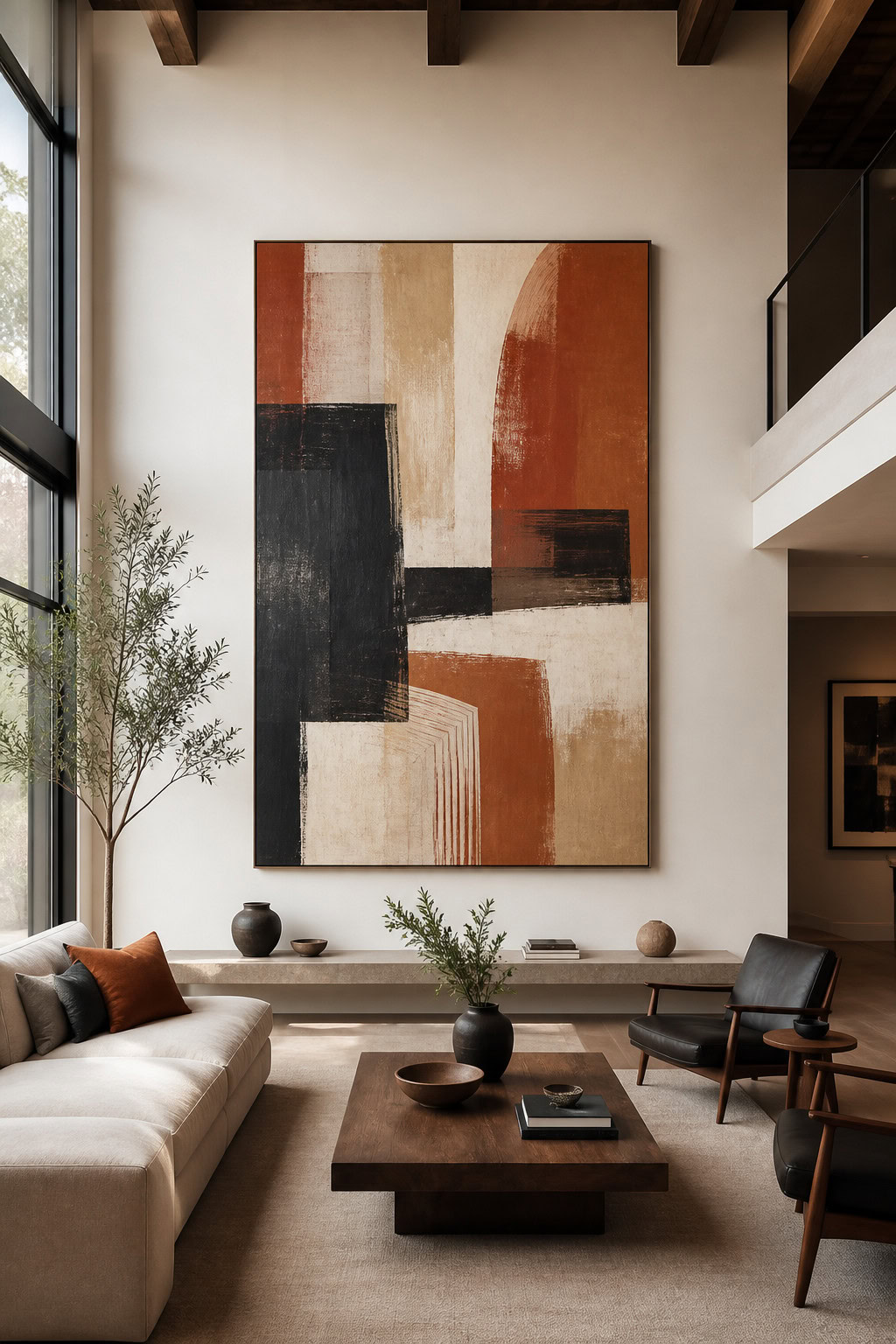
Image credit: @thetanee.com
Amazon Find: Large Abstract Canvas Wall Art
Oversized abstract canvas artwork can help anchor a spacious wall above a sofa or console. Check the artwork’s actual dimensions and hanging requirements before purchasing.

2. Decorate a Tall Wall With a Vintage Map Mural
A vintage map mural is a beautiful option for anyone who loves travel, history, or old-world interiors. Its detailed lines and familiar geographic shapes create interest across a large surface without requiring a collection of separate frames. Vintage maps look especially attractive in home offices, dining rooms, libraries, and open-plan spaces with traditional or industrial furniture.
Choose a mural featuring an antique-style world map, a favorite city, or a meaningful destination. Measure the entire wall, including doors, windows, and electrical outlets, before selecting a print. Position the most important part of the map where it remains visible above furniture. For a softer appearance, choose muted parchment, cream, taupe, or faded blue rather than a brightly colored design. Peel-and-stick murals can be useful on suitable smooth walls, but test adhesion and removal requirements before applying them, particularly in a rental home.
Styling tip: Place a wooden desk, leather chair, or simple console beneath the mural. Natural materials complement the historical appearance without competing with the map’s details.
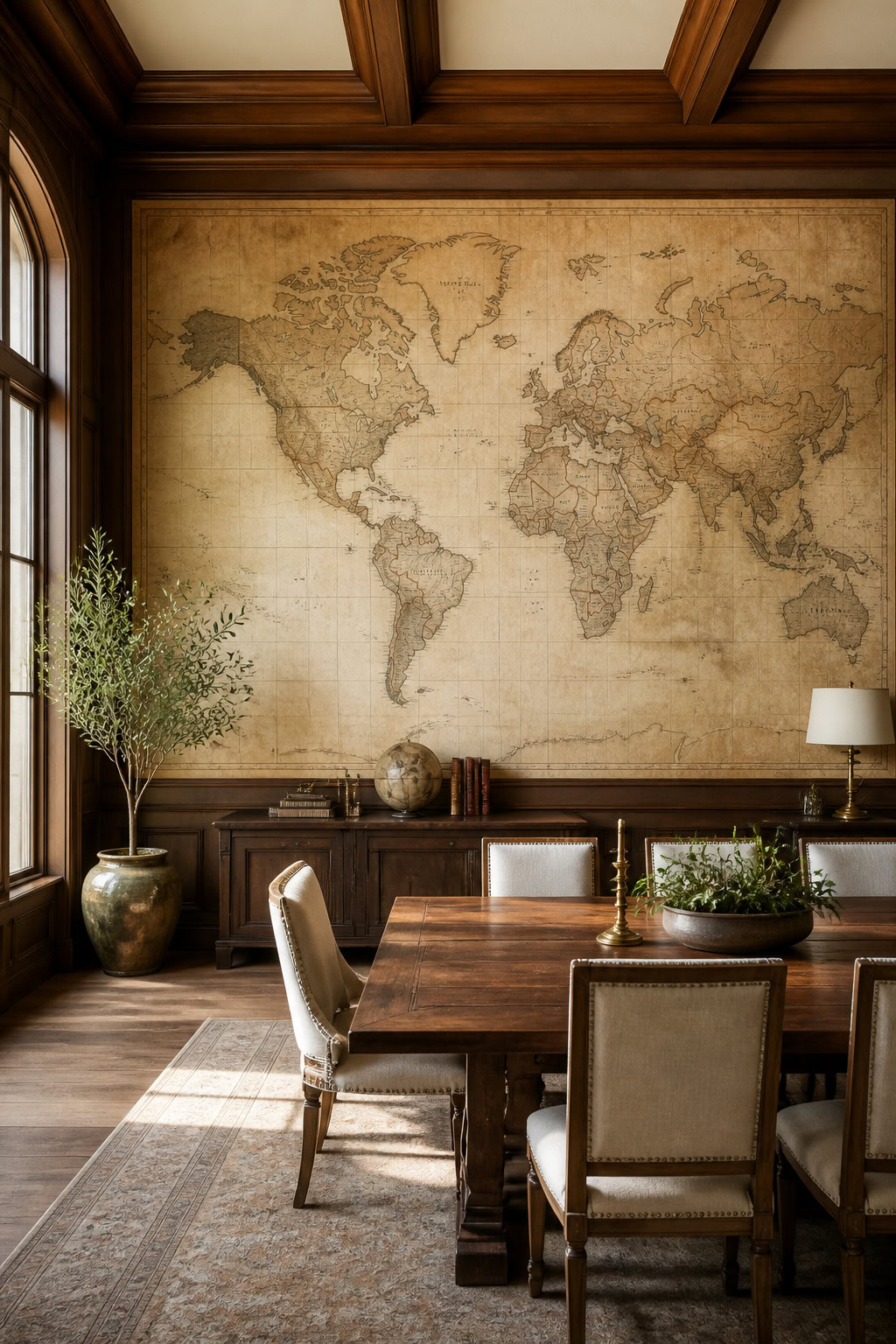
Image credit: @thetanee.com
3. Hang a Large Statement Tapestry
A statement tapestry is a wonderful choice for a large wall that feels too cold or empty. Unlike framed artwork, fabric adds visible softness and texture, helping balance rooms with tall windows, stone floors, or minimal furniture. Woven wall hangings, vintage-inspired textiles, and contemporary fiber art can all create a warm focal point in open living areas.
Choose a tapestry with enough width and height to feel substantial against the wall. Above a sofa, a wide textile can connect the seating area, while a longer woven piece works well between windows. Hang the fabric from a sturdy rod or a mounting system appropriate for its weight, allowing it to fall naturally without bunching. Select colors that repeat in your rug or cushions. If the tapestry has a bold pattern, keep nearby wall decorations simple so the design has space to breathe.
Practical tip: Avoid hanging heavy textiles from lightweight adhesive hooks. Use secure mounting hardware and keep fabric decorations away from fireplaces, heaters, and hot lighting fixtures.
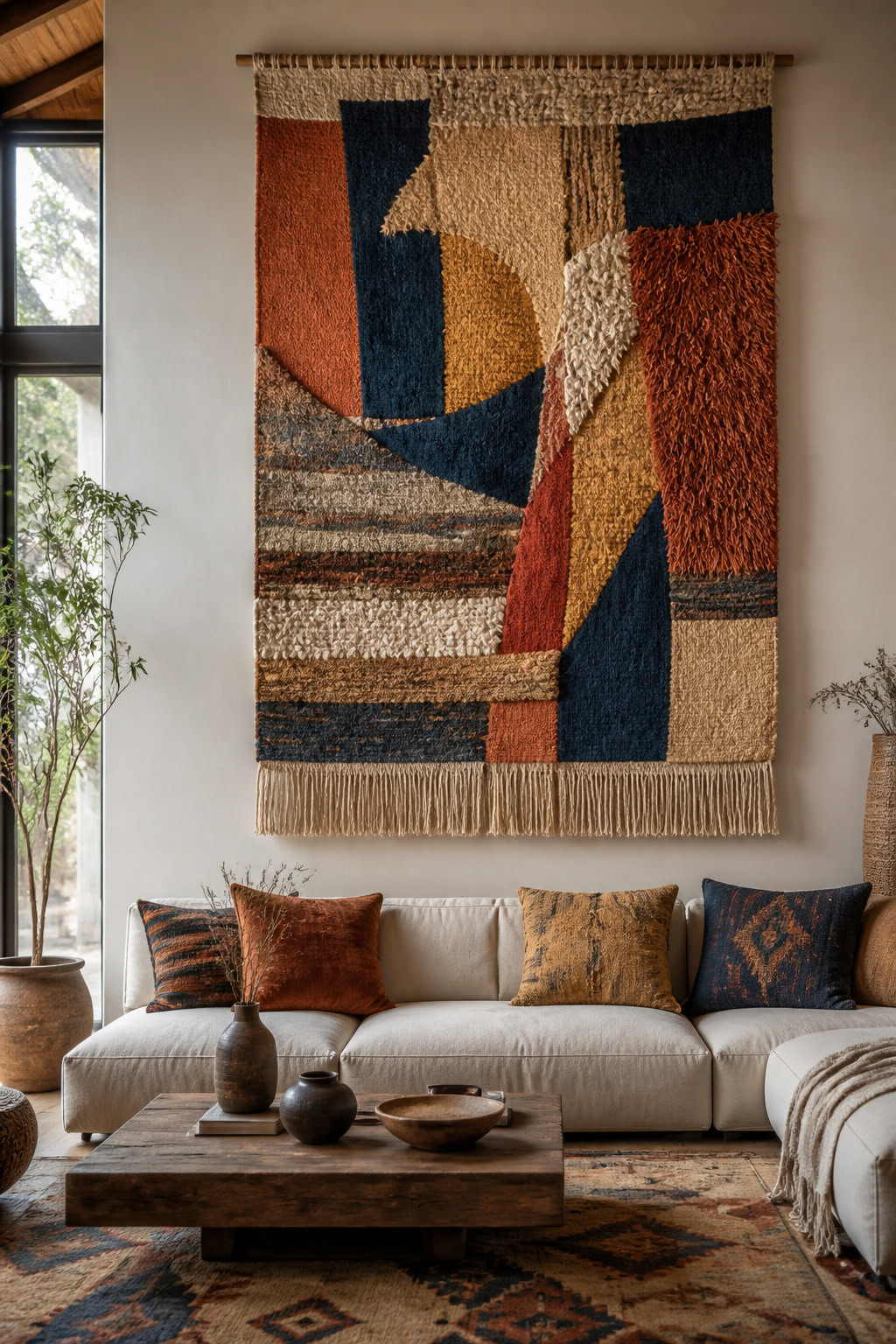
Image credit: @thetanee.com
Amazon Find: Large Woven Wall Tapestries
Large tapestries and textile wall hangings add texture to spacious living rooms and bedrooms. Compare the dimensions, fabric weight, and mounting options for your wall.

4. Add Architectural Wall Panels for Depth
Architectural wall panels can make a tall, plain wall feel like a deliberate feature of the home. Raised panels, geometric molding, and textured wall sections introduce shadows and depth without relying on multiple paintings or shelves. This approach is especially effective in double-height living rooms, formal dining rooms, and wide entryways where the wall itself can become the decoration.
Begin by sketching the wall and deciding whether the panels should extend across the entire surface or highlight one section. Simple rectangular molding works well in classic interiors, while wider geometric panels suit contemporary homes. Choose panel sizes that relate to the ceiling height and any nearby doors or windows. For a subtle look, paint the trim and wall in the same finish. If you’re installing wood or composite panels, account for expansion, wall irregularities, electrical access, and manufacturer-approved fastening methods.
Budget alternative: Add a few large picture-frame molding rectangles to the lower or central portion of the wall instead of installing expensive panels from floor to ceiling. Tall or difficult-to-reach installations may be better handled by a professional.
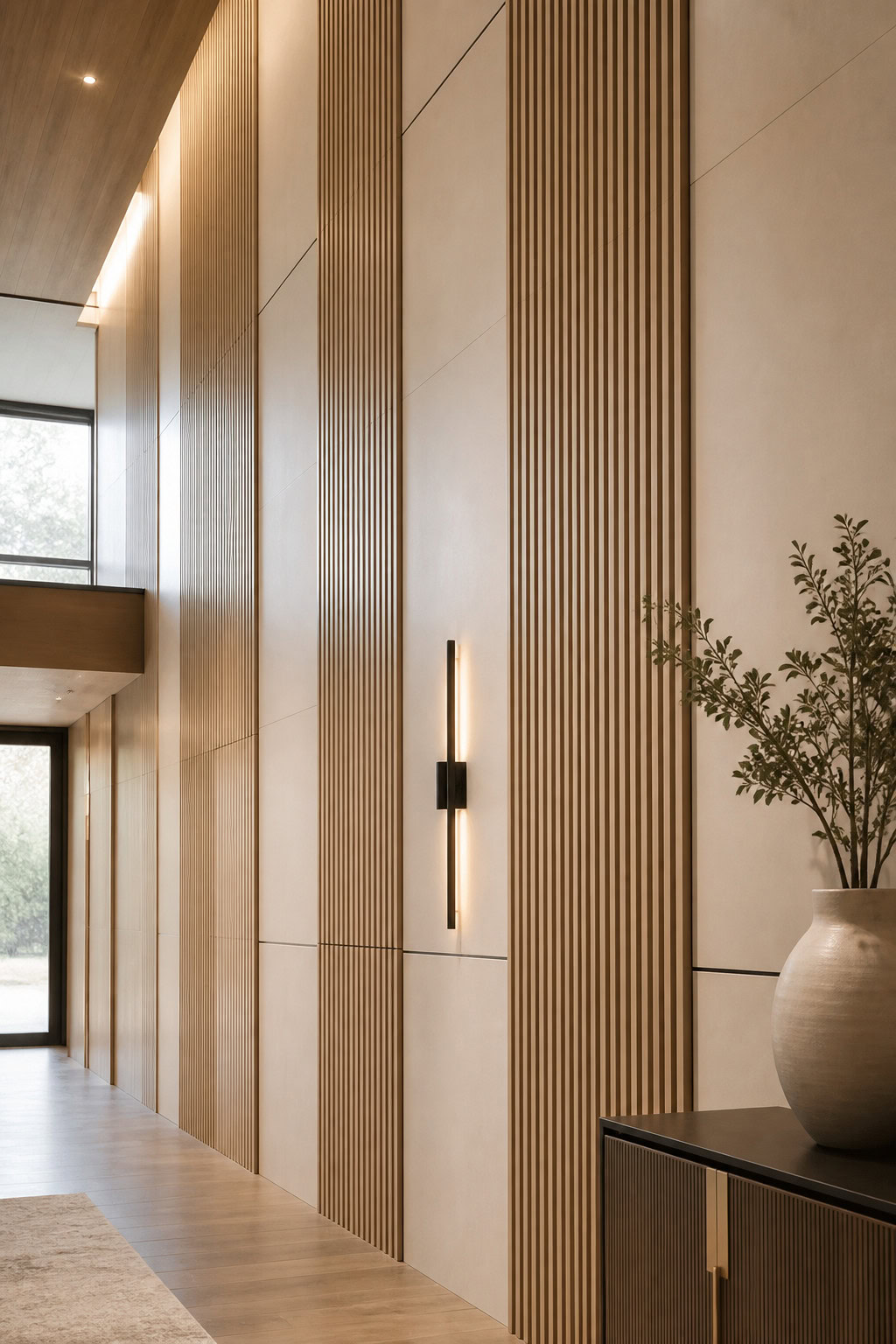
Image credit: @thetanee.com
5. Create a Dynamic Gallery Wall
A dynamic gallery wall fills a spacious surface with artwork and personal memories while allowing the display to change over time. Unlike a rigid matching-frame grid, this arrangement can combine different frame sizes, photographs, abstract prints, drawings, and meaningful keepsakes. It’s a lovely choice for open-concept living rooms where one artwork doesn’t reflect the home’s personality.
Start with one large anchor piece and arrange smaller frames around it on the floor before hanging anything. Repeat at least one element throughout the collection, such as black frames, warm wood, cream mats, or a shared color palette. Keep the gaps between frames reasonably consistent even when the shapes vary. Use the sofa or console below as a visual guide and make sure the gallery has a clear outer boundary rather than spreading randomly across the entire wall. A mix of vertical and horizontal pieces helps create movement.
Styling tip: Take a photograph of the planned arrangement before mounting the frames. For a cohesive look, use a few larger pieces rather than dozens of tiny prints that may disappear on a high wall.
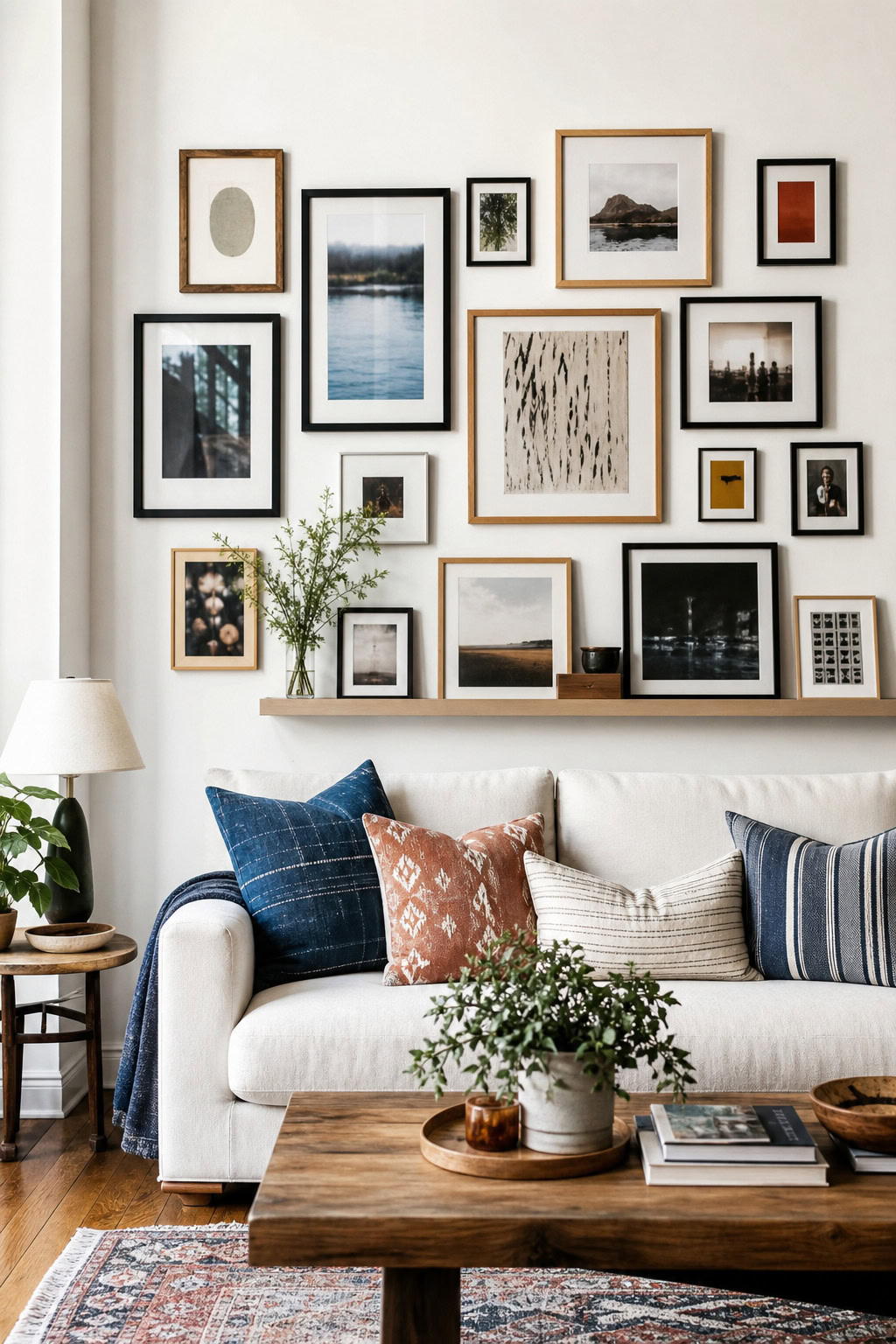
Image credit: @thetanee.com
Amazon Find: Gallery Wall Picture Frame Sets
Coordinated picture frames can help you arrange art and photography across a large wall. Compare the sizes, mounting hardware, and frame finishes before selecting a set.

6. Install Floor-to-Ceiling Shelving
Floor-to-ceiling shelving turns a blank wall into a practical architectural feature. Built-in shelves or tall bookcases offer space for books, artwork, baskets, and personal collections while making the most of a home’s vertical height. This look is particularly attractive in spacious living rooms, home libraries, and open-plan offices where additional storage is useful.
Choose a shelving design that fits the wall’s dimensions and complements the existing cabinetry. A pair of tall bookcases can frame a seating area, while a full wall of built-ins can create a library-inspired focal point. Arrange heavier books and storage items on lower shelves and reserve the upper areas for lightweight decorative objects. Repeat a few materials, such as pottery, woven baskets, and natural wood frames, to create a balanced display. Avoid filling every shelf completely so the arrangement doesn’t appear crowded.
Safety tip: Tall freestanding bookcases must be secured with suitable anti-tip hardware according to the manufacturer’s instructions. Custom shelving should be designed for the actual loads, wall structure, and intended use. Do not rely on lightweight decorative anchors for heavy shelving.
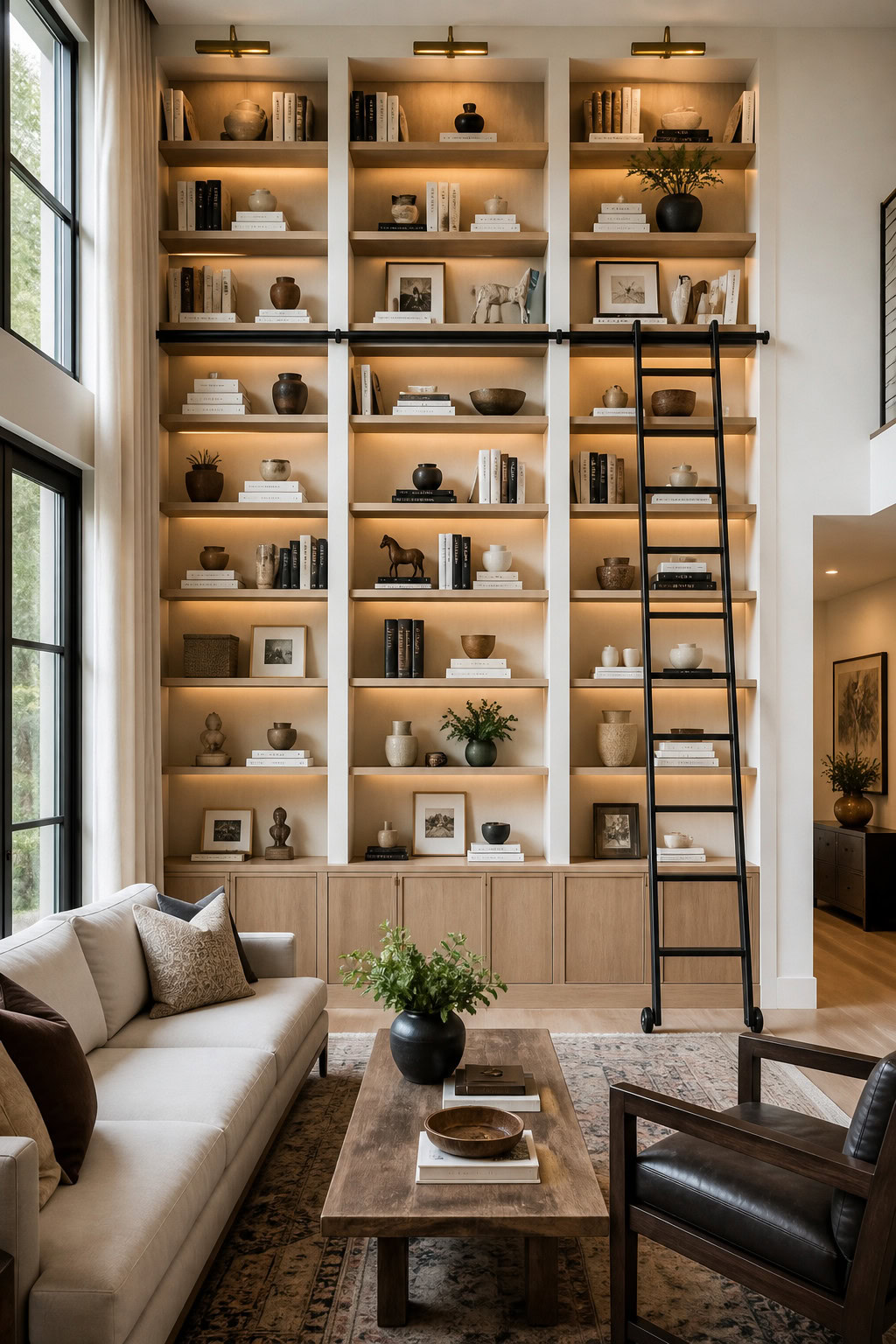
Image credit: @thetanee.com
7. Display Large-Scale Photography
Large-scale photography offers a personal alternative to abstract art. An oversized landscape, architectural photograph, or meaningful travel image can give a spacious room a clear identity. Photography also works beautifully in minimalist interiors because one strong image can provide visual interest without requiring several decorative pieces.
Choose a high-resolution photograph suitable for printing at the desired size. Consider a wide landscape above the sofa, a tall city photograph along an entryway wall, or a black-and-white architectural image in a modern home office. Frame the print with a simple border and optional mat that suits the room’s style. Before ordering, tape out the proposed dimensions on the wall to see how the piece will relate to the furniture below. If you prefer a coordinated series, choose two or three photographs with matching proportions and consistent frames.
Budget tip: Use one of your own travel photographs if the resolution supports a large print. A personal image can make the wall feel more meaningful than a generic decorative print.
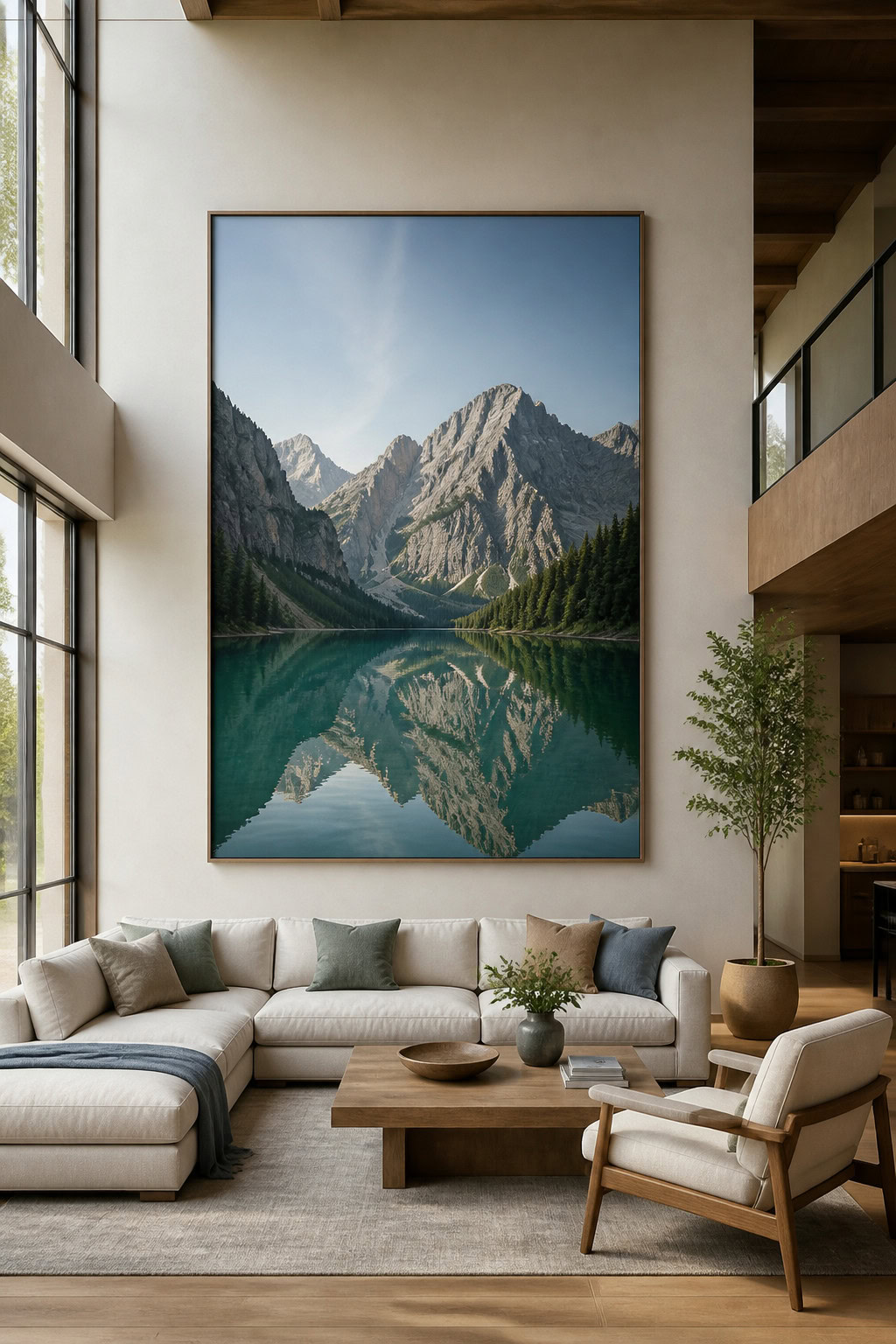
Image credit: @thetanee.com
8. Arrange a Large Art Collection Above the Sofa
A large art grouping above the sofa is a classic solution for a tall living room wall. Instead of trying to fill the entire height, this approach focuses on creating a substantial visual arrangement that connects with the seating area. Multiple framed pieces can function as one large composition when their spacing, colors, and overall outline feel coordinated.
Begin by measuring your sofa and marking the approximate width you want the artwork to occupy. Choose a small collection of medium-to-large frames rather than many tiny pieces. A balanced arrangement might include one larger central artwork with two supporting pieces on either side or a grid of six coordinating frames. Lay the artwork on the floor and adjust the spacing before mounting. Keep the bottom of the arrangement visually connected to the sofa, leaving enough space so people can sit comfortably without contacting the frames.
Designer-style tip: Repeat one frame finish or artwork color throughout the arrangement. A clear pattern helps the collection feel like a single focal point rather than unrelated decorations.
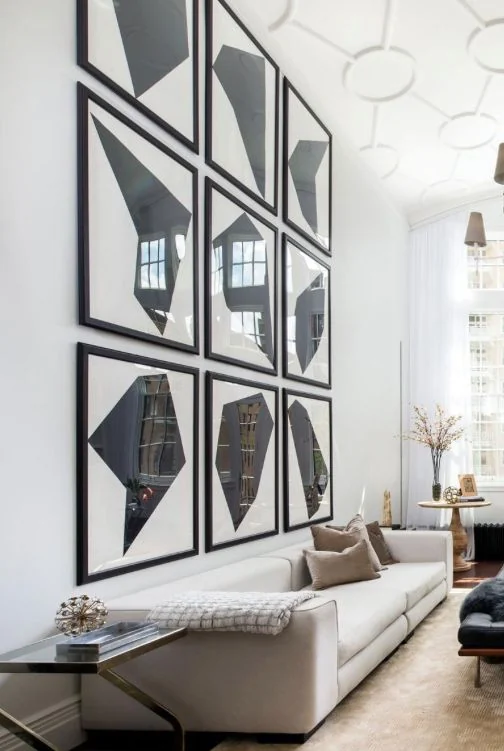
Image credit: @remodelaholic.com
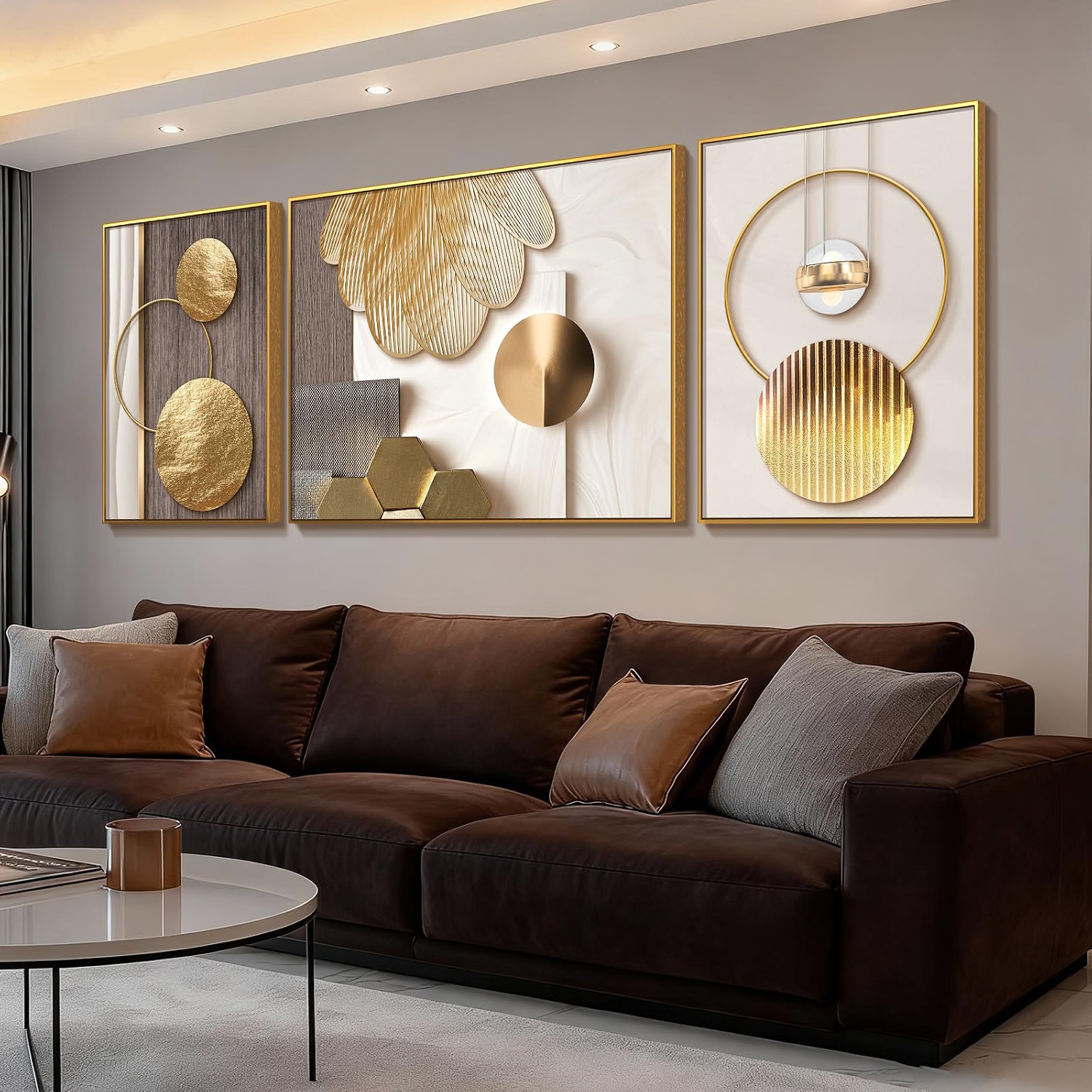
Amazon Find: Large Wall Art Frame Sets
Larger picture frames can help create a gallery above a sofa without relying on dozens of small prints. Choose sizes that fit your planned overall arrangement.
9. Create a Structured Artwork Grid Along the Staircase
Staircase walls are often tall and difficult to decorate because the floor rises diagonally while the ceiling may remain high. A structured gallery wall can solve this problem by introducing a clear pattern that follows the stairs. Matching frames create a calm, organized appearance and help connect the lower and upper levels of the home.
Choose several frames of the same size and arrange them in a stepped grid that follows the staircase angle. Use matching photographs, botanical prints, or simple art in a consistent color palette. Measure from a repeated reference line along the stairs rather than guessing the position of each frame. Use paper templates and painter’s tape to test the layout before drilling. Keep the artwork clear of handrails and avoid placing frames where people could brush against them while walking up or down the stairs.
Practical tip: Tall staircase walls are difficult to access safely. Don’t use an ordinary ladder on stairs; hire a professional with appropriate equipment for locations you cannot reach from a stable, level working platform.
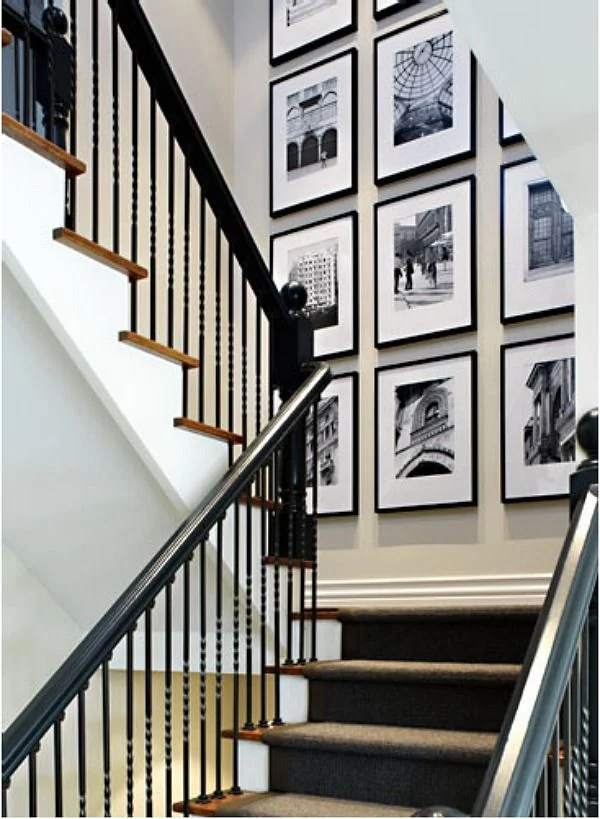
Image credit: @remodelaholic.com
10. Build a Floor-to-Ceiling Gallery on a Narrow Wall
A narrow, tall wall between windows or beside a doorway can feel awkward because a conventional horizontal artwork arrangement won’t fit. A floor-to-ceiling gallery makes use of the available vertical space and creates a striking design feature. Mixing frame shapes and sizes can make the display feel collected and artistic rather than overly formal.
Start with one medium-size piece near the middle of the wall and arrange smaller frames above and below it. Mix horizontal, vertical, and square pieces while maintaining a consistent visual boundary. Choose artwork with repeated colors or use matching frames to tie everything together. If the wall is very narrow, keep the collection within a central column rather than stretching the frames to every edge. Place the most detailed photographs and prints at a comfortable viewing height, with simpler pieces higher up.
Styling tip: Allow some wall to remain visible around the frames. A tall gallery needs a deliberate outline, but it doesn’t need to touch the ceiling or baseboard to make an impact.
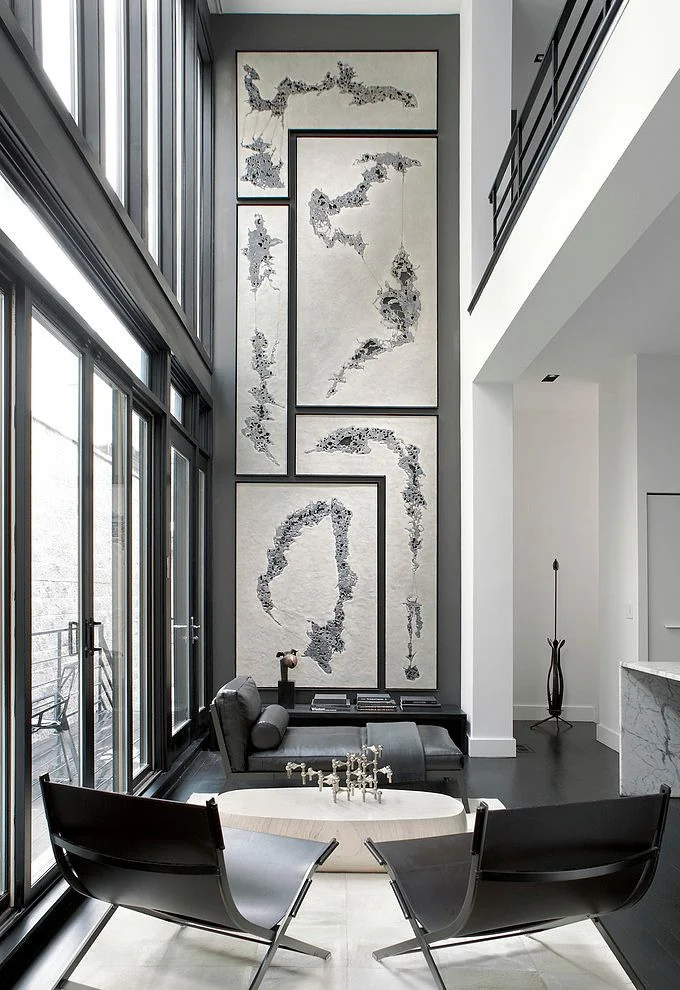
Image credit: @remodelaholic.com
11. Hang One Oversized Artwork on an Accent Wall
A single oversized artwork against a contrasting wall can create a beautiful focal point in a spacious room. This approach is particularly effective when the furniture is simple and you want the wall to have a strong visual presence without installing shelves or multiple frames. A large painting also gives you a clear starting point for choosing nearby cushions, rugs, and accessories.
Choose an artwork with a light or contrasting composition that stands out against your chosen wall color. Deep navy, charcoal, olive, and warm terracotta can provide a rich backdrop for neutral or colorful art. Position the piece so it relates to the furniture below rather than floating halfway up a double-height wall. A slim picture light or nearby wall sconce can add emphasis when installed correctly. If painting the wall, test the chosen color under natural and evening lighting before applying it across the entire surface.
Budget tip: Try one oversized framed print on an existing painted wall before committing to a new accent color. The scale of the art may provide enough visual interest on its own.
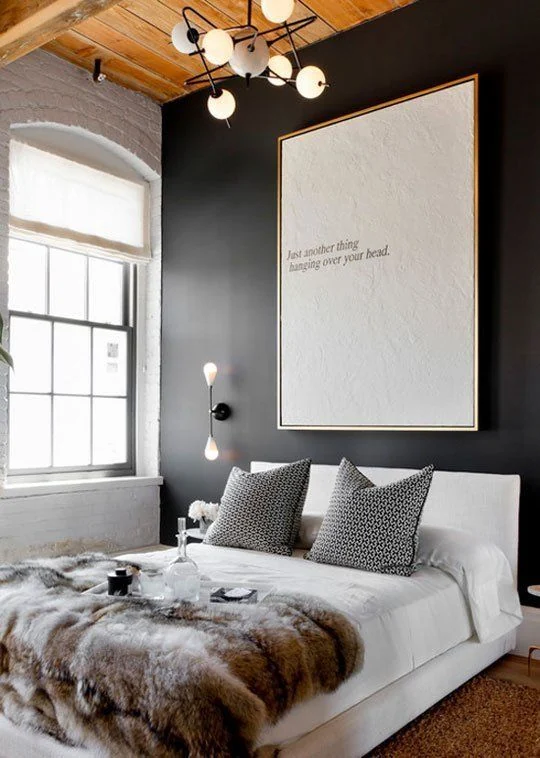
Image credit: @remodelaholic.com
12. Use a Large Statement Painting in the Entryway
A two-story entryway offers an opportunity to display one beautiful painting that introduces your home’s personality. Unlike a living room wall, the entryway often has limited furniture, making a substantial artwork especially effective. A tall painting can draw attention upward while a console table, bench, or decorative cabinet creates a comfortable human-scale anchor below.
Choose a painting or framed print that works with the entryway’s width and architectural features. A vertical landscape or abstract composition can emphasize height without taking over the entire space. Center the artwork above a console when appropriate and keep the frame clear of nearby doors and walkways. Add a small lamp, decorative bowl, or flower arrangement to the console to connect the artwork with the furniture. Use a consistent color palette so the arrangement feels welcoming rather than overly formal.
Styling tip: Avoid placing the artwork so high that it can only be viewed from the upstairs landing. The entryway should look balanced from the front door and main walking area.

Image credit: @remodelaholic.com
13. Display a Collection of Decorative Plates
A decorative plate collection can fill a tall wall with color, pattern, and personality. This look works beautifully in traditional dining rooms, farmhouse kitchens, vintage-inspired entryways, and eclectic interiors. The round shapes soften straight architectural lines, while a collection of different patterns creates an artistic arrangement that can grow over time.
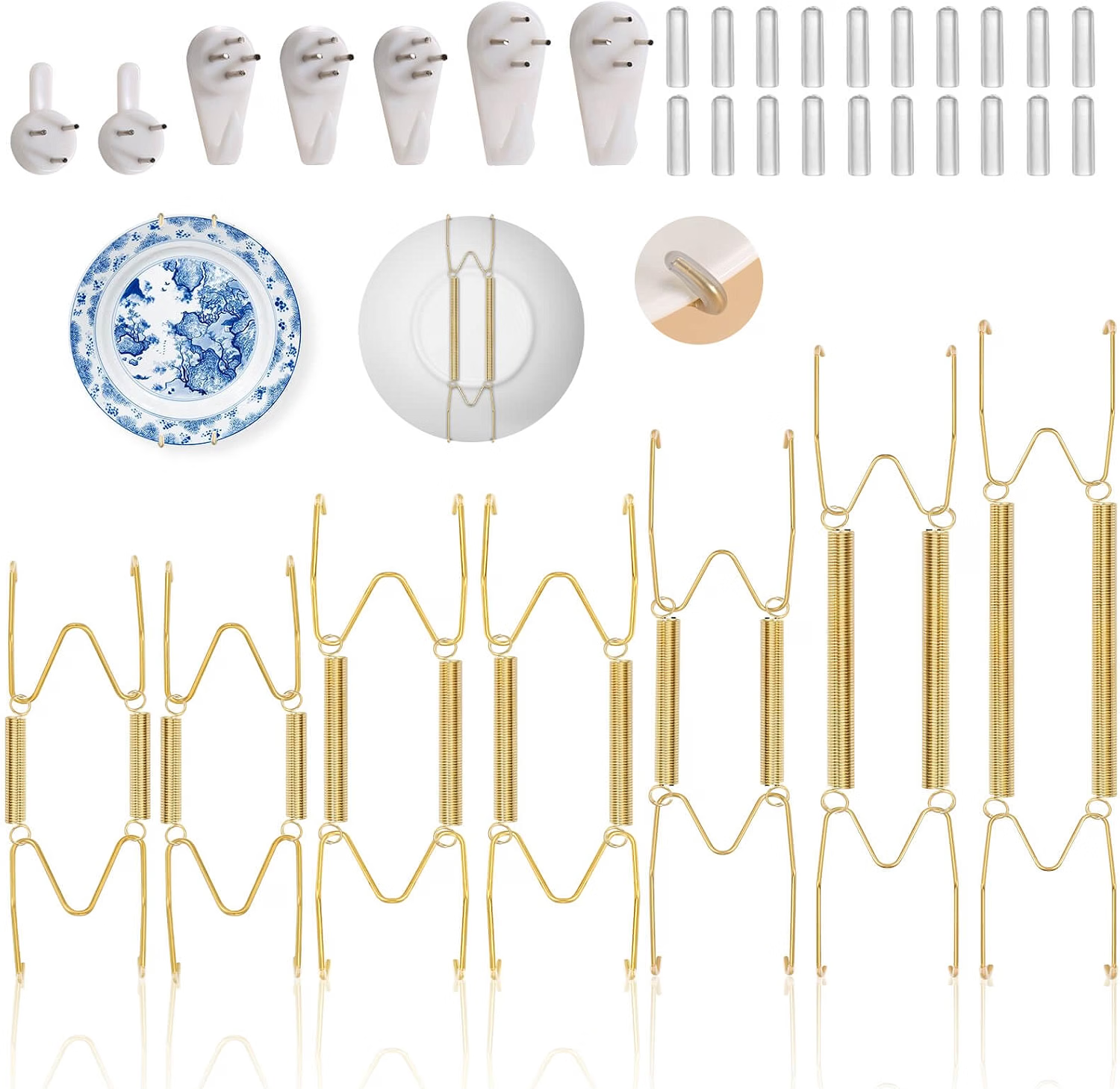
Choose plates with a shared element, such as blue-and-white patterns, floral motifs, or neutral stoneware finishes. Arrange them on the floor before mounting, beginning with the largest plates and filling gaps with smaller pieces. For a relaxed design, create a gently curved or organic grouping rather than a rigid grid. Use hangers specifically designed for wall-mounted plates and check their size and weight ratings. Install each hanger securely into the appropriate wall material, especially when displaying heavier ceramic pieces.
Budget tip: Look for decorative plates at thrift stores and flea markets. Collect them gradually rather than purchasing a large matching set, and test the arrangement with paper circles before hanging the real plates.

Image credit: @remodelaholic.com
Amazon Find: Decorative Plate Wall Hangers
Proper plate hangers help display decorative ceramic collections securely. Choose hangers rated for each plate’s dimensions, weight, and wall conditions.
14. Create a Family Photo Collection Wall
A family photo collection brings warmth and personal meaning to a large wall. Instead of decorating with generic prints, display photographs from birthdays, vacations, weddings, and everyday family moments. A large collection can feel especially inviting in a two-story family room or open-plan hallway where guests naturally notice the wall as they move through the home.
Choose an arrangement that can expand over time. A grid of matching frames creates a structured look, while a collection of removable photo tiles can make updating the display easier on compatible surfaces. Start with photographs you enjoy and decide whether to use color or black-and-white printing. Keep the frames aligned within a clear overall shape rather than spreading them randomly across the wall. Leave space for future additions so the collection can grow without needing a complete rearrangement.
Personal styling tip: Mix posed portraits with candid photographs for a more natural family story. Use consistent frame finishes or matching photo treatments to keep the wall visually connected.

Image credit: @remodelaholic.com
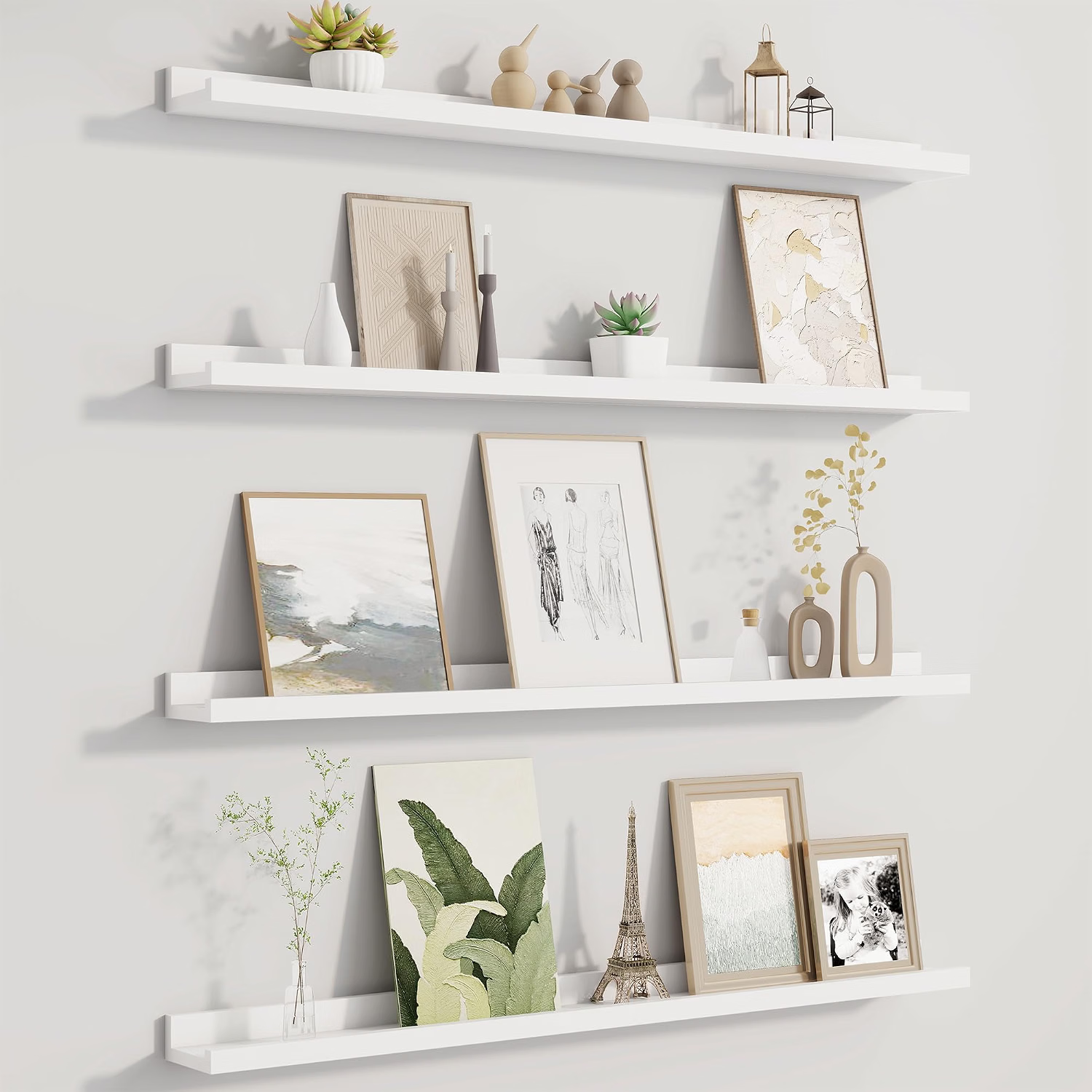
15. Style a Two-Story Wall With Tall Picture Ledges
Picture ledges are a flexible way to decorate large walls because artwork can be changed without creating new mounting holes for every frame. A carefully planned arrangement of long ledges can give a tall wall a layered, gallery-like appearance while leaving room to refresh photographs, artwork, and lightweight decorative objects over time.
Plan two or three horizontal ledges within an accessible wall section rather than automatically installing shelves near the ceiling. Choose ledge widths that relate to the sofa, console, or furniture beneath them. Arrange larger frames toward the back of each ledge and overlap smaller frames slightly in front, securing items against tipping. Repeat a few colors or frame finishes for consistency. Keep heavy objects off the upper ledges and check the manufacturer’s weight rating, mounting requirements, and wall material before installation.
Small-space adaptation: Use one long picture ledge above a sofa or office desk rather than a full vertical arrangement. You can still achieve the layered look while keeping the display easier to reach and maintain.
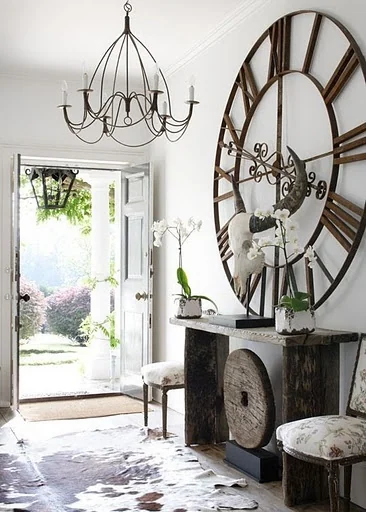
Image credit: @remodelaholic.com
Amazon Find: Long Picture Ledge Shelves
Picture ledges provide a flexible place to layer framed artwork and photographs. Check the ledge depth, load capacity, wall anchors, and mounting instructions before installing.
16. Use Vertical Wood Slats to Define an Open-Plan Zone
Vertical wood slats can give a large open-concept room a more organized appearance without closing off the space. The repeated lines emphasize ceiling height and create a strong architectural feature. This works especially well behind a dining table, along a living room feature wall, or near the transition between a seating area and home office.
Choose a wood tone that complements your floors, furniture, and existing trim. Natural oak offers a light, modern appearance, while walnut or dark-stained wood creates greater contrast. You can cover an entire accent wall or create one defined slatted panel behind a console or dining table. Keep the spacing consistent and plan around electrical outlets, switches, vents, and wall fixtures. For prefabricated panels, follow the manufacturer’s fastening instructions. Tall installations may require professional tools and assistance to ensure the slats remain straight and secure.
Budget alternative: Limit the slatted feature to a smaller vertical section instead of covering the entire wall. A well-proportioned accent can help distinguish one open-plan zone while reducing material costs.

Image credit: @remodelaholic.com
17. Combine Oversized Mirrors With Architectural Lighting
A large mirror paired with well-positioned wall lighting can make a tall entryway or spacious living room feel brighter and more elegant. Mirrors reflect existing windows and lighting while introducing a strong decorative shape. The combination is particularly effective in spaces that feel visually empty but don’t need additional shelves or artwork.
Choose a tall framed mirror that suits the width of the available wall and position it near a console or other substantial piece of furniture. An arched mirror can soften a room with many straight lines, while a rectangular black or brass frame suits contemporary interiors. Add properly installed wall sconces on either side when the architecture permits, or use a single table lamp on the console for a simpler alternative. Check what the mirror will reflect before finalizing the location. A view of a window, artwork, or attractive architectural feature is usually more appealing than a direct reflection of clutter or an unfinished corner.
Safety tip: Secure tall mirrors against tipping using hardware appropriate for their weight and wall material. Hardwired lighting should be installed according to local electrical requirements by a qualified professional where necessary.

Image credit: @remodelaholic.com
How High Should You Hang Art on a Tall Wall?
One common mistake in rooms with high ceilings is hanging artwork too close to the ceiling. Although the wall is tall, artwork should usually relate to the people and furniture in the room rather than floating high above the living area.
For artwork on an unobstructed wall, placing its center near typical standing eye level, often around 57 to 60 inches from the floor, can be a useful starting point. Above a sofa, console, or headboard, however, the furniture and the scale of the artwork matter more than a fixed measurement. Large vertical installations, staircases, and two-story foyers require a more tailored approach.
- Above a sofa: Keep the artwork visually connected to the sofa while allowing enough clearance for comfortable seating.
- Above a console: Position the display so the furniture and artwork form one coordinated arrangement.
- On a staircase: Follow the rise of the stairs and maintain consistent spacing between frames.
- On a two-story wall: Use the lower living area as an important reference point, even when the decoration extends upward.
- Between windows: Center a vertical piece within the usable wall area rather than the entire ceiling height.
- Inside a tall gallery: Place the most detailed and meaningful artwork where it can be viewed comfortably.
Before drilling, mark the proposed artwork dimensions with painter’s tape or paper templates. View the arrangement from the main entrance, seating area, and any connected upper-level landing. This simple test can reveal whether the artwork feels balanced from more than one perspective.
Best Color and Material Combinations for Big Walls
Large walls can carry stronger visual details than small walls, but that doesn’t mean every surface needs a bold color. Choose a combination of finishes that complements the furniture and architectural style of your home.
- Warm White, Oak, and Black: A clean contemporary combination for oversized abstract art, natural wood slats, and simple frames.
- Cream, Walnut, and Antique Brass: Ideal for traditional living rooms, tall shelves, and framed photography.
- Charcoal, Ivory, and Natural Linen: A dramatic palette for large art and textured tapestries.
- Sage Green, Beige, and Light Wood: A calming combination for botanical art, shelving, and organic wall features.
- Terracotta, Sand, and Cream: A warm earthy palette for murals, woven textiles, and open-plan living rooms.
- Navy, White, and Brass: A timeless combination for accent walls, framed art, and decorative lighting.
- Black, White, and Natural Stone: Ideal for minimalist photography displays and oversized mirrors.
Big Wall Decorating Shopping Checklist
A large wall makeover can become expensive when you purchase decorations before planning the layout. Measure the wall first, identify your preferred style, and choose only the materials that support the final arrangement.
| Item | Best For | Priority |
|---|---|---|
| Measuring Tape and Painter’s Tape | Testing Layout and Scale | Essential |
| Oversized Artwork | Living Room Focal Point | As Needed |
| Large Picture Frames | Gallery Walls and Photography | As Needed |
| Vintage Map Mural | Feature Walls | Optional |
| Woven Tapestry | Textured Wall Decor | Optional |
| Wall Molding or Paneling | Architectural Details | Project-Specific |
| Tall Shelving | Books and Display Storage | Optional |
| Decorative Plate Hangers | Ceramic Wall Collection | Project-Specific |
| Wall-Mounted Picture Ledges | Layered Frame Displays | Optional |
| Mirror and Anti-Tip Hardware | Large Reflective Displays | As Needed |
| Appropriate Wall Anchors | Secure Installation | Essential for Mounted Pieces |
How to Style an Open-Concept Wall Without Making the Room Feel Cluttered
Open-concept rooms often have several connected walls visible at the same time. Decorating every wall with a strong statement piece can make the room feel visually crowded. Instead, identify one main focal wall and allow the surrounding spaces to support it with simpler details.
- Choose one main wall: Use the wall behind the sofa, dining table, or entryway console as the primary decorative feature.
- Repeat one color or material: Connect wall art to nearby furniture through wood tones, frames, or a shared palette.
- Keep adjacent walls quieter: Let a large artwork or mural stand out without competing with another oversized display.
- Use furniture as an anchor: Align art arrangements with the sofa, console, or sideboard beneath them.
- Balance horizontal and vertical lines: Use wide art above long sofas and vertical arrangements for narrow architectural spaces.
- Include negative space: Not every portion of a tall wall needs to be decorated.
- Consider views from different rooms: Check how a wall looks from the kitchen, dining area, and seating space.
- Plan lighting carefully: Illuminate focal artwork without creating harsh glare or unsafe electrical installations.
Common Big Wall Decorating Mistakes to Avoid
Choosing Artwork That’s Too Small
Small artwork can appear lost on a wide, high wall. Instead of filling the space with tiny decorations, choose one substantial piece or arrange several frames into a larger unified composition. Test the proposed dimensions with painter’s tape before purchasing artwork.
Hanging Everything Too High
High ceilings don’t automatically mean artwork should be installed near the ceiling. Keep the main visual elements connected to the furniture and activity areas below. Place detailed pieces where people can see and enjoy them comfortably.
Ignoring the Furniture Below the Wall
An artwork arrangement that doesn’t relate to the sofa, console, or dining table can feel disconnected. Consider both width and placement when planning the wall. The furniture should visually anchor the artwork rather than appear unrelated to it.
Using Too Many Competing Focal Points
A large gallery wall, bold mural, tall shelving, and oversized mirror may each look beautiful individually, but placing them close together can overwhelm an open layout. Select one main feature and allow nearby walls to remain simpler.
Installing Heavy Decor Without Proper Support
Heavy mirrors, bookcases, ceramic plates, and wall panels need hardware suited to their weight and the structure of the wall. Check the manufacturer’s instructions and use appropriate anchors or studs. Seek qualified installation help for heavy, high, or difficult-to-reach pieces.
Trying to Reach Tall Walls With Unsafe Equipment
Staircases and double-height rooms create additional installation risks. Don’t balance an ordinary ladder on stairs or overreach from unstable furniture. Professional installers can use suitable platforms or access equipment for tall or awkward locations.
Frequently Asked Questions
1. How Do You Decorate a Large Wall With High Ceilings?
Start with one substantial focal point, such as oversized artwork, a tall gallery wall, architectural paneling, or a large tapestry. Choose pieces that relate to the furniture and architectural features below. Avoid trying to fill the entire wall simply because the ceiling is high.
2. What Can I Put on a Big Living Room Wall Instead of Pictures?
Consider a large tapestry, decorative wood panels, vertical slats, oversized mirrors, tall shelving, or a sculptural wall installation. These alternatives add texture or architectural detail without relying on framed artwork. Choose materials that complement your furniture and are suitable for secure installation.
3. How Big Should Art Be Above a Large Sofa?
A useful starting point is artwork or a gallery arrangement measuring approximately two-thirds to three-quarters of the sofa’s width. Adjust the proportions for the actual room and art style. Use painter’s tape to visualize the dimensions before buying or hanging anything.
4. How Can I Decorate a Two-Story Wall on a Budget?
Try one large DIY canvas, a collection of secondhand frames, a lightweight tapestry, or a carefully planned gallery wall. Concentrate the main decorations near the living area rather than purchasing enough items to reach the ceiling. Budget for safe mounting where required.
5. Should I Decorate the Entire Height of a Tall Wall?
Not necessarily. Leaving open wall space can help a room feel balanced and allow the architecture to stand out. Focus on creating a strong composition connected to the furniture and sightlines. Full-height features work best when they have a clear purpose, such as shelving, paneling, or a planned gallery installation.
Recommended Finds on Amazon
These practical supplies can help you plan and style large walls without purchasing unnecessary decorations. Measure your space and confirm installation requirements before ordering.
- Large Abstract Canvas Wall Art: Create a striking focal point above a sofa or along a spacious entryway wall.
- Large Gallery Wall Frame Sets: Arrange personal photographs and art into a cohesive collection with repeated frame finishes.
- Wall-Mounted Picture Ledge Shelves: Display and rearrange framed artwork on a flexible shelving system.
Final Thoughts
This big wall styling guide offers 17 ideas for high ceilings and open layouts, from oversized abstract paintings and vintage map murals to structured gallery walls, decorative plates, floor-to-ceiling shelving, and architectural wood panels. The key is choosing decorations that suit the wall’s scale while maintaining a clear relationship with the furniture and room below.
Start by measuring your wall and identifying one main focal point. Test the arrangement with paper templates or painter’s tape, repeat a few colors and materials, and leave enough open space for the design to feel balanced. With the right proportions and careful installation, even a very tall or wide wall can become a beautiful part of your home.



