

Japandi style is all about calm interiors, natural materials, clean lines, and furniture that feels useful without looking heavy. That makes IKEA a surprisingly good starting point because many of its simpler pieces already have the Scandinavian side of the look built in.
With a few changes—such as cane panels, wood slats, neutral paint, simple upholstery, lower profiles, and natural finishes—you can push basic IKEA furniture much closer to a warm Japanese-Scandinavian aesthetic.
These IKEA hacks for Japandi include shelving, cane-front storage, room dividers, bedroom furniture, sofas, wardrobes, kitchen cabinetry, and small-space ideas that keep the room simple without making it feel cold.
As an Amazon Associate, I earn from qualifying purchases. This article contains affiliate links, which may earn us a commission at no extra cost to you.
Quick Japandi IKEA Formula
- Keep colors muted: warm white, beige, taupe, greige, black, and earthy wood.
- Use natural-looking materials: wood, cane, linen, bamboo, and woven fibers.
- Lower the visual profile: low sofas, low beds, and simple horizontal storage work well.
- Hide clutter: closed storage helps the room stay visually calm.
- Keep hardware simple: wood knobs, matte black, or understated brass.
- Style lightly: one ceramic piece, one plant, and a few books are often enough.
What Makes an IKEA Hack Feel Japandi?
Japandi combines Scandinavian practicality with Japanese simplicity and appreciation for natural materials.
That means a successful hack should improve function while making the finished piece feel quieter, warmer, and less mass-produced.
| IKEA Element | Japandi Upgrade | Finished Effect |
|---|---|---|
| Plain cabinet | Cane or wood fronts | Natural and textured |
| White storage | Warm neutral paint | Softer and calmer |
| Raised sofa | Lower-profile surround | Grounded look |
| Open shelving | Edited ceramics and books | Minimal but warm |
| Basic kitchen | Wood-look fronts | Custom appearance |
11 Best IKEA Hacks for Japandi
1. Style SVALNÄS Shelving as a Minimal Japandi Display
The SVALNÄS-style shelving system works well for Japandi because the structure is visually light and lets the wall remain part of the design.
Keep the shelf finish natural and avoid filling every level. Use a small selection of books, stoneware, earthenware, tea accessories, and one trailing plant.
The main idea is not to make the shelves look empty, but to leave enough breathing room that every object feels intentional.
Japandi rule: display useful objects that also happen to be beautiful.
2. Turn a BILLY Bookcase Into Woven Cane Storage
A basic BILLY bookcase can feel much warmer when hard flat surfaces are softened with cane webbing.
Use woven cane on suitable door or panel sections and keep the surrounding finish warm white, greige, soft taupe, or natural wood.
Inside, hide less attractive storage and keep visible shelves lightly styled with books and ceramics.
Best look: cane + warm neutral paint + simple wood or matte hardware.
Get Embed Code
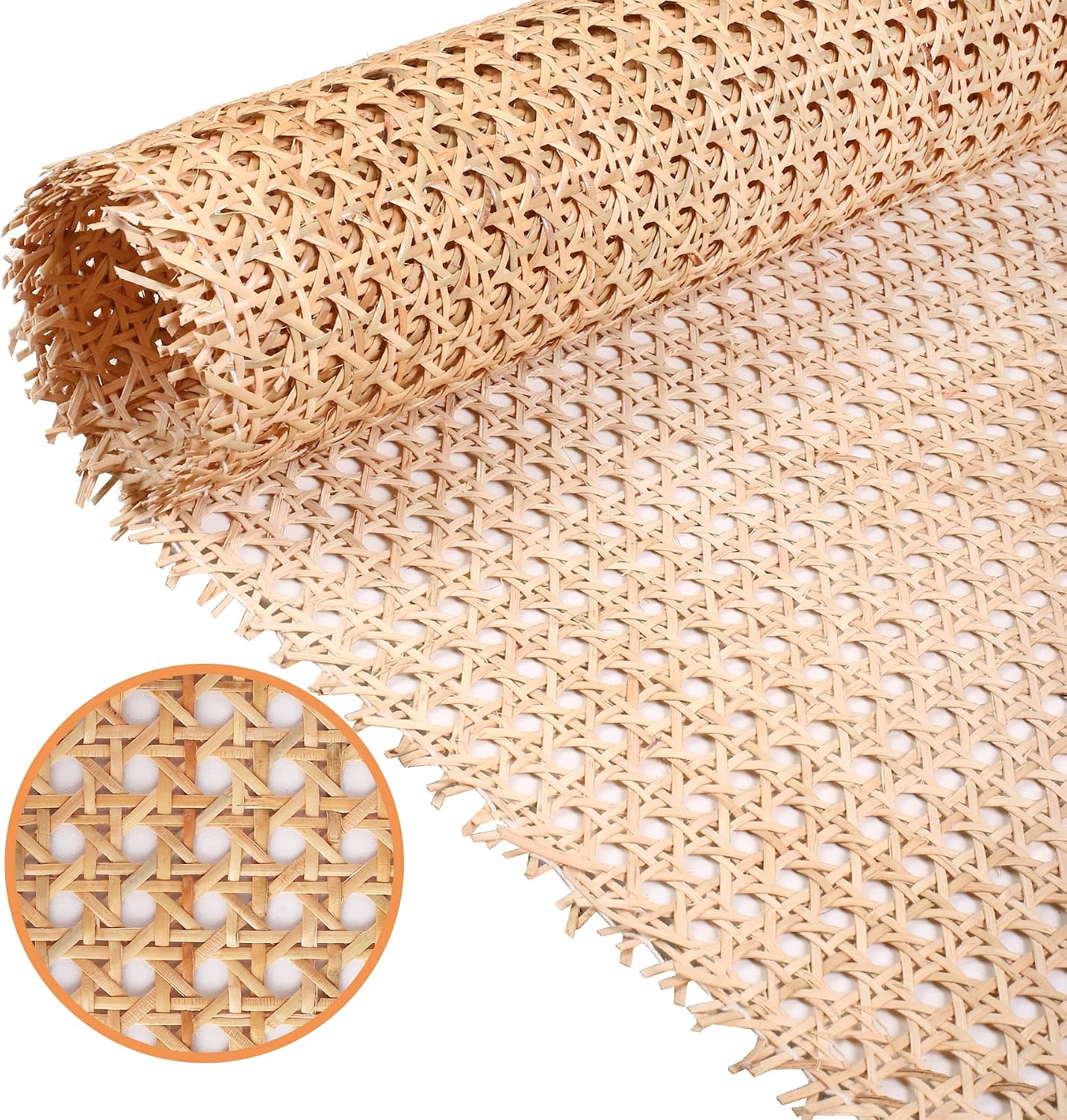
Amazon Find: Cane Webbing Roll
Natural cane webbing can add warmth and texture to suitable cabinet doors, bookcase panels, and room-divider projects.
3. Combine Two IVAR Cabinets Into a Caned Credenza
Two IVAR cabinets can create a long low storage unit that works beautifully in a Japandi living room.
Use cane fronts or simple natural-finish panels, then keep the top surface mostly clear.
The credenza can hide cables, media accessories, books, or everyday clutter while preserving the clean horizontal lines associated with Japandi interiors.
Styling formula: low cabinet + one lamp + one ceramic vessel + one plant.
4. Build a Japandi Mudroom Storage Bench
Entry storage can be functional without looking bulky.
Use IKEA storage units as the base and combine them with a warm wood top, clean cabinet fronts, and understated hardware.
An upholstered wall pad or simple neutral cushion can soften the hard cabinetry and add the cozy Scandinavian side of Japandi.
Keep it calm: hide shoes and bags behind doors and limit the open display to one basket or small plant.
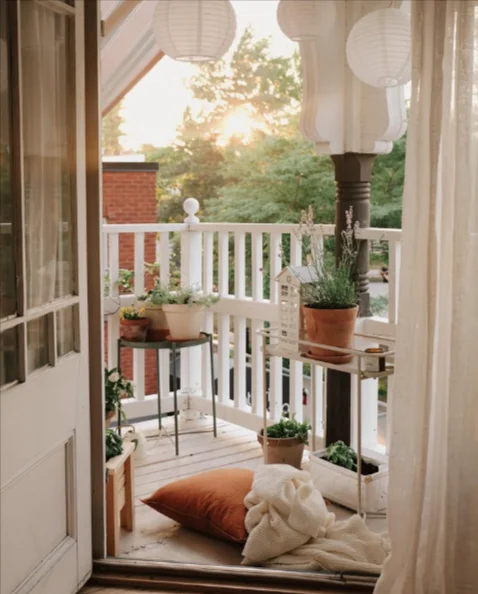
5. Give a Small Balcony a Japandi Makeover With IKEA Pieces
Japandi works especially well in small outdoor spaces because it does not rely on lots of furniture.
Use simple IKEA seating, neutral outdoor textiles, wood or bamboo-look accessories, and several green plants in restrained pots.
Repeat the same tones used inside the adjoining room so the indoor and outdoor spaces feel visually connected.
Small-space idea: use one bench, one side table, one outdoor rug, and a controlled group of plants rather than filling the balcony edge to edge.
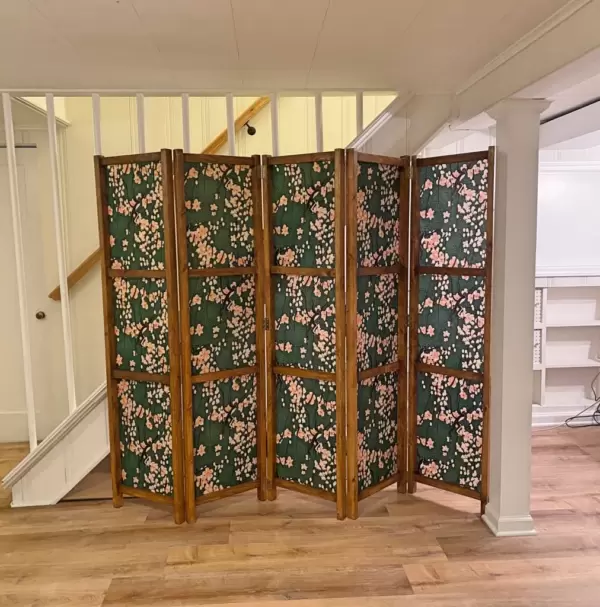
6. Turn IVAR Frames Into a Shoji-Inspired Room Divider
A folding divider is a smart Japandi addition because it can create separate zones without building a permanent wall.
Connect suitable IVAR side frames with hinges, then cover the openings with a plain natural fabric, cane, or another lightweight translucent material.
The vertical wood framework gives the divider a shoji-inspired rhythm while still keeping the project simple.
Important: keep the divider stable and appropriately secured so it cannot tip, especially in homes with children or pets.
If you are trying to divide or organize an awkward room, these ways to better use corner space include more ideas for zoning compact areas.
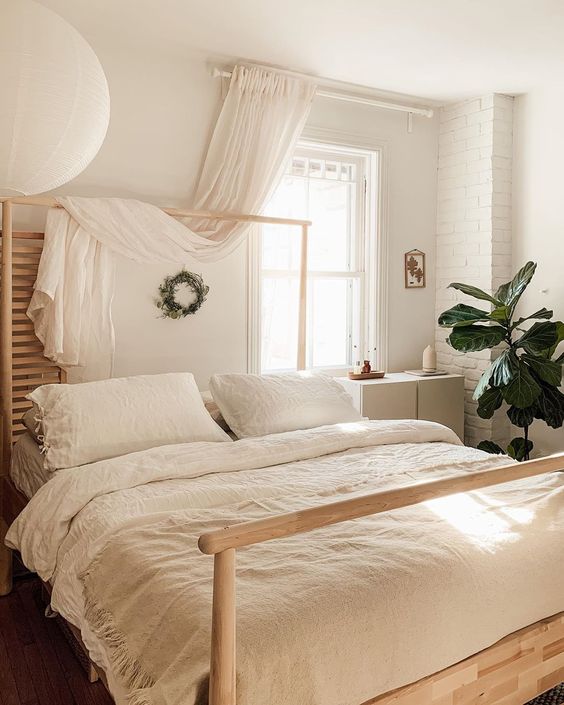
7. Style the GJÖRA Bed as a Calm Japandi Centerpiece
The simple timber frame of the GJÖRA bed already suits the low-key material palette of Japandi bedrooms.
Keep the wood visible and pair it with white, oatmeal, stone, or warm gray bedding.
A loosely draped linen panel over part of the frame can soften the geometry, while one tall plant adds a natural vertical element.
Bedroom formula: pale wood + linen bedding + warm neutral rug + one plant + soft lighting.
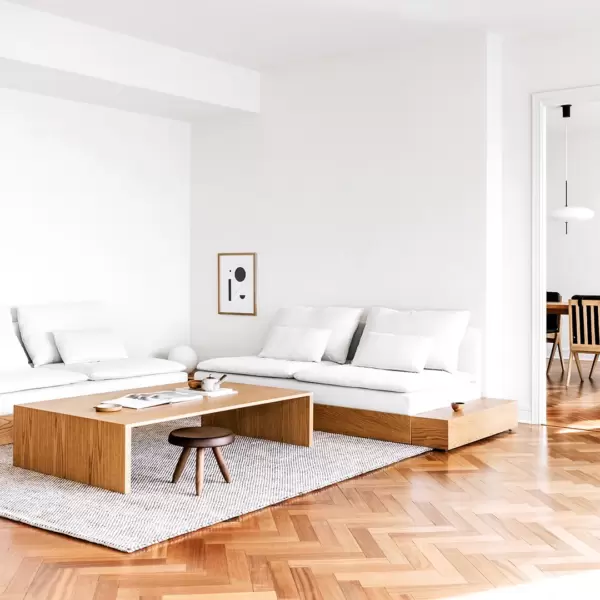
8. Make the SÖDERHAMN Sofa Look Lower and More Architectural
Low furniture is common in Japandi-inspired rooms because it creates a grounded and relaxed feeling.
A SÖDERHAMN sofa can be visually lowered by using a suitable wood surround or platform that hides the original gap beneath the frame.
The surround can also extend at one side to become a built-in-looking surface for books or a coffee cup.
Style it simply: use one or two textured cushions and a soft throw instead of filling the sofa with decorative pillows.
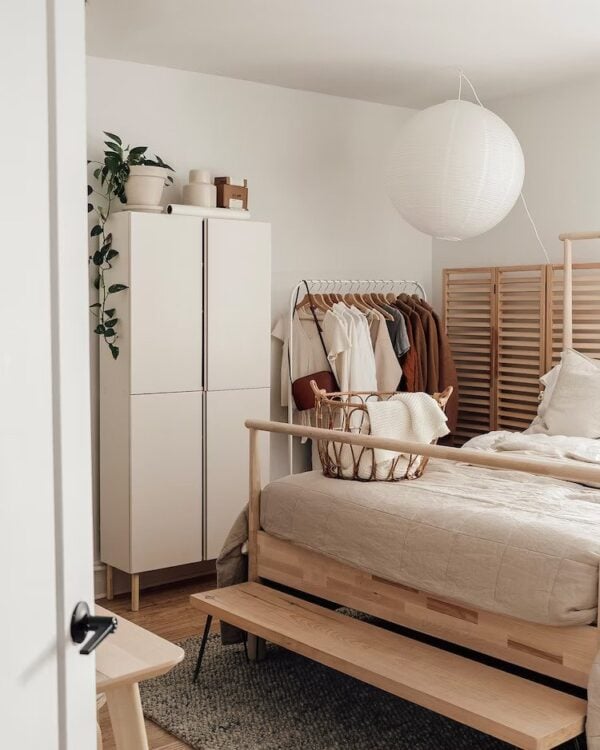
9. Turn IVAR Cabinets Into a Neutral Japandi Wardrobe
IVAR cabinetry can become a calm wardrobe when the finish is simplified and the storage remains mostly closed.
Paint the units in warm gray, putty, greige, muted beige, or another low-contrast neutral.
A simple timber base can raise the cabinets slightly and make them feel more like finished furniture than utility storage.
Japandi detail: keep door hardware nearly invisible or use small natural wood pulls.
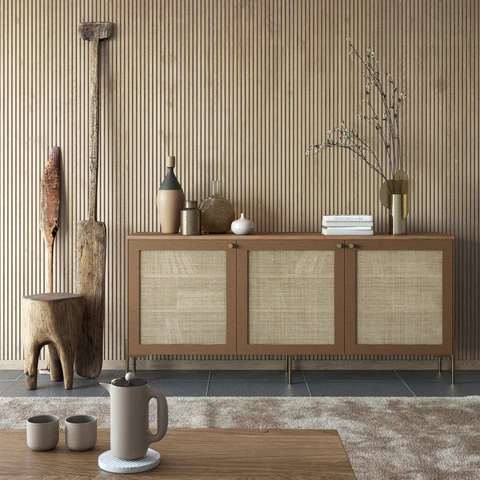
10. Give a BESTÅ Sideboard Dark Wood and Cane Details
Japandi does not have to mean pale wood everywhere. Dark walnut and deep brown tones can bring useful contrast.
Start with a BESTÅ storage unit and use dark wood-look fronts combined with cane, hessian-style, or another natural woven panel.
Keep the top surface uncluttered and use the cabinet for closed storage so the room remains visually simple.
High-end combination: walnut tone + woven panel + slim dark or brass hardware + warm white wall.
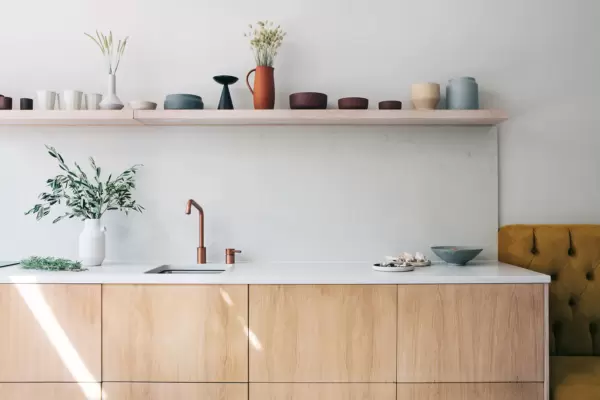
11. Make an IKEA METOD Kitchen Look Like White-Oak Japandi Cabinetry
An IKEA kitchen can feel much more custom when the cabinet layout stays simple and the visible fronts carry the character.
Use compatible wood-look or custom white-oak-style fronts on METOD cabinetry, then pair them with a thin pale countertop and minimal hardware.
Instead of filling the upper walls with cabinetry, leave some breathing room and add one simple open shelf where practical.
This creates the warm, restrained balance that works especially well in Japandi kitchens.
Designer rule: keep the wood grain, countertop, hardware, and backsplash visually quiet enough that no single finish dominates the room.
How to Make IKEA Furniture Look More Japandi
- Change glossy finishes: matte and wood-grain surfaces usually feel calmer.
- Add cane selectively: one cane element is often enough.
- Use warm neutral paint: avoid harsh brilliant white if the room already feels cold.
- Lower visual clutter: prioritize closed storage.
- Upgrade the base: wood plinths and simple legs can make basic cabinets feel more architectural.
- Keep decor functional: use books, lamps, ceramics, and baskets instead of lots of small ornaments.
Best Japandi Colors for IKEA Hacks
- Warm white — softens simple Scandinavian furniture.
- Oatmeal — works beautifully with pale oak and linen.
- Greige — useful for IVAR and BILLY storage.
- Taupe — gives cabinetry a warmer architectural feel.
- Soft black — adds contrast in small amounts.
- Walnut brown — introduces deeper Japanese-inspired warmth.
- Muted olive — works well as a restrained accent.
Best Materials to Pair With IKEA Furniture
| Material | Where to Use It | Effect |
|---|---|---|
| Cane | Cabinet fronts, screens | Light natural texture |
| Linen | Bedding, cushions, curtains | Soft relaxed finish |
| Oak | Cabinet fronts, shelves, tops | Warm Scandinavian base |
| Walnut | Sideboards, accent panels | Deeper contrast |
| Ceramic | Shelf styling | Handmade feeling |
Japandi IKEA Hack Checklist
- Measure the IKEA piece before buying hack materials.
- Choose one main wood tone.
- Limit the palette to a few neutral colors.
- Use natural texture selectively.
- Plan closed storage for clutter.
- Check weight and mounting requirements.
- Use appropriate hinges and hardware for room dividers.
- Sand and prepare surfaces before painting where required.
- Keep finished styling minimal.
- Test stability before loading shelves or cabinets.
Common Japandi IKEA Hack Mistakes
- Adding cane to everything: one or two woven details usually look more refined than repeating the same treatment across the whole room.
- Using too many wood tones: choose one dominant pale or dark wood and keep other finishes secondary.
- Overdecorating shelves: Japandi styling needs visible negative space.
- Making everything beige: add black, charcoal, olive, walnut, or textured ceramics for depth.
- Ignoring function: the finished piece should work better, not just look different.
- Using unstable DIY structures: shelves, room dividers, sofas, and cabinetry still need proper support and hardware.
- Choosing overly ornate hardware: simple knobs and pulls usually suit the style better.
- Forgetting lighting: warm low-level lighting is important for keeping minimal interiors from feeling sterile.
Frequently Asked Questions
What is Japandi style?
Japandi combines Japanese-inspired simplicity and natural materials with Scandinavian functionality, warmth, and comfort.
Which IKEA furniture works best for Japandi hacks?
Simple modular pieces such as BILLY, IVAR, BESTÅ, SÖDERHAMN, GJÖRA, and METOD can work well because their basic forms are relatively easy to customize.
How do I make IKEA furniture look less mass-produced?
Change one or two visible elements such as the doors, base, hardware, finish, or surface material. Cane panels, wood fronts, matte paint, and simple custom tops can make a large difference.
Does Japandi furniture have to be light wood?
No. Pale oak is common, but dark walnut, charcoal, and black accents can create useful contrast and still fit the style when used in a restrained way.
Can I create Japandi style in a rental?
Yes. Focus on freestanding IKEA furniture, neutral textiles, plants, portable room dividers, baskets, lamps, and reversible furniture hacks rather than permanent architectural changes.
How do I keep Japandi decor from looking boring?
Use subtle contrast through texture and material rather than lots of color. Linen, cane, wood grain, boucle, handmade ceramics, dark accents, and greenery can add depth while keeping the room calm.
Recommended Finds for Japandi IKEA Hacks
Measure the IKEA piece first and choose materials based on the actual project rather than buying decorative supplies before you know what you need.
- Natural cane webbing — for suitable cabinet fronts and room-divider panels.
- Minimal wood cabinet knobs — for simple BILLY, IVAR, or BESTÅ upgrades.
- Neutral linen pillow covers — for adding softness to beds and sofas.
- Textured ceramic vase — for lightly styling shelves and sideboards.
- Natural woven basket — for hiding everyday clutter while adding texture.
- Minimal warm table lamp — for soft ambient lighting.
- Neutral flatweave rug — for grounding a Japandi room without adding visual clutter.
Final Thoughts
The best IKEA hacks for Japandi are usually the ones that make a simple piece feel warmer, calmer, and more functional rather than completely disguising it.
Cane-front BILLY storage, low IVAR credenzas, shoji-inspired dividers, SÖDERHAMN seating, simple timber beds, and wood-front METOD cabinetry all work because they start with uncomplicated forms.
Focus on natural-looking materials, neutral colors, low profiles, hidden storage, and a small amount of carefully chosen decor.
If the finished piece feels useful, grounded, warm, and visually quiet, you are already much closer to the Japandi look than you would be with a room full of expensive decorative accessories.

Ankit is an engineer by profession and blogger by passion. He is passionate to do all the stuff such as designing the website, doing the SEO, researching for the content, writing tech blog posts and more.

