
Choosing the right flooring color can completely change how your home looks and feels. If your living room seems dark, your kitchen feels a little cramped, or your hallway needs a fresher appearance, the right luxury vinyl plank flooring can help create a more open, welcoming interior. From creamy blonde wood tones to soft greige and light natural oak, there are plenty of beautiful options that work with modern, farmhouse, coastal, and traditional decorating styles.
These 15 bright and airy LVP flooring colors include pale almond, weathered greige, natural oak, warm honey, sophisticated taupe, whitewashed wood, and subtle gray finishes. You’ll also discover several richer flooring options that create attractive contrast in bright spaces. Each idea includes practical styling advice, coordinating wall colors, furniture suggestions, and helpful tips for choosing a floor that suits your home’s natural lighting and everyday needs.
Affiliate disclosure: As an Amazon Associate, I earn from qualifying purchases. This article contains affiliate links, which may earn us a commission at no extra cost to you.
More Home Decorating Ideas to Explore
New flooring looks even better when your furniture, room layout, and overall color palette work together. Explore these related decorating guides for inspiration.
- 9 Must-Try Living Room Layout Ideas for Small Spaces for creating comfortable arrangements that complement light flooring.
- 12 Cute and Chic Small Apartment Ideas for bright palettes, practical furniture, and airy interiors.
- 18 Joanna Gaines’s Living Room Ideas for a Modern and Timeless Space for combining wood finishes, warm neutrals, and farmhouse details.
How to Choose the Best LVP Flooring Color for a Bright, Airy Home
Luxury vinyl plank flooring is available in a wide variety of wood-look colors, textures, and plank sizes. Although lighter shades are often associated with bright interiors, the best option depends on your wall colors, natural light, furniture, and the overall feeling you want to create.
Start by studying the light in your room. North-facing rooms may make cool gray floors appear more blue, while strong afternoon sunlight can bring out yellow or orange undertones in warm wood-look planks. A creamy oak finish may feel inviting in a room with limited daylight, while a whitewashed finish can look especially beautiful in a sun-filled coastal living room.
Simple flooring color formula: Existing room lighting + undertone compatibility + plank scale + practical surface finish + coordinating furniture colors.
Always bring physical flooring samples into the room before making a final decision. Place them beside your baseboards, cabinets, walls, and furniture. Look at each sample in morning sunlight, afternoon light, and under your evening lamps. Colors on a phone or computer screen can differ noticeably from the actual material.
Also compare the flooring’s wear-layer specifications, manufacturer-approved installation method, moisture limitations, warranty, and care instructions. LVP products differ in construction and performance, so a beautiful color should be only one part of your purchasing decision.
LVP Flooring Color Comparison Guide
| LVP Color | Undertone | Best Decorating Style |
|---|---|---|
| Weathered Greige | Balanced Gray-Beige | Modern Farmhouse |
| Pale Almond Oak | Soft Warm Cream | Modern Traditional |
| Urban Ash Gray | Cool Neutral Gray | Contemporary Minimalist |
| Caramel Russet | Rich Warm Brown | Rustic Farmhouse |
| Light Natural Oak | Neutral Golden Beige | Scandinavian and Transitional |
| Soft Taupe | Muted Brown-Gray | Cozy Contemporary |
| Honey Oak | Warm Golden | Classic and Cottage |
| Parchment Beige | Creamy Antique Beige | Vintage and Eclectic |
| Whitewashed Oak | Pale White-Beige | Coastal |
| Natural Walnut | Medium Warm Brown | Classic Entryway |
| Distressed Soft Gray | Weathered Gray | Country Farmhouse |
| Matte Espresso | Deep Brown | Bright Formal Dining Room |
| Slate Gray | Stone-Inspired Gray | Modern Kitchen |
| Wire-Brushed Ash | Muted Light Neutral | Japandi |
15 Bright & Airy LVP Flooring Colors That Elevate Any Space
1. Choose Soft Weathered Greige LVP for Modern Farmhouse Warmth
Weathered greige LVP is a beautiful choice when you want the softness of beige without giving up the contemporary appearance of gray. This balanced tone creates a relaxed farmhouse foundation that works with cream walls, natural wood furniture, and black metal accents. The subtle gray-and-beige variation can also bring visual depth to a large open-plan room.
Look for planks with realistic grain variation and a soft matte finish rather than a heavily distressed surface. Pair them with ivory upholstery, warm white walls, and woven baskets for a comfortable living room. In a kitchen, greige flooring can complement white cabinets, natural wood shelving, and muted green accessories. If your furniture contains several wood finishes, bring samples beside each piece to check that the undertones feel coordinated rather than clashing.
Styling tip: Use warm white walls and natural linen textures to prevent greige flooring from looking too cool. A cream rug can soften the transition between the flooring and darker furniture.
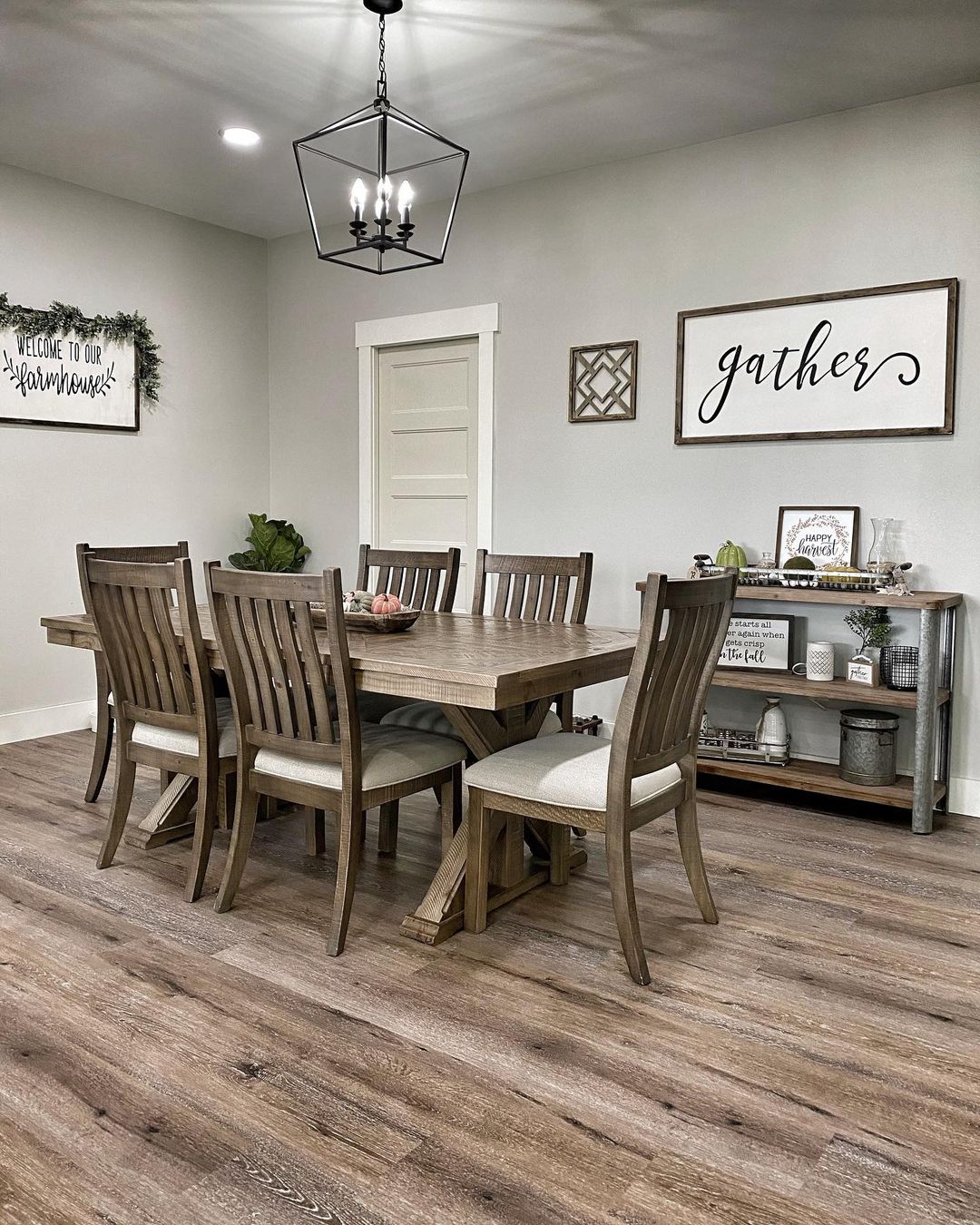
Image credit: @thecreativeshour.com
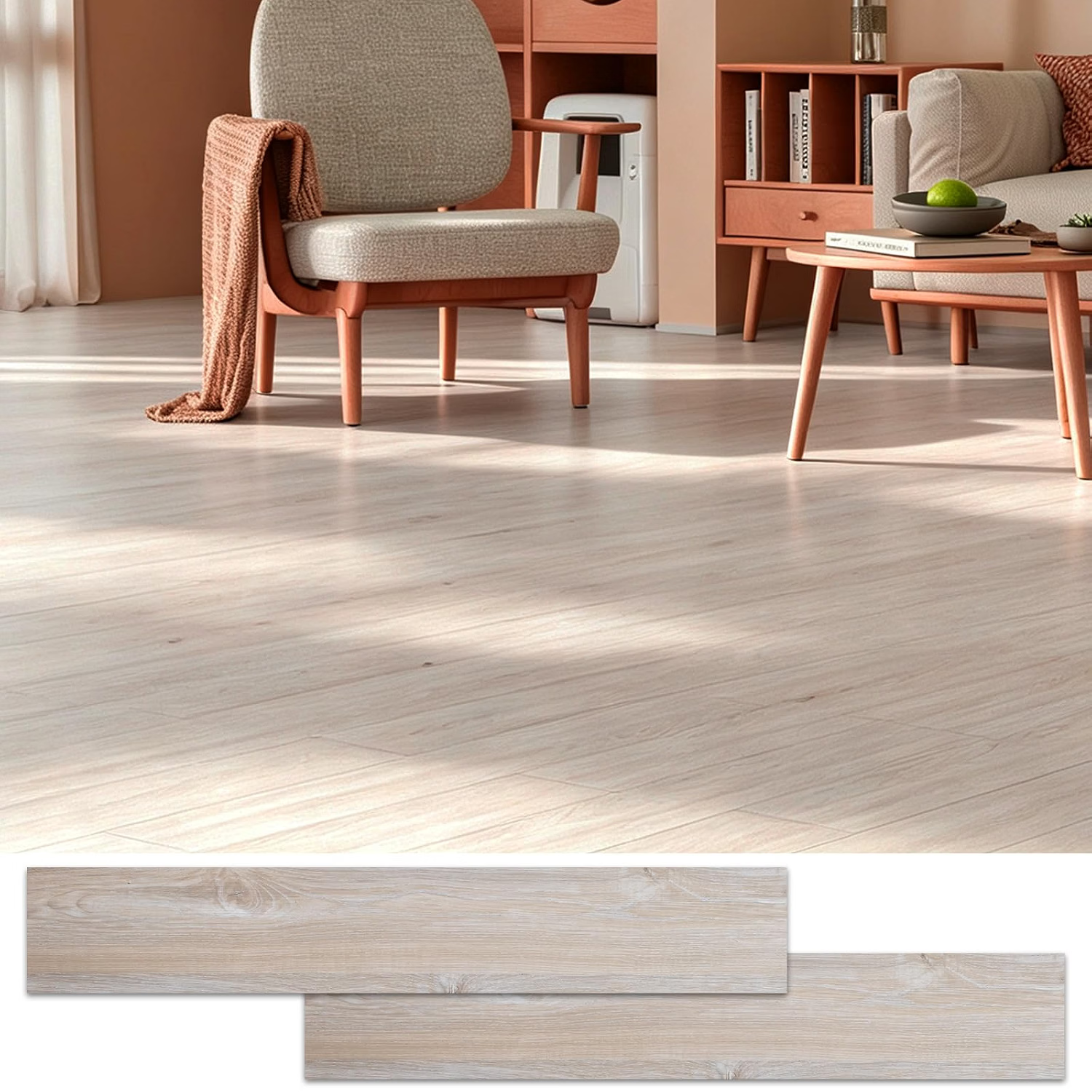
Amazon Find: Greige Wood-Look LVP Flooring Samples
Physical flooring samples can help you compare gray and beige undertones under your home’s actual lighting. Check sample dimensions and confirm the flooring manufacturer’s specifications before ordering a full installation.
2. Try Pale Almond Oak LVP for an Elegant Modern Farmhouse Look
Pale almond oak flooring creates a bright, welcoming foundation without looking stark white. Its gentle creamy undertone can soften the appearance of substantial furniture, dark fireplace surrounds, and exposed wood beams. This makes it an attractive choice for modern farmhouse homes where you want the room to feel spacious while preserving a sense of warmth.
Choose light almond-colored planks with a subtle wood grain and modest color variation. Pair the flooring with warm white walls, oatmeal sofas, and medium-brown furniture for an inviting contrast. If your living room has a dark fireplace or black-framed windows, the pale floor can balance those stronger elements. Continue the same flooring into an adjoining dining space where the layout and installation specifications permit, helping the rooms feel visually connected.
Design tip: Choose a pale almond finish that looks creamy rather than yellow under artificial lighting. Test samples next to your kitchen cabinets and baseboards before committing to the color.
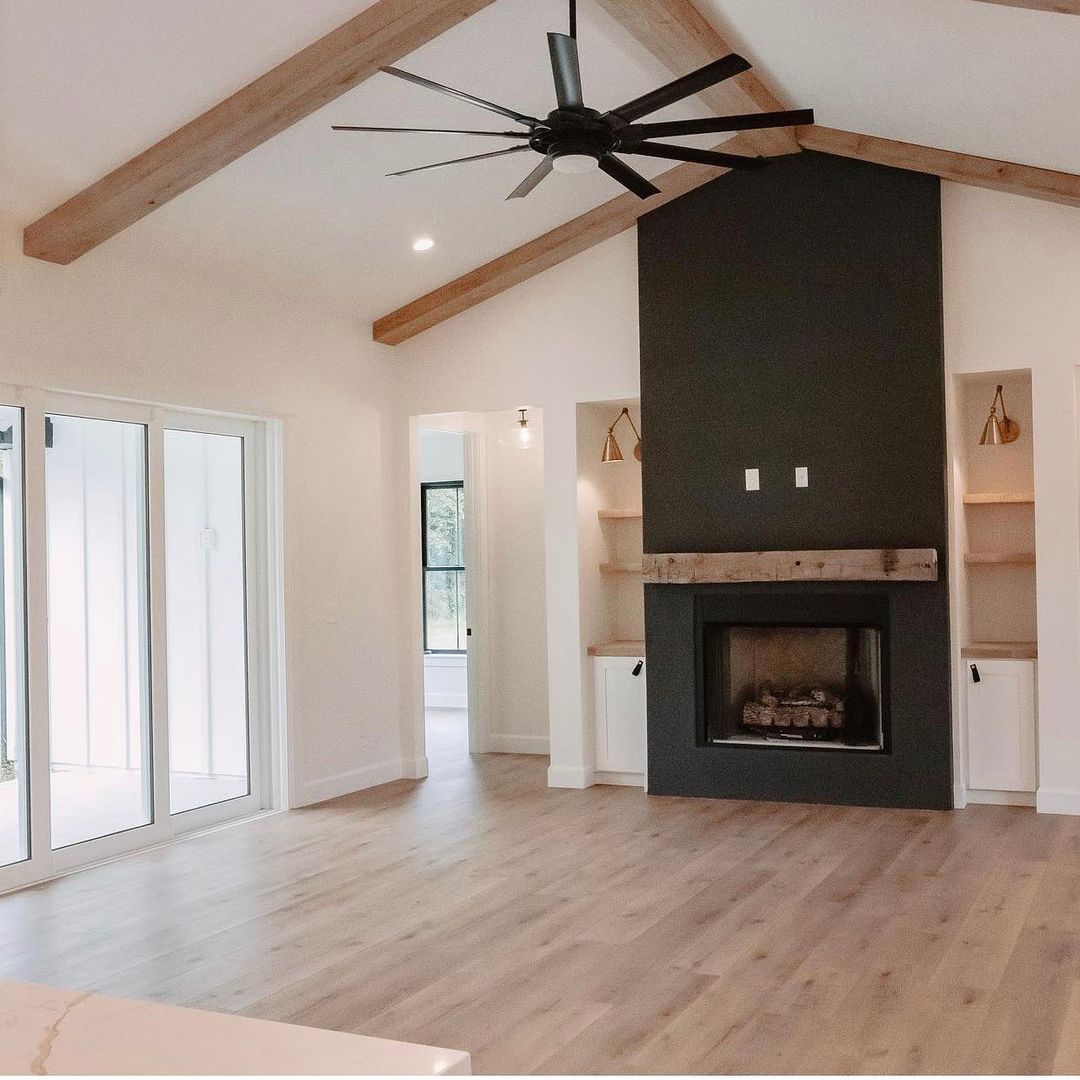
Image credit: @thecreativeshour.com
3. Use Cool Urban Ash Gray LVP for a Sleek Minimalist Interior
Urban ash gray LVP offers a clean, sophisticated foundation for modern interiors. Its cooler tones work beautifully with white trim, black furnishings, and streamlined furniture. In a bright hallway or minimalist apartment, a light ash finish can make the flooring feel calm and consistent without overwhelming the surrounding decor.
Choose a soft ash gray rather than a very dark charcoal if your goal is an airy appearance. Pair the planks with crisp white baseboards, light gray or cream walls, and furniture with simple shapes. Add a few warm natural materials, such as an oak bench, woven rug, or cream boucle chair, to prevent the palette from feeling cold. In narrow hallways, consider plank direction carefully and review the manufacturer’s installation guidance for the selected layout.
Styling tip: Gray flooring often looks more inviting when you add warm wood or beige textiles. Avoid mixing too many unrelated gray undertones across the walls, flooring, and furniture.
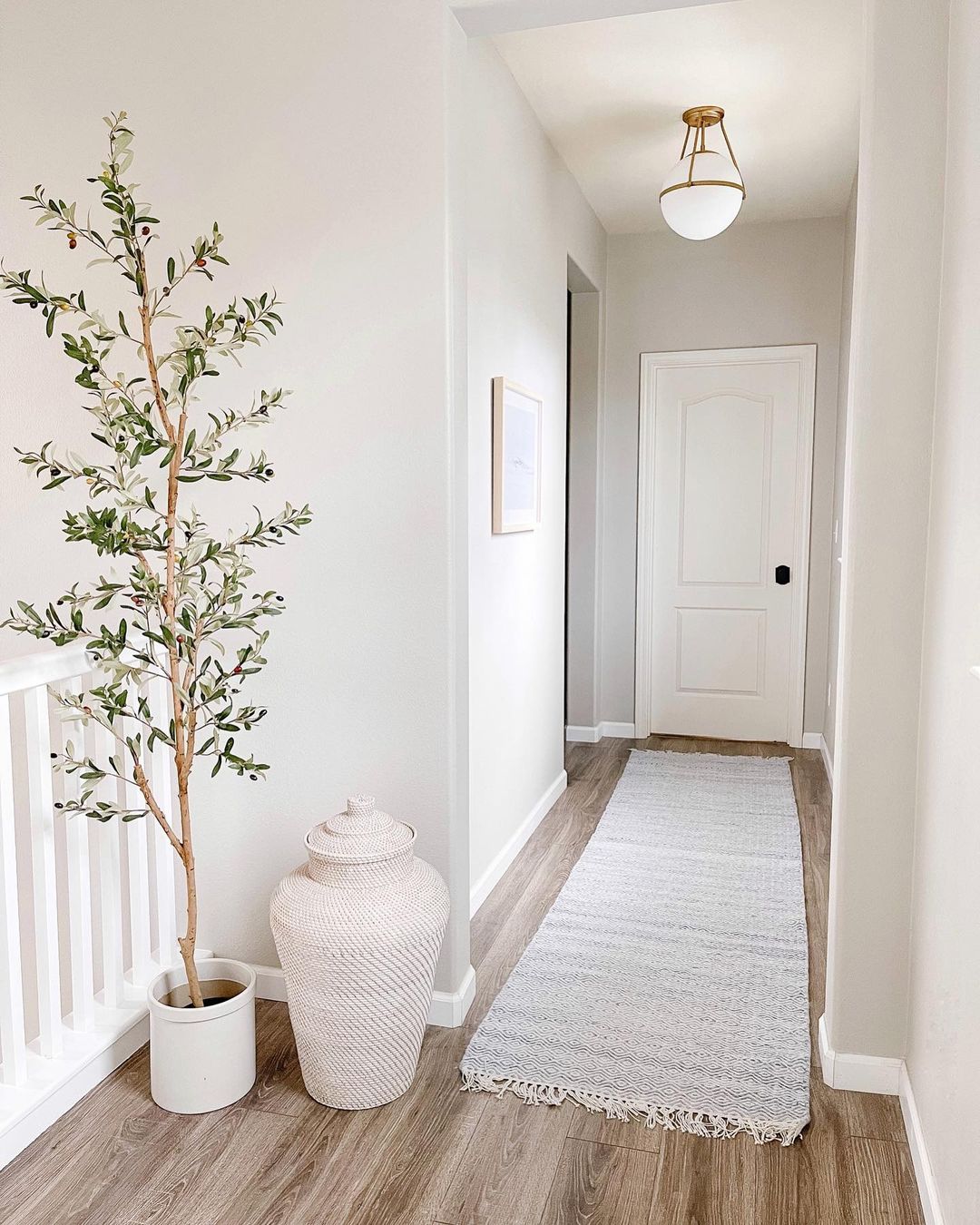
Image credit: @thecreativeshour.com
4. Add Warm Caramel and Russet Oak LVP for Rustic Character
Warm caramel and russet flooring brings the familiar appearance of traditional wood into an open-concept home. Although it’s richer than pale oak, its golden-brown grain can make a naturally bright room feel especially comfortable. This look works beautifully in rustic farmhouse interiors with white walls, textured upholstery, and substantial wooden furniture.
Look for a medium-light caramel finish with subtle variations rather than planks with strong orange coloring. Pair it with soft cream walls, an ivory sofa, and natural woven accessories. For an open-plan kitchen and living room, use light cabinetry and simple countertops to balance the warmth of the floor. Repeating one or two brown tones in furniture or picture frames can make the flooring feel intentional without requiring every wood item to match exactly.
Practical tip: Caramel flooring can look noticeably more orange in certain lighting. Compare full-size samples in morning and evening conditions and check them against your existing furniture finishes.
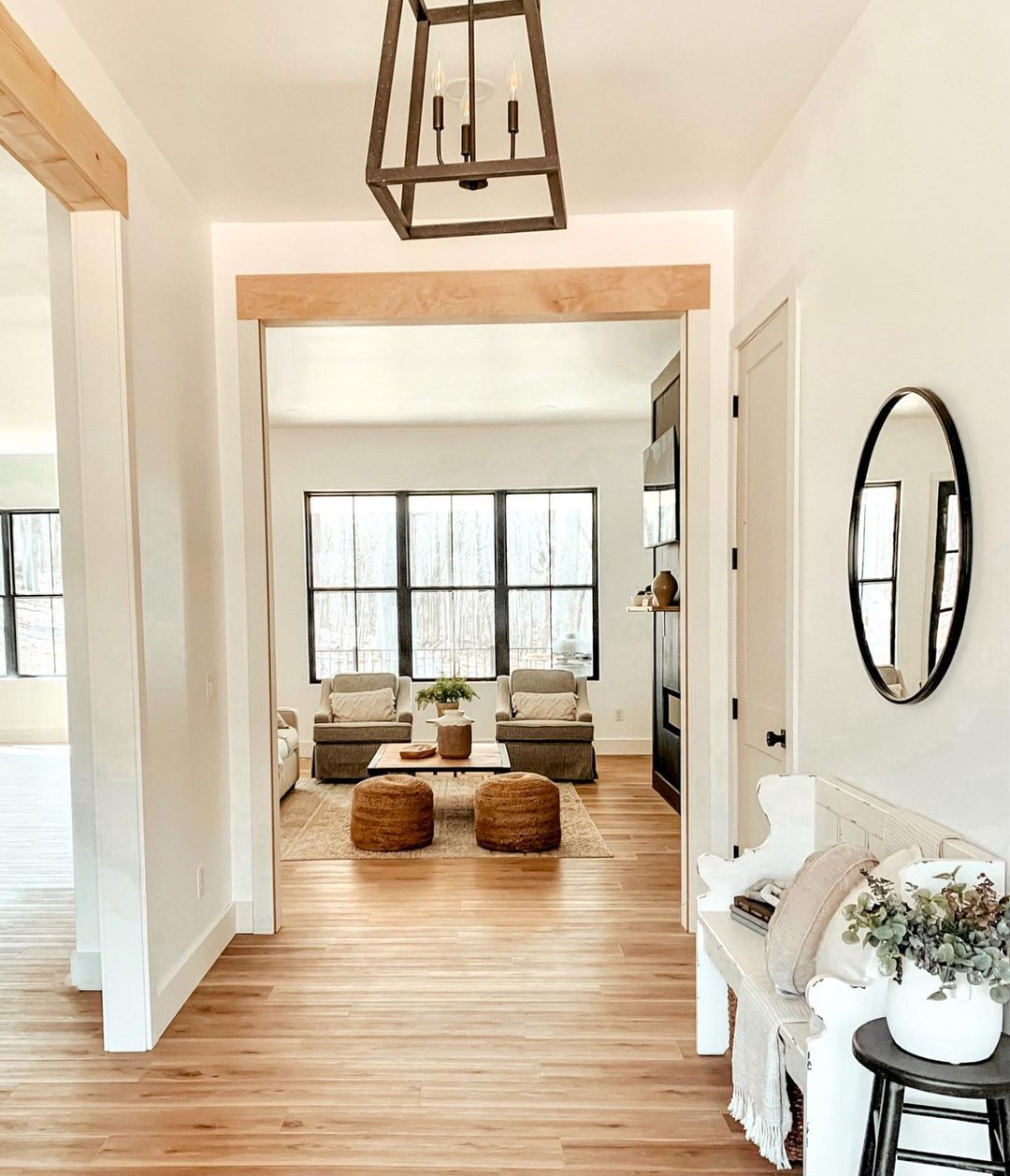
Image credit: @thecreativeshour.com
5. Choose Natural Light Oak LVP for a Fresh, Airy Entryway
Natural light oak is one of the most versatile LVP flooring colors for bright interiors. Its soft wood grain and pale beige coloring create a welcoming atmosphere without feeling overly decorative. This finish is particularly attractive in entryways, small apartments, and living rooms where you want the flooring to complement different furniture styles over time.
Choose a light oak look with subtle natural variation and pair it with warm white walls and simple trim. In an entryway, add a slim black console or natural wood bench for contrast. A washable runner can introduce texture while protecting the area from tracked-in dirt. Light oak also works with sage green, navy, charcoal, and cream furniture, making it a flexible choice if you enjoy changing your decor seasonally. Compare realistic plank samples because some products labeled light oak may lean noticeably yellow or gray.
Styling tip: Choose a doormat or runner suited to the flooring manufacturer’s recommendations, including backing compatibility. Certain rug backings can discolor some vinyl surfaces.
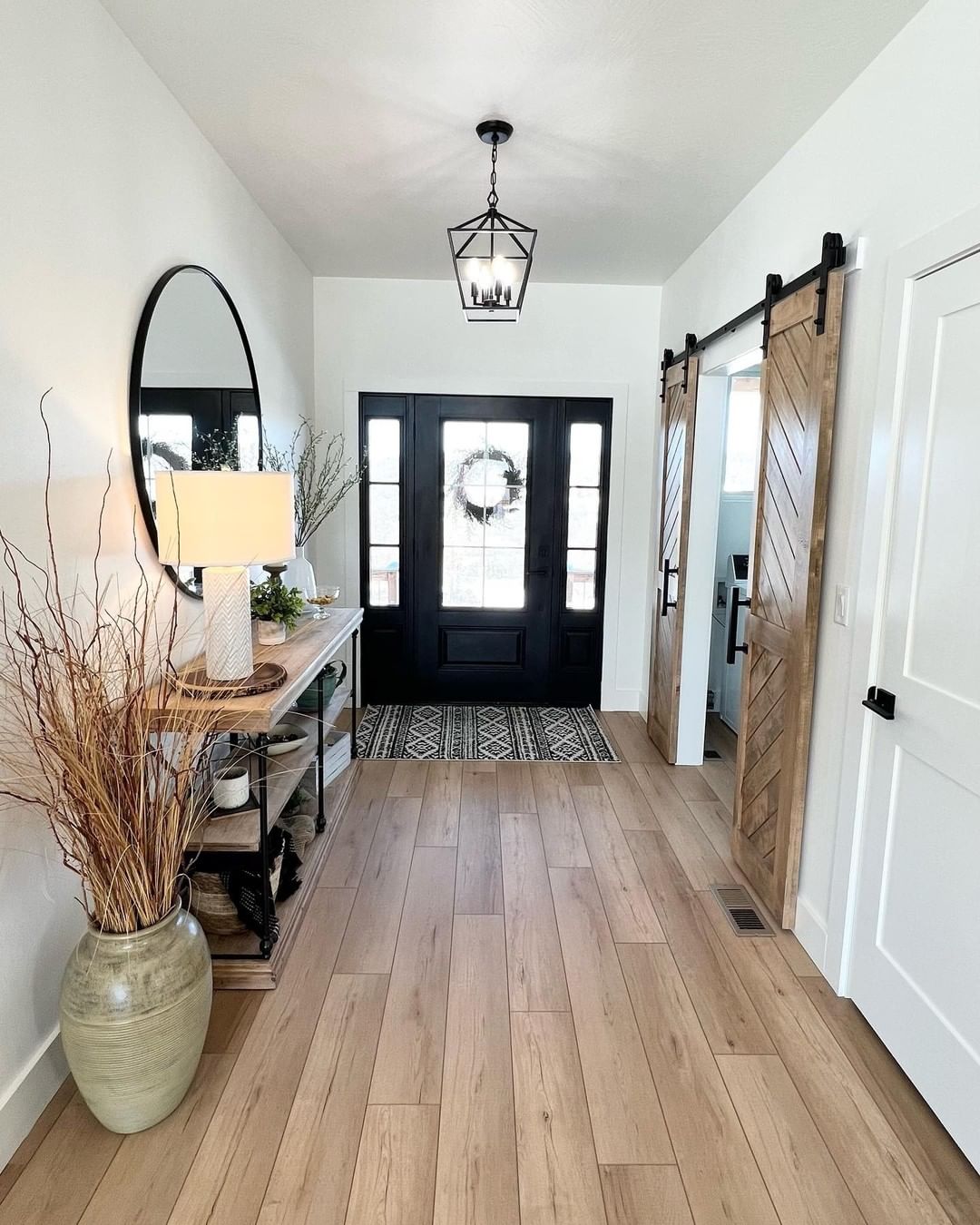
Image credit: @thecreativeshour.com
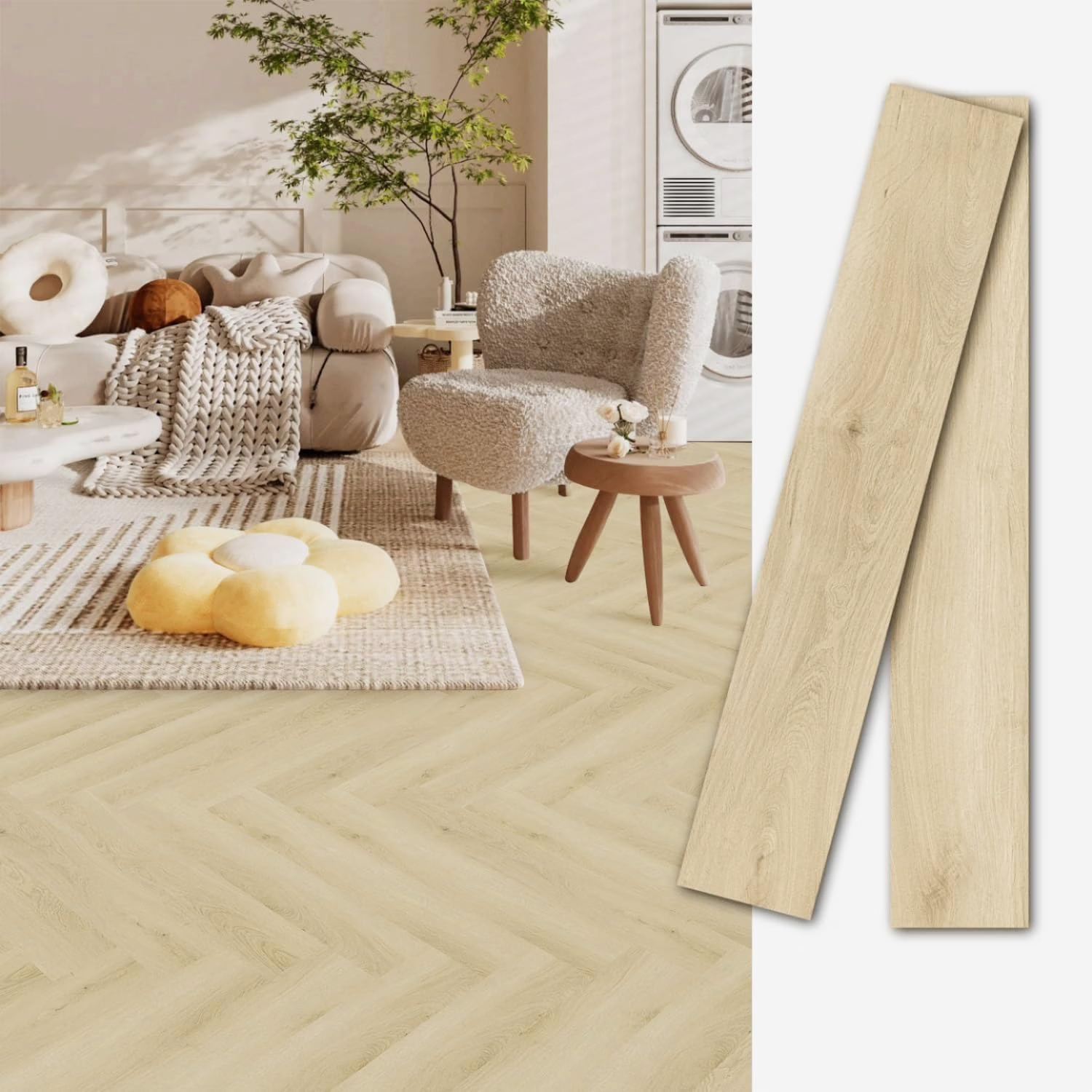
Amazon Find: Light Oak Luxury Vinyl Plank Flooring Samples
Light oak flooring samples make it easier to compare pale wood tones alongside your walls, cabinets, and furniture. Use actual samples to check color variation and surface texture.
6. Soften Your Living Room With Taupe Wood-Look LVP
Soft taupe flooring is ideal for homeowners who want a neutral base that feels warmer than silver gray but less golden than traditional oak. The combination of brown and gray undertones creates a quiet, comfortable look that works with many contemporary decorating styles. Taupe is especially attractive in living rooms filled with soft fabrics and natural materials.
Choose a light or medium-light taupe plank with gentle wood grain and a low-sheen finish. Pair it with a cream sofa, warm white walls, and textured cushions in oatmeal or muted olive. Add a pale area rug to define the seating space without hiding too much of the flooring. If your home has an open layout, taupe can help connect living, dining, and hallway spaces because it sits comfortably between cool and warm neutrals. Test samples against existing countertops to avoid mismatched gray or pink undertones.
Decorating tip: Taupe flooring looks beautiful with walnut furniture, linen upholstery, and soft brass accents. Keep the surrounding palette simple for a relaxed, polished result.
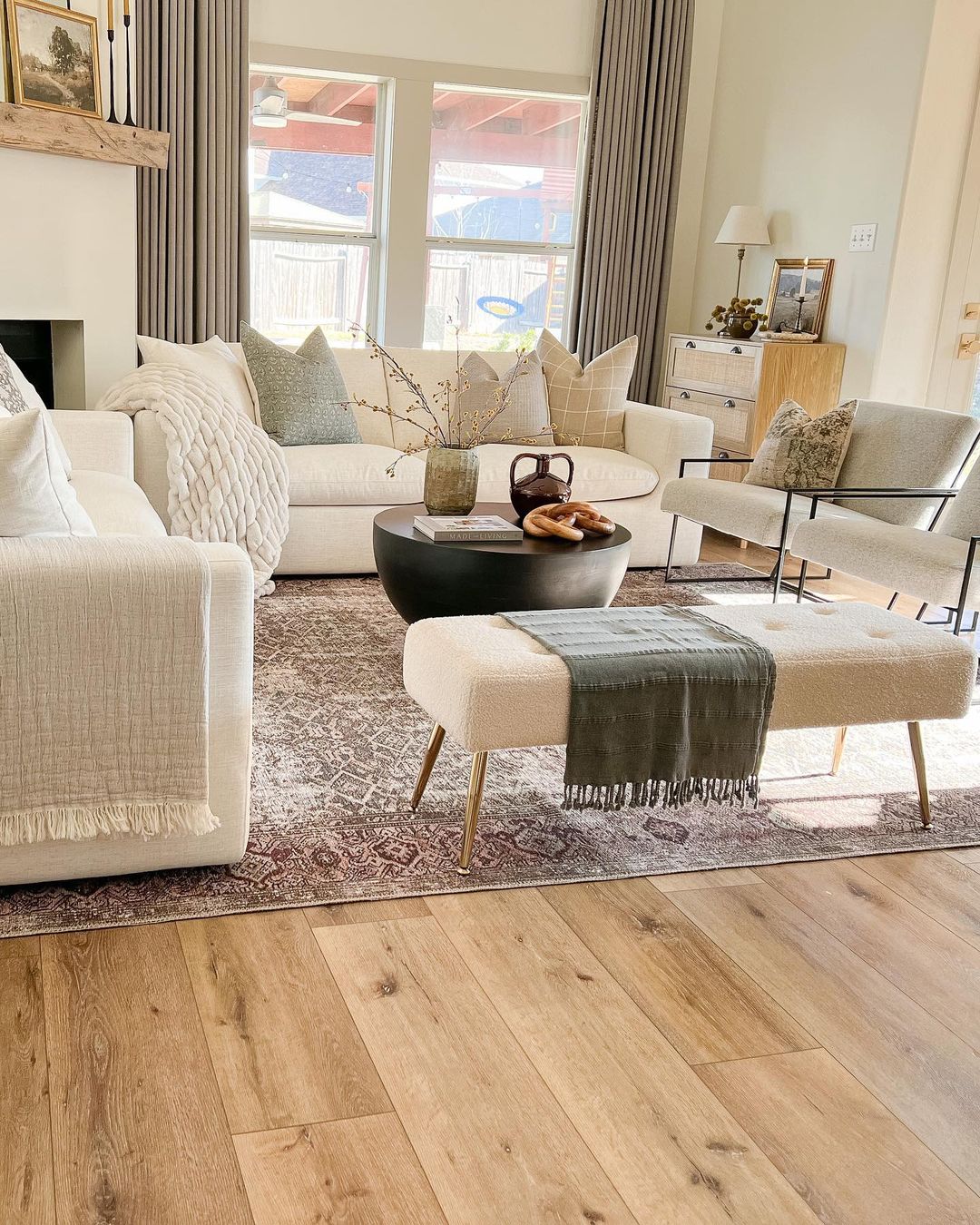
Image credit: @thecreativeshour.com
7. Bring Warmth Into the Kitchen With Honey Oak LVP
Honey oak LVP introduces soft golden warmth that can make a kitchen feel friendly and inviting. This finish works particularly well with white cabinets, cream backsplash tiles, and classic wooden furniture. In a room with plenty of daylight, the golden undertones can create a cheerful appearance without needing bright decorative colors.
Look for a honey oak finish with balanced beige and gold tones rather than an intense orange color. Pair it with white or ivory cabinetry, neutral countertops, and simple hardware in brushed nickel or aged brass. If you have a breakfast nook, add a natural wood table and light upholstered chairs. For kitchens, choose flooring specifically approved by its manufacturer for the installation conditions, and address moisture issues before installation. Wipe up spills promptly rather than allowing water to reach seams or wall edges.
Styling tip: Balance honey-colored flooring with white cabinets and natural textures. Too many strong orange or yellow wood finishes may make the kitchen appear more saturated than intended.
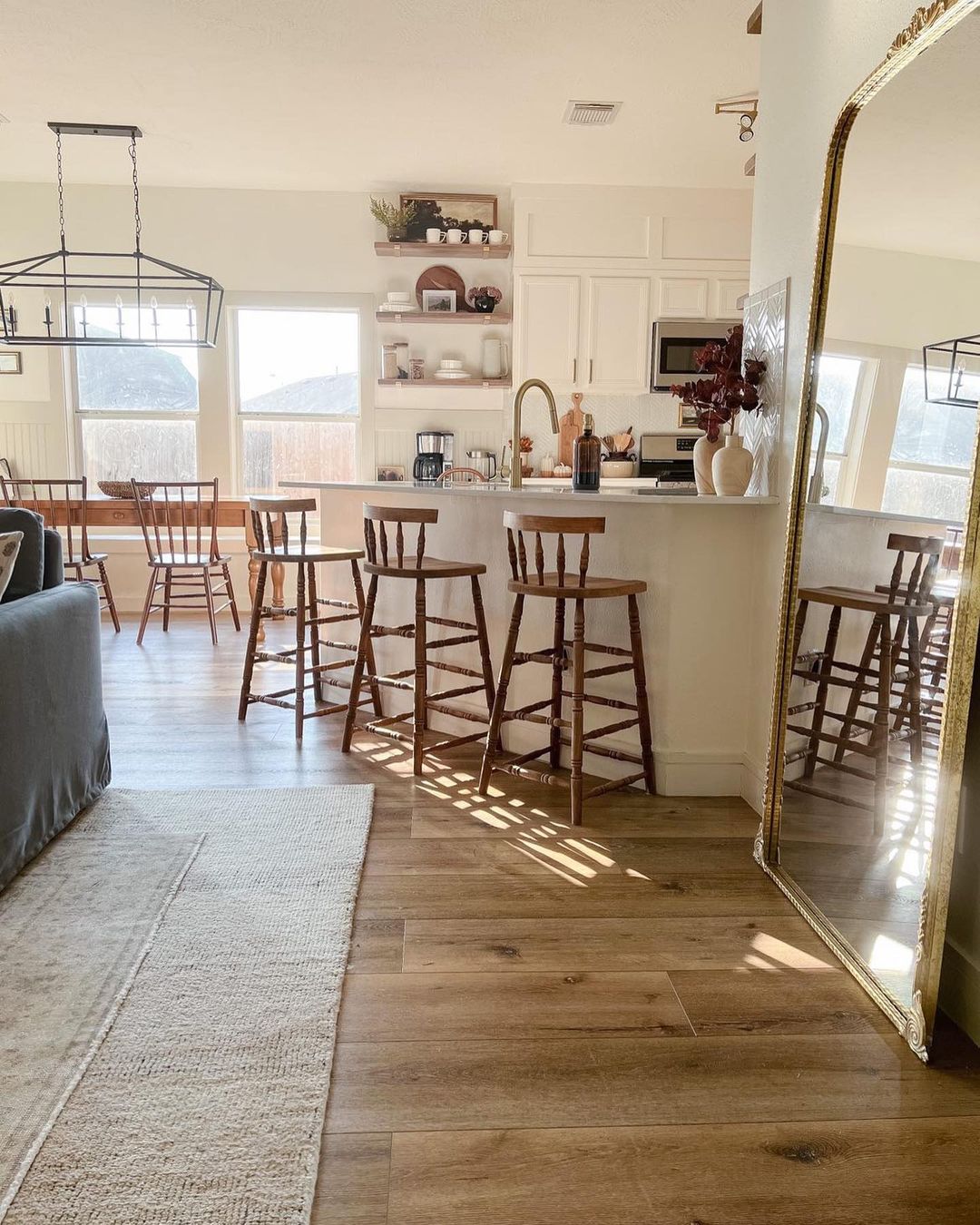
Image credit: @thecreativeshour.com
8. Try Vintage Parchment Beige LVP for a Soft, Collected Look
Parchment beige LVP has a soft, aged appearance that feels a little more distinctive than ordinary cream flooring. Its pale beige coloring and subtle grain can complement vintage furniture, antique-inspired artwork, and cozy reading corners. This is a lovely choice when you want a bright interior with gentle character rather than an ultra-modern finish.
Choose planks with a lightly weathered texture and understated color variation. Pair them with warm white walls, a vintage-style wooden chair, and linen or cotton textiles. In a reading nook, a narrow bookshelf and a soft patterned rug can bring the pale flooring into a cozy arrangement. Parchment shades also work beautifully with muted sage, dusty blue, terracotta, and natural wicker. Avoid pairing a very creamy floor with a strongly cool white wall without checking samples first, as the undertones may appear mismatched.
Budget decorating tip: Before replacing furniture, try combining pale parchment flooring with existing vintage frames, books, and a comfortable chair. The floor can create a fresh foundation while the older pieces add personality.
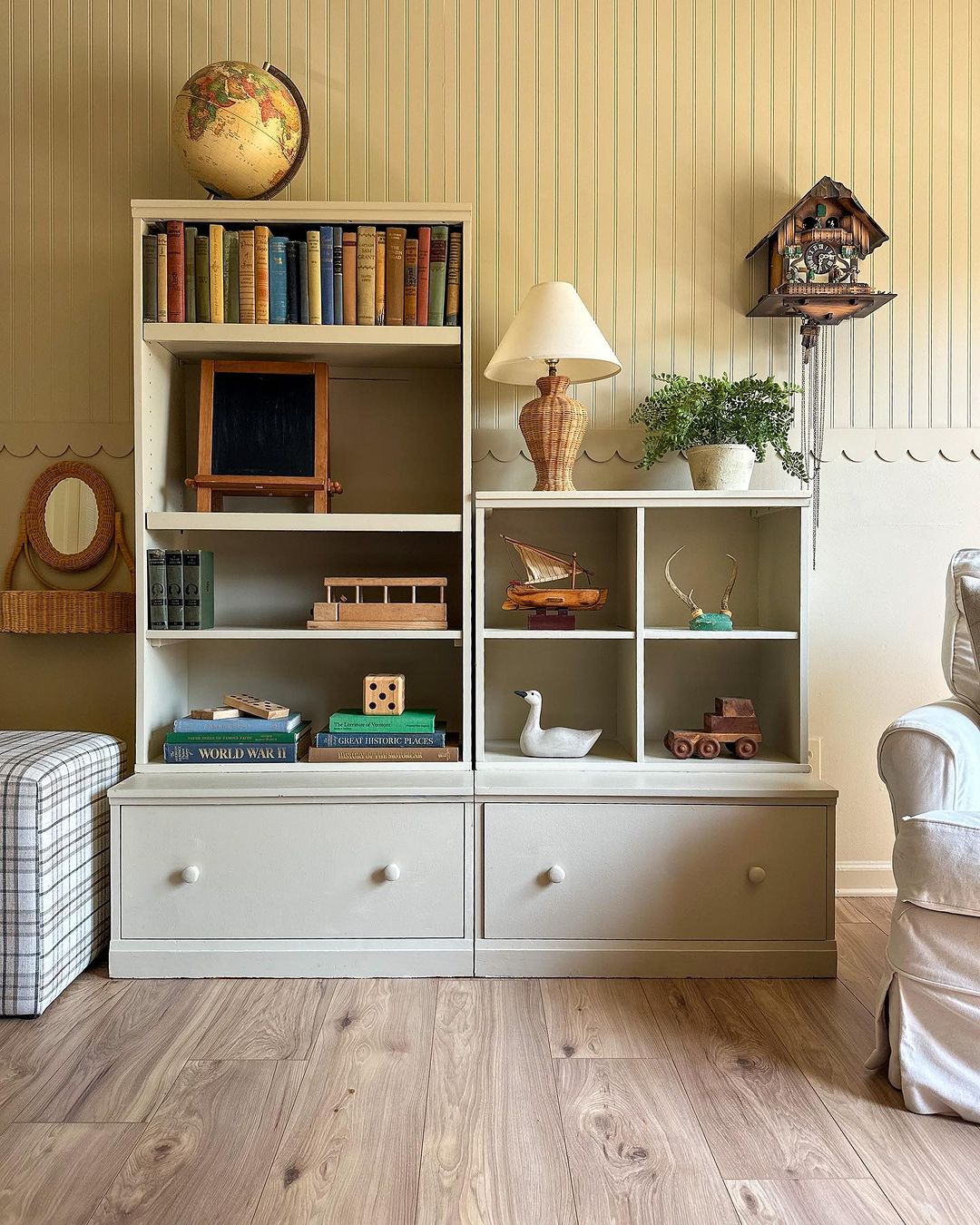
Image credit: @thecreativeshour.com
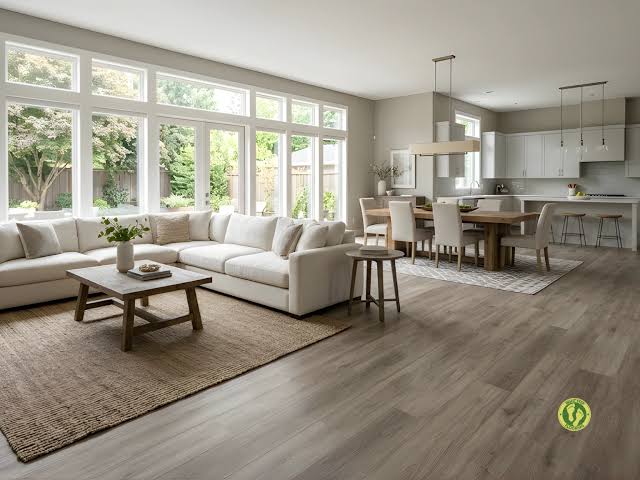
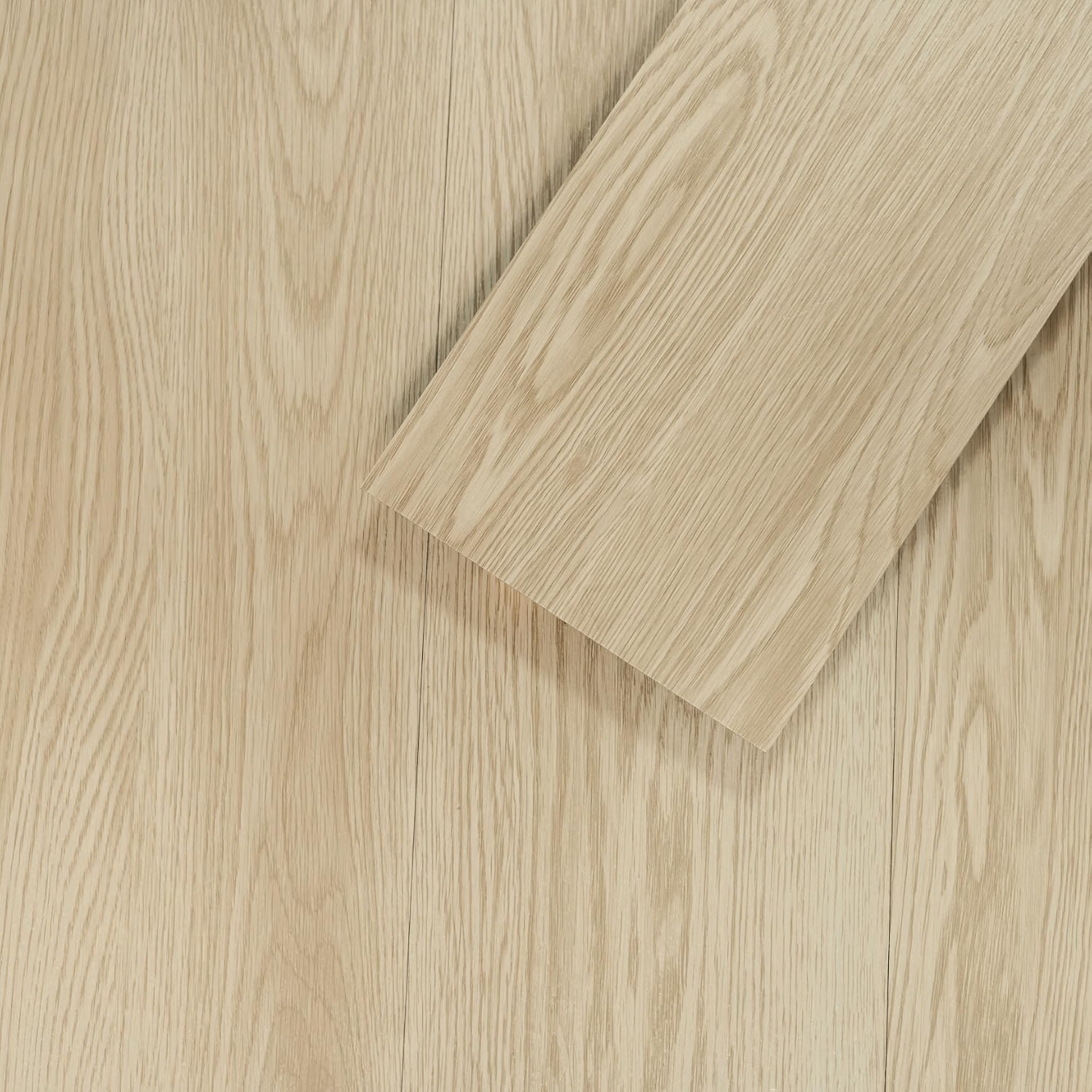
9. Use Wide-Plank Light Oak LVP in a Sun-Filled Living Room
Wide-plank light oak LVP is a beautiful option for a sun-filled living room. The pale wood finish creates a calm foundation, while wider planks can reduce the number of visible seams across the floor. This gives the space a more continuous appearance and works especially well with contemporary furniture, soft neutral upholstery, and large windows.
Choose wide planks with realistic oak grain and restrained knot patterns. Pair them with a white or beige sofa, natural linen curtains, and a simple coffee table. If your living room is connected to a kitchen or dining area, continuing the same flooring can help maintain visual flow where permitted by the installation specifications. Be sure to follow the product’s requirements for expansion gaps, maximum continuous installation dimensions, and transition moldings. A large area rug can define the seating zone without interrupting the overall airy look.
Design tip: Choose planks with subtle variation if you want a minimalist appearance. Strong contrasting grain patterns can create a busier look across a large floor.

Image credit: @rightstepflooringnc.com
Amazon Find: Wide-Plank Light Oak Vinyl Flooring Samples
Compare light oak shades and plank widths before choosing flooring for a large living area. Actual samples help you evaluate grain detail, finish, and the color under daylight.
10. Create an Elegant Entryway With Natural Walnut Herringbone LVP
Natural walnut herringbone flooring creates a more decorative look than standard straight planks. The angled layout introduces a sense of movement and can make an entryway feel thoughtfully designed. Although walnut is generally deeper in color than pale oak, a medium, natural walnut tone can look beautiful in a bright entrance with light walls and simple furniture.
Choose a walnut-look LVP product specifically designed or approved for herringbone installation. Arrange the angled pattern to complement the shape of the entryway, and test the layout before committing to the final direction. Pair the flooring with ivory walls, white trim, and a narrow console table in a contrasting finish. A simple mirror can help bring more light into the area. Herringbone patterns require careful alignment and may produce more offcuts than a straightforward plank layout, so account for additional material and installation complexity.
Styling tip: Let the herringbone pattern be the focal detail. Keep entryway furniture simple rather than combining it with several other strong floor and wall patterns.
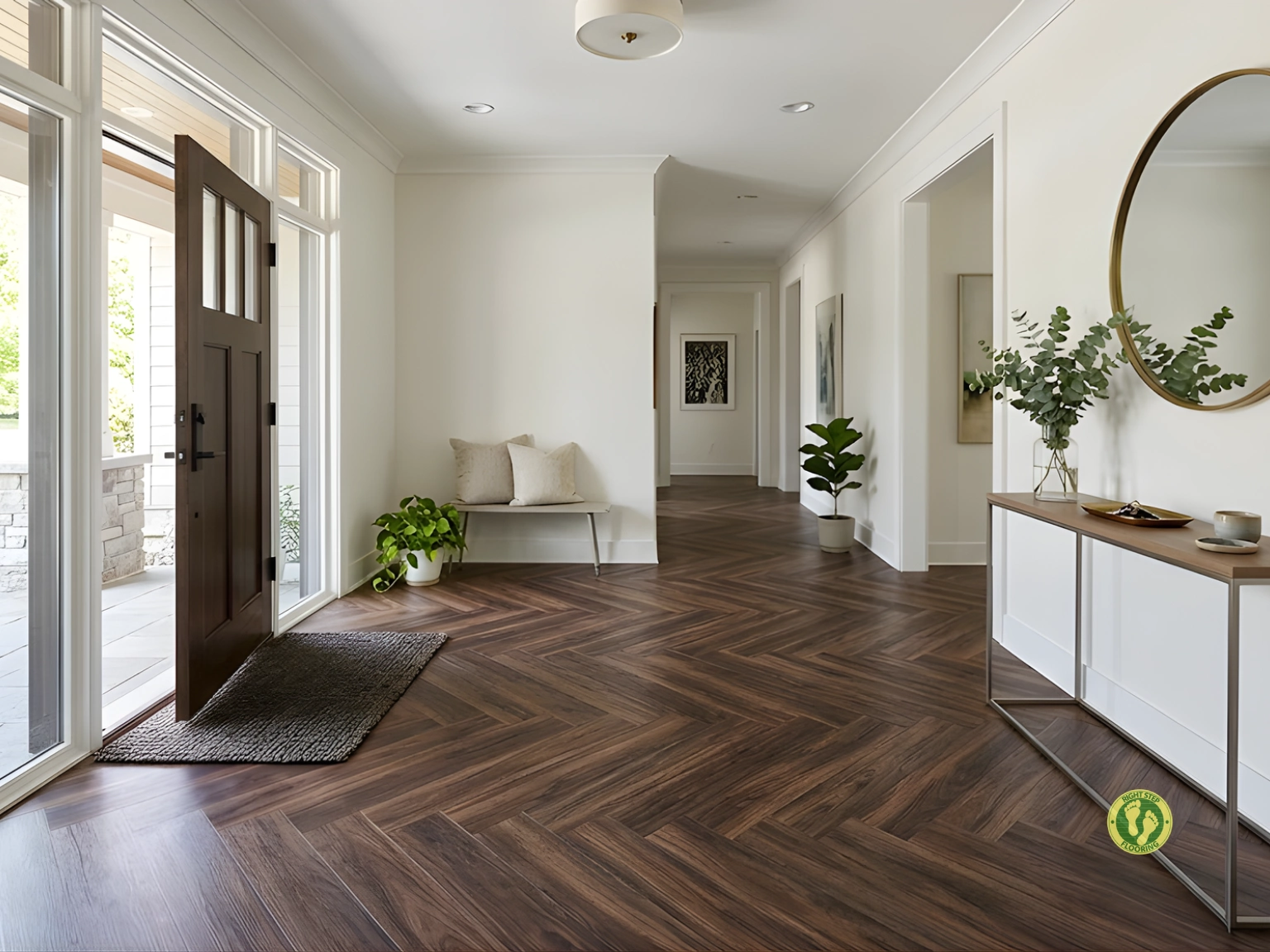
Image credit: @rightstepflooringnc.com
11. Add Distressed Soft Gray LVP to a Bright Farmhouse Kitchen
Distressed soft gray LVP provides the look of weathered wood, making it a charming flooring option for farmhouse kitchens. Light gray tones with visible wood grain can bring character to white cabinetry and rustic details without creating an overly dark foundation. The finish works particularly well when you want a casual, lived-in look rather than a perfectly polished modern surface.
Choose a medium-light gray plank with realistic grain and controlled distressed details. Pair it with white or cream cabinets, a butcher-block-style countertop, and open wooden shelves. If your kitchen includes black metal fixtures, repeat the black in a light fixture or cabinet hardware for a cohesive look. Avoid using too many strongly weathered finishes in the same room; if the flooring has prominent distressing, keep the cabinets and backsplash relatively simple. Test whether the gray contains blue, green, or brown undertones before choosing a wall color.
Practical tip: A textured visual pattern doesn’t automatically indicate a more slip-resistant surface. Check the actual flooring product’s suitability for kitchen use and follow its cleaning and maintenance instructions.

Image credit: @rightstepflooringnc.com
12. Choose Whitewashed Oak LVP for an Airy Coastal Bedroom
Whitewashed oak is one of the most appealing LVP flooring finishes for a light coastal bedroom. Its pale color and softly visible wood grain create an easy, relaxed foundation that pairs beautifully with natural light, linen curtains, and white bedding. The finish can make a room feel calm without requiring elaborate decoration.
Look for a whitewashed finish that still shows a natural wood pattern rather than an almost solid-white plank. Pair it with warm white walls, pale blue or sand-colored bedding, and light natural wood furniture. Add a woven bedside rug for texture and choose a simple bed frame to maintain a relaxed appearance. A few subtle coastal details, such as seagrass baskets or framed landscape photography, can complete the space without turning the bedroom into a heavily themed room.
Styling tip: Use warm natural textures to balance whitewashed flooring. Cream bedding, woven baskets, and light oak furniture prevent the room from feeling too stark.
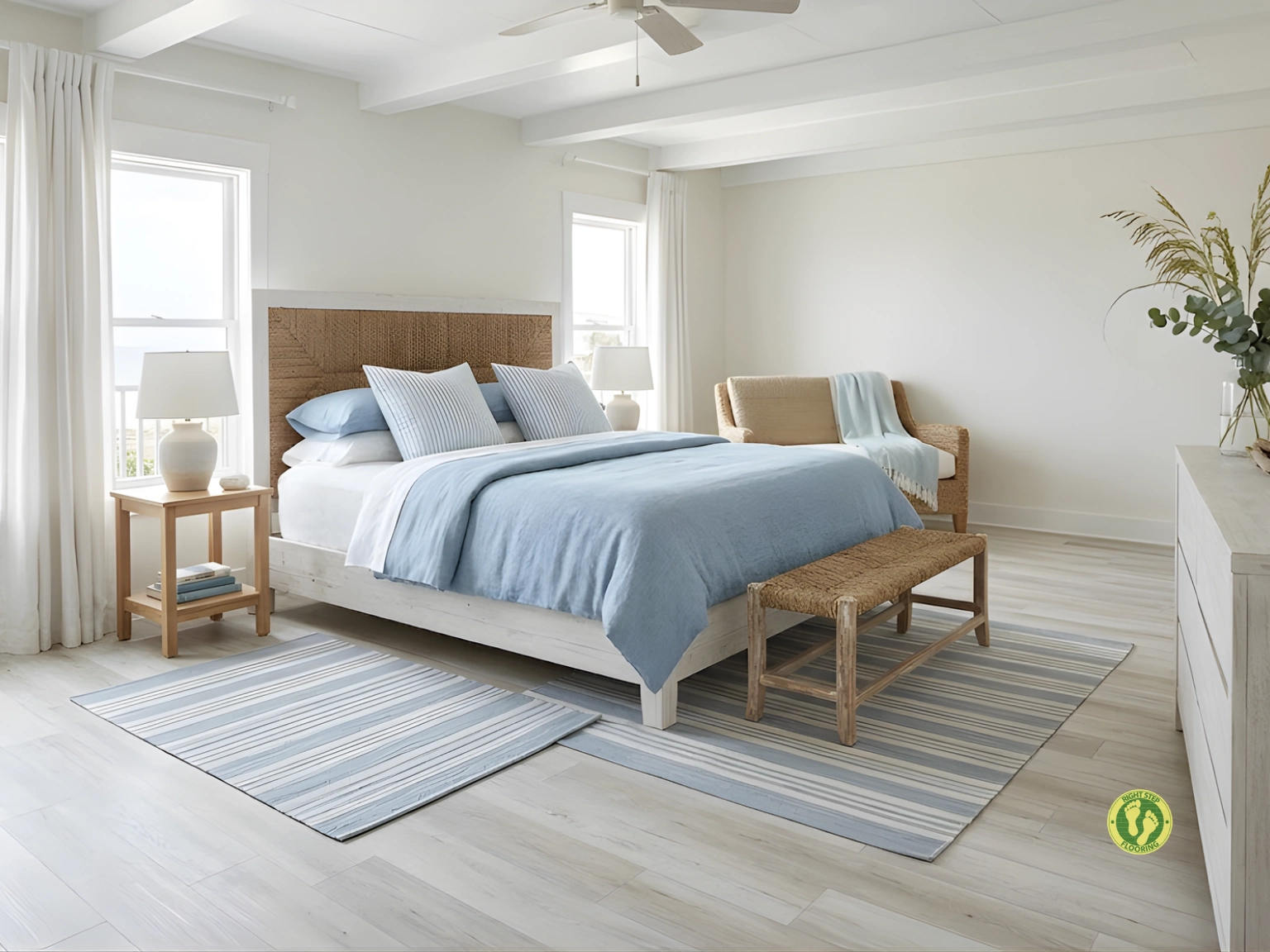
Image credit: @rightstepflooringnc.com
Amazon Find: Whitewashed Oak Vinyl Plank Samples
Whitewashed wood-look flooring samples help you compare pale beige and cool white undertones for bedrooms and coastal-inspired interiors.

13. Balance Matte Espresso Brown LVP With Light Dining Room Decor
Matte espresso brown flooring is a rich, dramatic alternative to the lighter LVP colors in this guide. While it won’t reflect as much light as pale oak, it can still work beautifully in a bright, spacious dining room. The deep brown shade creates contrast with white walls and light upholstery, giving the room a more grounded, elegant feeling.
Choose an espresso floor with subtle brown grain and a matte or low-sheen appearance. Pair it with a light wood dining table, cream upholstered chairs, and warm white walls. If the room has large windows, keep curtains light and avoid overly dark furniture on every side. A pale dining rug may soften the contrast, provided its backing is compatible with the flooring. In smaller or poorly lit rooms, consider a medium walnut alternative if espresso makes the space feel too enclosed.
Design tip: Dark espresso looks most airy when balanced with generous daylight, pale walls, and light furniture. Choose it for intentional contrast rather than expecting it to brighten the floor itself.

Image credit: @rightstepflooringnc.com
14. Try Soft Slate Gray Stone-Look LVP in a Modern Kitchen
Stone-look luxury vinyl offers an attractive alternative to wood-effect flooring. A soft slate gray finish can create a clean, modern kitchen foundation with subtle stone-inspired variation. It works especially well with flat-panel cabinets, simple hardware, and light countertops, offering a contemporary appearance without requiring actual natural stone.
Choose a light or medium slate gray finish rather than a very dark charcoal if you’re aiming for a brighter kitchen. Some products are sold as luxury vinyl tile rather than long planks, so check the format before buying. Pair the floor with white or pale wood cabinetry, a light backsplash, and simple pendant lighting. A warm oak dining table or wooden kitchen stools can keep the gray finish from feeling too cool. Confirm the selected product is approved for kitchen installation and follow the manufacturer’s subfloor and moisture requirements.
Styling tip: Let the stone-look flooring provide quiet texture. Pair it with clean cabinetry and a limited selection of warm natural accessories for a balanced modern kitchen.
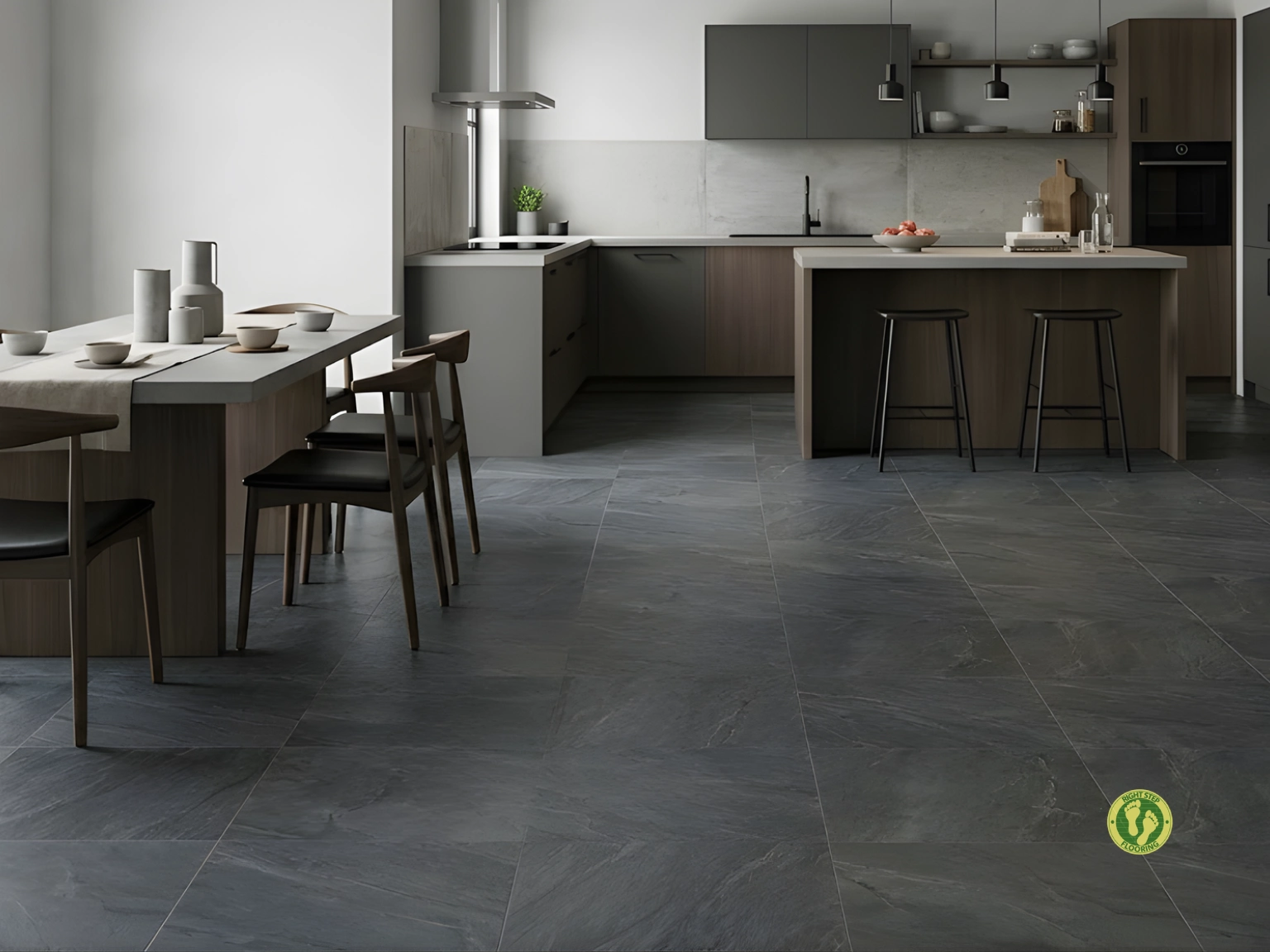
Image credit: @rightstepflooringnc.com
15. Finish With Light Wire-Brushed Ash LVP for a Japandi-Inspired Space
Light wire-brushed ash LVP is a beautiful choice for Japandi-inspired interiors, where simplicity, natural textures, and restrained colors are central to the look. The pale ash finish provides a quiet foundation, while subtle grain and surface texture make the flooring feel less flat than a uniform color. This works especially well in uncluttered living rooms, bedrooms, and open-plan homes.
Choose a light ash shade with gentle gray-beige undertones and a realistic textured appearance. Pair it with cream walls, low-profile furniture, simple wooden tables, and natural textiles. Black accents can provide contrast, but use them sparingly so the room remains soft and open. Keep the floor mostly visible and use one appropriately sized rug rather than several small rugs. If the flooring is embossed or textured, check its cleaning requirements and the actual surface characteristics before purchasing.
Styling tip: Combine ash flooring with natural linen, warm wood, and a small amount of greenery. This creates a calm, welcoming interior without needing a large collection of decorative accessories.

Image credit: @rightstepflooringnc.com
Best LVP Flooring Colors for Different Rooms
The same flooring shade can look different depending on the room’s size, natural light, cabinetry, and furniture. Choose a tone that complements the space rather than assuming one color is best for your entire home.
| Room | Suggested LVP Colors | Styling Approach |
|---|---|---|
| Small Living Room | Light Oak, Pale Almond | Cream Walls and Simple Furniture |
| Open-Plan Living Area | Greige, Natural Light Oak | Consistent Flooring Where Approved |
| Farmhouse Kitchen | Honey Oak, Weathered Gray | White Cabinets and Wood Accents |
| Coastal Bedroom | Whitewashed Oak, Light Ash | Linen and Soft Blue Accessories |
| Modern Entryway | Natural Oak, Walnut | Light Walls and Minimal Furniture |
| Formal Dining Room | Taupe, Espresso | Contrast Dark Flooring With Light Decor |
| Japandi Living Room | Wire-Brushed Ash | Natural Wood and Restrained Textures |
| Compact Hallway | Pale Almond, Urban Ash | Simple Trim and Good Lighting |
How to Match LVP Flooring Colors With Walls and Cabinets
The undertone of your flooring can make a noticeable difference in how the entire room looks. A pale gray plank with blue undertones may appear cool beside warm cream cabinets, while a golden oak floor can look overly yellow against some bright white walls. Matching undertones doesn’t mean everything needs to be identical, but the colors should feel intentionally connected.
- Warm white cabinets: Try pale almond, natural oak, parchment beige, or soft taupe flooring.
- Crisp white cabinets: Consider ash gray, light oak, whitewashed oak, or balanced greige.
- Sage green cabinets: Pair with light natural oak, warm beige, or subtle honey tones.
- Navy blue cabinets: Use pale oak, soft taupe, or a light ash finish for contrast.
- Natural wood cabinetry: Compare samples carefully and choose either a compatible undertone or a deliberate contrast in depth.
- Dark furniture: Light oak, pale almond, and whitewashed finishes can create a brighter visual balance.
- Cream or beige walls: Warm greige and neutral oak often create a cohesive foundation.
For the most reliable comparison, place a flooring sample flat on the floor beside the actual cabinets or baseboards. Hold paint samples vertically against the wall. Looking at both materials in their intended orientation makes the color relationship easier to judge.
What to Check Before Buying Luxury Vinyl Plank Flooring
Beautiful flooring should also suit the way your household uses each room. Before buying, compare the technical details of your shortlisted products rather than choosing solely by appearance.
- Wear layer: Review the manufacturer’s wear-layer specifications and warranty for your expected household traffic.
- Plank construction: Compare the available rigid-core and flexible LVP options and their installation requirements.
- Water resistance: Check where the specific flooring is approved for use. Waterproof claims do not mean moisture cannot affect the subfloor or surrounding structure.
- Surface finish: Compare matte, textured, and low-sheen finishes in person.
- Slip performance: Check product information for the intended room, particularly near entrances, kitchens, and other areas exposed to moisture.
- Subfloor requirements: Verify flatness, dryness, structural condition, and approved underlayment before installation.
- Plank dimensions: Compare width and length to see how the design relates to the room’s proportions.
- Transitions and expansion: Follow the manufacturer’s specifications for movement gaps, transitions, and maximum installation dimensions.
- Indoor air emissions: Look for relevant third-party low-emission certifications and current product documentation where important to your household.
- Cleaning instructions: Check the manufacturer’s approved cleaning products, furniture protection, and rug-backing guidance.
LVP Flooring Shopping Checklist
Use this checklist before ordering flooring materials. The supplies you need will depend on whether your selected product uses a click-lock or glue-down installation method and what the manufacturer recommends.
| Item | Best Use | Priority |
|---|---|---|
| LVP Flooring Samples | Comparing Color and Texture | Essential |
| Measuring Tape | Calculating Room Dimensions | Essential |
| Compatible LVP Planks | Main Flooring Installation | Essential |
| Moisture Testing Materials | Checking Subfloor Conditions | As Required by Manufacturer |
| Approved Underlayment | Specified Floor Assembly | Only if Required or Approved |
| Installation Spacers | Required Movement Gaps | Method-Specific |
| Compatible Cutting Tools | Trimming Flooring Pieces | Method-Specific |
| Transition Moldings | Doorways and Flooring Changes | As Needed |
| Furniture Floor Protectors | Reducing Scratches and Wear | Useful Basic |
| LVP-Compatible Cleaning Supplies | Routine Maintenance | Essential After Installation |
Common LVP Flooring Color Mistakes to Avoid
Choosing Flooring From Online Photos Alone
Flooring colors can look different depending on photography, screen settings, and room lighting. Always use physical samples before ordering a large quantity. Place them beside your existing cabinets, walls, and furniture, and view them at several times of day.
Ignoring Warm and Cool Undertones
A cool gray floor may clash with strongly yellow cabinets, while honey oak can look too warm beside blue-gray walls. Compare undertones together rather than selecting each finish separately. Neutral flooring doesn’t always mean it will coordinate with every paint color.
Assuming Lighter Flooring Is Always Better
Pale flooring can create a bright appearance, but the lightest possible shade isn’t necessarily right for your room. Consider your furniture, daylight, maintenance preferences, and desired contrast. A light taupe or medium natural oak may feel warmer and more balanced than an almost white floor.
Choosing an Extremely Busy Wood Grain
Planks with very strong knots, contrasting grain, or heavy distressing can make a small floor look visually busy. If you want an airy appearance, consider subtle natural variation and a consistent overall tone. Use a larger sample area to see how the pattern repeats across several planks.
Installing LVP Over a Problem Subfloor
Luxury vinyl flooring requires a subfloor that meets the manufacturer’s conditions for flatness, moisture, cleanliness, and structural soundness. Don’t install new flooring over active water damage or unsuitable surfaces. Correct the underlying problems first, and seek professional assessment when necessary.
Assuming All Vinyl Flooring Is Completely Waterproof
Some LVP products are marketed as waterproof, but water can still reach edges, seams, the subfloor, or surrounding building materials. Check the specific manufacturer’s claims and installation requirements. Promptly clean up spills and don’t treat ordinary flooring as a substitute for waterproofing in wet areas.
Using the Wrong Cleaner or Rug Backing
Harsh cleaners, abrasive tools, excess water, or incompatible rug backings may damage some vinyl flooring products. Follow the manufacturer’s maintenance instructions and use suitable furniture protectors. Test any new cleaning product or accessory in an inconspicuous area when recommended.
Frequently Asked Questions
1. What LVP Flooring Color Makes a Room Look Bigger?
Light oak, pale almond, whitewashed wood, and light greige can help a room feel brighter and more visually open. A consistent flooring color across connected areas may also reduce visual breaks. However, furniture layout, wall colors, natural light, and plank scale all contribute to how spacious a room feels.
2. Is Light Oak or Greige LVP Better for a Modern Home?
Both can work beautifully. Light oak provides a natural, slightly warmer appearance that suits Scandinavian, coastal, and modern farmhouse interiors. Greige offers a balanced gray-beige foundation that can coordinate with many contemporary finishes. Choose based on your room’s lighting and existing undertones rather than style labels alone.
3. Does Light-Colored LVP Flooring Show Dirt Easily?
Visibility depends on the exact color, grain pattern, surface texture, and type of debris. Very uniform pale floors may show certain marks, while subtle wood-look variation can make small particles less visually obvious. Routine sweeping and manufacturer-approved cleaning remain important regardless of flooring color.
4. Can You Use the Same LVP Flooring Throughout an Entire House?
Using one flooring finish across connected rooms can create a cohesive appearance, but you must follow the product’s installation specifications. Some floor plans require transitions, movement gaps, or different materials in particular rooms. Verify the flooring is approved for each location and the total installation dimensions.
5. What Is the Best LVP Flooring Color for White Kitchen Cabinets?
Natural light oak, pale almond, soft taupe, and balanced greige are versatile options for white kitchens. Honey oak can create a warmer appearance, while ash gray offers a contemporary contrast. Compare flooring samples directly against the cabinet finish, since white paint can have warm, cool, or neutral undertones.
Recommended Finds on Amazon
Before ordering flooring for an entire room, compare samples and check the technical requirements of your preferred product. These supplies can help with planning and maintaining your new floor.
- Light Oak LVP Flooring Samples: Compare pale wood tones and realistic grain patterns under your actual room lighting.
- LVP Flooring Installation Spacers: Help maintain manufacturer-specified movement gaps during compatible installations.
- Vinyl-Compatible Furniture Protectors: Reduce contact damage from furniture legs when selected and used according to the flooring manufacturer’s guidance.
Final Thoughts
These 15 bright and airy LVP flooring colors offer inspiration for creating a more comfortable and attractive home. Soft greige, pale almond, light natural oak, whitewashed wood, and wire-brushed ash are especially useful when you want a fresh, open appearance. Richer shades such as walnut and espresso can also work beautifully when balanced with light walls, furniture, and plenty of natural daylight.
Start by choosing three flooring shades that suit your room’s style, then compare real samples beside your walls and cabinets. Review each product’s installation and maintenance requirements before making a final decision. The best LVP flooring color is one that looks beautiful in your own lighting, coordinates with your furniture, and supports the way you use your home every day.