

Kitchen cabinets can hold an impressive amount of stuff, but without a clear system, even a large cabinet can feel frustratingly small.
The problem is often not the amount of storage you have. It is unused vertical space, deep shelves, awkward lids, loose spices, mixed categories, and items that disappear behind each other.
These genius ways to organize cabinets focus on making everything easier to see, reach, and return to its proper place. From pull-out shelves and turntables to labels, stackable risers, lid storage, and vertical dividers, these ideas can help you get far more from the cabinets you already have.
As an Amazon Associate, I earn from qualifying purchases. This article contains affiliate links, which may earn us a commission at no extra cost to you.
Quick Cabinet Organization Formula
- Group like with like: baking, breakfast, snacks, mugs, cookware, and spices.
- Use cabinet height: add risers, hooks, or hanging storage.
- Make deep storage pull out: sliding shelves are easier than reaching into the back.
- Store flat items vertically: lids, trays, boards, and pans are often easier to file.
- Label categories: especially in shared kitchens.
- Keep daily items easiest to reach: occasional-use pieces can go higher or deeper.
Organize Cabinets Before Buying Organizers
Before ordering baskets and bins, empty one cabinet at a time and look at what you actually store there.
Remove duplicates, expired food, broken containers, and items you never use. Then group what remains by function.
| Cabinet Problem | Best Fix | Why It Helps |
|---|---|---|
| Items disappear in the back | Pull-out shelf | Brings everything forward |
| Too much unused height | Shelf riser | Creates another storage level |
| Spices are difficult to find | Turntable or spice drawers | Improves visibility |
| Lids fall everywhere | Vertical lid organizer | Keeps them separated |
| Family members put things anywhere | Labels and zones | Makes the system obvious |
20 Genius Ways to Organize Cabinets
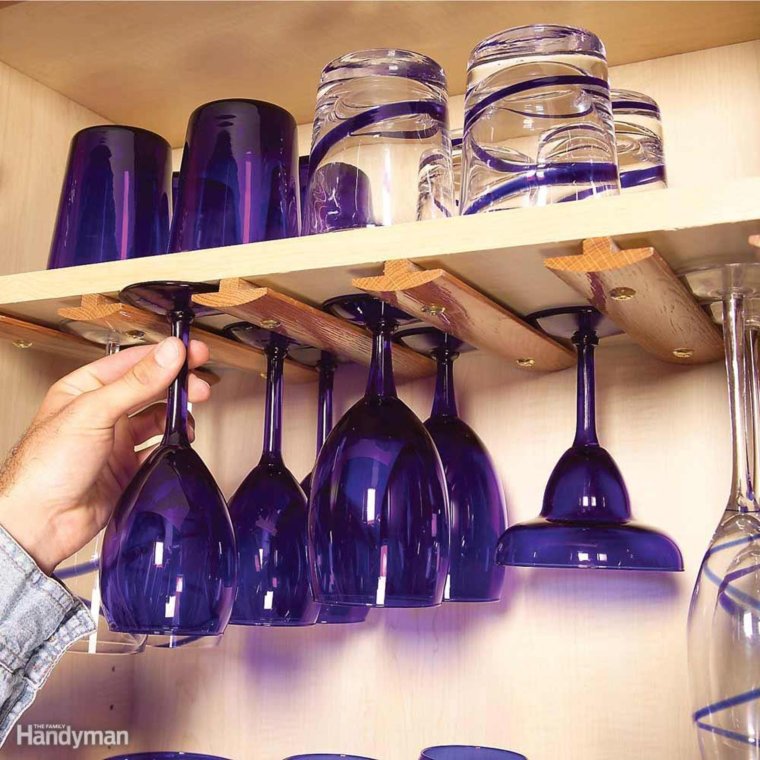
1. Hang Stemware Under a Cabinet Shelf
Stemware can occupy a lot of shelf space because glasses are wide at both the bowl and base.
A properly installed stemware rail or T-molding-style system allows wine glasses to hang upside down beneath a cabinet shelf.
This uses the otherwise empty area above items stored on the lower part of the shelf.
It can work especially well in cabinets used for glassware and entertaining pieces.
Safety check: make sure the rail is securely mounted and that each glass base fits the track correctly before loading it fully.
2. Label Containers and Cabinet Zones
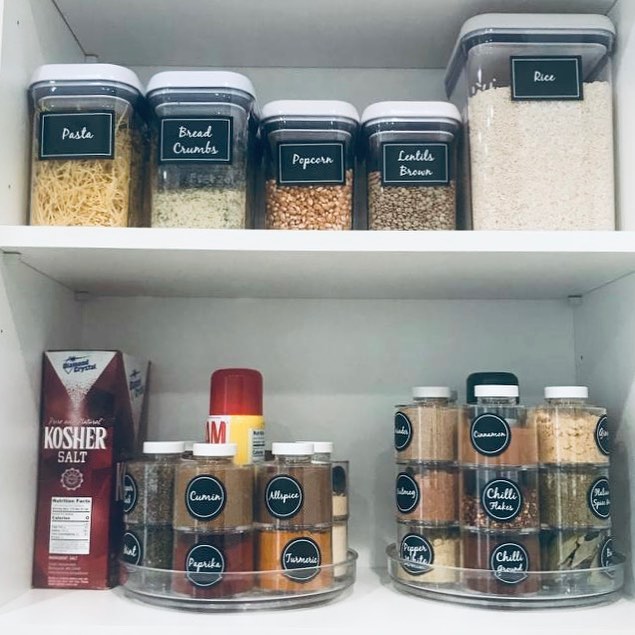
Labels are not only for creating a pretty pantry. They help everyone in the home understand where things belong.
Label bins for snacks, baking, breakfast, tea, spices, or extra supplies instead of relying on memory.
You can also label shelves rather than every container if you prefer a simpler system.
Maintenance advantage: a labeled kitchen is much easier to reset because there is less decision-making when putting groceries away.
3. Put a Measurement Reference Inside a Cabinet Door
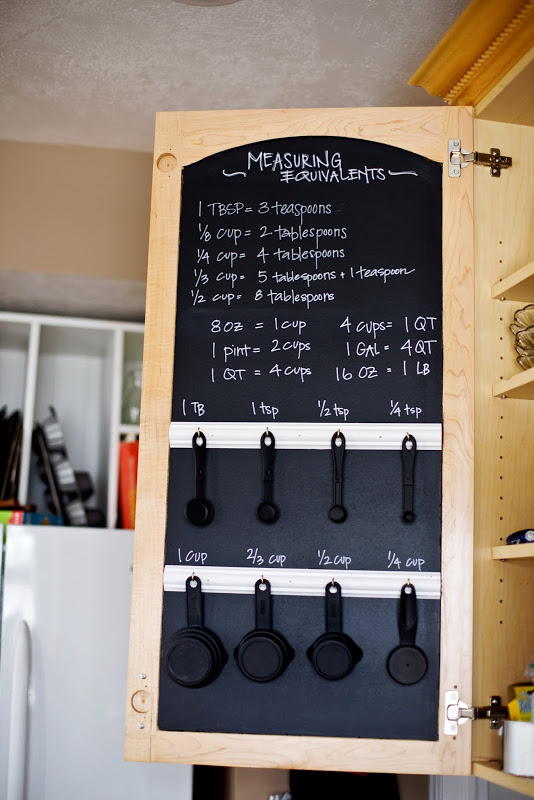
The inside of a cabinet door can become useful reference space instead of remaining completely empty.
Add a removable measurement chart, small chalkboard panel, or printed conversion guide for tablespoons, cups, ounces, and other measurements you regularly use.
You can also mount lightweight measuring spoons nearby if the cabinet has enough clearance.
Best location: place the chart inside the cabinet nearest your main baking or food-preparation zone.
4. Decant Dry Ingredients Into Clear Jars
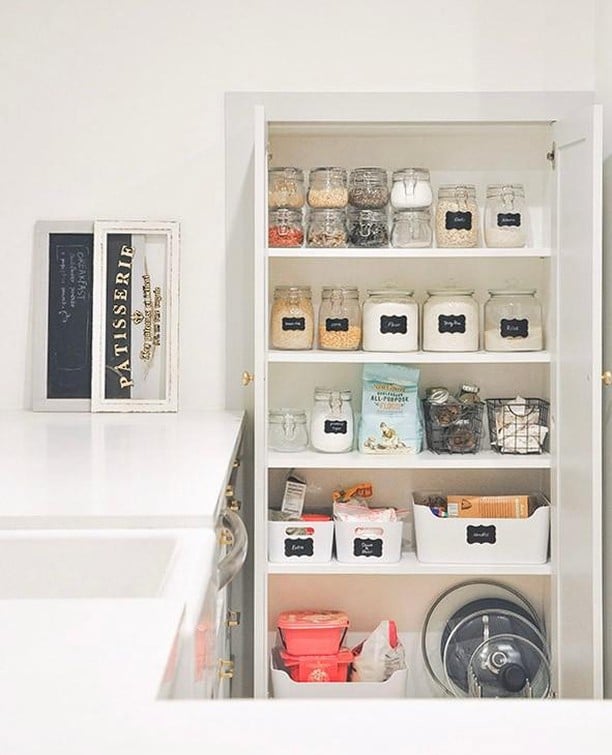
Half-empty packets and bags can make cabinet shelves difficult to stack and even harder to scan.
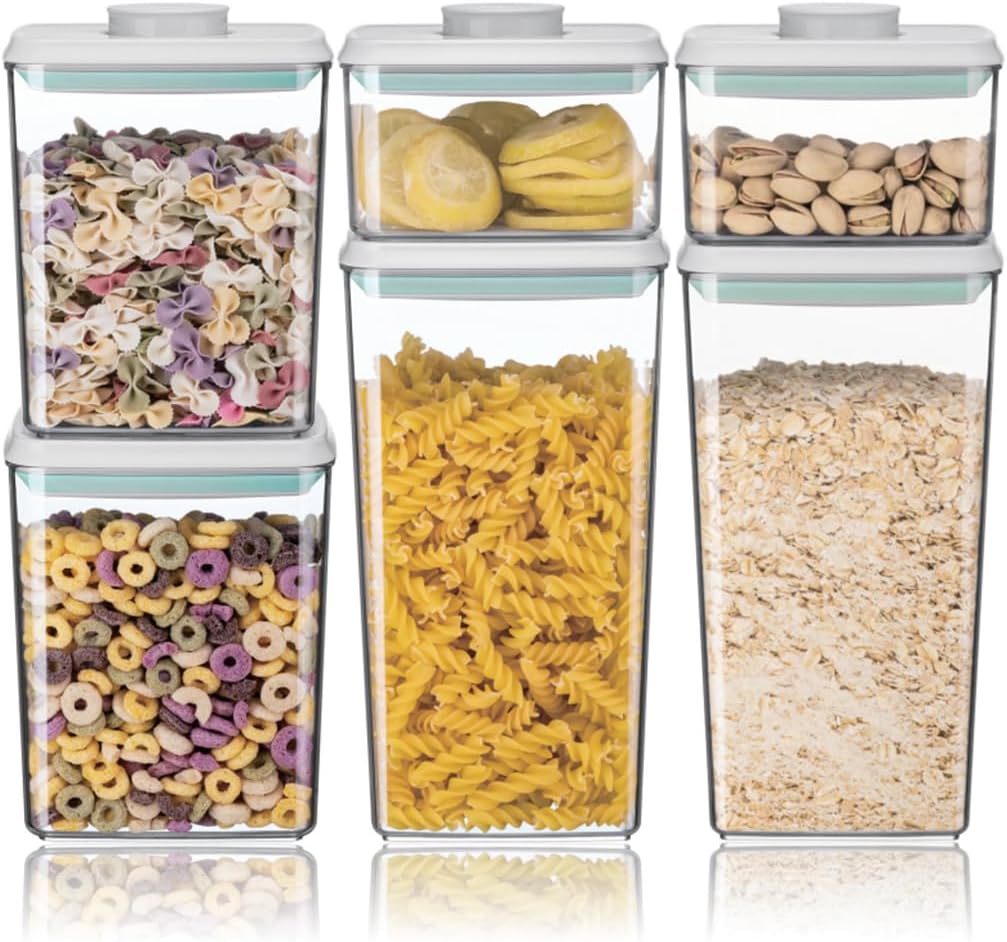
Clear jars or food-storage containers give flour, rice, pasta, oats, sugar, and other dry foods defined shapes that are easier to arrange.
Transparent sides also let you see how much is left without opening every container.
Food-storage tip: use containers appropriate for the ingredient and retain cooking instructions, expiration information, or allergen details when needed.
Amazon Find: Airtight Pantry Container Set
Stackable clear containers can make bags of pasta, rice, cereal, flour, and baking supplies easier to arrange inside cabinets.
For a larger food-storage system, these space-saving pantry organization ideas show how to combine containers, bins, risers, and labels.
5. Install Pull-Out Shelves in Deep Cabinets
Deep lower cabinets often look spacious until you have to reach something stored at the very back.
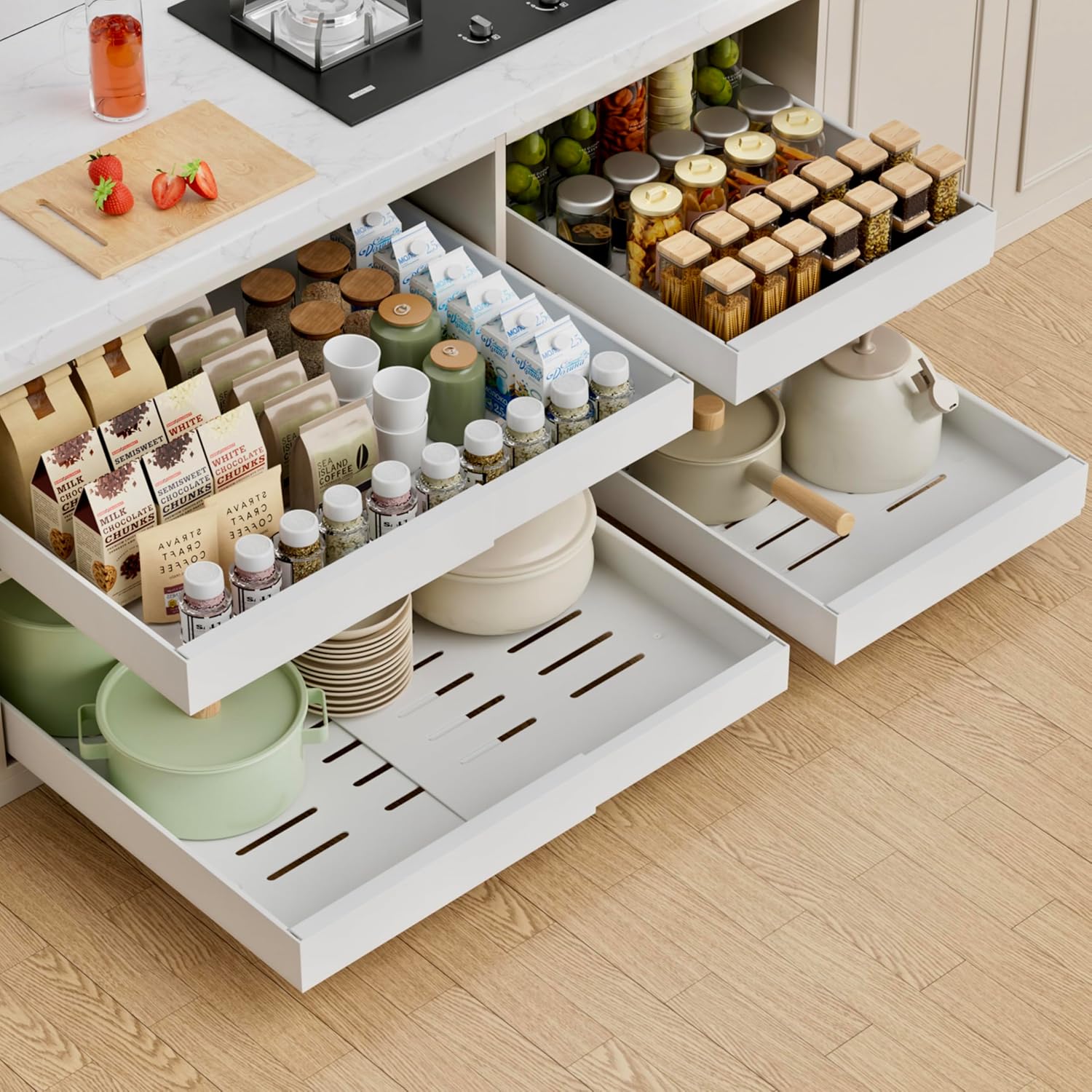
Pull-out shelves let the contents move toward you instead of forcing you to unload everything in front first.
They work especially well for pots, small appliances, pantry items, mixing bowls, and food-storage containers.
Measure the interior cabinet width, hinges, plumbing, and door opening before choosing a slide-out system.
Biggest benefit: deep cabinets become usable from front to back rather than only in the first few inches.
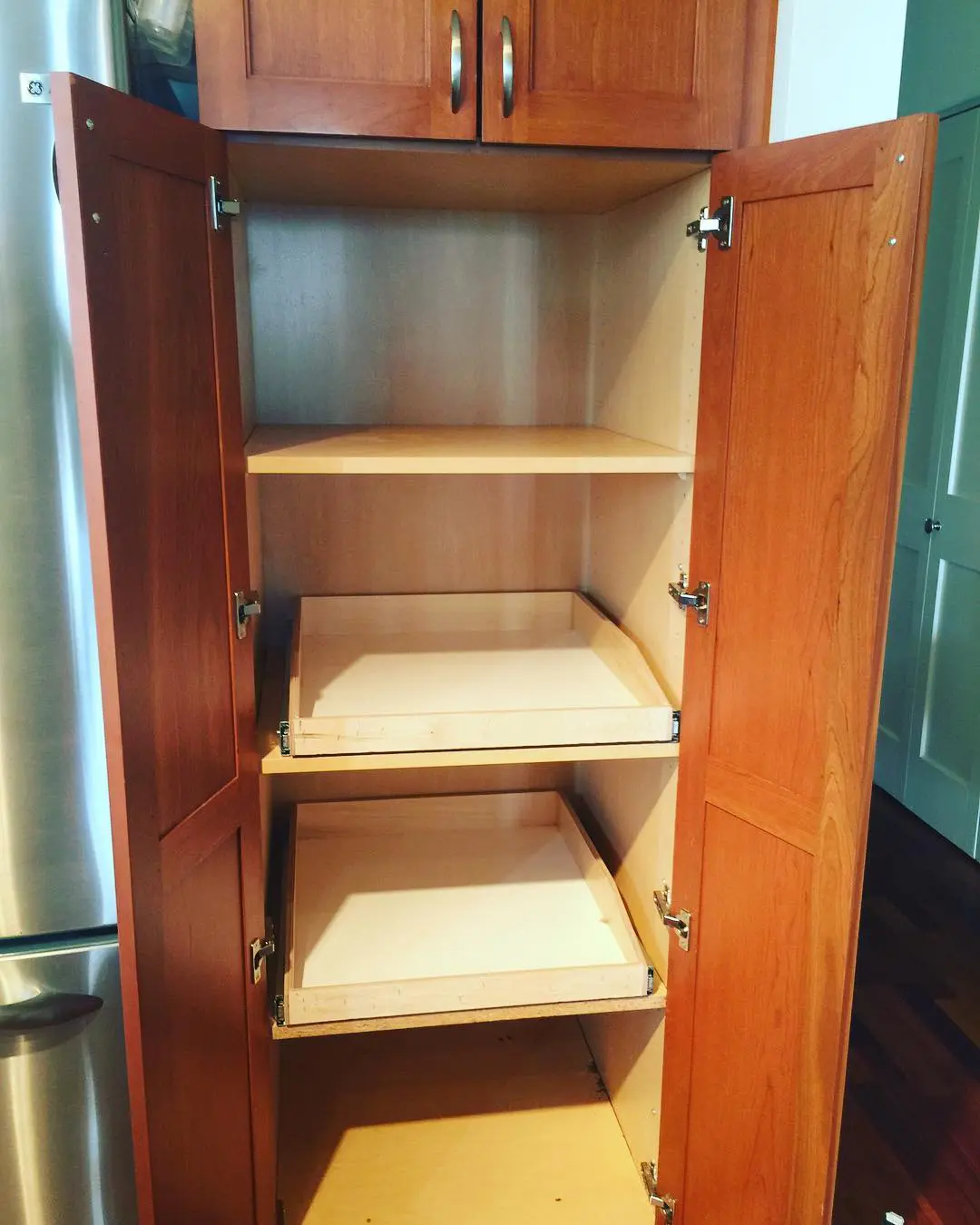
Amazon Find: Pull-Out Cabinet Organizer
A sliding organizer can make deep lower cabinets easier to access without replacing the existing cabinetry.
6. Divide Drawers With Clear Organizers
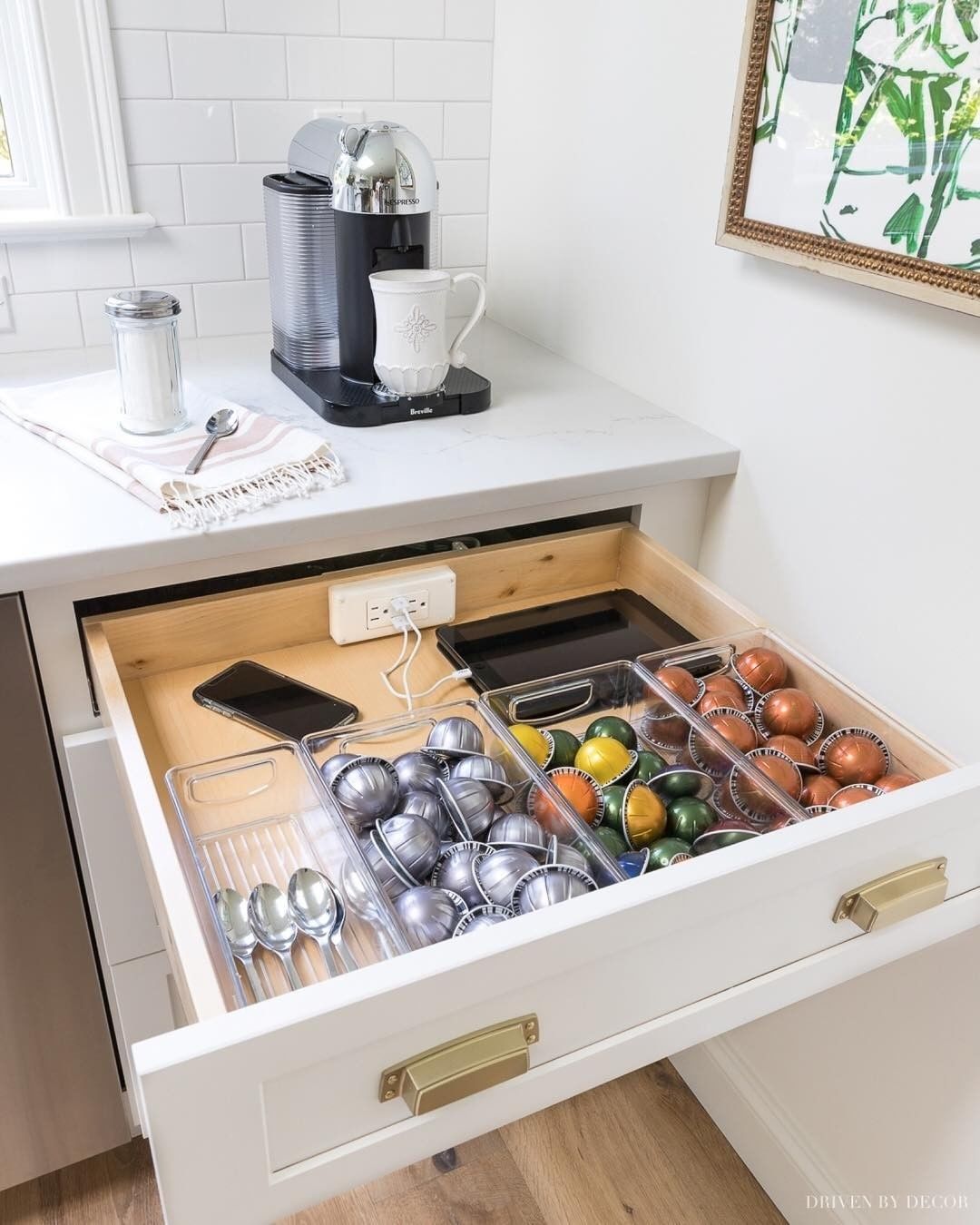
Wide drawers quickly become messy when every spoon, coffee pod, clip, and gadget can slide from one side to another.
Small clear organizers divide the drawer into defined categories without hiding the contents.
Use separate sections for teaspoons, measuring tools, coffee accessories, food clips, or other small items.
Before buying: measure both the inside width and usable height of the drawer so the organizers do not interfere with closing.
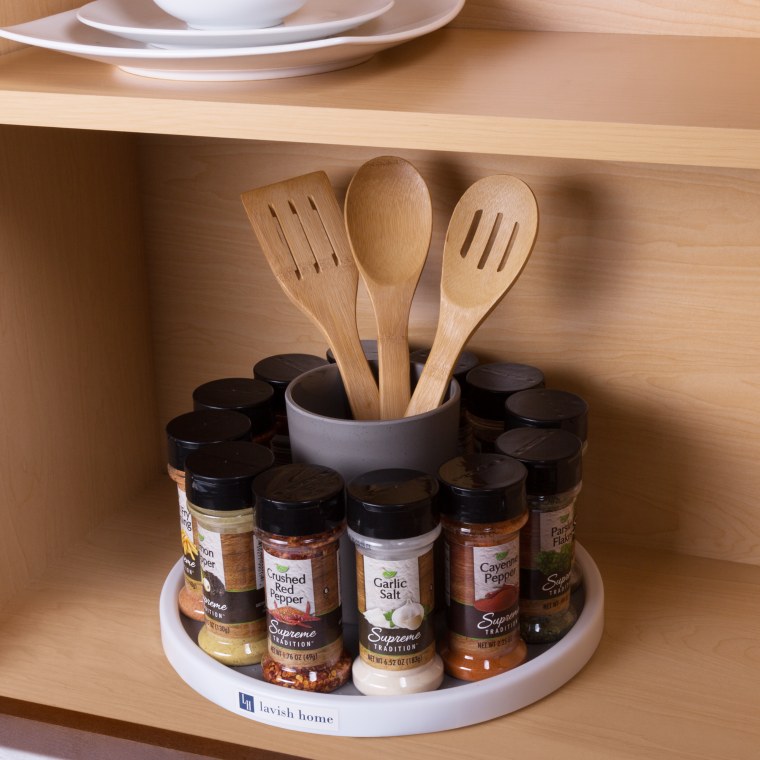
7. Put a Lazy Susan in a Spice or Sauce Cabinet
Small jars become frustrating when the ones you need are hidden behind two rows of other ingredients.
A turntable lets you rotate spices, sauces, oils, or small jars toward the front rather than reaching around everything.
It is especially useful in deeper cabinets and awkward corners.
Organization tip: do not overload the turntable. Leave enough space between bottles that they can rotate without catching each other.
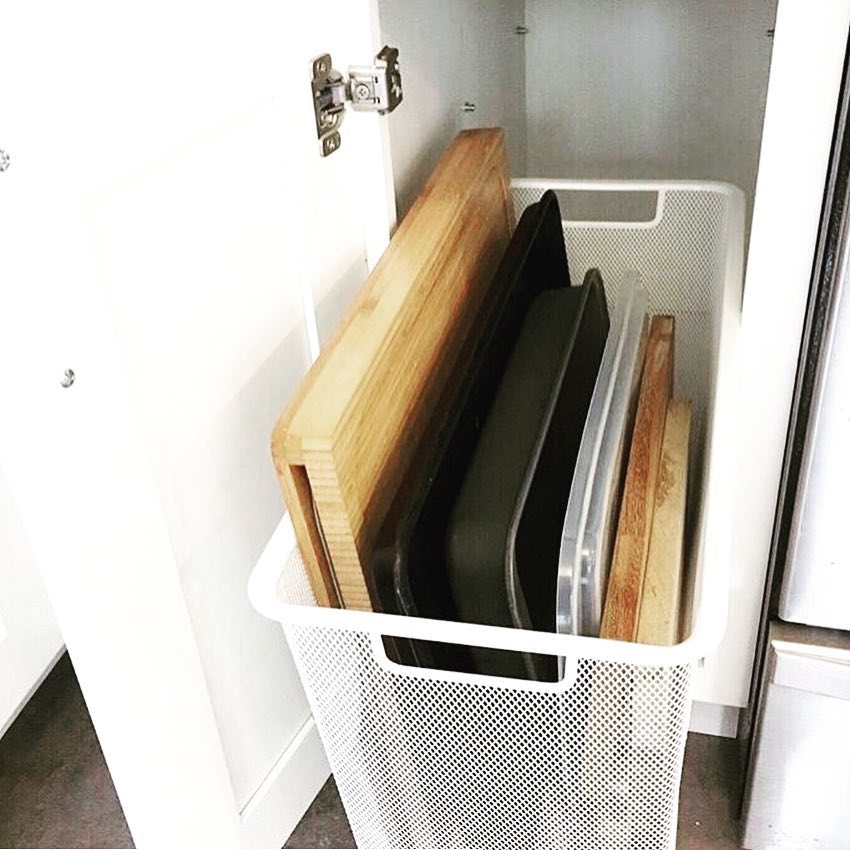
8. Use Wire Baskets for Cutting Boards and Trays
Large flat kitchen items are often difficult to stack because you have to remove everything above them to reach the piece underneath.
A sturdy wire basket can hold cutting boards, trays, baking sheets, and similar pieces vertically.
Instead of creating one heavy horizontal stack, each piece can slide out individually.
Best cabinet: use this inside a deep lower cabinet with enough height for the boards to stand safely.
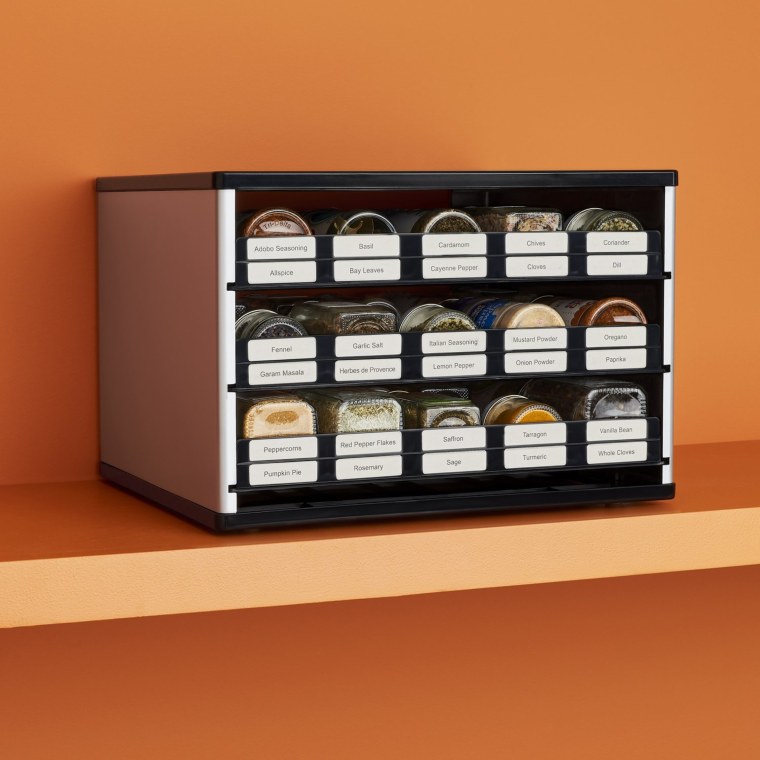
9. Give Spices Their Own Pull-Out Drawers
If you have a large spice collection, storing everything on one shelf can make labels impossible to read.
A multi-level spice organizer with small pull-out sections separates the collection into smaller categories.
Group baking spices, savory seasonings, blends, and frequently used basics separately.
Label smartly: label the front or top of jars based on how they are positioned in the organizer.
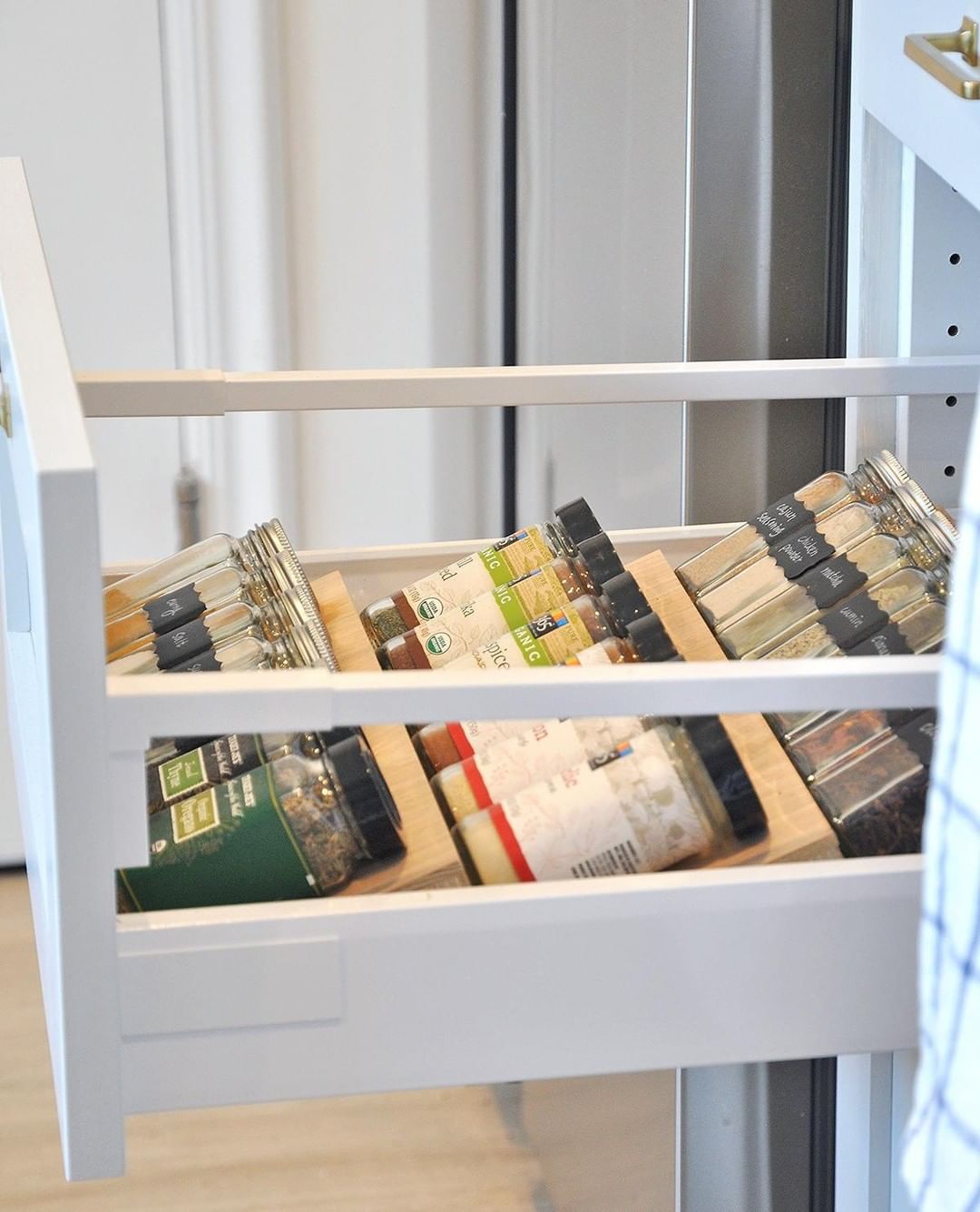
10. Build a Slanted DIY Spice Drawer
If you have drawer space available, spices can be easier to scan horizontally than vertically.
Use wood strips or a purpose-made insert to angle each row slightly so labels remain visible when the drawer opens.
Arrange frequently used spices in the front rows and occasional seasonings farther back.
Designer benefit: a spice drawer keeps the visual clutter completely hidden while making the whole collection visible at once.
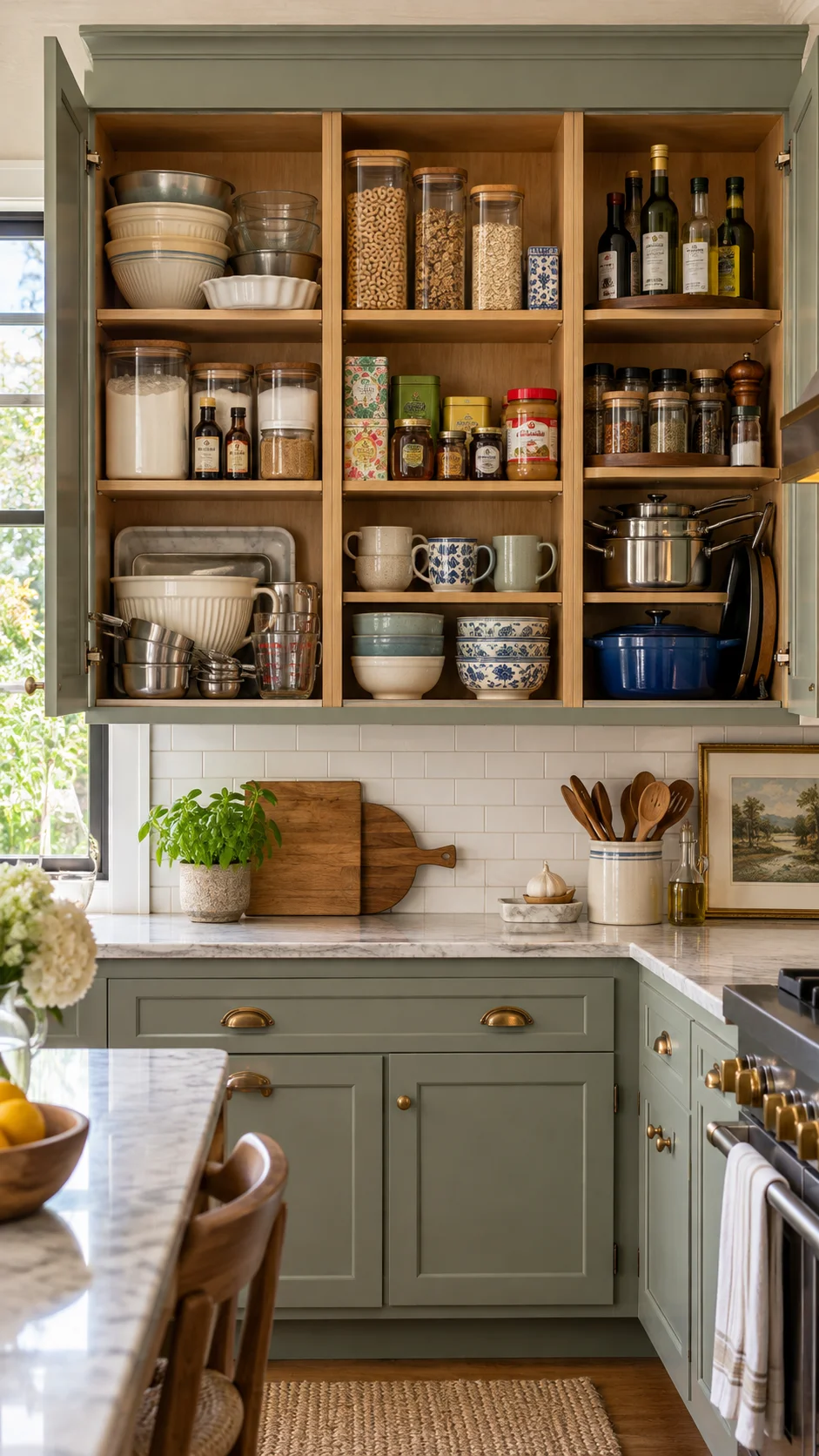
11. Group Cabinet Contents by Activity
One of the simplest cabinet systems does not require buying anything at all.
Instead of placing items wherever they fit, group them by how you actually use the kitchen.
Create a baking cabinet with bowls, measuring cups, extracts, and baking ingredients. Create a breakfast zone with cereal, oats, spreads, and tea.
When related items live together, you spend less time walking between cabinets while cooking.
Easy starting point: create just three categories—cooking, baking, and breakfast—and refine them later.
12. Double Shelf Space With Stackable Risers
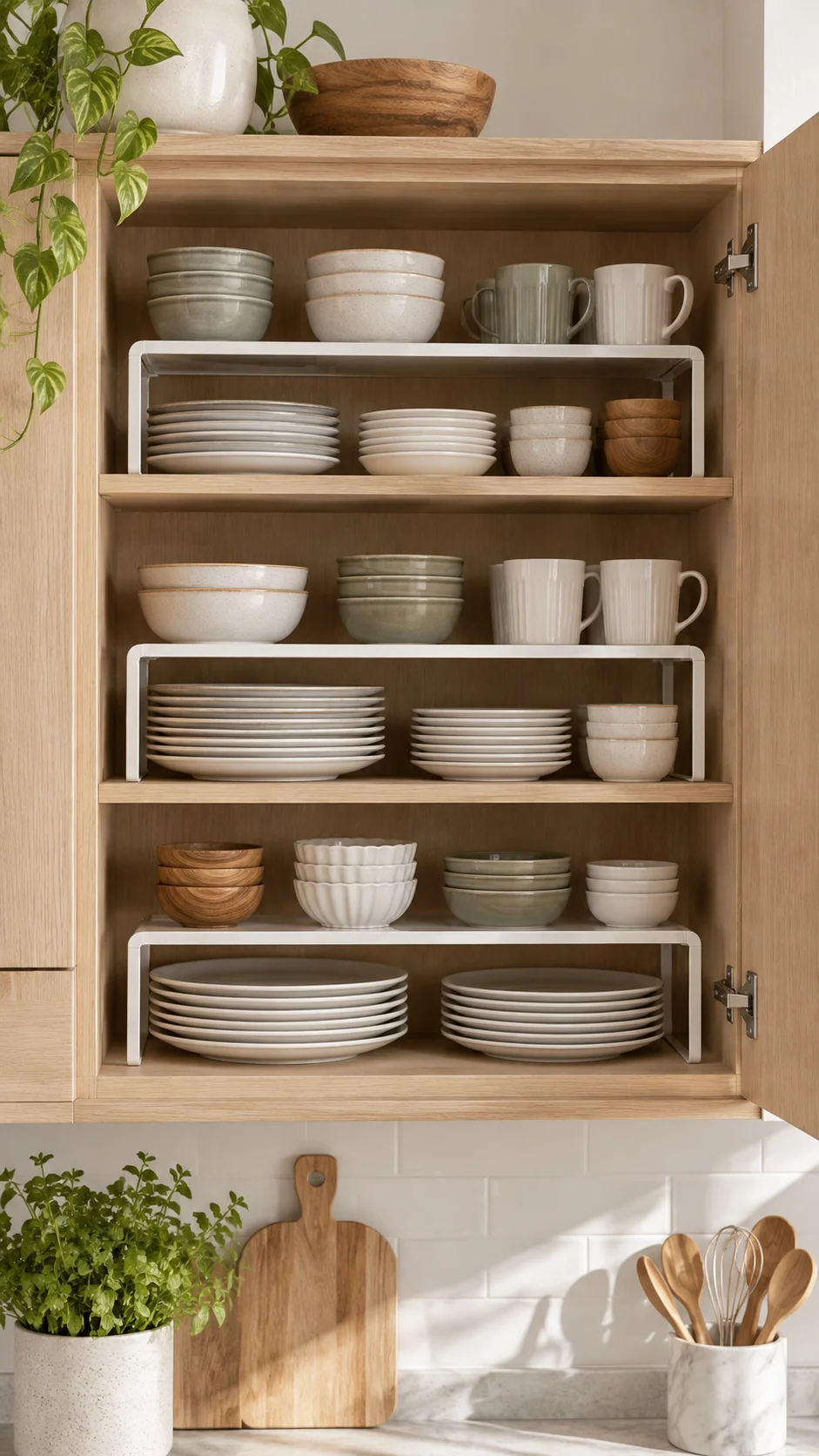
A tall cabinet shelf can waste a surprising amount of vertical space when short bowls and plates sit only on the bottom.
Shelf risers create a second level so plates can sit below while bowls, mugs, or smaller dishes sit above.
This is one of the easiest ways to increase capacity without drilling or changing the cabinet itself.
Safety tip: put heavier pieces on the lower level and make sure the riser sits flat and stable.
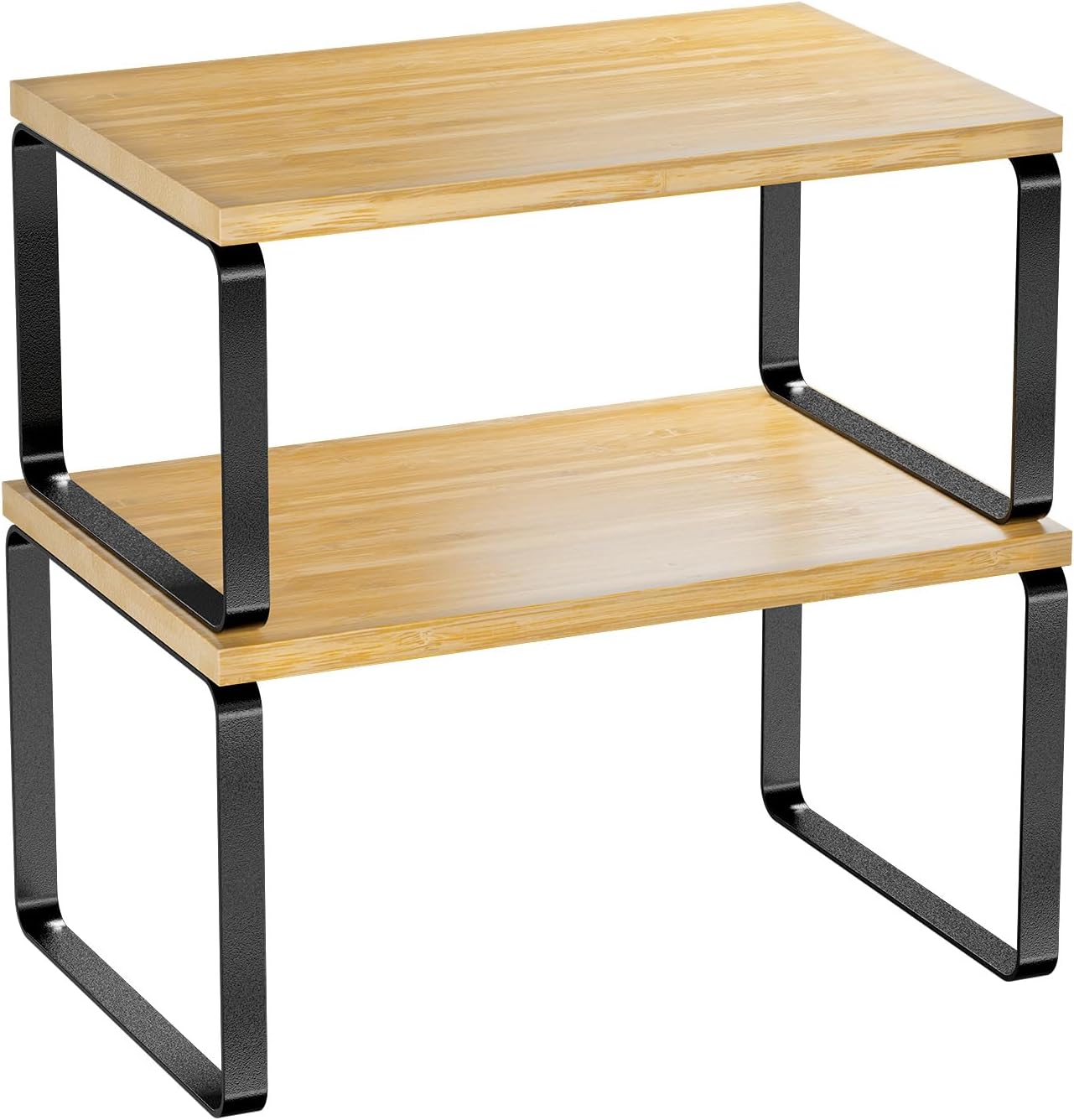
Amazon Find: Stackable Cabinet Shelf Risers
Shelf risers can create a second storage level for plates, bowls, mugs, jars, and other short items.
13. Make a Simple Organizer for Food-Container Lids
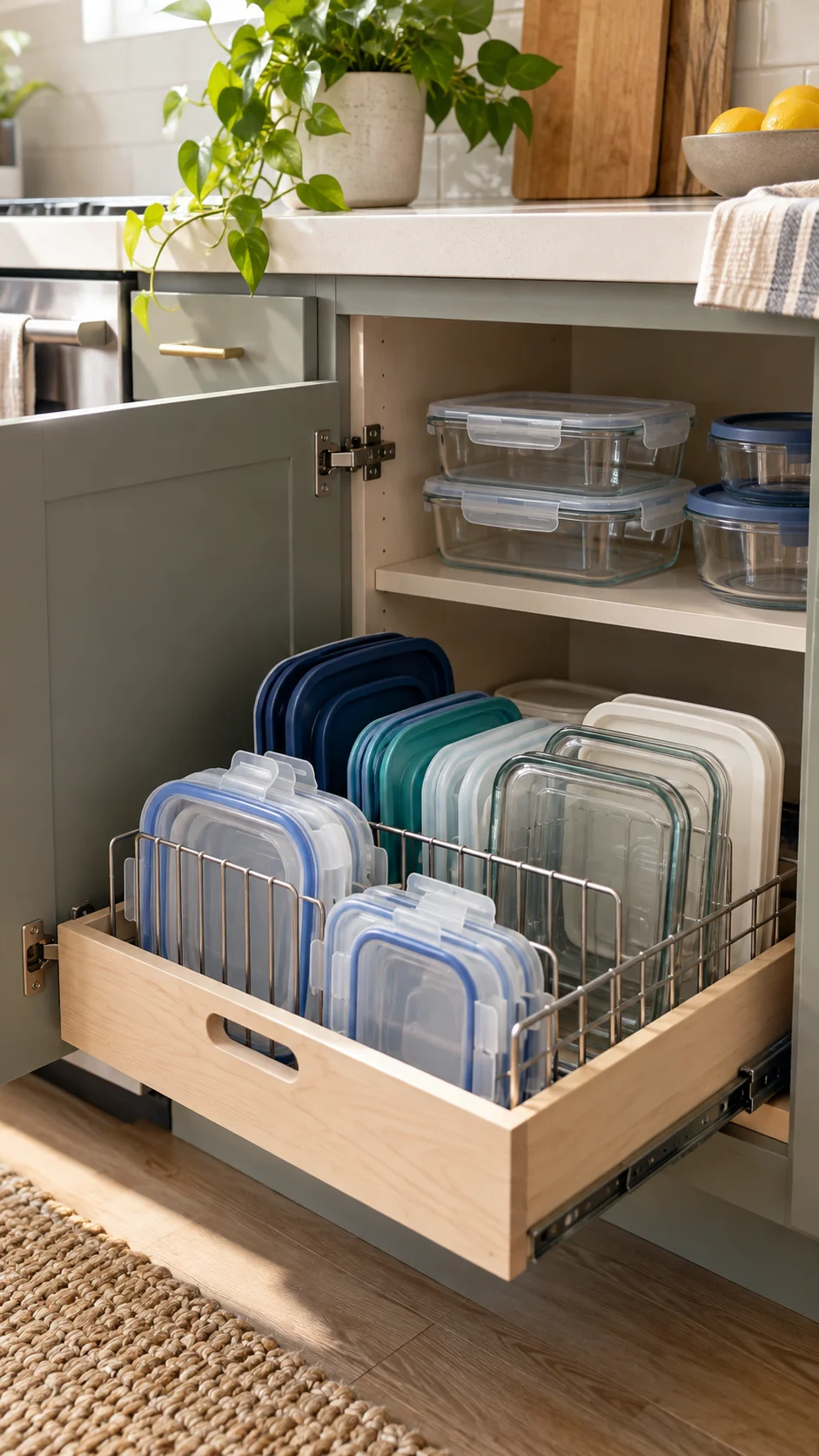
Food-storage lids are difficult to organize because they come in several shapes but take up almost no thickness individually.
A cooling rack placed inside a shallow bin can create individual slots for lids.
You can then pull out the entire organizer when you need to find a matching lid.
Helpful step: discard orphan lids and containers before organizing so you are not dedicating storage space to pieces that no longer match.
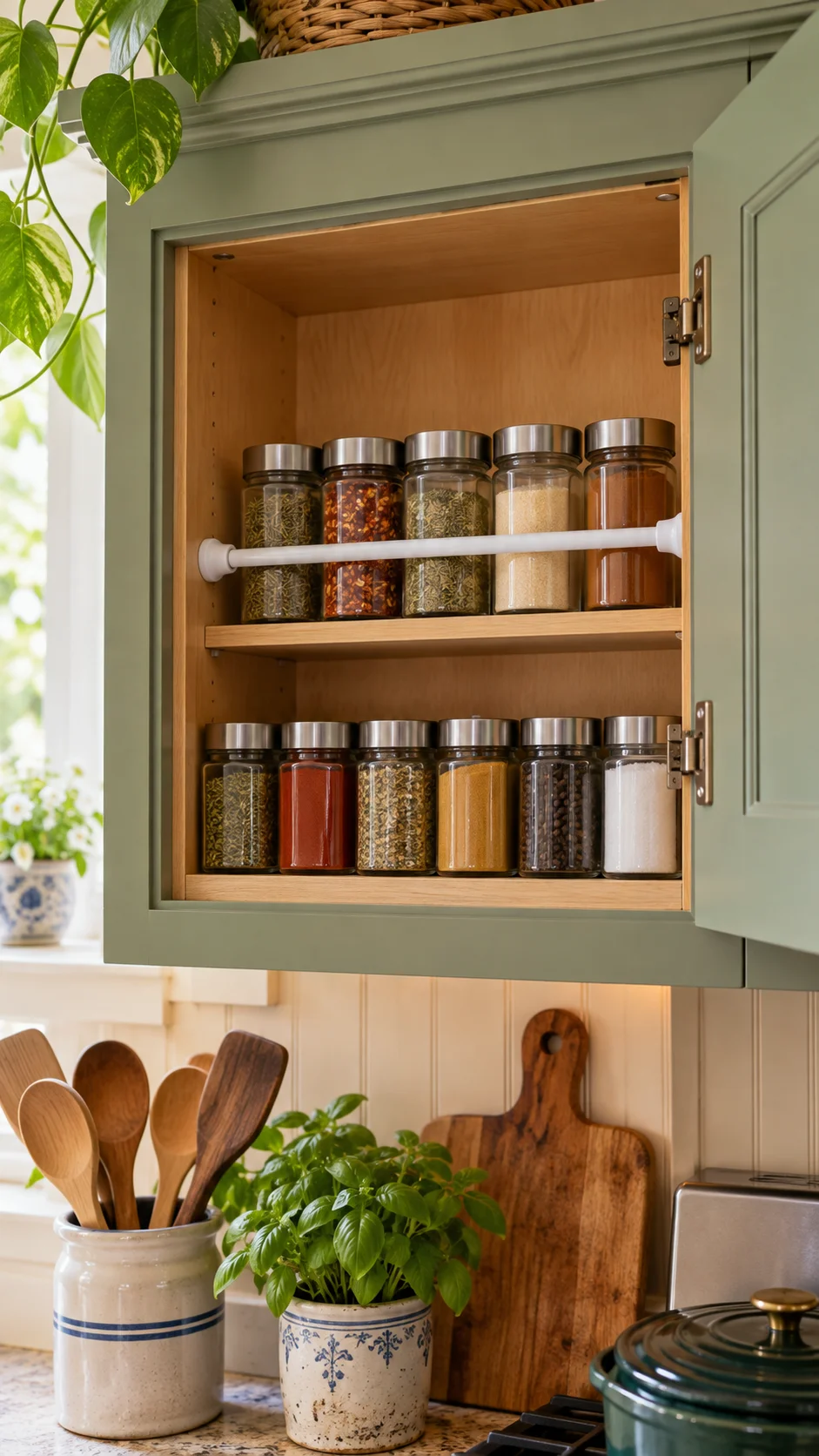
14. Add a Tension Rod to Create a Mini Spice Shelf
If there is unused space above short spice containers, a small tension rod can create an extra ledge-like storage point.
Use it only for lightweight small items and make sure it is firmly fitted between the cabinet sides.
The goal is to take advantage of the air above the first row rather than piling everything into deeper stacks.
Best use: compact spice cabinets where full shelf risers would consume too much depth.
15. Store Pot Lids on the Inside of a Cabinet Door
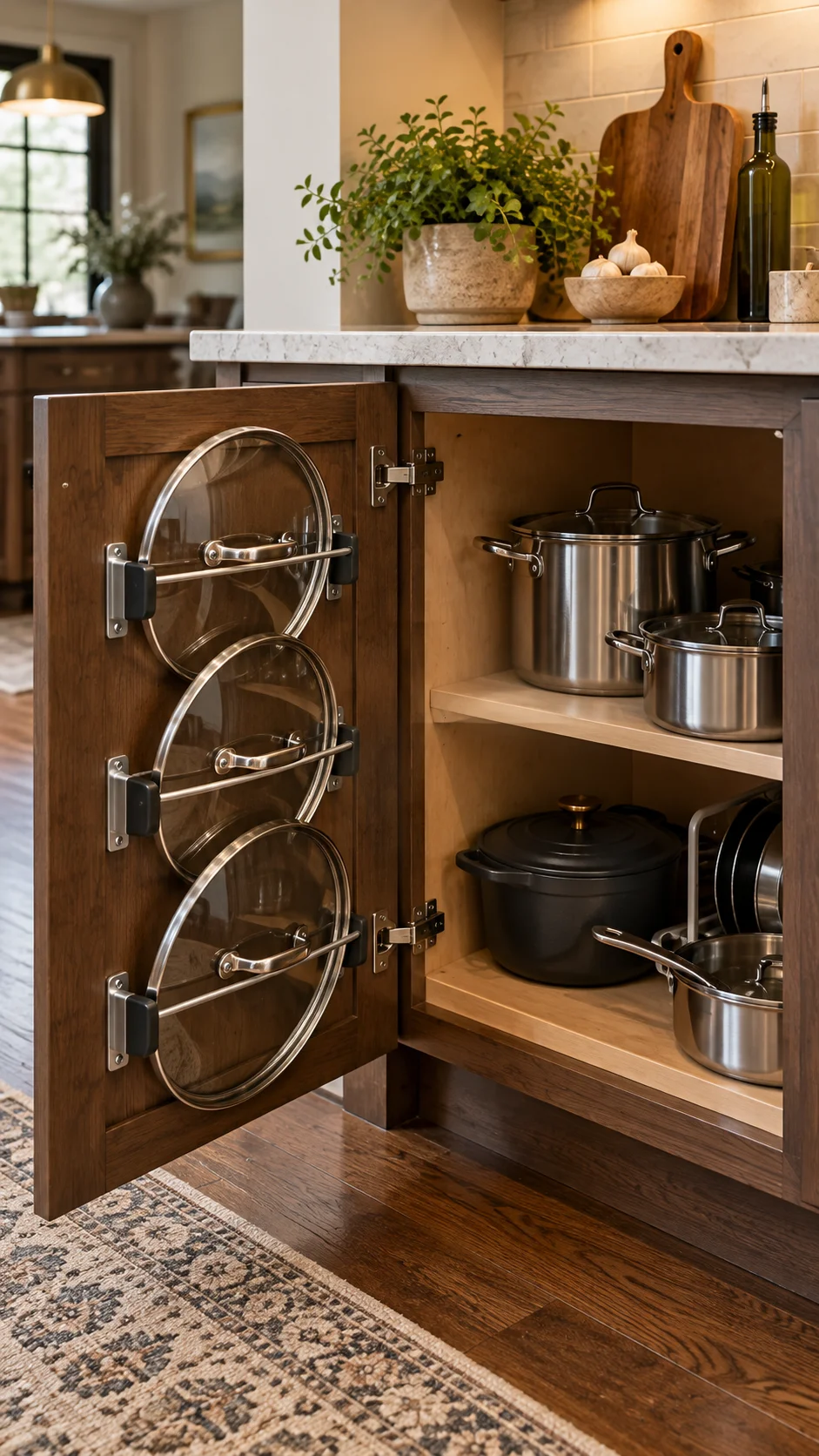
Pot lids tend to create unstable stacks because their handles prevent them from sitting flat.
Use appropriately rated adhesive hooks or a purpose-made lid holder on the inside of the cabinet door to keep selected lids upright.
This frees the cabinet base for pots and pans while turning the door into storage.
Clearance check: close the cabinet slowly before loading it fully to confirm the lids will not collide with interior shelves or cookware.
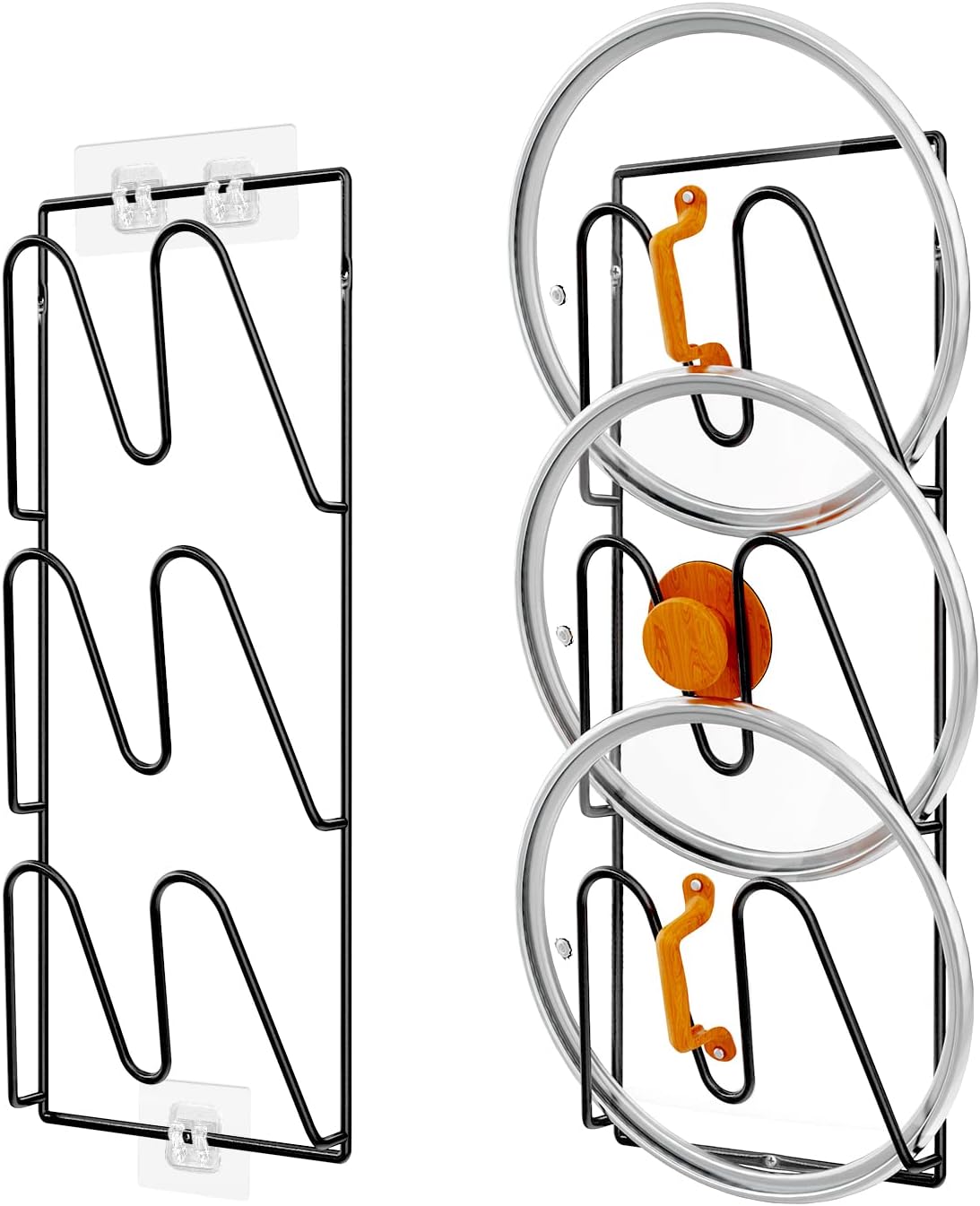
Amazon Find: Cabinet Door Pot Lid Organizer
A door-mounted lid rack can keep frequently used pot lids separated while freeing shelf space for cookware.
16. Hang Foil and Parchment Paper Inside a Door
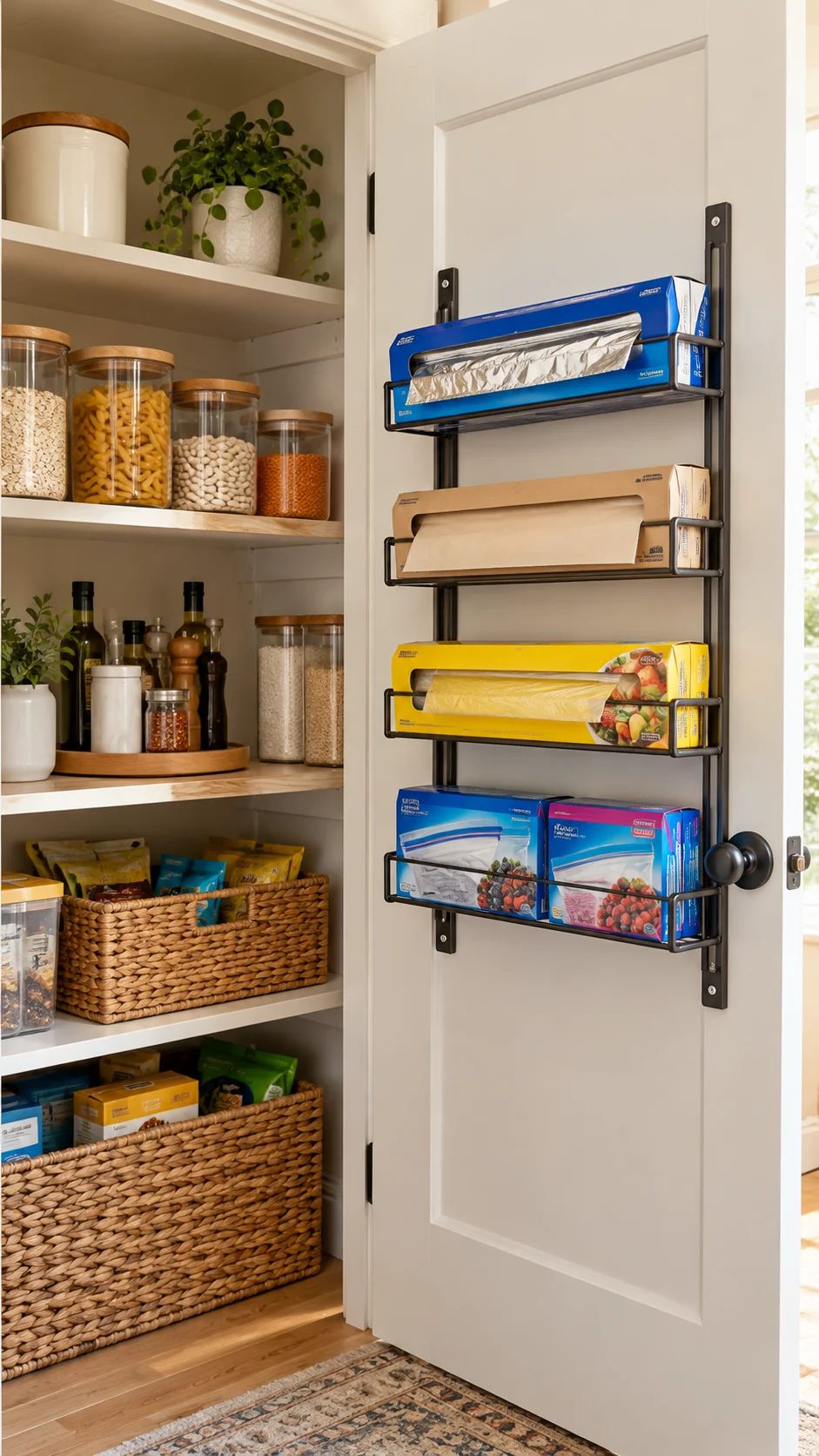
Foil, parchment paper, plastic wrap, and storage-bag boxes can consume an entire kitchen drawer.
Move them into an appropriately sized door-mounted rack or organizer inside a cabinet or pantry door.
Mount the organizer near your main food-preparation area so the boxes remain convenient to grab.
Keep it functional: leave enough room to pull the rolls from the organizer without removing everything around them.
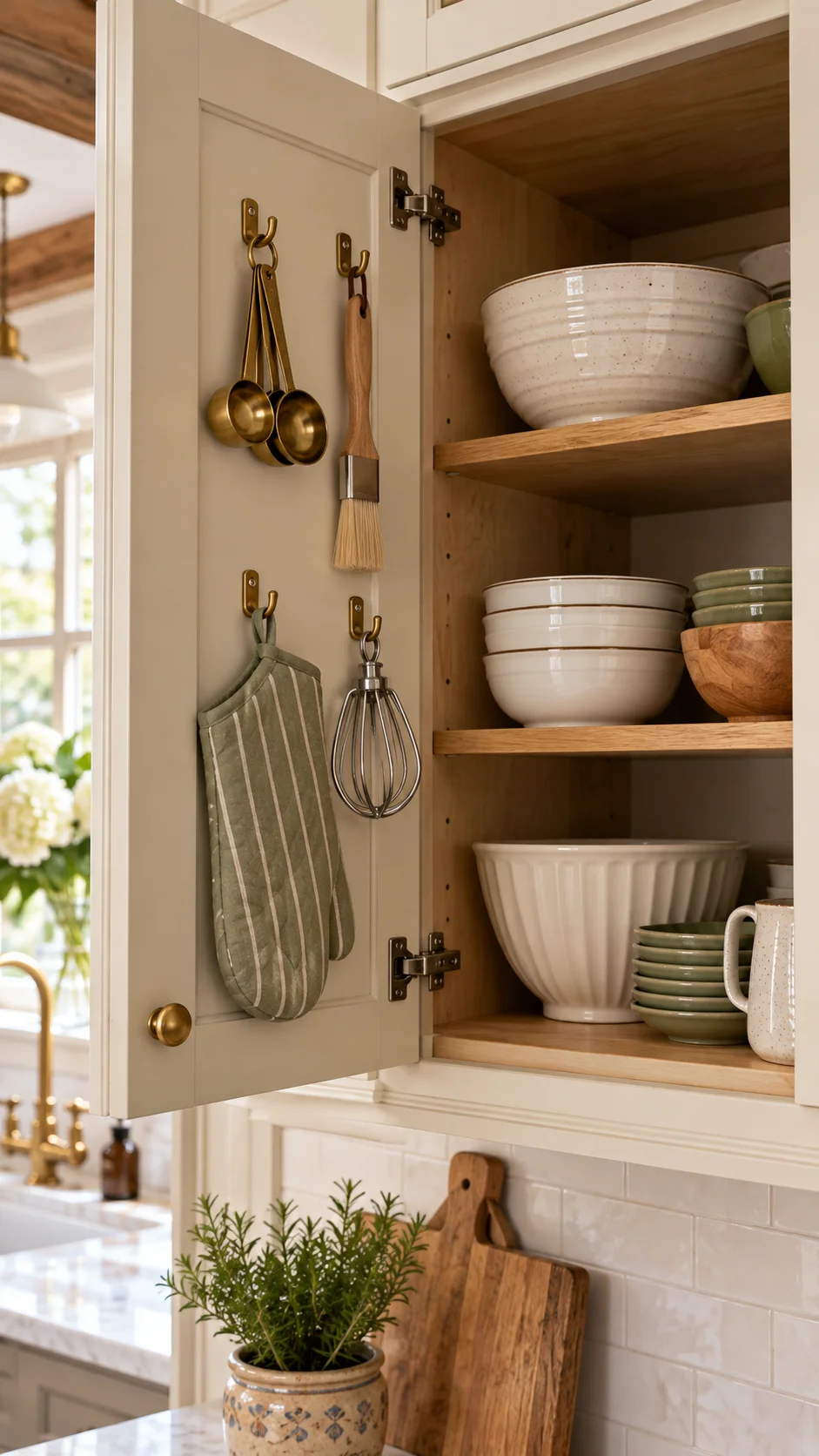
17. Add Hooks to Empty Cabinet Walls
The sides and interior walls of cabinets are often completely unused.
Small hooks can hold lightweight measuring spoons, oven mitts, brushes, attachments, or other compatible tools.
Place hooks where hanging items will not interfere with shelves or the cabinet door.
Simple principle: if an item hangs naturally, it does not always need to occupy valuable shelf or drawer space.
18. Use the Exposed Side of a Cabinet
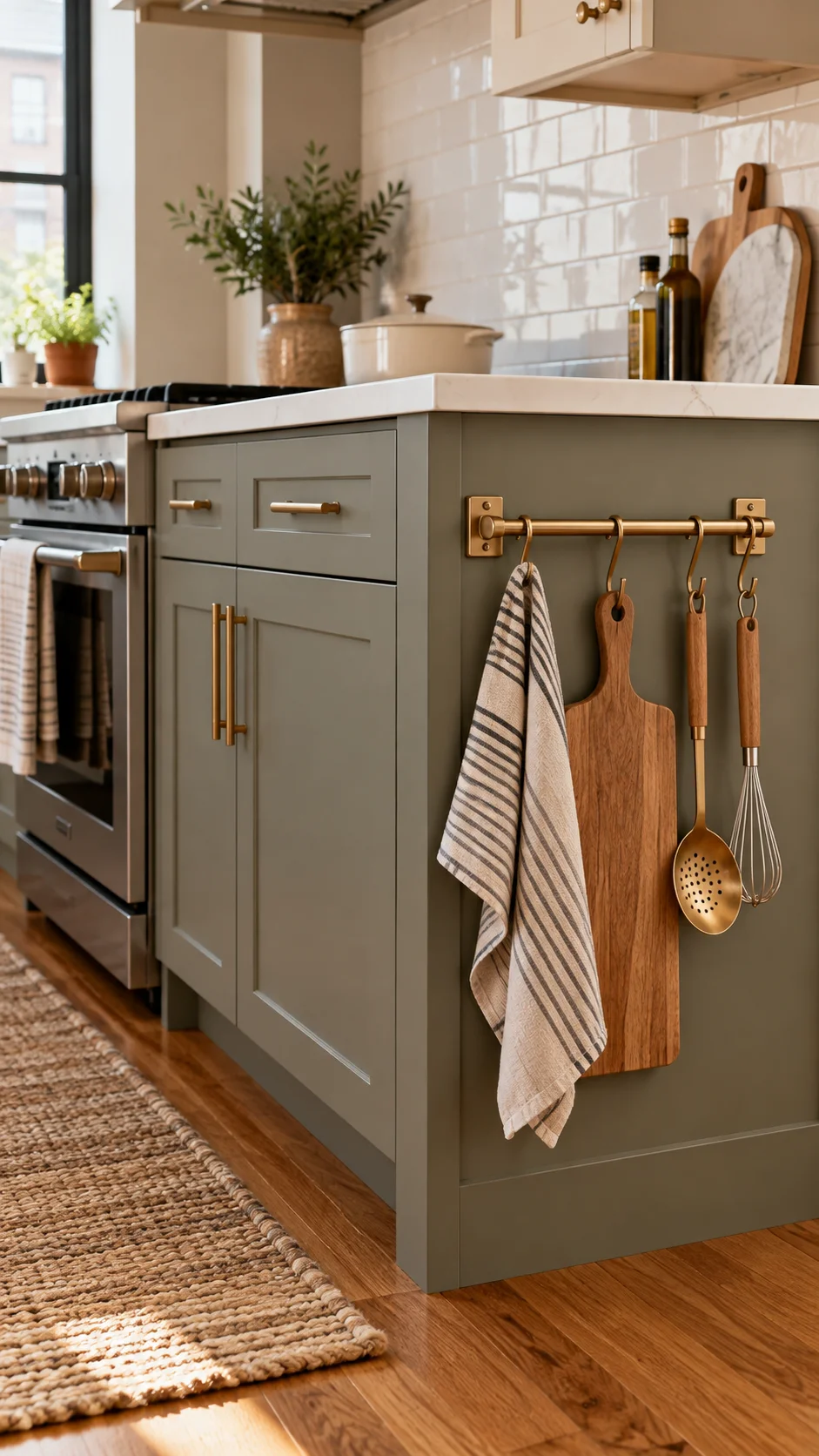
Cabinet organization does not have to stop at the inside.
If the end panel of a cabinet is exposed, it may be able to hold a small rail, hooks, narrow shelf, or lightweight organizer.
This works particularly well for towels, lightweight utensils, frequently used boards, or a small spice shelf.
Design tip: choose hardware that matches the cabinet handles so the added storage looks intentional rather than improvised.
19. Use Tension Rods as Vertical Dividers
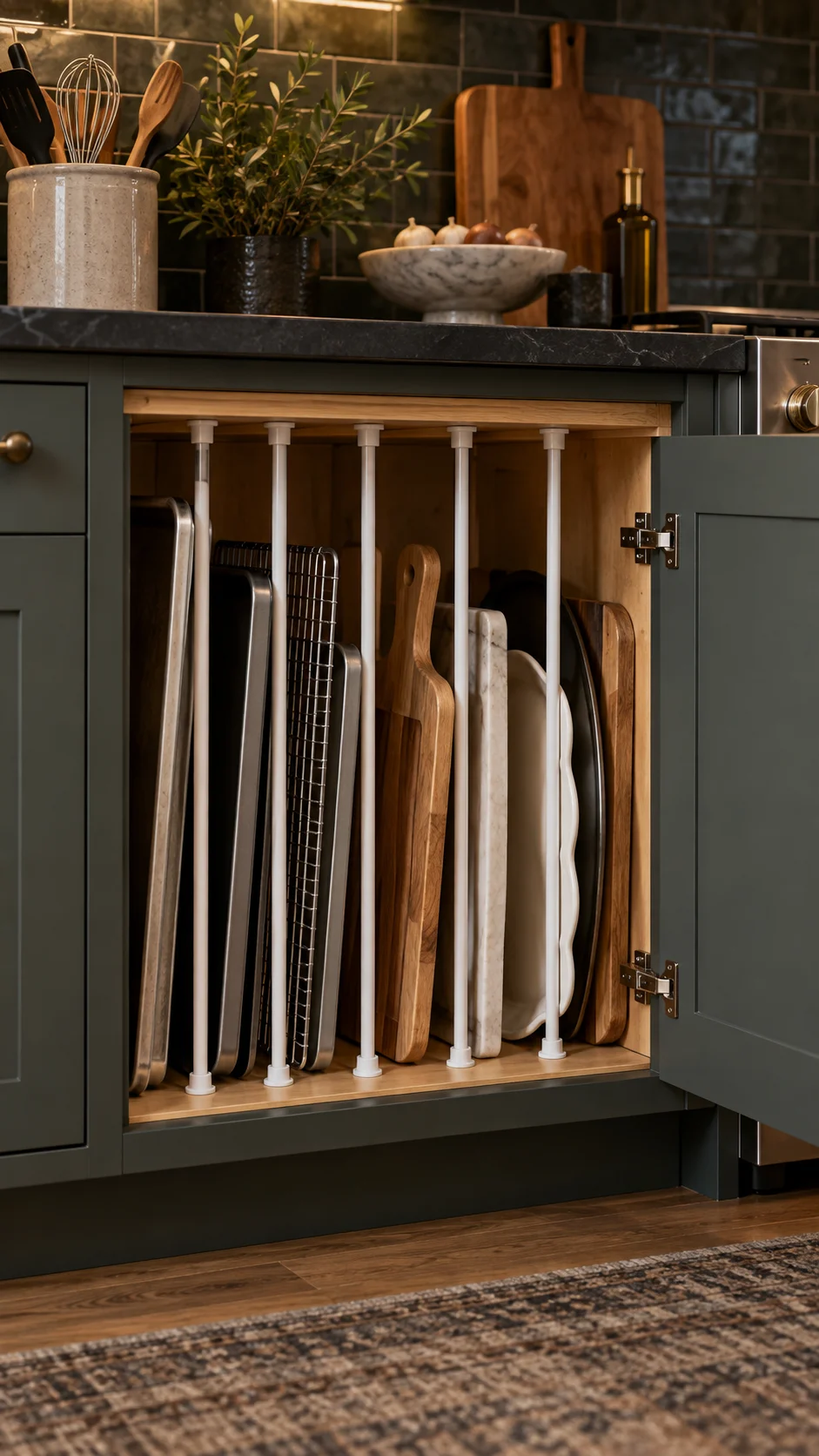
Sometimes flat kitchen items are easier to organize like files rather than stacks.
Install several sturdy tension rods vertically inside a suitable cabinet to create slots for baking sheets, cutting boards, cooling racks, and serving trays.
You can then remove one item without lifting an entire pile.
Best location: a tall lower cabinet with enough uninterrupted vertical space for the items you want to store.
20. Use a Dish Rack to File Plates and Small Boards
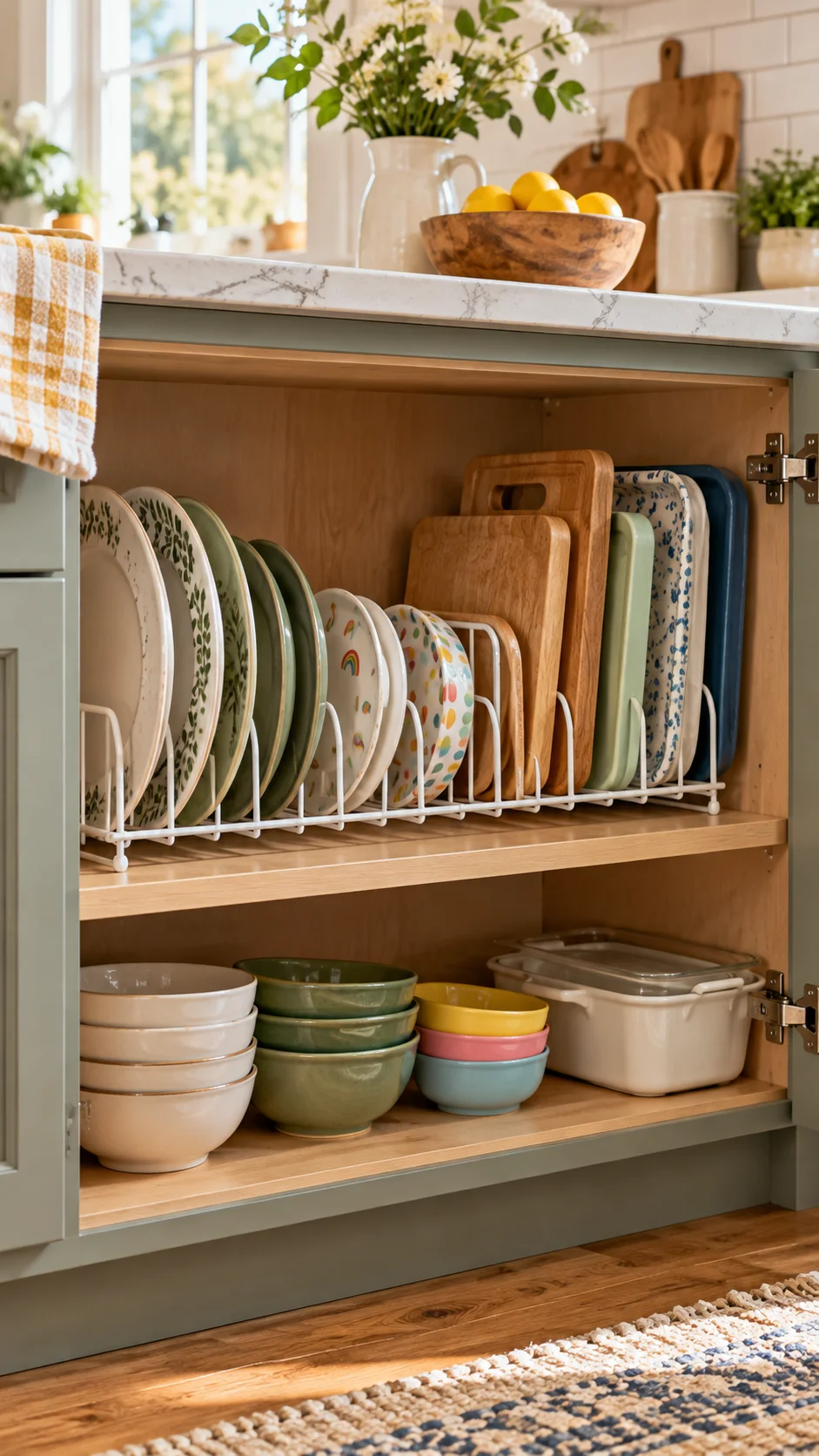
A basic wire dish rack can become a surprisingly useful cabinet divider.
Instead of using it beside the sink, put it inside a cabinet and use the slots to separate lightweight plates, lids, small cutting boards, or trays.
This works especially well for children’s plates and other pieces that do not stack neatly.
Budget hack: before buying a specialty divider, test whether a simple dish rack already fits the cabinet and the items you need to organize.
Best Cabinet Organization by Zone
| Cabinet Zone | Useful Organizers | Good Items to Store |
|---|---|---|
| Upper dish cabinet | Shelf risers | Plates, bowls, mugs |
| Spice cabinet | Turntable, drawers, risers | Spices and small sauces |
| Lower pot cabinet | Pull-out shelf, lid holder | Pots, pans, lids |
| Baking cabinet | Bins, vertical dividers | Ingredients, trays, pans |
| Food cabinet | Clear containers, labels | Dry ingredients and snacks |
How to Organize Deep Kitchen Cabinets
Deep cabinets become messy when you treat them like ordinary shallow shelves.
- Use pull-out shelves so the back comes toward you.
- Use bins like drawers and pull the whole category forward.
- Keep rarely used items behind daily items only when the front group is easy to remove.
- Use turntables for bottles rather than several deep rows.
- Avoid loose small packets that disappear at the back.
How to Organize Small Kitchen Cabinets
When cabinet space is limited, every organizer should either create another level or make difficult space easier to access.
- Add shelf risers where there is unused height.
- Store flat items vertically.
- Use cabinet doors for lightweight storage.
- Move frequently used items forward.
- Remove unnecessary packaging.
- Do not store rarely used appliances in prime cabinet space.
If the entire kitchen feels short on storage rather than just one cabinet, these small kitchen remodel ideas include more ways to use vertical storage, narrow gaps, pull-outs, and overlooked zones.
Cabinet Organization Checklist
- Empty one cabinet completely.
- Discard expired or unusable items.
- Group similar items together.
- Measure before buying organizers.
- Put heavy items lower.
- Keep daily items within easy reach.
- Use vertical space where possible.
- Label categories that other family members use.
- Check door clearance before adding racks.
- Keep organizers removable for cleaning.
- Do not overload shelves or adhesive hooks.
- Review the system after a few weeks and adjust what is not working.
Common Cabinet Organization Mistakes
- Buying organizers before decluttering: you may end up organizing things you do not need.
- Ignoring vertical space: tall cabinets often have large unused gaps above short items.
- Creating categories that are too specific: simple zones are usually easier to maintain.
- Storing heavy cookware too high: large pots and appliances are generally safer in lower storage.
- Stacking lids horizontally: they quickly become unstable and difficult to retrieve.
- Using opaque bins without labels: hidden contents can become forgotten contents.
- Overfilling turntables: they only work when everything can rotate freely.
- Blocking cabinet hinges: check moving hardware before installing door organizers.
- Making everything look perfect but difficult to use: accessibility is more important than matching containers.
Frequently Asked Questions
What is the best way to start organizing kitchen cabinets?
Start by emptying one cabinet, removing anything expired or unused, and grouping the remaining items by function. Only then decide which organizers would genuinely improve the space.
How can I organize kitchen cabinets without buying anything?
Group similar items together, move frequently used things forward, store flat items vertically where possible, reuse small boxes as dividers, and relocate rarely used pieces to less convenient shelves.
How do I organize very deep cabinets?
Pull-out shelves are ideal, but removable baskets can provide a similar effect. Use each basket as a drawer so you can pull the entire category forward instead of reaching through several rows.
How can I make kitchen cabinets hold more?
Use shelf risers, cabinet doors, hooks, turntables, vertical dividers, and pull-out storage. These solutions make use of space that conventional shelving often leaves empty.
What should go in upper kitchen cabinets?
Upper cabinets work well for dishes, glasses, mugs, lightweight food containers, spices, and other frequently used items that are safe and comfortable for you to reach.
What should go in lower cabinets?
Lower cabinets are generally better for heavier cookware, pots, pans, mixing bowls, small appliances, bulk supplies, and other items that would be uncomfortable to lift from high shelves.
How often should kitchen cabinets be reorganized?
You should not need a major reset often if the system works. Do a quick review when cabinets become difficult to close, categories start mixing, or groceries regularly no longer fit where they belong.
Recommended Finds for Organizing Kitchen Cabinets
Measure cabinet width, depth, height, hinges, and door clearance before buying organizers. Even a great product is useless if it prevents the cabinet from closing.
- Pull-out cabinet organizer — for making deep lower cabinets easier to reach.
- Stackable shelf risers — for creating a second level inside tall cabinets.
- Cabinet turntable — for sauces, spices, oils, and small jars.
- Pot-lid door organizer — for using otherwise empty cabinet-door space.
- Vertical cabinet divider — for baking trays, cutting boards, and pan lids.
- Clear drawer organizers — for dividing utensils and smaller kitchen tools.
- Airtight pantry containers — for creating uniform dry-food storage.
Final Thoughts
The smartest ways to organize cabinets do not necessarily involve adding more storage. They make the storage you already have easier to see and use.
Start with categories, labels, and a good declutter. Then solve specific problems rather than buying matching organizers for every shelf.
Deep cabinet? Add a pull-out. Wasted height? Add a riser. Messy lids? Store them vertically. Hard-to-find spices? Try a turntable or dedicated drawer.
Most importantly, build the system around your everyday routine. The cabinet you open ten times a day should contain the things you use ten times a day—not appliances and serving dishes that only come out a few times a year.
When everything has a logical home and the storage is easy to access, keeping kitchen cabinets organized becomes far easier than repeatedly reorganizing them from scratch.

Ankit is an engineer by profession and blogger by passion. He is passionate to do all the stuff such as designing the website, doing the SEO, researching for the content, writing tech blog posts and more.

